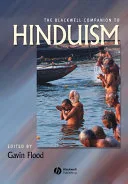
The Blackwell Companion to Hinduism
 80
80

The Blackwell Companion to Hinduism
Gavin Flood’s 2008 collection, The Blackwell Companion to Hinduism, offers a valuable counterpoint to simplistic narratives of the tradition. Its strength lies in aggregating diverse scholarly voices, particularly in its detailed sections on textual traditions and the critique of essentialist understandings of religion. The inclusion of discussions on Hindu society and politics, rather than solely focusing on doctrine, provides a more grounded perspective. However, the sheer breadth of topics, while comprehensive, can sometimes lead to a fragmented reading experience, with individual essays not always connecting as seamlessly as one might hope. A passage discussing the evolution of the concept of *dharma* across different eras and philosophical schools, for example, highlights this breadth but could benefit from a more explicit comparative thread linking the various interpretations. Despite this minor reservation, the volume stands as a significant academic resource for serious students of the subject.
📝 Description
80
Published in 2008, Gavin Flood's Blackwell Companion to Hinduism gathers academic perspectives on the religion's diversity.
The Blackwell Companion to Hinduism, edited by Gavin Flood, is a 2008 collection of essays from academics. It addresses the varied nature of Hindu traditions, moving past single viewpoints. The essays cover current research and different understandings of Hinduism. It is a reference for students and academics studying Hinduism or world religions. The book appeals to those wanting a broad look at Hindu practice and belief, including theory, texts, philosophy, and social aspects. Readers interested in newer academic approaches to religion will find it useful. The companion was published when scholars increasingly recognized Hinduism's complexities and internal differences, questioning older, uniform views. It aligns with a scholarly move away from simple definitions of religion and engages with current academic study of the subject. The book covers theoretical matters in Hindu studies, its many texts from the Vedas to later śāstras, and how science, philosophy, and Hindu ideas connect. It also looks at the social and political settings where Hinduism has developed and continues to operate, giving a detailed picture.
This companion engages with the academic study of Hinduism, a tradition often approached through esoteric lenses. While not an esoteric text itself, it provides scholarly context for understanding practices and philosophies that might be considered esoteric. It addresses the vast textual traditions and philosophical inquiries within Hinduism, which form the basis for many esoteric interpretations. By challenging monolithic views and highlighting internal diversity, the work allows for a more nuanced appreciation of the varied paths within the tradition, some of which are deeply esoteric.
💡 Why Read This Book?
• Gain a nuanced understanding of Hindu traditions beyond essentialist frameworks, as explored in the sections critiquing monolithic views. • Grasp the scope of Hindu textual traditions, from ancient Vedas to later philosophical works, as detailed in the dedicated sections. • Analyze the interplay between Hindu philosophy, science, and societal structures, offering insights not readily available in introductory texts.
⭐ Reader Reviews
Honest opinions from readers who have explored this book.
❓ Frequently Asked Questions
When was The Blackwell Companion to Hinduism first published?
The Blackwell Companion to Hinduism was first published on April 15, 2008, serving as a contemporary resource for academic study.
Who is the editor of The Blackwell Companion to Hinduism?
The volume is edited by Gavin Flood, a notable scholar in the field of religious studies.
What academic fields does The Blackwell Companion to Hinduism cover?
It covers Hindu studies, world religions, comparative religion, religious philosophy, and sociology of religion.
Does the book present a single, unified view of Hinduism?
No, the companion intentionally presents a forum for multiple scholarly views and research, moving away from singular or essentialist understandings.
What are the main thematic sections of the book?
The book is organized into four main sections: theoretical issues, textual traditions, science and philosophy, and Hindu society and politics.
Is this book suitable for beginners in religious studies?
While comprehensive, its academic nature and focus on scholarly debate make it ideal for those with some background or serious academic interest in Hinduism or world religions.
🔮 Key Themes & Symbolism
Textual Traditions
The work extensively maps the vast corpus of Hindu scriptures and philosophical texts. It moves beyond a simple chronology, exploring the hermeneutics and diverse interpretations that have shaped Hindu thought over millennia. From the foundational Vedas and Upanishads to the Puranas and later śāstras, the companion provides scholarly analysis of their content and significance, crucial for understanding the intellectual foundations of various Hindu practices.
Beyond Essentialism
A central aim of this volume is to counter essentialist notions of Hinduism. It emphasizes the plurality of traditions, practices, and beliefs that constitute Hinduism, recognizing regional variations and historical developments. This approach is vital for a contemporary understanding, reflecting scholarly trends that acknowledge complexity and resist monolithic definitions of religious phenomena.
Society and Politics
The companion situates Hindu traditions within their social and political contexts. It examines how religious beliefs and practices interact with caste systems, political structures, and modern societal changes. This section offers critical perspectives on the lived realities of Hinduism, moving beyond purely theological or philosophical discussions to encompass the material and communal dimensions.
Philosophy and Science
This theme explores the sophisticated philosophical systems within Hinduism and their engagement with scientific thought. It considers concepts like cosmology, epistemology, and metaphysics as articulated in Hindu traditions, and how these have been debated or reconciled with scientific perspectives, particularly in the modern era.
💬 Memorable Quotes
Direct passages from the work, attributed to the author.
“Hinduism is not a monolithic entity but a constellation of diverse traditions.”
— This interpretation captures the book's core argument against essentialism, highlighting the internal variety and regional specificities that define Hindu religious life.
“The study of Hindu textual traditions requires attention to evolving interpretations.”
— This underscores the dynamic nature of scripture and doctrine within Hinduism, emphasizing that understanding requires engaging with the history of commentary and diverse philosophical schools.
“Social and political realities profoundly shape Hindu practice.”
— This highlights the book's commitment to contextualizing religious study, demonstrating how external factors like social structures and political events influence the lived experience of Hinduism.
“Contemporary scholarship moves away from seeking a singular 'essence' of Hinduism.”
— This reflects the academic shift away from reductionist approaches, favoring analyses that embrace complexity, difference, and the many-sided nature of religious traditions.
“The intersection of Hindu philosophy and scientific inquiry offers new avenues of understanding.”
— This points to the book's exploration of how Hindu metaphysical and epistemological frameworks engage with, challenge, or complement scientific worldviews.
🌙 Esoteric Significance
Tradition
While not strictly an esoteric text in the Western Hermetic or Gnostic sense, this companion engages with traditions that have esoteric dimensions within Hinduism itself. It provides scholarly context for understanding various schools of Hindu philosophy (like Advaita Vedanta or Yoga) which, in their higher reaches, explore profound states of consciousness and metaphysical realities often considered esoteric. It serves as a foundational text for those seeking to understand the intellectual frameworks that underpin more specialized esoteric practices within the Hindu fold.
Symbolism
The work implicitly engages with potent Hindu symbols by analyzing the texts and concepts they represent. For instance, the concept of Brahman, often symbolized by Om (ॐ), is explored through philosophical discourse, revealing its metaphysical significance beyond mere sound. Similarly, the cyclical nature of time (kalpas) and the concept of cosmic dissolution and recreation are examined, providing a scholarly lens on motifs that resonate with esoteric notions of cosmic cycles and spiritual evolution.
Modern Relevance
Contemporary thinkers and practitioners exploring global spiritual movements, comparative mysticism, and the philosophical underpinnings of yoga and meditation often draw upon the comprehensive scholarship presented here. Academics studying the globalization of spiritual ideas, or movements like the Hare Krishnas (ISKCON) and various Tantric lineages, find crucial context in the companion's discussions of textual authority, devotional practices (bhakti), and philosophical divergence.
👥 Who Should Read This Book
• Academic researchers in religious studies and South Asian studies seeking a comprehensive overview of current scholarship on Hinduism. • Students of comparative religion who require a foundational text that details the diversity within Hindu traditions. • Individuals interested in the philosophical and societal dimensions of Hinduism, beyond devotional or ritualistic aspects.
📜 Historical Context
The Blackwell Companion to Hinduism, released in 2008, arrived at a key moment in the academic study of religion. The early 21st century saw a concerted effort within religious studies to move beyond Orientalist or essentialist frameworks that had previously dominated the field. Scholars were increasingly focused on the lived realities, internal diversity, and historical contingencies of religious traditions. Flood's collection directly addressed this shift, offering a platform for a generation of scholars challenging monolithic views of Hinduism. It emerged in dialogue with works that emphasized the constructed nature of religious identity and practice, contrasting with earlier, more unified theological or philosophical accounts. The companion’s structure, featuring sections on textual traditions alongside society and politics, reflects the growing interdisciplinary nature of religious scholarship, incorporating sociological and anthropological insights.
📔 Journal Prompts
The concept of *dharma* across diverse Hindu texts.
Hinduism's shift from essentialist understandings.
The role of textual traditions in shaping Hindu practice.
The societal and political contexts of Hindu traditions.
Intersections of Hindu philosophy and scientific thought.
🗂️ Glossary
Upanishads
A collection of foundational philosophical texts in Hinduism, forming the theoretical basis for Vedanta philosophy and exploring concepts like Brahman and Atman.
Vedas
The oldest scriptures of Hinduism, comprising hymns, prayers, and rituals, considered by adherents to be divinely revealed (śruti).
Śāstras
A broad category of Sanskrit texts in Hinduism dealing with a wide range of subjects, including law, ethics, politics, and philosophy, often considered to be of human authorship (smṛti).
Bhakti
A devotional movement and practice within Hinduism emphasizing intense love and surrender to a personal deity.
Advaita Vedanta
A prominent school of Hindu philosophy that posits the non-duality of the individual soul (Atman) and the ultimate reality (Brahman).
Tantra
A diverse set of esoteric traditions within Hinduism and Buddhism that often involve ritual practices, meditation, and a focus on achieving liberation through harnessing cosmic energies.
Kalpa
In Hindu cosmology, a vast unit of time representing a cosmic cycle, typically involving creation, preservation, and dissolution.