Encyclopedia of American Religions
 80
80

Encyclopedia of American Religions
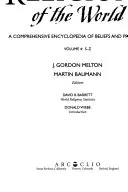
J. Gordon Melton’s Encyclopedia of American Religions is less a narrative and more a meticulously organized data repository, a fact underscored by its inclusion in library reference collections. Its strength lies in its sheer scope, cataloging over two millennia of religious groups in North America, from the familiar to the obscure. The 1996 publication date, however, means it predates the significant spiritual shifts and online community formations of the 21st century. While its essays provide valuable context, the directory format, though efficient, can feel somewhat detached. Melton’s dedication to comprehensive cataloging is evident throughout, offering a solid baseline for any inquiry into American religious pluralism. It’s a work of diligent compilation rather than interpretive revelation, a crucial distinction for the serious scholar.
📝 Description
80
J. Gordon Melton's Encyclopedia of American Religions, first published in 1996, catalogues over 2,100 religious groups.
This reference work offers a structured overview of spiritual and belief systems active in the United States and Canada. It presents information in both essay and directory formats, creating a systematic survey of religious diversity. The encyclopedia covers a wide array of traditions, from established denominations to newly formed spiritual communities. Its dual approach allows for both in-depth understanding of broader trends and quick reference to factual data on individual groups. This makes it a useful tool for anyone seeking to understand the proliferation of religious organizations and movements across the continent.
While not exclusively focused on what is commonly termed 'esoteric', this encyclopedia's comprehensive cataloging of diverse spiritual and belief systems necessarily includes many groups that operate outside mainstream religious definitions. Its detailed entries on movements often considered fringe or alternative, and its systematic approach to understanding their structures and beliefs, make it a valuable resource for scholars of esoteric traditions. It provides a factual basis for examining the often-unseen currents within American religious life.
💡 Why Read This Book?
• Gain immediate access to factual data on over 2,100 North American religious groups, a scope unmatched in single volumes since its 1996 publication. • Understand the structured approach to religious diversity through Melton’s dual essay and directory format, facilitating comparative study. • Identify historical religious movements and their organizational descendants, providing context for contemporary spiritual landscapes.
⭐ Reader Reviews
Honest opinions from readers who have explored this book.
❓ Frequently Asked Questions
What is the primary purpose of J. Gordon Melton's Encyclopedia of American Religions?
The encyclopedia serves as a comprehensive reference guide cataloging over 2,100 religious groups in the U.S. and Canada. It aims to provide clear, factual information for researchers, librarians, and students of religion.
When was the Encyclopedia of American Religions first published?
The first edition of J. Gordon Melton's Encyclopedia of American Religions was published in 1996, providing a snapshot of religious organizations at that time.
How does Melton organize information on religious groups?
Melton presents information in two distinct sections: analytical essays that explore broader religious trends and movements, and directory entries offering concise factual data on individual groups.
Which types of libraries are recommended to house this encyclopedia?
The American Reference Books Annual recommended this resource for public, academic, and theological libraries, highlighting its utility for a wide range of users.
Does the encyclopedia cover only mainstream religions?
No, the encyclopedia covers a broad spectrum, including Adventists, Zen Buddhists, and over 2,100 other North American religious groups, encompassing both established and less common spiritual organizations.
What is the historical significance of the 1996 publication date?
The 1996 publication date places the encyclopedia within a period of burgeoning academic interest in new religious movements and the diversification of American spirituality, offering a key reference point.
🔮 Key Themes & Symbolism
Religious Pluralism in North America
The encyclopedia meticulously documents the vast array of religious traditions that have taken root and evolved across the United States and Canada. It moves beyond mere enumeration to offer structured data, highlighting how diverse belief systems, from established faiths to nascent spiritual communities, coexist and interact within the North American context. The work underscores the dynamic nature of religious expression and organization in the region since its initial publication in 1996.
Comparative Religious Studies
By presenting over 2,100 religious groups in a systematic, two-part format (essays and directories), Melton provides a crucial tool for comparative religious studies. Researchers can easily draw parallels, contrasts, and connections between different movements, tracing their origins, practices, and organizational structures. This facilitates a deeper understanding of the common threads and unique divergences within the global spectrum of spiritual thought as manifested in North America.
The Evolution of New Religious Movements
The catalog's breadth inherently captures the emergence and development of new religious movements, particularly those prominent around the time of its 1996 publication. It serves as an invaluable historical marker, documenting groups that may have been on the periphery of mainstream discourse but represented significant shifts in spiritual seeking and community formation across the continent.
💬 Memorable Quotes
Direct passages from the work, attributed to the author.
“Compact, clearly printed, and a delight to use.”
— This highlights the practical usability of the encyclopedia, suggesting that despite its comprehensive nature, the physical design and organization make it an accessible and pleasant resource for consultation.
“Coverage on more than 2,100 North American religious groups.”
— This fact serves as a powerful indicator of the encyclopedia's extensive scope, demonstrating its ambition to catalog the vast majority of organized religious belief systems present in the U.S. and Canada.
“Information on these groups is presented in two distinct sections: essays and directory.”
— This points to the structured methodology employed by Melton, offering both analytical depth through essays and specific, verifiable data through directory entries for ease of research and comparison.
“From Adventists to Zen Buddhists.”
— This phrase illustrates the wide spectrum of religious traditions covered by the encyclopedia, signifying its inclusive approach that spans from widely recognized denominations to Eastern philosophical-spiritual practices.
💡 Key Ideas
Editorial paraphrase of the work's core concepts — not direct quotes.
A sine qua non for the reference collections of public, academic, and theological libraries.
This quote from the American Reference Books Annual emphasizes the book's critical importance and indispensability for any serious library serving patrons interested in religious studies or North American culture.
🌙 Esoteric Significance
Tradition
While not explicitly aligned with a single esoteric lineage like Hermeticism or Theosophy, Melton's work serves as a foundational catalog for those studying the esoteric dimensions of North American religions. It provides essential context for understanding movements that often incorporate esoteric elements, even if not overtly labeled as such. Its value lies in providing the broader landscape within which these specific traditions operate and can be compared.
Symbolism
The encyclopedia's strength lies not in its exploration of specific esoteric symbols, but in its comprehensive mapping of the groups that *employ* them. For instance, understanding the context of groups that might utilize astrological charts, numerology, or specific iconographies requires this foundational knowledge of their organizational and historical placement within the broader religious spectrum.
Modern Relevance
Contemporary scholars and practitioners of modern Paganism, New Age spirituality, and various forms of alternative religion frequently consult Melton's work. It remains a critical baseline for tracing the lineage and influences of contemporary esoteric practices, many of which have roots in or connections to the groups cataloged in the 1996 edition and its subsequent updates.
👥 Who Should Read This Book
• Researchers in religious studies requiring a comprehensive overview of North American spiritual organizations, particularly those interested in the period up to 1996. • Librarians seeking to build or augment their reference collections with authoritative directories of religious groups. • Students of comparative religion needing a structured resource to identify and understand the diversity of belief systems in the U.S. and Canada.
📜 Historical Context
J. Gordon Melton’s Encyclopedia of American Religions, first published in 1996, emerged during a period of significant scholarly and public interest in the diversification of religious life in the United States. The late 20th century witnessed the rise of new religious movements and the increased visibility of previously marginalized spiritual traditions. Melton’s work provided a much-needed, comprehensive catalog, offering a systematic counterpoint to earlier, often more impressionistic, accounts of American spirituality. It arrived at a time when scholars like Robert Wuthnow were actively examining the changing religious landscape. The encyclopedia’s reception, as indicated by its citation in the American Reference Books Annual, affirmed its utility for researchers and librarians navigating this complex terrain. It aimed to map a field that was rapidly expanding and transforming, providing a stable reference point amidst ongoing spiritual flux.
📔 Journal Prompts
The sheer number of religious groups cataloged, from Adventists to Zen Buddhists, suggests a profound diversity; what underlying human needs might explain this proliferation?
Melton’s catalog presents information in both essay and directory formats; how does this dual structure aid in understanding complex religious phenomena?
Consider the historical context of 1996; what societal or cultural factors might have contributed to the religious landscape documented in the encyclopedia?
Identify one religious group listed in the encyclopedia that is unfamiliar to you and research its core tenets as presented by Melton.
Reflect on the concept of 'religious group' itself; how does Melton's extensive catalog challenge or affirm your understanding of this term?
🗂️ Glossary
Adventists
A diverse Christian denomination that emphasizes the imminent second coming (advent) of Jesus Christ. Many Adventist groups originated from the Millerite movement of the 1840s in the United States.
Zen Buddhists
A school of Mahayana Buddhism originating in China, emphasizing meditation and intuitive understanding. Zen was introduced to North America in the late 19th and early 20th centuries.
Religious Group
An organized body of people adhering to a particular set of beliefs, rituals, and practices, often centered around a shared spiritual or theological framework.
Directory Format
A section within the encyclopedia that provides concise, factual information about specific religious groups, typically including founding dates, key figures, and core beliefs.
Essays
Analytical pieces within the encyclopedia that offer in-depth discussion of broader religious trends, historical movements, or theological concepts relevant to North American spirituality.
North American Religious Landscape
The collective array of religious beliefs, practices, organizations, and communities present within the geographical boundaries of the United States and Canada.
New Religious Movements (NRMs)
Groups that have emerged relatively recently, often challenging established religious norms or presenting novel spiritual syntheses. The encyclopedia documents many such movements active around 1996.
This book appears in 1 collection
🔮 Readers Also Liked
Browse all →




From the “Soul Travel” Collection
View all →







More Free Sacred Texts & Gnosticism Books
View all →