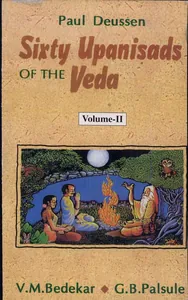
Innovation in Esotericism from the Renaissance to the Present
 78
78

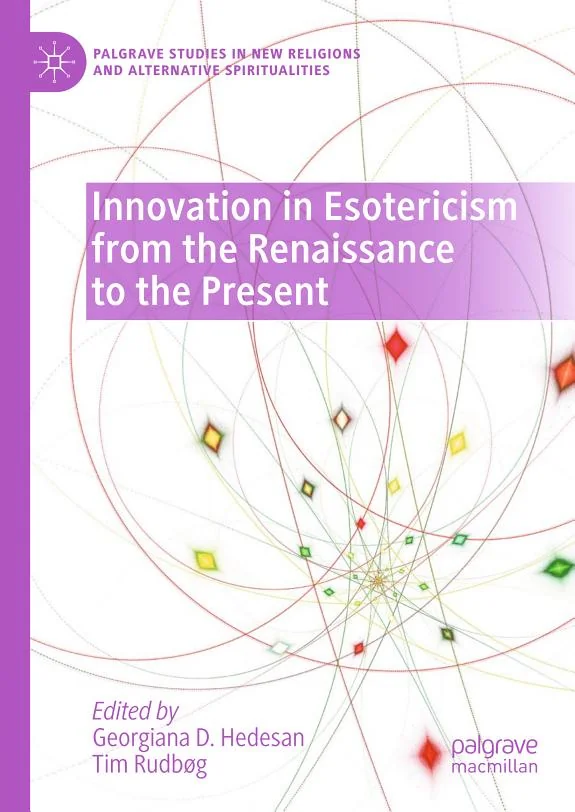
Innovation in Esotericism from the Renaissance to the Present
Georgiana D. Hedesan and Tim Rudbøg’s edited collection, *Innovation in Esotericism from the Renaissance to the Present*, offers a welcome corrective to studies that might present esoteric traditions as monolithic or static. The editors’ introduction lays out a compelling argument for understanding esoteric development as a continuous process of negotiation, where new ideas are forged against or adapted from older ones in response to present needs. This theoretical frame provides a consistent through-line for the diverse case studies that follow. One particularly strong contribution examines the evolving discourse around magic, demonstrating how its definition and practice shifted dramatically from the Renaissance to the early modern period, responding to both internal developments and external societal pressures. While the collection admirably avoids simplistic narratives, its sheer breadth occasionally means some chapters feel more like surveys than deep dives, leaving the reader wishing for more detailed engagement with specific historical actors or textual lineages. Nevertheless, the work as a whole succeeds in presenting a dynamic view of esoteric history.
📝 Description
78
Published in 2021, this collection examines innovation within esoteric traditions.
This book argues that esoteric traditions develop through a dynamic negotiation of ideas, not through fixed dogma. New concepts arise when esotericists actively challenge older frameworks or subtly adjust them to fit their current circumstances. The contributors show how this process of "production against" or "adaptation from" existing concepts drives change in esoteric thought and practice over centuries.
Scholars and advanced students of esotericism, religious studies, and intellectual history will find this volume particularly useful. It appeals to those interested in the history of magic, alchemy, and other esoteric disciplines. Readers who want to understand how ideas within hidden traditions change over time, rather than just cataloging beliefs, will appreciate this work. It is for those who value detailed academic discussion on the subject.
This work contributes to the ongoing scholarly reevaluation of Western esotericism, moving beyond a focus on textual analysis to consider the social and historical forces shaping these traditions. It builds on earlier work, such as Frances Yates's studies of Renaissance esotericism, by emphasizing a continuous, context specific innovation. The collection engages with current academic debates concerning how to periodize esoteric history and define what constitutes an 'esoteric tradition' itself.
💡 Why Read This Book?
• Learn how esoteric traditions evolve through active negotiation with past ideas, a concept explored through case studies on alchemy and Rosicrucianism. • Understand the historical mechanisms of "production against" and "adaptation from" concepts, as applied to movements like Theosophy in the late 19th century. • Gain insight into how specific historical contexts, such as the Enlightenment's influence on Mesmerism, spurred innovation within occult thought.
⭐ Reader Reviews
Honest opinions from readers who have explored this book.
❓ Frequently Asked Questions
What is the central thesis of *Innovation in Esotericism* regarding the development of esoteric traditions?
The book argues that esoteric traditions evolve through a process of "innovation as negotiation." This means new ideas are developed by either directly opposing or adapting older conceptual frameworks to address the specific needs and contexts of the present.
Which historical periods and movements are covered in the collection?
The collection spans from the Renaissance to the present, examining diverse fields including magic, alchemy, Rosicrucianism, Theosophy, Tarot, apocalypticism, Mesmerism, and occultism.
Who are the editors of this volume?
The volume was edited by Georgiana D. Hedesan and Tim Rudbøg. It features contributions from various distinguished scholars in the field of esotericism.
What does the book mean by "production against" an older set of concepts?
"Production against" refers to the creation of new esoteric ideas or practices that are explicitly formulated in opposition to existing or dominant traditions, thereby defining themselves through contrast.
How does the book approach the study of magic historically?
It analyzes magic not as a static practice, but as a concept and activity that has been redefined and renegotiated across different historical periods, responding to contemporary intellectual currents and social conditions.
Is this book suitable for beginners in esoteric studies?
While accessible to motivated learners, the book is primarily aimed at scholars and advanced students due to its academic rigor and focus on historiographical methodology rather than introductory overviews.
🔮 Key Themes & Symbolism
Innovation as Negotiation
The core argument posits that historical change within esotericism is driven by "innovation as negotiation." This framework illustrates how esoteric thinkers and movements develop new ideas by either challenging established concepts or reinterpreting them to fit contemporary needs. This process is demonstrated through examples ranging from Renaissance alchemy, where practitioners innovated by adapting classical texts to new chemical understandings, to the emergence of Theosophy, which synthesized various traditions in response to late 19th-century spiritual anxieties.
Historical Dynamics of Esoteric Fields
This theme examines the specific ways innovation manifests across distinct esoteric fields. Chapters explore how magic transformed from ceremonial practices to theoretical frameworks, how Rosicrucianism emerged and evolved through its textual and symbolic innovations, and how the study of Tarot shifted from divination to a tool for psychological and symbolic exploration. The focus remains on the historical contingency and contextual adaptation driving these changes.
Renaissance to Present Trajectory
The volume traces the lineage of innovation in esotericism from its significant developments during the Renaissance through to contemporary manifestations. It highlights how intellectual currents, scientific discoveries, and social changes influenced the trajectory of esoteric thought. For instance, the rise of Mesmerism in the late 18th century is presented as a product of Enlightenment rationalism applied to ostensibly occult phenomena, showcasing a distinct mode of negotiation.
Mechanisms of Conceptual Change
The book details the specific mechanisms by which esoteric concepts change over time. This includes analyzing "production against" older ideas, where new doctrines are defined in opposition to existing ones, and "adaptation from," where existing concepts are modified and repurposed. This analytical approach allows for a nuanced understanding of how seemingly stable esoteric traditions are, in fact, dynamic and responsive to their historical environments.
💬 Memorable Quotes
Direct passages from the work, attributed to the author.
“Innovation is a mechanism of negotiation whereby an idea is either produced against, or adapted from, an older set of concepts in order to respond to a present context.”
— This foundational statement defines the book's central thesis, framing historical development in esotericism not as linear progress or static repetition, but as a dynamic, context-dependent process of intellectual engagement and adaptation.
“Magic's definition and practice have shifted significantly from the Renaissance to the early modern period.”
— This statement highlights a key finding within the book's exploration of specific esoteric fields, illustrating how concepts like 'magic' are not fixed but subject to historical redefinition.
“Theosophy synthesized diverse traditions to address late 19th-century spiritual anxieties.”
— This observation points to a specific example of innovation through adaptation, showing how new movements like Theosophy drew upon various esoteric and religious sources to meet contemporary societal needs.
“Rosicrucianism's evolution is understood through its textual and symbolic innovations.”
— This highlights a specific approach taken in the book to analyze a particular esoteric movement, focusing on the concrete developments in its literature and symbolism as drivers of its historical trajectory.
💡 Key Ideas
Editorial paraphrase of the work's core concepts — not direct quotes.
The study of esotericism must account for how traditions respond to their socio-historical circumstances.
This paraphrased concept emphasizes the volume's methodological commitment to historical and social analysis, moving beyond purely textual or philosophical interpretations of esoteric movements.
🌙 Esoteric Significance
Tradition
This work is situated within the academic study of Western Esotericism, a field that examines diverse traditions including Hermeticism, Gnosticism, Kabbalah, alchemy, and modern occult movements. It departs from purely historical or anthropological accounts by offering a specific theoretical lens—innovation as negotiation—to understand how these traditions have historically adapted and transformed, rather than merely persisted.
Symbolism
While not a manual of symbolism, the book analyzes how symbols function within innovation. For example, the Rosicrucian manifestos, products of their time, used specific symbolic language to innovate and disseminate their message. Similarly, Tarot cards, initially used for games, were later reinterpreted and imbued with complex symbolic meanings by figures like Eliphas Lévi in the 19th century, demonstrating adaptation.
Modern Relevance
Contemporary esoteric practitioners and scholars, particularly those interested in comparative esotericism and the sociology of religion, draw upon the book's framework. Thinkers exploring modern occultism, new religious movements, and the ongoing reinterpretation of historical esoteric texts find value in its model of context-dependent innovation. It provides tools for understanding how current esoteric practices and beliefs continue to evolve.
👥 Who Should Read This Book
• Scholars of Religious Studies and Intellectual History: To understand a new theoretical framework for analyzing the development of hidden traditions and their place in intellectual history. • Students of Western Esotericism: To gain a nuanced perspective on how magic, alchemy, and movements like Theosophy have historically adapted and changed. • Researchers of Conceptual Change: To explore a model of how ideas are generated and transformed within specific cultural and historical contexts, applicable beyond esoteric studies.
📜 Historical Context
Published in 2021, *Innovation in Esotericism* arrives at a moment of sophisticated academic engagement with the history of Western esotericism. It builds upon foundational scholarship from figures like Frances Yates, who extensively researched Renaissance Hermeticism, but shifts the focus from uncovering lost ancient wisdom to analyzing the dynamic processes of change within these traditions. The work engages with contemporary scholars like Wouter J. Hanegraaff, whose critiques have pushed the field toward more rigorous historical contextualization. By framing development as "innovation as negotiation," the collection implicitly addresses debates surrounding the definition and boundaries of esotericism itself, moving beyond essentialist or purely textual approaches. Its publication provides a timely academic framework for understanding the continuous evolution of occult, magical, and mystical thought across centuries, responding to a growing scholarly interest in the historiography of hidden traditions.
📔 Journal Prompts
The concept of "innovation as negotiation" in esoteric traditions.
How has the definition of "magic" been adapted or produced against older concepts since the Renaissance?
Analyze a contemporary esoteric movement using the framework of "production against" or "adaptation from" older ideas.
Reflect on the role of Rosicrucianism's textual innovations in its historical trajectory.
Consider how Theosophy's synthesis of traditions responded to late 19th-century spiritual needs.
🗂️ Glossary
Esotericism
A broad category of religious and spiritual traditions that are on the fringes of mainstream religions. These traditions often involve secret knowledge, initiation, and a focus on inner transformation or hidden realities.
Innovation as Negotiation
The central theoretical concept of the book, describing how esoteric ideas evolve through a process of either challenging (producing against) or modifying (adapting from) existing concepts to meet present historical and social contexts.
Production Against
A mode of innovation where new ideas or traditions are consciously formulated in opposition to, or as a reaction against, older or dominant conceptual frameworks.
Adaptation From
A mode of innovation where existing concepts, symbols, or practices are reinterpreted, modified, or integrated into new frameworks to address contemporary needs or understandings.
Historiography of Esotericism
The study of how the history of esoteric traditions has been written, interpreted, and debated by scholars over time, including the methodologies and theoretical approaches employed.
Rosicrucianism
A spiritual and cultural movement that emerged in Europe in the early 17th century, associated with the legendary founder Christian Rosenkreuz and characterized by esoteric knowledge, alchemy, and mysticism.
Theosophy
A spiritual movement founded in the late 19th century by Helena Blavatsky, seeking to synthesize Eastern and Western esoteric traditions and promote universal brotherhood, occult knowledge, and spiritual evolution.
This book appears in 1 collection
🔮 Readers Also Liked
Browse all →








From the “Western Esotericism” Collection
View all →




![[ T. W. C. Moriarty], Seven Aphorisms of Creation, Seven Cosmic Principles](/img/thumb/t-w-c-moriarty-seven-aphorisms-of-creation-seven-cosmic-principles.webp)



More Free Sacred Texts & Gnosticism Books
View all →