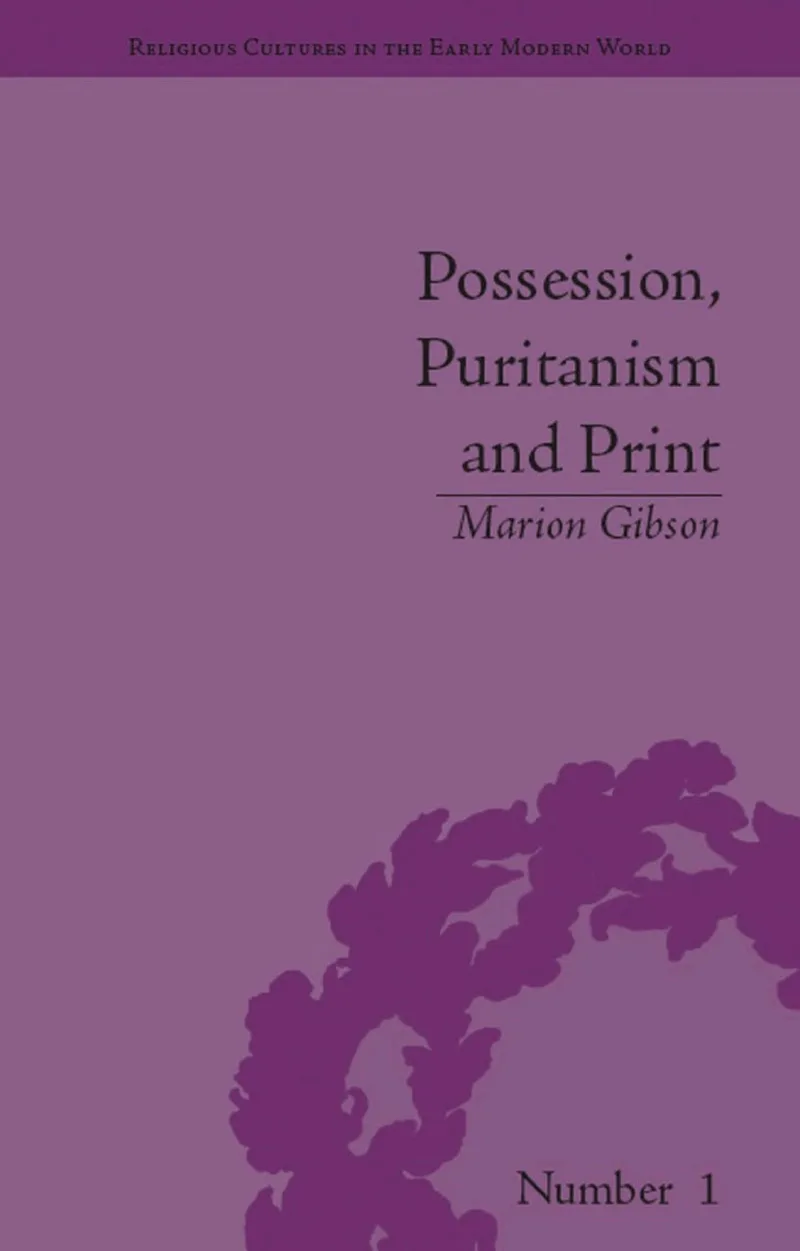
Possession, Puritanism and Print
 75
75

Possession, Puritanism and Print
Marion Gibson’s "Possession, Puritanism and Print" offers a sharp, critical lens on the late Elizabethan era, moving past simplistic notions of witch hunts. The strength lies in its meticulous analysis of how print itself became a battleground for religious and social anxieties. Gibson compellingly argues that sensational accounts of demonic possession and exorcism, far from being mere curiosities, were central to print controversies that foreshadowed later civil strife. A particularly striking section details the printed responses to a specific series of possessions, revealing the complex interplay between clerical authority, popular belief, and the burgeoning print industry. If there's a limitation, it's that the sheer density of textual analysis might occasionally obscure the human drama, though this is arguably the point of the work. The book effectively demonstrates that the controversies fueled by print in the 1590s were not just about demons, but about power, belief, and the control of narrative. It is a vital corrective to understanding early modern religious conflict.
📝 Description
75
Marion Gibson's 2006 book examines print controversies surrounding demonic possessions in late Elizabethan England.
Possession, Puritanism and Print investigates the print controversies surrounding demonic possessions and exorcisms in late Elizabethan England. Marion Gibson moves beyond simple narratives of superstition to reveal a complex intellectual and theological environment where printed materials fueled public debate and anxieties. The work meticulously examines how these sensational events were recorded, disseminated, and interpreted through the printed word, highlighting their role in shaping public perception and religious discourse.
This study is for scholars of early modern English history, religious studies, and the history of print. It will also appeal to readers interested in the historical roots of demonology, the psychology of belief, and the power of media in shaping societal narratives. Anyone curious about the intersection of religious fervor, social control, and the emergent public sphere in a period of intense upheaval will find valuable material here.
The book is situated in the final years of Queen Elizabeth I's reign (c. 1590s), a period marked by significant religious tension following the English Reformation and ongoing anxieties about Catholic influence and Puritan dissent. The rise of print technology meant that accounts of extraordinary events, such as demonic possessions, could reach a wider audience than ever before, becoming subjects of both fascination and condemnation. This era saw the nascent development of a public sphere where printed pamphlets and books could ignite debate and influence opinion, setting the stage for later political and religious conflicts.
This work engages with the history of religious belief and practice during a period of significant upheaval in England. It situates anxieties about demonic possession and the rituals of exorcism within the context of print culture's growing influence. By examining how these events were documented and debated through pamphlets and books, the study touches upon the ways in which spiritual phenomena were understood, contested, and managed within a specific historical and theological framework. It connects to broader discussions about the intersection of the sacred, the social, and the printed word in shaping popular and elite understandings of the supernatural.
💡 Why Read This Book?
• Understand the foundational role of print in shaping public discourse around religious phenomena, specifically examining how pamphlets detailing demonic possessions in the 1590s ignited widespread debate and contributed to a volatile socio-religious climate. • Gain insight into the specific historical context of late Elizabethan England, recognizing how religious persecution and the proliferation of printed materials created a volatile atmosphere that Gibson argues presaged the English Civil War. • Explore the concept of 'print controversies' as a mechanism for theological and social conflict, learning how contested narratives surrounding exorcisms were weaponized in the print sphere.
⭐ Reader Reviews
Honest opinions from readers who have explored this book.
❓ Frequently Asked Questions
What specific time period does "Possession, Puritanism and Print" focus on?
The book concentrates on the last decade of Queen Elizabeth I's reign, roughly the 1590s, a period of intense religious and political maneuvering in England.
What is a 'print controversy' as discussed in the book?
A print controversy refers to a heated public debate or dispute that unfolds through the medium of printed materials, such as pamphlets and books, during the period studied.
How did demonic possessions factor into Elizabethan print culture?
Demonic possessions became sensational subjects for printed accounts, fueling public fascination and religious debate, and were used in polemical arguments by various religious factions.
What is the connection between possession narratives and later civil war?
Gibson suggests that the intense print-fueled controversies surrounding religious dissent and perceived threats (like demonic influence) in the late Elizabethan era created a climate of division that contributed to the eventual outbreak of the English Civil War.
Who was Marion Gibson prior to writing this book?
Marion Gibson is a scholar specializing in early modern literature and culture, with a particular focus on witchcraft, magic, and religious belief in historical periods.
Does the book offer modern-day parallels to Elizabethan print controversies?
While primarily historical, the book implicitly highlights enduring themes of how media can amplify societal anxieties and shape perceptions of 'otherness', offering a lens through which to view contemporary digital discourse.
🔮 Key Themes & Symbolism
Print as a Weapon
This work fundamentally re-examines the role of printed materials in the late Elizabethan era, positing them not merely as recorders of events but as active agents in religious and social conflict. Gibson demonstrates how sensational accounts of demonic possessions and exorcisms were strategically deployed in print controversies. These narratives became tools for Puritan and Anglican factions to assert their theological dominance, condemn opponents, and shape public opinion, effectively turning the burgeoning print industry into a battleground for spiritual and political power.
The Contested Nature of Exorcism
The book highlights that exorcisms during this period were far from straightforward rituals. They were complex performances, often publicly documented and debated through print. Gibson shows how printed accounts of these events were contested texts, subject to interpretation and manipulation by different groups. The narratives surrounding possessions and their supposed cures served as focal points for theological arguments, accusations of fraud, and broader anxieties about spiritual purity and the perceived influence of demonic forces within English society.
Precursors to Civil Conflict
Gibson's central thesis connects the intense print-fueled controversies of the 1590s directly to the later outbreak of the English Civil War. By analyzing the heated debates surrounding religious dissent, perceived threats of foreign influence (often linked to Catholicism), and the very nature of belief and spiritual warfare as disseminated through print, the book argues that a deeply fractured society was being forged. The polarization evident in these earlier print controversies laid crucial groundwork for the more widespread political and religious schisms that would erupt decades later.
Religious Persecution and Resistance
The study illuminates the harsh realities of religious persecution in late Elizabethan England, where dissenters and those perceived as 'unorthodox' faced significant challenges. Within this context, the narratives of possession and exorcism also reveal passionate resistance. Whether through the actions of those undergoing alleged possessions, the defiance of their families, or the counter-arguments published by critics of established religious doctrines, the book uncovers instances of agency and struggle against enforced religious conformity, mediated and amplified by the power of the printed word.
💬 Memorable Quotes
Direct passages from the work, attributed to the author.
“The sensational series of demonic possessions and exorcisms in the late Elizabethan period”
— This phrase captures the core subject matter, signaling that the book will analyze specific, dramatic events that captured public attention and became subjects of intense discussion and publication.
“Controversies in print in the late Elizabethan period”
— This points to the book's central argument: that printed materials were not passive records but active participants in sharp disagreements and debates shaping the era's religious and political landscape.
“The kind that would one day lead to civil war”
— This interpretation highlights Gibson's thesis linking the specific print controversies of the 1590s to the larger, long-term societal divisions that ultimately erupted into the English Civil War.
“Injustice and passionate resistance to religious persecution”
— This suggests the book explores not only the oppressive aspects of the religious climate but also the determined opposition and struggles for autonomy faced by individuals and groups.
“Analysis of a sensational series of demonic possessions and exorcisms”
— This signifies the methodological approach, indicating a deep dive into specific documented cases of alleged demonic activity and the rituals performed to counter it.
🌙 Esoteric Significance
Tradition
While not strictly adhering to a single esoteric lineage, "Possession, Puritanism and Print" engages with themes relevant to Western Esotericism, particularly its historical manifestations. It touches upon the historical understanding of spiritual warfare, the nature of demonic influence, and the practices aimed at countering such forces, which have parallels in various occult traditions. The book's focus on belief systems and the power of narrative within a specific historical context provides a foundation for understanding how esoteric ideas, even when framed within mainstream religious discourse, intersect with societal anxieties and power structures.
Symbolism
The primary symbolic elements revolve around the concepts of possession and exorcism themselves. Possession, in this context, symbolizes the perceived intrusion of disruptive, malevolent forces – whether literal demons or metaphorical societal/political threats – into the individual and the body politic. Exorcism symbolizes the attempt to restore order, purity, and control, often through ritualistic means. The printed accounts of these events function symbolically as records of the battle between perceived good and evil, order and chaos, and orthodox belief versus perceived heresy or external corruption.
Modern Relevance
Contemporary thinkers and practitioners interested in the history of belief, the psychology of religious experience, and the social construction of 'the uncanny' can draw valuable insights from Gibson's work. It offers a historical case study relevant to understanding how narratives of external malevolent influence are employed in societal discourse, echoing in modern discussions of misinformation, conspiracy theories, and the demonization of 'others'. Scholars of media studies and the history of communication also find relevance in its analysis of how print controversies shaped public opinion and political discourse.
👥 Who Should Read This Book
• Early modern history scholars seeking a nuanced understanding of religious conflict and the impact of print culture in Elizabethan England. • Students of the history of witchcraft and demonology interested in primary source analysis and the social context of belief during a key era. • Readers fascinated by the intersection of religion, psychology, and media, who want to explore how sensational narratives shaped public perception and contributed to societal division.
📜 Historical Context
The late Elizabethan era, specifically the 1590s, was a period of profound religious and political tension in England. Following the tumultuous decades of the English Reformation, the nation grappled with the legacy of Catholic influence, the rise of Puritanism, and anxieties about succession. The proliferation of printing presses meant that extraordinary events, such as accounts of demonic possession and exorcism, could be rapidly disseminated, becoming subjects of widespread public debate and theological controversy. Gibson highlights how these printed narratives fueled existing divisions, acting as a crucial medium for expressing anxieties about spiritual purity, social order, and political loyalty. This era witnessed a burgeoning 'print public sphere' where arguments, accusations, and defenses were exchanged through pamphlets and books, significantly shaping public opinion. Unlike earlier periods where such discourse might have been localized or oral, print allowed these controversies to gain national traction, creating a climate of polarization that, as Gibson argues, contributed significantly to the intellectual and social fault lines that would eventually erupt into the English Civil War.
📔 Journal Prompts
The concept of 'print controversies' and its role in religious persecution.
Reflect on the power of sensationalized narratives, as seen in the demonic possession accounts.
Analyze the relationship between religious dissent and the resistance documented in the book.
Consider the Elizabethan anxieties surrounding spiritual purity and their manifestation in print.
Explore how the mechanisms of 'controversies in print' echo in contemporary media landscapes.
🗂️ Glossary
Demonic Possession
A state believed to be caused by the invasion of a person's body by a demon or evil spirit, leading to altered personality, behavior, or physical symptoms.
Exorcism
The religious or spiritual practice of evicting demons or other spiritual entities from a person or place believed to be possessed.
Print Controversies
Disputes and debates conducted and amplified through the medium of printed materials like pamphlets and books, common in periods of significant social and religious upheaval.
Late Elizabethan Period
Refers to the final years of the reign of Queen Elizabeth I of England, roughly spanning the 1590s, a time characterized by religious tension and political uncertainty.
Puritanism
A diverse movement within Protestant Christianity that emerged in the 16th century, advocating for further reform of the Church of England and simpler forms of worship.
Religious Persecution
The systematic mistreatment, harassment, or punishment of individuals or groups based on their religious beliefs or affiliations.
Body Politic
A metaphorical concept representing the state or nation as a single organism, where different parts (citizens, institutions) function together.