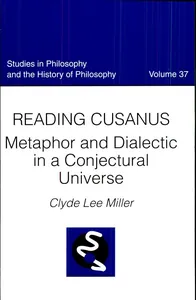
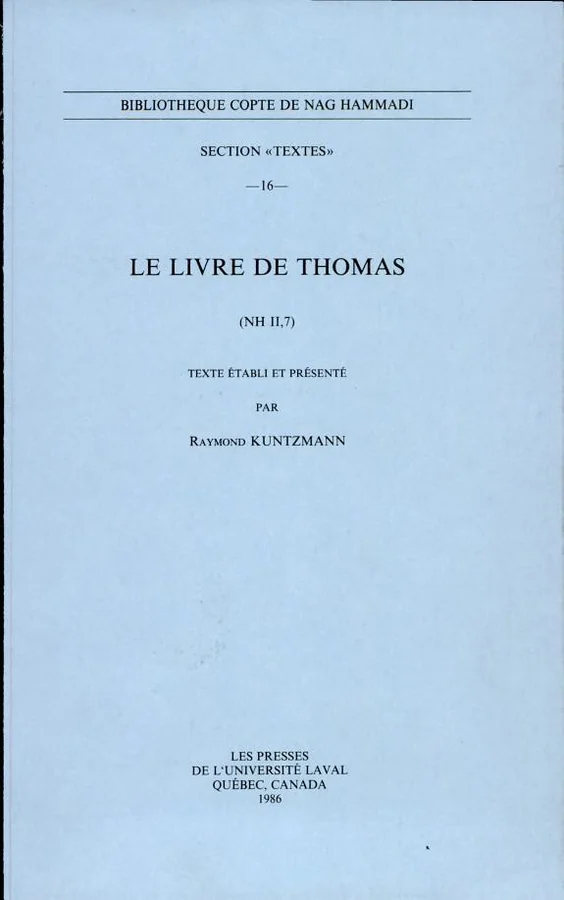
Le livre de Thomas
 72
72

Le livre de Thomas
Kuntzmann's 'Le livre de Thomas' is not for the casual browser; it demands sustained attention. The author demonstrates an impressive command of esoteric lore, particularly in his detailed exegesis of symbolic systems. His interpretation of the 'Great Work' as an internal, spiritual endeavor rather than solely an external alchemical pursuit offers a compelling perspective. However, the text occasionally suffers from an overly dense prose style, making certain conceptual leaps challenging without prior familiarity with the referenced traditions. A particularly striking section details the symbolic journey through the spheres, which, while intricate, provides a clear, albeit demanding, cartography of the soul's potential path. The book's strength lies in its systematic, almost academic, approach to mystical concepts. While some readers might find the lack of direct, personal revelation a drawback, its rigorous exploration of established esoteric frameworks is its definitive merit. It serves as a dense, scholarly addition to the library of Western esotericism.
📝 Description
72
Raymond Kuntzmann's 'Le livre de Thomas,' published in 1986, decodes hidden meanings in religious and philosophical traditions.
Raymond Kuntzmann's 'Le livre de Thomas' (1986) is not a single doctrine but a synthesis of disparate mystical currents. Kuntzmann guides readers to actively engage with the material, focusing on systematic interpretation of symbolic language and allegory. The book aims to reveal spiritual truths obscured by literal readings of sacred texts, encouraging a deeper understanding of religious traditions.
This work targets dedicated students of esotericism interested in comparative mysticism and the philosophical roots of spiritual paths. It is for those who wish to move beyond surface-level interpretations and explore symbolic dimensions. Readers who value rigorous intellectual inquiry into occult philosophy and can handle dense conceptual frameworks will find substantial content. The book serves practitioners and researchers aiming to enhance their hermeneutical tools.
Published in 1986, 'Le livre de Thomas' appeared during a resurgence of interest in esoteric studies. This period saw attempts to synthesize Eastern and Western mystical traditions. Kuntzmann's work engages with figures like Manly P. Hall, known for his symbolic encyclopedias, and the academic focus on Gnosticism in the late 20th century. The book's detailed symbolic analysis aligns with a broader search for universal patterns across diverse religious expressions.
💡 Why Read This Book?
• Gain a structured understanding of the 'Great Work' beyond alchemy, appreciating it as a metaphor for personal spiritual transformation as detailed in Kuntzmann's systematic analysis. • Explore the symbolic architecture of the 'Tree of Life' as presented in the book, learning how its structure can be interpreted as a map for spiritual development. • Understand the principle of 'correspondences' as a method for interpreting the interconnectedness of the cosmos and human experience, as Kuntzmann applies it to various traditions.
⭐ Reader Reviews
Honest opinions from readers who have explored this book.
❓ Frequently Asked Questions
What is the primary focus of Raymond Kuntzmann's 'Le livre de Thomas'?
'Le livre de Thomas' focuses on unlocking hidden meanings within religious and philosophical traditions through symbolic and allegorical interpretation, encouraging active engagement with esoteric concepts.
When was 'Le livre de Thomas' first published?
The original publication date for 'Le livre de Thomas' by Raymond Kuntzmann was 1986.
What esoteric traditions does 'Le livre de Thomas' draw upon?
The book synthesizes various mystical currents, often referencing concepts found in Kabbalah (like the 'Tree of Life') and general alchemical symbolism, reinterpreting them through a spiritual lens.
Is 'Le livre de Thomas' suitable for beginners in esotericism?
While accessible to those with a serious interest, the book's dense conceptual framework and systematic approach make it more suited for dedicated students rather than absolute beginners.
What is the 'Great Work' as discussed in 'Le livre de Thomas'?
In 'Le livre de Thomas,' the 'Great Work' is presented primarily as a metaphor for spiritual transformation and self-realization, extending beyond purely alchemical interpretations.
What does Kuntzmann mean by 'correspondences'?
Kuntzmann uses 'correspondences' to denote the esoteric principle that macrocosmic patterns (like celestial movements) are reflected in the microcosm of human experience and spiritual states.
🔮 Key Themes & Symbolism
The Inner Light
A core concept in 'Le livre de Thomas' is the 'Inner Light' or 'Spark Divine,' representing the inherent spiritual essence within each individual. Kuntzmann explores this concept as the fundamental reality that connects humanity to the divine. The book guides readers to recognize and cultivate this internal luminescence, suggesting that its illumination is key to spiritual awakening and self-understanding. This theme is central to the text's emphasis on introspection and the discovery of sacredness within oneself, transcending external dogma.
The Great Work as Spiritual Alchemy
Raymond Kuntzmann reinterprets the traditional 'Great Work' (Main work) not merely as a physical or chemical process but as a profound metaphor for spiritual evolution. 'Le livre de Thomas' details this internal transformation, emphasizing the purification of the soul and the integration of higher consciousness. The text outlines stages analogous to alchemical processes, focusing on the refinement of the practitioner's inner being towards a state of spiritual perfection and union with the divine.
Symbolic Cartography of the Soul
The work utilizes complex symbolic systems, notably the 'Tree of Life,' as a framework for understanding the structure of consciousness and the path of spiritual ascent. Kuntzmann employs these symbols as a 'cartography,' mapping the journey from the material world to higher spiritual realms. This symbolic language provides a visual and conceptual guide for practitioners seeking to work through the inner planes and comprehend the interconnectedness of the manifest and unmanifest universes.
The Principle of Correspondences
Central to Kuntzmann's hermeneutic is the principle of 'correspondences.' This doctrine posits that patterns observed in the cosmos, nature, and human life are reflections of each other and of underlying divine order. 'Le livre de Thomas' applies this principle to interpret sacred texts and spiritual phenomena, suggesting that understanding these linkages is crucial for perceiving the unity of all things and for comprehending the subtle influences that shape existence.
💬 Memorable Quotes
Direct passages from the work, attributed to the author.
“Each sphere represents a stage of realization, a veil to be lifted.”
— This interpretation of symbolic journeys suggests that the various levels or spheres discussed in the book are not static locations but progressive states of consciousness to be attained through spiritual effort.
“True alchemy is the transmutation of the self, not of base metals.”
— This captures Kuntzmann's focus on the 'Great Work' as an internal, spiritual process of self-refinement and enlightenment, distinct from purely material alchemical pursuits.
“Wisdom lies not in accumulation, but in the recognition of inherent unity.”
— This concept underscores the book's philosophical underpinnings, suggesting that spiritual understanding comes from perceiving interconnectedness rather than merely gathering knowledge.
💡 Key Ideas
Editorial paraphrase of the work's core concepts — not direct quotes.
The divine spark within is the true philosopher's stone.
This paraphrased concept highlights Kuntzmann's view of the 'Inner Light' as the ultimate agent of spiritual transformation, equating it to the legendary alchemical substance capable of transmutation.
The macrocosm mirrors the microcosm; understanding one illuminates the other.
This paraphrase captures the principle of 'correspondences,' emphasizing the interconnectedness between the universal order and the individual human being, a key interpretive tool in the book.
🌙 Esoteric Significance
Tradition
This work draws heavily from the Western Esoteric Tradition, particularly Hermeticism and Kabbalistic thought, reinterpreting their core concepts through a lens of spiritual psychology. Kuntzmann synthesizes these elements, presenting a unified vision of spiritual ascent. It departs from purely dogmatic interpretations by emphasizing personal gnosis and the symbolic language of the soul's journey, aligning with a tradition that values direct experience and symbolic understanding over creed.
Symbolism
Key symbols include the 'Tree of Life,' used as a map of consciousness and spiritual progression, and the 'Great Work,' representing the process of inner transformation and self-realization. The 'Inner Light' or 'Spark Divine' is another crucial motif, symbolizing the inherent spiritual essence within humanity, the ultimate goal of the spiritual quest.
Modern Relevance
Contemporary practitioners of Hermeticism and Kabbalah may find Kuntzmann's systematic approach to symbolism and spiritual development a valuable resource. His work continues to inform discussions on comparative mysticism and the application of esoteric principles to personal growth and consciousness studies, resonating with modern seekers exploring the intersection of psychology and spirituality.
👥 Who Should Read This Book
• Students of Hermeticism and Kabbalah seeking a structured exploration of symbolic systems and their application to spiritual development. • Researchers in comparative mysticism interested in how different esoteric traditions can be synthesized into a cohesive framework for understanding the soul's journey. • Dedicated practitioners of occult philosophy looking for texts that offer a rigorous, intellectual approach to esoteric concepts and symbolic interpretation.
📜 Historical Context
Raymond Kuntzmann’s 'Le livre de Thomas,' published in 1986, emerged during a vibrant period for esoteric and occult studies. The late 20th century saw a resurgence of interest in Gnosticism, Hermeticism, and comparative mysticism, partly fueled by academic discoveries and a counter-cultural legacy seeking alternative spiritual frameworks. Kuntzmann’s work can be situated alongside other contemporary authors who sought to synthesize Western esoteric traditions, such as the prolific Manly P. Hall, whose encyclopedic approach to symbolism influenced many. While Kuntzmann’s text is not a direct response to a specific event, its detailed symbolic exegesis reflects the intellectual currents of its time, which were grappling with integrating ancient wisdom into modern understanding. The burgeoning field of comparative religion also provided fertile ground for texts that explored universal themes across diverse spiritual paths.
📔 Journal Prompts
The concept of the 'Inner Light' as described by Kuntzmann: how does it manifest in your own awareness?
Reflect on the stages of the 'Great Work' presented; which stage most challenges your current understanding?
Consider the 'Tree of Life' as a map: where do you perceive yourself to be on this symbolic journey?
The principle of 'correspondences': identify one instance where a macrocosmic pattern seems to mirror your personal experience.
Analyze a familiar religious or philosophical symbol through the lens of 'Le livre de Thomas' and its symbolic cartography.
🗂️ Glossary
Inner Light / Spark Divine
The inherent spiritual essence or divine spark within each individual, considered the fundamental reality and the source of spiritual illumination.
Great Work (Main work)
In 'Le livre de Thomas,' this refers to the process of spiritual transformation, self-realization, and the purification of the soul towards higher consciousness.
Tree of Life
A symbolic diagram, often associated with Kabbalah, used in the book as a map of consciousness and the path of spiritual ascent.
Correspondences
The esoteric principle that patterns in the cosmos, nature, and human life are interconnected and reflect each other, revealing underlying divine order.
Symbolic Cartography
The use of symbols and symbolic systems to map out spiritual landscapes, consciousness, and the journey of the soul.
Hermeticism
A philosophical and religious tradition based on writings attributed to Hermes Trismegistus, emphasizing divine wisdom, occult sciences, and the unity of the cosmos.
Gnosis
Spiritual knowledge or insight, often understood as direct, intuitive apprehension of divine truths, central to Gnostic traditions and many esoteric paths.
This book appears in 1 collection
🔮 Readers Also Liked
Browse all →




From the “Gospel of Thomas” Collection
View all →

More Free Esoteric History & Biography Books
View all →