Dark Night of the Soul

 71
71

Dark Night of the Soul
Candace Trombetta's "Dark Night of the Soul" presents a compelling, if occasionally dense, continuation of its narrative. The book's strength lies in its ambitious scope, attempting to map a personal spiritual crucible onto a grand cosmic struggle for divine resurrection. Trombetta effectively portrays the disorienting nature of Marisa's dark night, making her internal torment palpable. However, the sheer volume of esoteric concepts and organizational machinations can sometimes overshadow the emotional core of Marisa's journey. A particular passage detailing the 'empyreal quest for the unknowable' offers a glimpse into the book's philosophical underpinnings, but the explanation feels somewhat abstract without deeper character grounding. The author's exploration of Michael's organization, while providing necessary plot momentum, occasionally detracts from the intimate struggle central to the 'dark night' concept. Despite these challenges, the novel offers a unique perspective on spiritual crisis within a speculative fiction framework. It is a work that demands engagement from its reader.
📝 Description
71
Candace Trombetta's 2018 novel 'Dark Night of the Soul' stages a spiritual crisis within a cosmic conflict.
In Candace Trombetta's 'Dark Night of the Soul,' protagonist Marisa undergoes a spiritual crisis. This event, known as the 'Dark Night of the Soul,' is depicted as a difficult but necessary stage for divine understanding. The story weaves Marisa's internal struggle into a larger battle against Michael and his organization, who work to protect divine resurrection from new dangers. Her personal transformation is directly tied to events happening on a cosmic scale.
This novel suits readers of contemporary esoteric fiction that combines spiritual allegory with plot-driven action. It will appeal to those interested in themes of spiritual growth, the nature of divinity, and the challenges faced by beings evolving through existence. Readers familiar with the concept of the dark night of the soul from mystical traditions, or those drawn to stories where individual change affects the wider universe, will find resonance here.
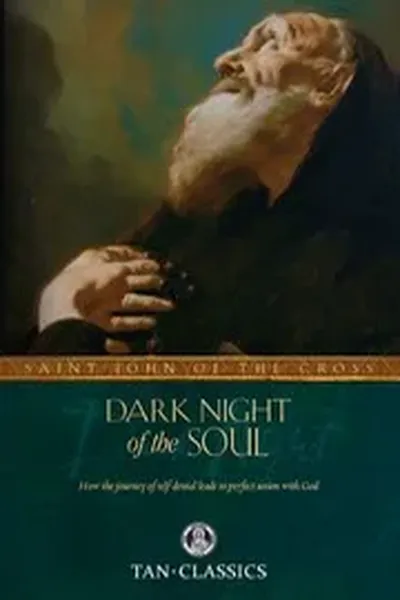
Published in 2018, 'Dark Night of the Soul' applies the 16th-century concept of the dark night of the soul, famously articulated by St. John of the Cross, to a modern fictional cosmology. It enters a cultural moment where esoteric ideas are more frequently found in literature. While the book shares thematic ground with spiritual literature and New Age philosophy, its specific narrative and character focus distinguish it from earlier movements like Theosophy or academic comparative religion studies.
💡 Why Read This Book?
• Gain a unique perspective on the 'Dark Night of the Soul' as an active, cosmically significant quest, moving beyond traditional interpretations of St. John of the Cross. • Understand the mechanics of 'divine resurrection' as depicted in Trombetta's specific fictional cosmology, exploring how individual spiritual crises impact larger universal goals. • Witness the power of 'Ultimate Prayer' as a narrative device that precipitates significant events, offering a concrete example of spiritual invocation within a high-stakes fictional setting.
⭐ Reader Reviews
Honest opinions from readers who have explored this book.
❓ Frequently Asked Questions
What is the 'Dark Night of the Soul' as presented in Candace Trombetta's book?
The book portrays the 'Dark Night of the Soul' as a crucial, albeit painful, stage in the spiritual evolution of enlightened beings. It is depicted as an 'empyreal quest for the unknowable we call God,' a transformative period essential for deeper divine connection.
Who are Michael and his organization in 'Dark Night of the Soul'?
Michael leads an organization of 'highly evolved beings' in the book. Their purpose is to protect the process of 'divine resurrection' and confront unforeseen threats that endanger this cosmic endeavor.
When was Candace Trombetta's 'Dark Night of the Soul' first published?
Candace Trombetta's 'Dark Night of the Soul' was first published on January 22, 2018. This places it within contemporary esoteric literature.
What is the significance of Marisa's 'Ultimate Prayer'?
Marisa's invocation of the 'Ultimate Prayer' is a pivotal moment in the narrative. It acts as a catalyst, setting in motion a chain of calamitous events that drive the plot forward.
What esoteric traditions influence the themes in 'Dark Night of the Soul'?
While drawing on the historical concept of the dark night of the soul, the book integrates elements of speculative fiction and a narrative focused on cosmic conflict and spiritual hierarchy.
Does the book explain the concept of 'divine resurrection' in detail?
The book presents 'divine resurrection' as a central, perilous goal. It is explored through the narrative's unfolding events and the actions of the characters striving to achieve or protect it.
🔮 Key Themes & Symbolism
The Spiritual Crucible
The narrative centers on Marisa's 'Dark Night of the Soul,' presented as a necessary, arduous passage toward divine understanding. This is not passive suffering but an active 'empyreal quest.' The book posits that such trials are integral to the evolution of enlightened beings, pushing them toward a confrontation with the unknowable aspects of the divine. This theme emphasizes transformation through intense spiritual adversity.
Cosmic Order and Resurrection
Beyond individual struggle, the book engages with the concept of 'divine resurrection' as a critical, yet endangered, cosmic objective. Michael and his organization are depicted as guardians of this process, suggesting a structured, hierarchical spiritual reality. The threats they face imply that the balance of creation is precarious, requiring constant vigilance and intervention from evolved entities.
Invocation and Consequence
Marisa's act of evoking the 'Ultimate Prayer' serves as a powerful narrative engine. This highlights the esoteric principle that focused spiritual intent can directly influence the material and energetic planes. The subsequent 'calamitous events' underscore the profound interconnectedness of spiritual actions and their far-reaching, often unexpected, consequences within the story's cosmology.
Evolved Beings and Hierarchy
The presence of Michael and his 'organization of highly evolved beings' introduces a framework of spiritual hierarchy. These entities operate with a specific mission related to cosmic stability and divine resurrection. Their existence suggests a reality where advanced consciousness plays an active role in managing universal affairs, distinct from human experience but intrinsically linked to it.
💬 Memorable Quotes
Direct passages from the work, attributed to the author.
“Marisa suffers a Dark Night of the Soul.”
— This simple statement frames the protagonist's personal ordeal as the core spiritual challenge, linking her internal state to the broader mystical concept and the narrative's unfolding events.
“Michael and his organization of highly evolved beings face new and unforeseen threats.”
— This highlights the external conflict, positioning a group of advanced entities as protectors against emergent dangers, suggesting a cosmic struggle underlying the personal journey.
“Marisa evokes the Ultimate Prayer, setting into motion a succession of calamitous events.”
— This emphasizes the catalytic power of spiritual action, illustrating how focused intent, like an 'Ultimate Prayer,' can trigger significant and often disruptive consequences.
💡 Key Ideas
Editorial paraphrase of the work's core concepts — not direct quotes.
The Dark Night of the Soul is the empyreal quest for the unknowable we call God.
This quote captures the book's central thesis: the profound spiritual crisis is reframed not as abandonment, but as a direct, purposeful pursuit of the ultimate divine mystery.
The fate of divine resurrection remains in peril.
This line immediately establishes the narrative's central conflict and the immense significance of the unfolding events, placing the story within a grand, spiritual drama.
🌙 Esoteric Significance
Tradition
This work draws upon the Christian mystical tradition, specifically the concept of the 'dark night of the soul' as described by St. John of the Cross. However, Trombetta expands this into a broader, more universal esoteric framework, incorporating elements of cosmic struggle and intervention by 'highly evolved beings,' moving beyond a purely Christian interpretation towards a more syncretic, speculative esoteric cosmology.
Symbolism
The 'Dark Night of the Soul' itself functions as a primary symbol, representing the necessary descent into spiritual void or trial for ultimate enlightenment. 'Divine resurrection' symbolizes a state of perfected spiritual existence or cosmic renewal. The 'Ultimate Prayer' acts as a symbol of potent, focused spiritual will capable of altering reality, signifying the power of conscious intent in esoteric practice.
Modern Relevance
Contemporary spiritual seekers and fiction readers exploring themes of personal transformation within larger existential or cosmic contexts find resonance here. The book's approach to integrating profound spiritual crises with narrative action appeals to a modern audience interested in speculative fiction that tackles metaphysical questions, echoing trends seen in contemporary New Age thought and spiritual psychology.
👥 Who Should Read This Book
• Readers of contemporary spiritual fiction seeking narratives that blend personal transformation with high-stakes cosmic plots. • Students of mysticism interested in modern interpretations of classic concepts like the 'dark night of the soul' within fictional contexts. • Fans of speculative fiction that explores spiritual hierarchies and the consequences of intense inner journeys on a wider scale.
📜 Historical Context
Candace Trombetta's "Dark Night of the Soul," published in 2018, arrives in a literary landscape increasingly receptive to esoteric and spiritual narratives. While the concept of the 'dark night' itself is historically anchored in the 16th-century writings of St. John of the Cross, a Spanish mystic, Trombetta transplants this profound spiritual concept into a contemporary fictional framework. The book's exploration of 'highly evolved beings' and cosmic conflict situates it within a lineage of speculative fiction that engages with spiritual hierarchies, a theme present in earlier movements like Theosophy, founded by Helena Blavatsky in the late 19th century. However, Trombetta's work distinguishes itself through its specific narrative focus on a protagonist's internal crisis directly impacting external, cosmically significant events, rather than solely focusing on philosophical exposition or historical accounts common in earlier esoteric literature. Its publication coincides with a broader resurgence of interest in mindfulness, spirituality, and the integration of these themes into popular culture, differentiating it from the more niche reception of esoteric texts in previous decades.
📔 Journal Prompts
The nature of Marisa's 'Dark Night of the Soul' as an 'empyreal quest.'
The role of 'highly evolved beings' in maintaining cosmic balance.
Reflect on the concept of 'divine resurrection' as presented in the narrative.
The impact of invoking the 'Ultimate Prayer' on external events.
Interpreting the threats faced by Michael's organization.
🗂️ Glossary
Dark Night of the Soul
A spiritual concept, originating with St. John of the Cross, describing a period of spiritual desolation and purification necessary for deeper union with the divine. In this book, it's an active quest.
Empyreal Quest
An exploration or journey toward the highest, purest, or most divine realms or understanding. It suggests a spiritual pursuit of ultimate truth or God.
Divine Resurrection
A central, perilous goal within the book's cosmology, referring to a state of renewed or perfected spiritual existence or cosmic order that requires protection.
Highly Evolved Beings
Entities possessing advanced consciousness and spiritual capacity, often organized to safeguard cosmic processes like divine resurrection.
Ultimate Prayer
A potent form of spiritual invocation or focused intention used by Marisa, capable of initiating significant and transformative events within the narrative.
Unforeseen Threats
Emergent dangers or challenges that Michael and his organization must confront, indicating a dynamic and perilous spiritual landscape.
Calmmitous Events
A series of disruptive or disastrous occurrences triggered by spiritual actions, highlighting the powerful consequences of esoteric practices within the story.
This book appears in 1 collection
🔮 Readers Also Liked
Browse all →









From the “Dark Night of the Soul” Collection
View all →







More Free Occult Philosophy Books
View all →