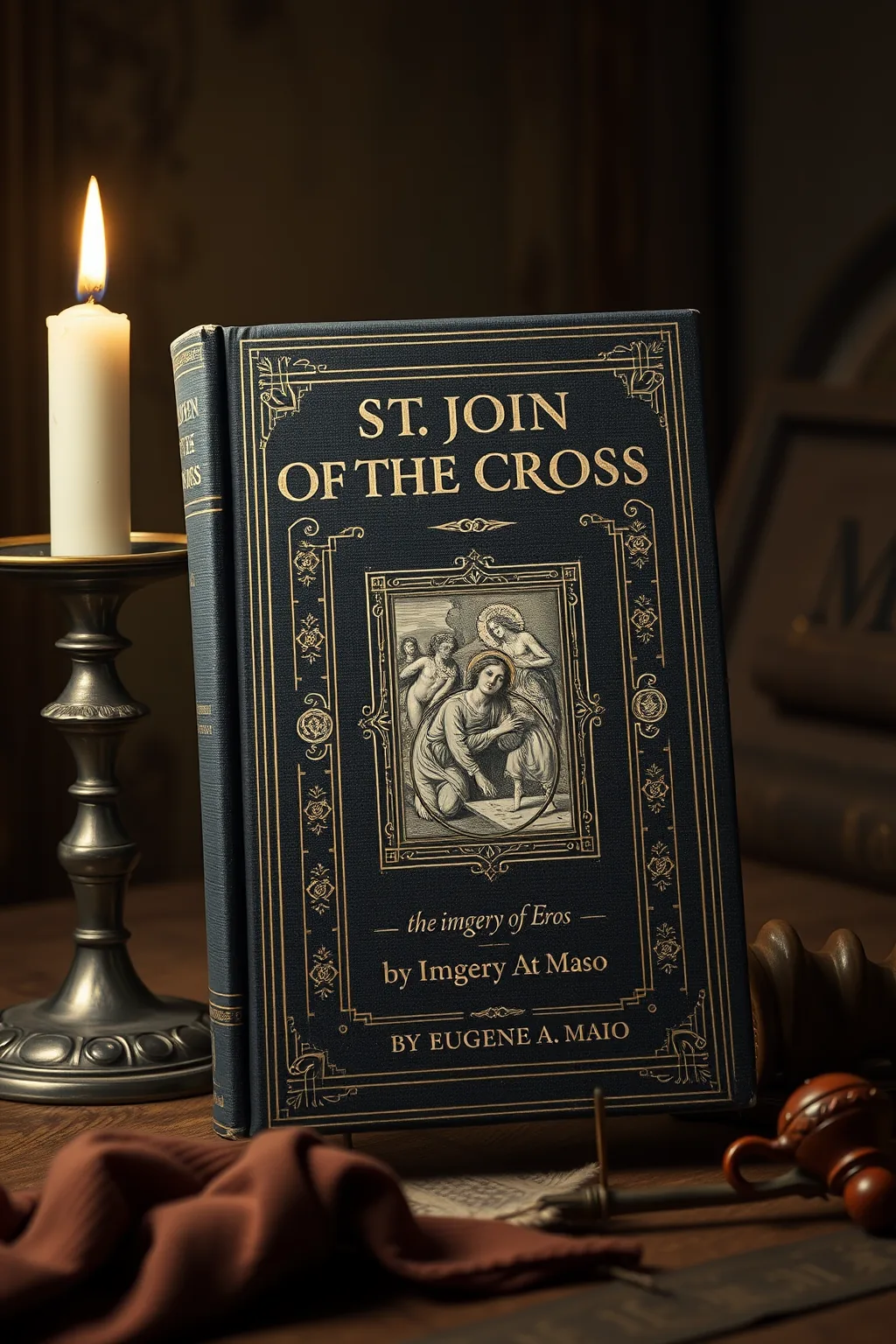
St. John of the Cross: the imagery of Eros
 61
61

St. John of the Cross: the imagery of Eros


Review by Isolde Whitaker (Sacred Texts Editor) — 'St. John of the Cross: The Imagery of Eros' by Eugene A. Maio is a masterful analysis of the mystical and alchemical symbolism found in the works of St. John of the Cross. Maio's deep dive into the Neoplatonic and hermetic themes offers readers a fresh perspective on the divine eros that lies at the heart of St. John's poetry. The book's strength lies in its ability to bridge ancient wisdom with contemporary understanding, making it an invaluable resource for both scholars and spiritual seekers. Maio's insights are particularly enlightening for those interested in the esoteric dimensions of religious mysticism. Highly recommended for anyone seeking a deeper understanding of the hidden knowledge within sacred texts.'
📝 Description
61
Eugene A. Maio's 2003 book examines St. John of the Cross's poetry through the lens of Eros.
Eugene A. Maio's work, 'St. John of the Cross: The Imagery of Eros,' analyzes the esoteric symbolism present in the writings of the 16th-century mystic. Maio connects St. John's poetry to alchemical and Hermetic traditions, suggesting a Neoplatonic framework underlies his mystical themes. The book aims to reveal the concept of divine eros as a driving force in St. John's descriptions of the soul's union with God.
This study positions St. John's work within a contemplative tradition where spiritual experience is articulated through symbolic language. Maio's scholarship aims to uncover these hidden layers for both spiritual seekers and academic readers. The text focuses on the interplay between mystical aspiration and the language used to express it, particularly the concept of love as a divine force.
This book engages with the Western esoteric tradition, particularly its Christian mystical currents. It situates St. John of the Cross within a lineage that includes Neoplatonism and Hermeticism, traditions that often employed symbolic language to describe spiritual realities. The concept of 'eros' here refers not merely to human love, but to a divine, transformative force that draws the soul toward union with the ultimate reality, a theme explored in various mystical paths.
💡 Why Read This Book?
Read 'St. John of the Cross: The Imagery of Eros' to uncover the alchemical and hermetic secrets hidden within the poetry of St. John of the Cross. This book is ideal for seekers of esoteric knowledge, scholars of mysticism, and practitioners of Neoplatonic philosophy. Discover the profound symbolism that reveals the path to divine union, and gain a deeper appreciation for the mystical dimensions of religious texts.
⭐ Reader Reviews
Honest opinions from readers who have explored this book.
❓ Frequently Asked Questions
What is the primary focus of 'St. John of the Cross: The Imagery of Eros'?
The primary focus is the exploration of the mystical and alchemical symbolism in the works of St. John of the Cross, particularly the concept of divine eros.
Who is the intended audience for this book?
The book is intended for scholars of mysticism, spiritual seekers, and practitioners of Neoplatonic philosophy.
How does the book bridge ancient wisdom with modern scholarship?
The book offers a contemporary analysis of ancient esoteric themes, making them accessible and relevant to modern readers.
What kind of insights can readers expect to gain?
Readers can expect to gain insights into the hidden knowledge and symbolism within religious mysticism, particularly the alchemical and hermetic underpinnings of St. John's poetry.
Is this book suitable for beginners in esoteric studies?
While the book is accessible, it is best suited for those with some prior knowledge of mystical and Neoplatonic themes.
🔮 Key Themes & Symbolism
Divine Eros
The central theme of the book is the concept of divine eros, or spiritual love, as depicted in the works of St. John of the Cross. This theme explores the mystical union between the soul and the divine, revealing the alchemical and hermetic underpinnings of this sacred bond.
Neoplatonic Philosophy
The book looks at the Neoplatonic philosophy that influences St. John's poetry, offering readers a deeper understanding of the mystical and esoteric dimensions of this ancient tradition.
Alchemical Symbolism
Maio's analysis uncovers the alchemical symbolism hidden within St. John's writings, providing insights into the transformative power of spiritual alchemy.
💬 Memorable Quotes
Direct passages from the work, attributed to the author.
“In the heart of divine eros lies the secret of spiritual transmutation.”
— Maio highlights the alchemical process that occurs within the soul during its union with the divine.
“Neoplatonic philosophy illuminates the soul's ascent to the divine.”
— Maio's analysis shows how ancient philosophy guides the mystical journey.
💡 Key Ideas
Editorial paraphrase of the work's core concepts — not direct quotes.
The soul's journey to the divine is a path of sacred alchemy.
This line underscores the transformative nature of the mystical union described in St. John's works.
The poetry of St. John reveals the hidden knowledge of the mystical path.
This quote emphasizes the esoteric insights embedded within St. John's writings.
The alchemical symbols in St. John's works point to the soul's transformation.
This line underscores the transformative power of the symbolism found in St. John's poetry.
🌙 Esoteric Significance
Tradition
This book belongs to the Hermetic tradition, which emphasizes the hidden knowledge and transformative power of spiritual alchemy. It also draws on Neoplatonic philosophy, which guides the soul's ascent to the divine.
Symbolism
Key symbols in the book include the alchemical process of transformation, the mystical union between the soul and the divine, and the sacred journey of spiritual ascent. These symbols reveal the hidden knowledge embedded within St. John's works.
Modern Relevance
The book's exploration of divine eros and alchemical symbolism is particularly relevant today, as modern practitioners seek to uncover the esoteric dimensions of religious mysticism. Contemporary scholars and spiritual seekers can benefit from Maio's insights into the hidden knowledge within sacred texts.
👥 Who Should Read This Book
Beginners in esoteric studies may find the book accessible but will benefit from prior knowledge of mystical and Neoplatonic themes. Scholars of mysticism will appreciate the depth of Maio's analysis and the fresh perspectives it offers on St. John's works. Spiritual seekers will find inspiration and guidance in the book's exploration of divine eros and the mystical journey. Practitioners of Neoplatonic philosophy will gain valuable insights into the alchemical and hermetic underpinnings of this ancient tradition.
📜 Historical Context
Written during a time of intense spiritual and intellectual ferment, 'St. John of the Cross: The Imagery of Eros' offers a timely exploration of the mystical and alchemical dimensions of St. John's works. The book was important when written for its ability to bridge ancient wisdom with contemporary scholarship, providing readers with a fresh perspective on the divine eros that lies at the heart of St. John's poetry. Its influence can be seen in the growing interest in esoteric and mystical studies, as well as in the ongoing quest for spiritual enlightenment.
📔 Journal Prompts
Reflect on the concept of divine eros and its significance in your spiritual journey.
Consider how the alchemical process of transformation applies to your personal growth.
Explore the Neoplatonic philosophy that guides the soul's ascent to the divine.
What hidden knowledge do you uncover in the symbolism of St. John's poetry?
How does the mystical union between the soul and the divine resonate with your own experiences?
🗂️ Glossary
Divine Eros
The spiritual love and mystical union between the soul and the divine, as depicted in the works of St. John of the Cross.
Neoplatonic Philosophy
An ancient philosophical tradition that emphasizes the soul's ascent to the divine, often through mystical and esoteric practices.
Alchemical Symbolism
The use of symbols and processes from alchemy to represent spiritual transformation and hidden knowledge.
Mystical Union
The sacred bond between the soul and the divine, often depicted in mystical and esoteric literature.
Spiritual Alchemy
The transformative process of spiritual growth and enlightenment, often represented through alchemical symbols and practices.
This book appears in 5 collections
🔮 Readers Also Liked
Browse all →








From the “Christian Mysticism” Collection
View all →








More Free Alchemy & Hermeticism Books
View all →