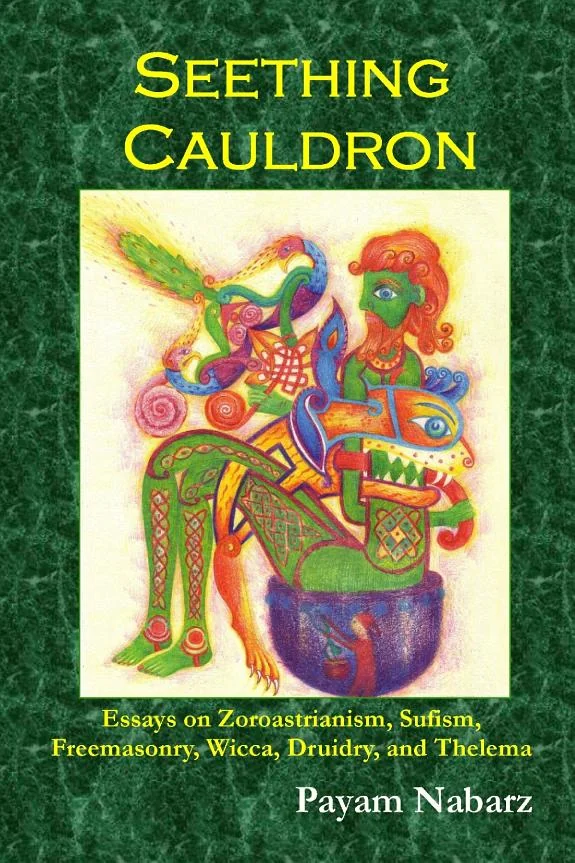
Seething Cauldron
 82
82

Seething Cauldron
Payam Nabarz’s *Seething Cauldron* offers a commendably broad sweep across esoteric traditions, framing them through the potent metaphor of the Sufi 'Deeg-Jush' ritual. The strength of this 2010 collection lies in its accessible comparisons, linking the 'cooking' of the initiate in the cauldron to transformative processes in diverse paths like Wicca and Mithraism. Nabarz’s grounded approach avoids overly academic jargon, making complex ideas palatable. However, the sheer breadth of coverage means that some traditions, such as Zoroastrianism and Thelema, receive relatively brief treatment. A particularly insightful section explores the 'Cauldron of Cerridwen' alongside its Sufi counterpart, highlighting a shared symbolic language of rebirth. While the essays might benefit from deeper dives into specific historical contexts, the book succeeds in its aim of demonstrating the interconnectedness of esoteric thought. *Seething Cauldron* is a useful primer for those exploring the common roots of Western and Eastern spiritual practices.
📝 Description
82
Payam Nabarz's 2010 book, Seething Cauldron, compares esoteric traditions using the Sufi 'Deeg-Jush' ceremony.
Seething Cauldron is a comparative examination of esoteric traditions, published in 2010 by Payam Nabarz. The book uses the Sufi ritual meal, 'Deeg-Jush,' as a central metaphor for spiritual transformation. Nabarz connects shared symbolism and rituals across diverse spiritual paths, presenting a grounded perspective on modern spirituality. He draws links between practices that may appear unrelated on the surface. This work aims to show the underlying unity in spiritual expression. It appeals to those interested in how ancient symbols and rituals continue to appear in contemporary spiritual contexts. Nabarz's approach contrasts with studies focused on single traditions, reflecting a larger movement toward syncretism in spirituality. The book engages with traditions that have seen significant renewal and reinterpretation since the mid-20th century, such as Wicca and Druidry.
Nabarz's comparative method offers a view against more insular studies of individual paths. The work discusses concepts like initiation rituals, the significance of sacred meals, and the symbolism of fire. These are examined across traditions including Zoroastrianism, Mithraism, Thelema, Freemasonry, and Neo-Paganism. The core idea of the 'Seething Cauldron' itself represents alchemical and spiritual change, drawing from both Sufi and Celtic sources. This metaphor guides the reader through the common elements found in these varied spiritual disciplines.
Published in 2010, Seething Cauldron entered a climate of heightened interest in esoteric studies and the blending of spiritual ideas. Nabarz’s work interacts with traditions that experienced considerable resurgence and reevaluation from the mid-20th century onward, including Wicca and Druidry. His comparative perspective stands apart from studies that concentrate on isolated traditions. It mirrors a wider inclination toward syncretism in present-day spirituality, demonstrating how disparate esoteric lineages share common symbolic language and ritual structures.
💡 Why Read This Book?
• Gain a unique perspective on transformation by understanding the 'Seething Cauldron' metaphor, linking Sufi 'Deeg-Jush' rituals to initiatory processes across traditions like Celtic Druidry. • Explore the commonalities between seemingly distinct spiritual systems, such as Zoroastrianism, Mithraism, Freemasonry, and Wicca, as presented in Nabarz's comparative analysis. • Discover the down-to-earth approach to contemporary spirituality through the lens of Persian Magi traditions and their influence on later esoteric movements.
⭐ Reader Reviews
Honest opinions from readers who have explored this book.
❓ Frequently Asked Questions
What is the 'Deeg-Jush' ceremony mentioned in Seething Cauldron?
The 'Deeg-Jush' is a Sufi ritual meal ceremony, which translates to 'Seething Cauldron' or 'Boiling Cauldron'. Payam Nabarz uses it as a central symbol for spiritual transformation and initiation in his 2010 book.
Which esoteric traditions does Payam Nabarz compare in Seething Cauldron?
Nabarz compares Persian Magi, Zoroastrianism, Sufism, Freemasonry, Wicca, Druidry, Neo-Paganism, Mithraism, and Thelema, highlighting shared symbolism and concepts.
What does the 'Cauldron of Cerridwen' symbolize according to the book?
In Seething Cauldron, the Celtic 'Cauldron of Cerridwen' is presented as a symbol of transformation and change, analogous to the Sufi 'Seething Cauldron', where an initiate undergoes a process of spiritual 'cooking'.
When was Seething Cauldron first published?
Seething Cauldron by Payam Nabarz was first published in 2010. The book offers a contemporary look at spirituality.
What is the main theme explored through the 'Seething Cauldron' metaphor?
The primary theme is spiritual transformation and initiation, symbolized by the process of being 'cooked' within a sacred cauldron, a concept explored across various esoteric traditions discussed in the book.
Does Seething Cauldron focus on just one spiritual path?
No, Seething Cauldron is a comparative work. It examines multiple paths including Sufism, Zoroastrianism, Wicca, and Thelema to highlight shared esoteric principles and symbolism.
🔮 Key Themes & Symbolism
Symbolism of Transformation
The central metaphor of the 'Seething Cauldron', derived from the Sufi 'Deeg-Jush' and Celtic 'Cauldron of Cerridwen', represents the alchemical and spiritual process of initiation. Nabarz explores how this symbolism signifies profound personal change, rebirth, and the integration of new spiritual understanding across diverse traditions. The act of being 'cooked' within the cauldron symbolizes the breakdown of the old self and the emergence of a transformed consciousness, a recurring motif in esoteric lore.
Comparative Esotericism
This book excels in drawing parallels between seemingly disparate spiritual systems. Nabarz examines the connective tissue between Persian Magi, Zoroastrianism, Sufism, Freemasonry, Wicca, Druidry, Neo-Paganism, Mithraism, and Thelema. The focus is on identifying universal archetypes and ritualistic structures that underpin these diverse paths, suggesting an underlying unity in humanity's quest for the sacred and the application of esoteric principles.
Ritual and Sacred Meals
Nabarz highlights the significance of ritual meals, exemplified by the 'Deeg-Jush', as potent vehicles for spiritual experience and community building. These ceremonies often involve symbolic consumption and communal participation, fostering a shared sense of transformation. The book analyzes how such practices serve as focal points for initiatory experiences and the transmission of esoteric knowledge within various traditions.
Contemporary Spirituality
Beyond historical comparisons, Nabarz offers a grounded perspective on how these ancient traditions and symbols manifest in contemporary spiritual life. He bridges the gap between historical esoteric currents and modern Neo-Paganism, Wicca, and other New Age movements, demonstrating the enduring relevance of these symbolic languages for seekers today. The work encourages a practical, down-to-earth engagement with spiritual concepts.
💬 Memorable Quotes
Direct passages from the work, attributed to the author.
“Like its Celtic equivalent: the Cauldron of Cerridwen, it symbolizes the transformation and change of the initiate.”
— Here, Nabarz explicitly draws a parallel between Eastern Sufi symbolism and Western Celtic mythology. This highlights his comparative approach, showing how similar archetypes of transformation appear across geographically and culturally distinct spiritual traditions.
“Payam Nabarz takes a down-to-earth look at contemporary spirituality.”
— This statement from the original blurb suggests the book's practical and accessible nature. It implies that Nabarz avoids overly theoretical or obscure discussions, focusing instead on relatable aspects of modern spiritual seeking and practice.
“Essays covering Persian Magi, Zoroastrianism, Sufism, Freemasonry, Wicca, Druidry, Neo-Paganism, Mithraism, and Thelema.”
— This list, drawn from the book's scope, underscores its ambition in comparative esotericism. It signals to the reader the wide range of traditions that Nabarz investigates for commonalities in symbolism and practice.
“The Sufi ritual meal ceremony of 'Deeg-Jush' translates as the 'Seething Cauldron'.”
— This foundational definition grounds the book's central metaphor in a specific ritual practice. It establishes the origin and literal meaning of the term, providing a concrete starting point for exploring its symbolic implications.
💡 Key Ideas
Editorial paraphrase of the work's core concepts — not direct quotes.
The 'Seething Cauldron' symbolizes the transformation and change of the initiate as he/she becomes cooked in the cauldron.
This quote expresses the book's central thesis, directly linking the Sufi 'Deeg-Jush' ritual to the initiatory process. It emphasizes the active, transformative nature of spiritual growth, likening it to a controlled, alchemical process of refinement.
🌙 Esoteric Significance
Tradition
Nabarz's work fits within the broader stream of comparative esotericism and comparative mythology, drawing heavily from traditions that emphasize inner transformation. While explicitly referencing Sufism and Zoroastrianism, its comparative method also aligns with the syncretic tendencies found in movements like Theosophy and later Neo-Paganism, seeking universal truths across diverse spiritual expressions.
Symbolism
The primary symbol is the 'Seething Cauldron' itself, representing alchemical transformation, initiation, and spiritual purification. This links to the symbolism of fire, cooking, and rebirth found in traditions like Mithraism (bull sacrifice, divine meals) and Celtic lore (Cauldron of Cerridwen). The book also implicitly touches upon the symbolism of sacred meals and communal ritual as conduits for spiritual experience.
Modern Relevance
Contemporary practitioners of Wicca, Neo-Paganism, and ceremonial magic find resonance in Nabarz's exploration of shared symbolism and initiatory structures. Thinkers and groups interested in modern shamanism and cross-cultural spiritual practices also draw upon his work. The book's emphasis on the unifying aspects of esoteric traditions remains relevant for those seeking to understand the field of contemporary spirituality.
👥 Who Should Read This Book
• Students of comparative religion interested in identifying common symbolic threads across global spiritual traditions. • Practitioners of Wicca, Neo-Paganism, or other modern esoteric paths seeking historical and symbolic context for their beliefs and rituals. • Individuals exploring Sufism or Zoroastrianism who are curious about their connections to Western esoteric traditions like Freemasonry and Thelema.
📜 Historical Context
Published in 2010, *Seething Cauldron* arrived during a period where academic and popular interest in comparative religion and esoteric studies was robust. Nabarz's work engaged with traditions that had experienced significant revivals and reinterpretations throughout the 20th century, notably Wicca and Druidry, which saw major growth following figures like Gerald Gardner and the resurgence of Neo-Paganism. The book's comparative approach, drawing links between Persian Magi, Zoroastrianism, Sufism, Mithraism, and Western esoteric orders like Freemasonry, positioned it within a scholarly trend examining syncretism and shared archetypes. This contrasted with more narrowly focused studies prevalent earlier in the century. While not directly engaging with contemporaries like Mircea Eliade (whose work on myth and ritual was highly influential), Nabarz’s accessible style offered a bridge for general readers interested in esoteric connections, diverging from purely academic or strictly sectarian approaches.
📔 Journal Prompts
The 'Seething Cauldron' as a symbol of personal transformation.
Connections between the 'Deeg-Jush' ritual and other sacred meals.
Archetypal symbolism shared between Zoroastrianism and Wicca.
The role of initiation in Freemasonry versus Sufism.
Personal interpretation of the 'Cauldron of Cerridwen' metaphor.
🗂️ Glossary
Deeg-Jush
A Sufi ritual meal ceremony, literally translating to 'Seething Cauldron' or 'Boiling Cauldron', used symbolically for spiritual transformation.
Cauldron of Cerridwen
A symbol from Celtic mythology representing inspiration, transformation, and rebirth, paralleled with the Sufi 'Deeg-Jush' in Nabarz's work.
Persian Magi
Ancient priests of Zoroastrianism, often associated with wisdom, astrology, and esoteric knowledge, influencing later esoteric traditions.
Zoroastrianism
One of the world's oldest continuously practiced monotheistic religions, originating in ancient Persia, with significant influence on other religious and esoteric systems.
Sufism
The mystical or esoteric dimension of Islam, focused on seeking divine knowledge and love through direct personal experience.
Mithraism
A mystery religion popular in the Roman Empire, centered on the god Mithras, known for its initiatory rituals and symbolism.
Thelema
A spiritual philosophy and religion developed by Aleister Crowley, emphasizing the principle of 'Do what thou wilt shall be the whole of the Law'.
This book appears in 1 collection
🔮 Readers Also Liked
Browse all →





From the “Thelema” Collection
View all →




More Free Sacred Texts & Gnosticism Books
View all →