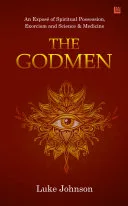
“The” Godmen
 81
81

“The” Godmen
Luke Johnson’s "The" Godmen offers a sharp, unvarnished look at the architects of modern spiritual followings. Rather than rehashing common critiques of cults, Johnson meticulously dissects the *mechanics* of manufactured divinity, focusing on the performative aspects of spiritual leadership. His analysis of how figures leverage societal voids for personal gain, particularly in chapter three's examination of 'sacred debt,' provides a concrete framework for understanding follower commitment. The strength of the book lies in its systematic approach, moving beyond anecdotal evidence to identify repeatable patterns in the rise of these figures. However, its academic tone, while precise, occasionally risks alienating readers seeking more direct emotional engagement with the subject matter. The work’s limitation is a tendency to remain at a high level of abstraction, sometimes obscuring the lived experiences of those most affected. Johnson’s examination of the "divine persona" is particularly insightful, revealing the deliberate construction behind perceived supernatural authority. Ultimately, "The" Godmen serves as an essential critical lens for understanding contemporary spiritual marketplaces.
📝 Description
81
Luke Johnson's "The" Godmen, published in 2021, examines how spiritual leaders gain and keep followers.
Published in 2021, "The" Godmen by Luke Johnson analyzes the construction of belief systems and spiritual authority. The book dissects the psychological, social, and symbolic methods through which charismatic figures, labeled 'godmen,' amass and retain influence. Johnson avoids simple praise, instead offering critical examinations of power structures within religious and spiritual groups. He investigates the specific language, rituals, and community dynamics that allow these figures to shape their followers' views and commitments.
This work is suitable for readers interested in the sociology of religion, belief psychology, and critical analyses of spiritual movements. It appeals to those who question established beliefs and seek to understand the human aspects of spiritual phenomena. Academics in religious studies, anthropology, and sociology will find it a useful resource. The book is particularly relevant for individuals skeptical of contemporary spiritual figures or cult like groups, favoring analytical inquiry over unquestioning devotion.
While the book itself is a contemporary analysis of spiritual authority, it engages with a long tradition of examining charismatic leadership. Max Weber's early 20th-century theories on charismatic authority provide a historical anchor. Johnson updates these ideas for the digital age, considering how global media and the internet impact the spread of spiritual ideologies. This connects to broader discussions within occult philosophy about the nature of influence, the role of the guru, and the mechanisms by which belief is formed and maintained outside conventional religious structures.
💡 Why Read This Book?
• Gain a framework for analyzing spiritual leaders by understanding the concept of the 'divine persona,' as detailed in Johnson's 2021 work, helping you critically assess claims of authority. • Learn about the mechanism of 'sacred debt,' a specific concept elaborated in the book, to recognize how commitment is cultivated through obligation and sacrifice in various movements. • Understand the psychological strategies employed by charismatic figures, drawing from Johnson's analysis of leveraging societal anxieties, to better discern manipulative tactics in spiritual or self-help contexts.
⭐ Reader Reviews
Honest opinions from readers who have explored this book.
❓ Frequently Asked Questions
What is the primary focus of Luke Johnson's "The" Godmen?
The book primarily focuses on the critical analysis of how charismatic spiritual leaders, termed 'godmen,' construct and maintain their authority through psychological, social, and symbolic means, first published in 2021.
Does "The" Godmen offer practical advice for spiritual seekers?
No, "The" Godmen is an analytical and critical text, not a guide for spiritual seeking. It aims to deconstruct the phenomenon of spiritual leadership rather than provide pathways to enlightenment.
What historical figures or movements does "The" Godmen reference?
While not solely focused on historical examples, the work implicitly draws upon sociological concepts like Max Weber's theories of charismatic authority and examines contemporary manifestations of spiritual leadership.
Is "The" Godmen a religious or philosophical text?
It is best categorized as an esoteric or critical social science text. It engages with religious and spiritual phenomena but from an analytical, often skeptical, perspective rather than a devotional one.
What distinguishes "The" Godmen from other books on cults or gurus?
Johnson's work distinguishes itself by focusing on the systematic construction of a 'divine persona' and the mechanics of 'sacred debt,' offering a structural analysis rather than purely psychological or historical accounts.
When was "The" Godmen first published?
Luke Johnson's "The" Godmen was first published in 2021, placing its analysis within the contemporary landscape of spiritual movements and online influence.
🔮 Key Themes & Symbolism
The Divine Persona
This theme explores the deliberate construction of a 'divine persona' by spiritual leaders. Johnson argues that these figures meticulously craft an image of supernatural connection or authority, often through specific rhetoric, curated personal narratives, and symbolic presentation. The work details how this persona functions not as an innate quality but as a performative tool designed to elicit awe, devotion, and unquestioning obedience. It examines the psychological impact of this manufactured divinity on followers, who may perceive the leader as an intermediary to the sacred or a divine being themselves, thereby solidifying the leader's control and influence.
Sacred Debt and Indebtedness
Johnson introduces the concept of 'sacred debt' as a critical mechanism for binding followers to a spiritual leader. This isn't necessarily financial debt but a complex web of perceived obligations accrued through the leader's perceived generosity, spiritual guidance, or the follower's own sacrifices made in the leader's name. The work analyzes how this indebtedness fosters a sense of obligation, making it difficult for followers to leave or question the leader, as doing so would be seen as a betrayal of the 'sacred' relationship. This theme highlights the power dynamics inherent in spiritual economies of exchange and reciprocity.
Discursive Control and Lexical Isolation
A significant aspect of "The" Godmen is its examination of how leaders establish and maintain discursive control. This involves shaping the language and interpretive frameworks used within the group, often creating a unique lexicon that is only fully understood by insiders. Johnson explains how this lexical isolation serves to insulate followers from external criticism or alternative viewpoints, reinforcing the leader's narrative as the sole source of truth. The work details how specific jargon, interpretations of scripture, or symbolic meanings are employed to create a closed system of belief, strengthening group cohesion and leader authority.
Exploitation of Existential Needs
The book critically analyzes how spiritual leaders often exploit fundamental human existential needs – the desire for meaning, belonging, security, and transcendence. Johnson argues that 'godmen' identify and target these universal anxieties and longings, presenting themselves as the unique solution or provider. The work details the process by which followers, seeking solace or purpose, become susceptible to the leader's narrative and demands. This theme underscores the psychological vulnerability exploited by charismatic figures and the role of societal voids in creating fertile ground for such movements.
💬 Memorable Quotes
Direct passages from the work, attributed to the author.
“The divine persona is not an accident of birth, but a meticulously constructed edifice.”
— This interpretation highlights Johnson's central argument that the perceived divinity of spiritual leaders is a product of deliberate performance and strategic self-presentation, rather than inherent spiritual status.
“Language becomes a cage when its terms are dictated by a single voice.”
— This interpretation captures the essence of discursive control, illustrating how a leader can manipulate a group's vocabulary and meaning-making tools to isolate members and enforce a singular worldview.
“Charisma is often the art of filling voids others cannot even acknowledge.”
— This interpretation focuses on the leader's ability to identify and capitalize on unspoken societal or individual anxieties and needs, presenting themselves as the unique solution to deeply felt, often unarticulated, problems.
“Authenticity is the performance that convinces most.”
— This interpretation suggests that for spiritual leaders, the perceived authenticity of their persona and teachings is paramount, and this authenticity is itself a skillfully executed performance designed to gain follower trust.
💡 Key Ideas
Editorial paraphrase of the work's core concepts — not direct quotes.
Sacred debt binds more strongly than any earthly obligation.
This paraphrased concept emphasizes the unique power of spiritual or existential indebtedness, suggesting that the sense of obligation fostered within a spiritual community can be more potent and difficult to break than conventional commitments.
🌙 Esoteric Significance
Tradition
While not strictly adhering to a single esoteric lineage, "The" Godmen engages with themes common in Gnostic and Hermetic thought concerning hidden knowledge, the nature of illusion (maya), and the discernment of true spiritual authority versus false saviors. It critiques the mechanisms by which figures claim divine or enlightened status, echoing Gnostic concerns about archons or false demiurges. The work departs from traditional esoteric texts by focusing on the human psychology and sociological structures behind such claims, rather than solely on metaphysical or cosmological explanations.
Symbolism
The book implicitly dissects the symbols used by 'godmen' to project authority. This includes the deliberate use of iconography that signifies purity, power, or divine connection (e.g., white robes, specific gestures, luminous imagery). It also examines the symbolism of community itself – the creation of an 'enlightened' group distinct from the profane world. The 'sacred debt' functions as a symbolic marker of devotion and commitment, where acts of service or sacrifice become tangible symbols of a follower's spiritual standing and loyalty to the leader.
Modern Relevance
Contemporary thinkers and practitioners in fields ranging from critical psychology to digital sociology draw upon Johnson's analysis. His work is relevant to discussions on influencer culture, online gurus, and the psychology of online communities. Modern schools of comparative religion and secular spirituality studies utilize his framework for deconstructing charismatic leadership. Practitioners of critical thinking and media literacy also find value in understanding the rhetorical and psychological strategies he outlines, applying them to contemporary figures across various domains, not just religious ones.
👥 Who Should Read This Book
• Students of comparative religion and sociology of belief seeking analytical tools to understand spiritual movements and leadership structures. • Skeptical individuals interested in deconstructing charismatic authority and identifying the mechanisms behind cult-like phenomena, particularly those emerging in the 21st century. • Aspiring critical thinkers and researchers of modern influence, who can apply Johnson's concepts of 'divine persona' and 'sacred debt' to analyze contemporary public figures and online communities.
📜 Historical Context
Published in 2021, Luke Johnson's "The" Godmen emerges in an era saturated with readily accessible information and a concurrent rise in polarized belief systems. The work engages with a long intellectual tradition of analyzing charisma and religious authority, notably building upon Max Weber's seminal theories of the early 20th century concerning the routinization of charisma and the sociology of religion. Johnson's analysis, however, is uniquely positioned to address the impact of globalized media and the internet, phenomena that significantly amplify the reach and speed of influence compared to Weber's time. The book implicitly contrasts with the more devotional or uncritical biographies of spiritual figures that were prevalent in earlier decades. Its critical stance aligns with contemporary academic skepticism, positioning it against burgeoning new spiritual movements and self-help gurus that gained traction throughout the late 20th and early 21st centuries.
📔 Journal Prompts
The construction of the 'divine persona' by a specific leader.
Reflect on instances of 'sacred debt' in your own life or observations.
Analyze the specific lexicon used within a group you are part of or observe.
Your personal experience with figures claiming unique spiritual authority.
The role of existential needs in susceptibility to charismatic influence.
🗂️ Glossary
Divine Persona
The carefully crafted image and projected identity of a spiritual leader, designed to convey supernatural authority, enlightenment, or direct connection to the divine.
Sacred Debt
A concept describing the complex web of perceived obligations and indebtedness followers accumulate towards a spiritual leader, often through personal sacrifice or perceived spiritual gifts.
Discursive Control
The process by which a leader or group dictates the language, concepts, and interpretive frameworks used within a community, limiting external influence and reinforcing the leader's narrative.
Lexical Isolation
The creation of a unique vocabulary or set of specialized terms within a group, understood primarily by insiders, which serves to separate them from outside discourse and reinforce group identity.
Existential Needs
Fundamental human psychological requirements such as the need for meaning, belonging, security, and purpose, which can be exploited by charismatic leaders.
Godmen
A term used by Johnson to describe charismatic spiritual leaders who cultivate an image of divine authority and influence over their followers, often leveraging psychological and social mechanisms.
Sociological Mechanisms
The observable patterns, structures, and processes within groups and societies that contribute to the rise and maintenance of leadership and belief systems.