Esoteric Orders and Their Work
 83
83

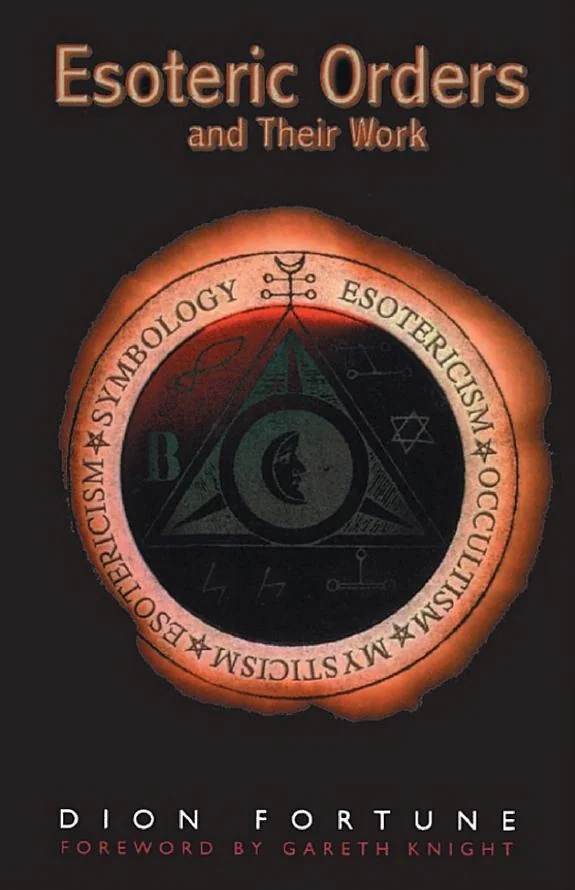
Esoteric Orders and Their Work
Dion Fortune’s "Esoteric Orders and Their Work" offers a refreshingly direct, almost clinical, dissection of what constitutes a genuine initiatory society. Eschewing the romanticized notions often associated with secret orders, Fortune focuses on their function as crucibles for spiritual transformation. Her strength lies in her clear articulation of the initiatory process itself, detailing how symbols, rituals, and teaching are employed to awaken latent capacities. A notable passage discusses the necessity of confronting one's own psychic shadow, a concept often glossed over in less rigorous treatments. However, the book occasionally suffers from its own internal logic; while advocating for clarity, some of the explanations, particularly concerning the hierarchical structures, can feel somewhat abstract without direct experiential reference. The work’s primary limitation is its assumed reader familiarity with occult terminology, which may present a barrier for newcomers. Despite this, it remains a vital text for understanding the mechanics of structured spiritual training. It serves as a pragmatic guide to the architecture of occult fraternities.
📝 Description
83
Dion Fortune published 'Esoteric Orders and Their Work' in 1920, analyzing secret societies for spiritual development.
Dion Fortune's 1920 book, 'Esoteric Orders and Their Work,' examines the structure, purpose, and function of secret societies and fraternal organizations focused on spiritual growth. The work distinguishes genuine initiatory bodies from social clubs, outlining the characteristics of true esoteric orders. Fortune addresses public misconceptions, offering a reasoned analysis of these groups' internal workings and aims. She asserts that these orders require rigorous self-discipline and dedicated study, not casual curiosity.
The book centers on the concept of initiation as a transformative process within these orders. Fortune explains initiation as more than a ceremony; it is a structured path involving specific teachings, symbolic rituals, and guidance from experienced members. This process aims to awaken latent spiritual faculties and facilitate inner evolution. The orders provide a framework for individuals to confront and integrate personal shadow aspects, leading to spiritual growth and higher consciousness. The benefits are internal, focusing on personal development rather than external rewards.
Published in the early 20th century, 'Esoteric Orders and Their Work' emerged from a period of intense interest in Western esotericism. Dion Fortune, a prominent occultist and author, wrote this book within the context of the Hermetic Order of the Golden Dawn tradition, though she also founded her own order, the Fraternity of the Inner Light. The book reflects the era's fascination with secret societies, Freemasonry, and the potential for spiritual advancement through structured occult training. It stands as a practical guide to understanding the mechanisms and aims of organizations dedicated to esoteric knowledge and personal spiritual evolution.
💡 Why Read This Book?
• Gain a clear understanding of the functional differences between social clubs and true initiatory orders, learning the specific criteria Fortune outlines for recognizing genuine esoteric structures. • Comprehend the practical purpose of ritual and symbolism within esoteric training, as detailed in chapters discussing their role in psychological transformation and spiritual awakening. • Appreciate the historical continuity of esoteric traditions, understanding how groups like the Rosicrucians have historically provided frameworks for spiritual development across centuries.
⭐ Reader Reviews
Honest opinions from readers who have explored this book.
❓ Frequently Asked Questions
What distinguishes a true esoteric order from a social club according to Dion Fortune?
Fortune distinguishes true esoteric orders by their focus on rigorous spiritual and psychological transformation through initiation, rather than mere social interaction or intellectual discussion. They possess a structured curriculum and aim for the evolution of consciousness.
What is the role of initiation in Dion Fortune's view of esoteric orders?
Initiation, as described by Fortune, is a transformative process designed to awaken latent spiritual faculties within the candidate. It involves structured teachings, symbolic rituals, and guidance aimed at profound inner change and self-mastery.
Does "Esoteric Orders and Their Work" discuss specific historical esoteric orders?
While not detailing every single order, the work situates esoteric organizations within historical currents, implicitly referencing traditions associated with movements like Rosicrucianism and discussing their enduring influence on spiritual development.
What kind of 'work' do esoteric orders perform, according to the book?
The 'work' involves dedicated study, rigorous self-discipline, ethical development, and the application of esoteric principles to achieve spiritual evolution. It is an internal process of transformation, often facilitated by group structure and guidance.
Is Dion Fortune's "Esoteric Orders and Their Work" suitable for beginners?
The book offers a foundational understanding but assumes some familiarity with occult concepts. Beginners may find certain explanations abstract, but its clarity on the *function* of orders makes it valuable for those serious about the subject.
When was "Esoteric Orders and Their Work" first published?
Dion Fortune's "Esoteric Orders and Their Work" was first published on August 13, 2000, reflecting a later compilation or edition of her writings on the subject.
🔮 Key Themes & Symbolism
The Nature of Initiatory Orders
This theme examines the fundamental definition and purpose of esoteric orders, differentiating them from mundane organizations. Fortune emphasizes their role as training grounds for spiritual evolution, requiring discipline and commitment from members. The work clarifies that genuine orders operate on principles designed to facilitate the awakening of latent spiritual capacities and the attainment of higher consciousness, moving beyond superficial pursuits to address the core of human potential and transformation.
The Process of Initiation
Central to the book is the concept of initiation as a transformative journey. Fortune outlines how these orders utilize symbolic language, ritual, and structured teaching to guide individuals through stages of inner development. This theme explores how initiation serves to integrate the personality, confront psychological shadow aspects, and ultimately lead to a fundamental shift in perception and being. The emphasis is on the internal work required, rather than external validation or mere ceremony.
Historical Lineage and Influence
Fortune situates esoteric orders within a broad historical context, suggesting their continuous presence and influence throughout human history. This theme touches upon how these traditions, often operating discreetly, have preserved and transmitted specific forms of spiritual knowledge. The resilience of these orders against external pressures and internal challenges is highlighted, underscoring their enduring role in providing frameworks for spiritual seekers across different eras and cultures.
Practical Application of Esoteric Principles
Beyond theory, the book stresses the practical application of esoteric teachings in daily life. This theme focuses on how principles like ethical conduct, self-discipline, and service are integral to the work of an esoteric order. Fortune suggests that true spiritual progress is demonstrated through one's actions and inner state, integrating occult science with personal virtue to achieve a balanced and evolved existence.
💬 Memorable Quotes
Direct passages from the work, attributed to the author.
“The work of an esoteric order is the work of spiritual evolution.”
— This statement expresses the book's core argument: that these organizations are not for casual study but are structured environments dedicated to the fundamental transformation and advancement of the individual's spiritual nature.
“Initiation is a process, not merely an event.”
— Fortune emphasizes that the transformative ceremonies within esoteric orders are but gateways to a longer, more arduous path of inner work and self-development that continues long after the initial rite.
“Symbolism is the language of the soul.”
— This highlights the crucial role of symbolic representation within esoteric traditions. Fortune suggests that symbols bypass the rational mind to communicate directly with the deeper, intuitive levels of consciousness, facilitating spiritual understanding.
“The outer must be brought into alignment with the inner.”
— This concept underscores the practical aspect of esoteric training: the necessity of manifesting inner spiritual understanding and ethical principles through one's outward actions and daily life.
“Secrecy is often a necessity for preservation, not for exclusion.”
— Fortune addresses the common perception of secrecy in occult orders, framing it not as a barrier to keep people out, but as a protective measure to safeguard teachings from misunderstanding and misuse.
🌙 Esoteric Significance
Tradition
This work is firmly rooted in the Western Esoteric Tradition, drawing heavily from Hermeticism, Kabbalah, and Neoplatonism, filtered through a modern psychological lens. It aligns with the lineage of practical occultism exemplified by the Hermetic Order of the Golden Dawn, from which Fortune herself had roots. The book departs by integrating Freudian and Jungian psychological concepts, particularly regarding the shadow, into the understanding of initiatory work, offering a more psychologized interpretation than some earlier texts.
Symbolism
Key symbols explored include the Tree of Life (Kabbalah) as a map of consciousness and the spiritual planes, and the concept of the 'Inner Light' as representing divine consciousness or the Higher Self. The process of initiation itself can be seen as a symbolic journey through death and rebirth, mirroring alchemical processes of transformation and purification, leading to the realization of one's true spiritual identity.
Modern Relevance
Fortune's emphasis on psychological integration within esoteric practice continues to resonate. Contemporary occultists and spiritual psychologists often reference her work for its insights into the structure of spiritual training and the importance of confronting the shadow self. Modern esoteric groups, particularly those focused on Western Hermeticism or psychological occultism, find value in her clear articulation of the 'work' involved in initiatory paths.
👥 Who Should Read This Book
['• Students of Western Esotericism: Individuals seeking to understand the organizational structures and foundational principles behind historical and contemporary occult fraternities.', '• Aspiring occultists: Those interested in the practical requirements and psychological preparation necessary for engaging in structured spiritual training and initiatory work.', '• Comparative religion scholars: Researchers examining the development and function of secret societies and their role in transmitting spiritual knowledge across cultures and eras.']
📜 Historical Context
Dion Fortune, a prominent figure in 20th-century British occultism, wrote "Esoteric Orders and Their Work" during a period of significant interest in spiritualism and esoteric philosophy, following theosophical popularization and alongside movements like the Hermetic Order of the Golden Dawn's offshoots. Published posthumously in its current form around 2000, the work reflects earlier writings likely from the 1920s-1940s, a time when figures like Aleister Crowley were also active, though Fortune often maintained a more traditionalist, psychologically focused approach. Unlike Crowley's more flamboyant public persona and the Ordo Templi Orientis, Fortune's work emphasized psychological integration and contained instruction for her own fraternity, the Fraternity of the Inner Light. The book's reception was primarily within esoteric circles, appreciated for its clear exposition of organizational structures and the initiatory process, offering a counterpoint to more mystical or purely ceremonial interpretations prevalent at the time.
📔 Journal Prompts
The essential function of an esoteric order.
Confronting the shadow aspect within initiatory work.
The symbolic language of the soul and its expression.
Personal application of esoteric principles in daily life.
Reflecting on the historical persistence of spiritual lineages.
🗂️ Glossary
Esoteric Order
A structured group dedicated to the spiritual and psychological development of its members through specific teachings, rituals, and initiatory processes, often operating with degrees of secrecy.
Initiation
A formal ceremony or series of ceremonies designed to confer a new degree of knowledge, status, or spiritual awareness upon a candidate within an esoteric order.
Occultism
The study and practice of hidden or secret knowledge, often concerning supernatural, spiritual, or magical phenomena, aiming for spiritual advancement or understanding.
Symbolism
The use of images, signs, or objects to represent abstract ideas or spiritual truths, serving as a key method of teaching and communication within esoteric traditions.
Spiritual Evolution
The process of progressive development of the soul or consciousness towards higher states of being, understanding, and integration, often seen as the primary goal of esoteric work.
The Shadow
In a psychological context, the unconscious, repressed, or disowned aspects of the personality that must be integrated for wholeness and spiritual development.
Western Esoteric Tradition
A broad category encompassing various spiritual and magical philosophies originating in Europe, including Hermeticism, Kabbalah, Alchemy, and Rosicrucianism.
This book appears in 1 collection
🔮 Readers Also Liked
Browse all →









From the “Mystery Schools” Collection
View all →





More Free Occult Philosophy Books
View all →