Gotthold Ephraim Lessing
 81
81

Gotthold Ephraim Lessing
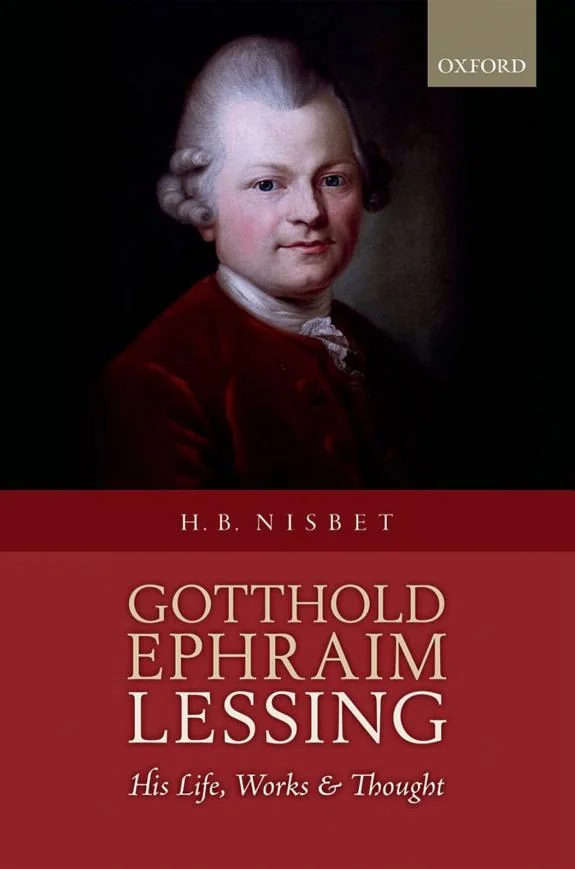
Hugh Barr Nisbet’s "Gotthold Ephraim Lessing" provides a meticulously researched account of the Enlightenment thinker’s life and intellectual output. Nisbet succeeds in placing Lessing within his specific 18th-century European context, a feat that lends considerable weight to the analysis of Lessing’s philosophical and literary contributions. The strength of this work lies in its contextualization, allowing readers to grasp Lessing’s innovations not in a vacuum, but as responses to contemporary debates. A particular point of interest is the exploration of Lessing's "The Education of the Human Race," which Nisbet effectively demonstrates as a seminal text for understanding Lessing’s evolving views on religious progression. However, the book occasionally feels overly dense, with its academic rigor sometimes overshadowing narrative flow, which might deter readers less familiar with the period's dense philosophical discourse. Despite this, Nisbet's study offers a solid scholarly assessment of Lessing's enduring legacy. It is an essential resource for serious students of the Enlightenment.
📝 Description
81
Hugh Barr Nisbet's 1973 study examines Gotthold Ephraim Lessing's place in 18th-century thought.
This volume by Hugh Barr Nisbet analyzes the life and writings of Gotthold Ephraim Lessing, a significant figure in the German Enlightenment. Nisbet places Lessing's work within the intellectual, social, and cultural context of eighteenth-century Europe, detailing his contributions to philosophy, theology, and literary criticism.
The book situates Lessing's ideas within the intellectual currents of the 1700s, a period marked by a move toward rational inquiry and empirical observation away from strict religious doctrine. Lessing actively promoted this shift, advocating for a more critical examination of religious texts and history. He engaged in debates with contemporaries like Voltaire and was part of the emerging Sturm und Drang movement.
Nisbet discusses Lessing's engagement with concepts like the 'religion of reason,' his ideas on historical revelation versus eternal truths, and his support for artistic autonomy. The study also highlights Lessing's role in developing German literary criticism and his attempts to harmonize Enlightenment rationalism with enduring spiritual concerns.
While Lessing himself was a product of Enlightenment rationalism, his work on religious tolerance and the nature of truth touched upon themes that later resonated within esoteric traditions. His questioning of dogma and emphasis on individual understanding over blind faith provided a framework for later movements seeking deeper, more personal spiritual insights. The book's examination of his efforts to reconcile reason with spiritual questions aligns with a broader esoteric interest in bridging the material and the transcendent, moving beyond conventional religious or philosophical boundaries.
💡 Why Read This Book?
• Gain a precise understanding of Gotthold Ephraim Lessing's philosophical arguments regarding the 'religion of reason,' a concept he developed in response to Enlightenment skepticism and traditional theology. • Grasp the specific intellectual currents of 18th-century Europe, such as the tension between rationalism and Pietism, as detailed in Nisbet's analysis of Lessing's engagement with his contemporaries. • Appreciate Lessing's groundbreaking contributions to literary criticism, particularly his theories on dramatic structure as presented in the "Hamburg Dramaturgy" (1767-69), which reshaped theatrical standards.
⭐ Reader Reviews
Honest opinions from readers who have explored this book.
❓ Frequently Asked Questions
When was Gotthold Ephraim Lessing born and when did he live?
Gotthold Ephraim Lessing was born on January 18, 1729, and passed away on February 15, 1781. His life spanned a critical period of the German Enlightenment.
What is the 'religion of reason' as discussed in relation to Lessing?
The 'religion of reason' is a concept Lessing explored, suggesting that true religion is not based on historical revelation but on eternal moral truths discoverable through human reason.
What was Lessing's most famous work regarding education and religion?
Lessing's "The Education of the Human Race" (Die Erziehung des Menschengeschlechts), published in 1780, is his most significant work on the progressive development of religious understanding through human history.
Who was a key intellectual contemporary of Lessing?
Immanuel Kant was a significant intellectual contemporary of Lessing. Both were central figures in the German Enlightenment, though they approached philosophical issues from different perspectives.
What is the 'Hamburg Dramaturgy'?
The "Hamburg Dramaturgy" (Hamburgische Dramaturgie) was a series of critical essays Lessing wrote between 1767 and 1769, analyzing plays and theatrical theory, which significantly influenced German drama.
What was Lessing's stance on historical versus rational truth?
Lessing famously argued for the primacy of eternal truths accessible through reason over the 'accidental truths of history,' suggesting that historical events, while important, cannot serve as the sole basis for religious belief.
🔮 Key Themes & Symbolism
Reason and Revelation
This theme centers on Lessing's attempt to reconcile the claims of historical revelation with the authority of human reason. The work details Lessing's arguments against using specific biblical events as the sole foundation for religious truth, positing instead that eternal, rational truths form the core of genuine spirituality. His "The Education of the Human Race" is a prime example, framing religious development as a gradual process of human understanding, guided by reason over centuries.
Aesthetic Autonomy
Lessing's critical engagement with theatre, particularly in the "Hamburg Dramaturgy" (1767-69), is explored as a crucial development in aesthetic theory. He advocated for dramatic art to be judged by its own internal principles, moving away from rigid classical rules and towards a more naturalistic representation of human emotion and action. This emphasis on art's independent value laid groundwork for later German literary movements.
Religious Tolerance and Enlightenment
The book highlights Lessing's role as a champion of religious tolerance and free inquiry during the Enlightenment. His play "Nathan the Wise" (1779) is presented as a powerful, allegorical plea for coexistence among Judaism, Christianity, and Islam, embodying the era's burgeoning ideals of secularism and intellectual freedom. Lessing challenged dogmatism and censorship, arguing for a more humane and rational approach to faith.
The Philosopher as Critic
Nisbet positions Lessing as a quintessential Enlightenment critic, not only of religious dogma but also of prevailing philosophical and literary conventions. His method involved rigorous analysis, a pursuit of clarity, and a commitment to intellectual honesty. The work examines how Lessing used his philosophical insights to dissect and reform the cultural field of 18th-century Germany.
💬 Memorable Quotes
Direct passages from the work, attributed to the author.
“Why must I abandon my reason in order to believe?”
— This question, representative of Lessing's critical stance, challenges the notion that faith requires the suspension of rational faculties, advocating instead for a reasoned approach to spiritual understanding.
“The education of the human race.”
— This phrase, the title of his influential work, suggests a progressive, historical unfolding of religious and moral understanding, implying that humanity, like an individual, undergoes a developmental process towards enlightenment.
“The greatest service that can be done to the state and to religion is to be able to serve both without being the servant of either.”
— This sentiment highlights Lessing's commitment to intellectual independence and his belief that true service to society and faith comes from critical engagement rather than blind adherence to institutional power.
“The author of the 'Fragments' was so very wrong in one respect: he believed that he was the first to bring about the overthrow of Christianity.”
— This interpretation of Lessing's critique of the 'Fragments' (by Reimarus) reveals his nuanced view on religious reform, suggesting that challenges to established dogma were part of a longer, ongoing intellectual tradition rather than isolated revolutionary acts.
💡 Key Ideas
Editorial paraphrase of the work's core concepts — not direct quotes.
The accidental truths of history can never become the proof of the necessary truths of reason.
This quote expresses Lessing's core argument that empirical historical events, while significant, cannot serve as the ultimate foundation for abstract, rational truths, especially in matters of faith and morality.
🌙 Esoteric Significance
Tradition
While Lessing is primarily a figure of the secular Enlightenment, his work can be seen as engaging with esoteric currents by seeking universal spiritual truths beyond institutionalized religion. His "religion of reason" echoes Hermetic ideals of immanent divine wisdom accessible through intellect, and his emphasis on inner understanding rather than external dogma aligns with Gnostic pursuits of gnosis. He departs from traditional esoteric lineages by grounding his search firmly within rational philosophy and empirical observation.
Symbolism
In "Nathan the Wise," the "Ring Parable" serves as a central symbol, representing the equal validity and shared origin of the three Abrahamic faiths (Judaism, Christianity, Islam). The parable suggests that true faith lies not in the specific outward form but in the moral actions and inner virtues it inspires. Lessing uses this symbol to advocate for religious pluralism and tolerance, a potent motif in esoteric thought seeking unity beneath diversity.
Modern Relevance
Lessing's ideas on the separation of church and state, the importance of critical thinking in religion, and the pursuit of universal ethical principles continue to influence contemporary discourse on secularism and interfaith dialogue. Thinkers and movements focused on humanistic ethics, comparative religion, and rational spirituality often draw upon Lessing's foundational arguments for a faith grounded in reason and morality, making his work relevant to modern philosophical and theological debates.
👥 Who Should Read This Book
• Students of German literature and philosophy: Those studying the Enlightenment will find a detailed analysis of Lessing's key role in shaping German intellectual history and literary criticism. • Scholars of religious history and comparative religion: Readers interested in the evolution of religious thought and the historical dialogues between faith and reason will benefit from Lessing's arguments on revelation and tolerance. • Individuals interested in the history of ideas: Anyone seeking to understand the intellectual foundations of modern secularism, humanism, and critical inquiry will find Lessing's contributions, as presented here, useful.
📜 Historical Context
Gotthold Ephraim Lessing (1729-1781) was a central figure in the German Enlightenment, a period marked by a profound shift towards reason, individualism, and secularism. Nisbet places Lessing's work within this dynamic milieu, showing his engagement with the rationalist philosophies of Wolff and Leibniz, as well as his critical stance against the dogmatic constraints of Pietism and traditional theology. Lessing's career unfolded against a backdrop of intellectual ferment, often in dialogue with contemporaries like Moses Mendelssohn, with whom he debated the nature of religious truth, and in opposition to more conservative theological critics. The mid-18th century saw a growing emphasis on aesthetic theory, a field Lessing significantly advanced with his "Hamburg Dramaturgy" (1767-69), critiquing prevailing French classical models and advocating for a more native German dramatic tradition. His work on religious tolerance, culminating in "Nathan the Wise" (1779), directly addressed social and religious tensions of the era.
📔 Journal Prompts
The Ring Parable's assertion of equal faith validity.
Lessing's critique of historical versus rational truths.
The concept of the 'religion of reason' in practice.
The "Hamburg Dramaturgy" and dramatic innovation.
Lessing's advocacy for religious tolerance.
🗂️ Glossary
Enlightenment
An 18th-century intellectual and cultural movement emphasizing reason, individualism, and skepticism towards traditional authority, particularly in religion and politics.
Pietism
A 17th and 18th-century movement within Lutheranism emphasizing personal piety, emotional experience, and a more direct relationship with God, often critical of purely intellectual approaches to faith.
Rationalism
A philosophical approach that emphasizes reason as the primary source of knowledge and justification, often contrasting with empiricism or faith-based belief.
Revelation
In a religious context, the divine or supernatural disclosure of certain truths or knowledge to humankind, often through scriptures or prophets.
Dogmatism
The tendency to lay down principles as undeniably true, without consideration of evidence or the opinions of others; rigid adherence to a set of beliefs.
Aesthetic
Relating to beauty or the appreciation of beauty; concerned with the principles of artistic taste and judgment.
Secularism
The principle of separating religious institutions from the state and public affairs, and maintaining a neutral stance towards religious beliefs.
This book appears in 1 collection
🔮 Readers Also Liked
Browse all →






From the “Enlightenment” Collection
View all →






More Free Esoteric History & Biography Books
View all →