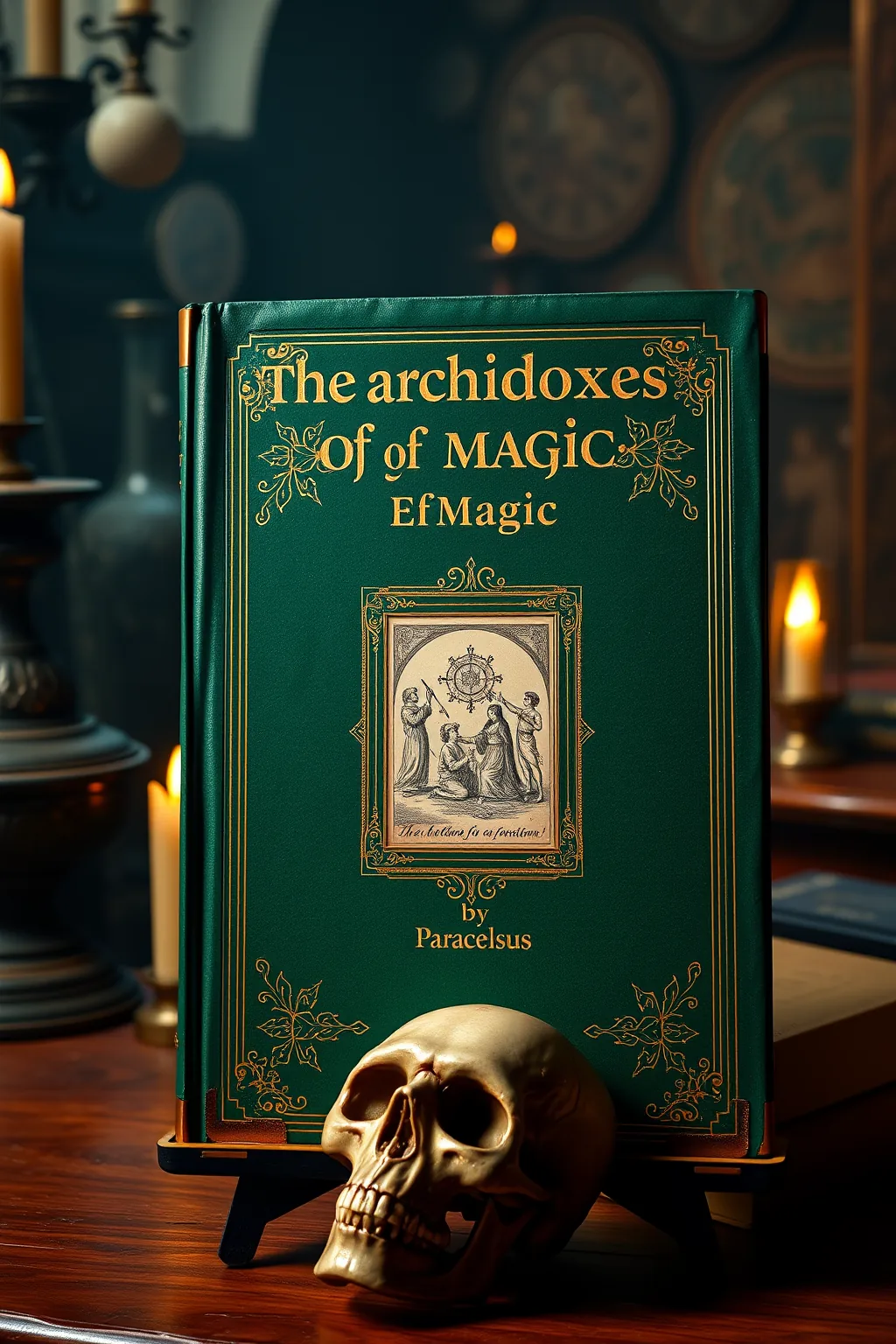
The archidoxes of magic
 75
75

The archidoxes of magic
The Archidoxes of Magic offers a dense, often challenging, but ultimately rewarding glimpse into Paracelsus's unique brand of natural magic. Unlike more straightforward spellbooks, this work demands intellectual engagement, presenting a coherent, albeit esoteric, worldview that intertwines cosmology, physiology, and theology. The strength lies in its systematic approach to understanding hidden forces, particularly its emphasis on the interconnectedness of the human body (microcosm) and the universe (macrocosm). However, the sheer density of his philosophical system, coupled with the often obscure language and the challenge of translating 16th-century concepts, can be a significant hurdle for modern readers. A particularly illuminating section details the preparation of "elixirs" and the invocation of celestial influences, illustrating his practical application of theoretical principles. While not a casual read, its value for understanding the roots of Western esotericism is undeniable.
📝 Description
75
Paracelsus's Archidoxes of Magic outlines a system of ceremonial magic and divine invocation.
The Archidoxes of Magic is a philosophical treatise by Theophrastus von Hohenheim, known as Paracelsus. It details a complex system of ceremonial magic and divine invocation, going beyond a simple grimoire to explain the theories behind what Paracelsus called "natural magic." The book discusses the hidden forces in the cosmos and the human body, suggesting that understanding these connections allows for influence over the material world and communion with spiritual beings. It includes specific rituals, incantations, and instructions for preparing magical substances, all rooted in Paracelsus's unique views on nature and medicine.
This work is geared towards dedicated students of Western esotericism, particularly those interested in Paracelsus's writings and their impact on later magical thought. Practitioners looking to grasp the theoretical basis of older magical methods, researchers of Renaissance alchemy and occult philosophy, and anyone intrigued by the links between medicine, theology, and magic will find it relevant. A prior grasp of Hermetic principles and alchemical symbolism would greatly assist the reader's comprehension.
Paracelsus, a physician and alchemist of the 16th century, developed ideas that challenged contemporary medical and philosophical thought. The Archidoxes of Magic, reflecting the Renaissance's renewed interest in Neoplatonic and Hermetic texts, sits within a tradition that blurred the lines between natural philosophy, divine knowledge, and observation. His work arose during a time when alchemical investigations were common, and the separation between natural science and the occult was not strictly defined.
💡 Why Read This Book?
• Gain insight into Paracelsus's concept of "natural magic," understanding how he believed inherent cosmic forces could be harnessed through specific rituals and sympathetic correspondences. • Explore the Paracelsian doctrine of the "microcosm" and "macrocosm," learning how the human being is seen as a reflection of the universe and vice-versa. • Discover the principles behind the preparation of "elixirs" and the invocation of celestial influences, as detailed in the text, offering a practical, albeit theoretical, glimpse into Renaissance magical practices.
⭐ Reader Reviews
Honest opinions from readers who have explored this book.
❓ Frequently Asked Questions
What is the core philosophy behind Paracelsus's Archidoxes of Magic?
The Archidoxes is founded on Paracelsus's concept of "natural magic," which posits that by understanding the hidden forces (Archei) within nature and their correspondence with the human microcosm, one can influence the material world and achieve divine communion.
When was the Archidoxes of Magic first published?
While Paracelsus lived in the first half of the 16th century, the Archidoxes of Magic saw its first known publication in 1577, several decades after his death.
Who was Paracelsus and why is he significant?
Paracelsus (Theophrastus von Hohenheim) was a 16th-century Swiss physician, alchemist, and astrologer. He is significant for challenging traditional medicine, pioneering the use of chemical remedies, and integrating spiritual and natural philosophy in his esoteric writings.
What is the relationship between the microcosm and macrocosm in the Archidoxes?
The Archidoxes posits a profound connection between the microcosm (the human being) and the macrocosm (the universe). Understanding this mirroring allows the practitioner to exert influence and engage in sympathetic magic.
Is the Archidoxes of Magic a practical guide for performing spells?
While it describes rituals and preparations, the Archidoxes is more of a philosophical and theoretical treatise. It outlines the principles of Paracelsian magic, requiring significant study and understanding rather than being a simple spellbook.
What are 'Archei' according to Paracelsus in this work?
Archei, in Paracelsian philosophy as presented in the Archidoxes, are the hidden, fundamental principles or forces that constitute and govern all things in nature, which the magician seeks to apprehend.
🔮 Key Themes & Symbolism
Natural Magic and Divine Will
The Archidoxes frames magic not as demonic pacts but as "natural magic" – the art of understanding and manipulating the inherent forces within creation. Paracelsus stresses that these operations are only effective when aligned with divine will, emphasizing that true magical power stems from God and nature's principles, not from illicit forces. This perspective sought to legitimize magical practices within a Christian framework, distinguishing his work from more overtly occult or forbidden arts prevalent at the time.
The Microcosm-Macrocosm Correspondence
A central tenet of the Archidoxes is the intricate relationship between the microcosm (human being) and the macrocosm (the universe). Paracelsus believed that the human body, with its humors, elements, and celestial influences, perfectly mirrors the structure and workings of the greater cosmos. This doctrine of correspondence is fundamental to his magical system, suggesting that by understanding and acting upon the principles within oneself, one can affect and be affected by the universal forces.
The Doctrine of Archei
Paracelsus introduces the concept of "Archei" as the fundamental, hidden essences or principles that underlie all phenomena in nature. These are the true forces and powers within elements, plants, animals, and celestial bodies. The Archidoxes aims to reveal these Archei and explain how a magician, through precise rituals, sympathetic preparations, and focused intention, can draw upon these hidden powers for healing, influence, and spiritual understanding.
Alchemical Preparation and Invocation
The text details specific methods for preparing "elixirs" and other substances, imbued with the Archei of their natural sources and celestial influences. It outlines procedures for invoking spiritual intelligences or forces associated with planets and elements. These practices are not arbitrary but are presented as systematic applications of natural laws, designed to bridge the gap between the material and spiritual realms and facilitate the magician's work.
💬 Memorable Quotes
Direct passages from the work, attributed to the author.
“The art of magic is the perfection of nature.”
— This statement expresses Paracelsus's view of magic as an advanced form of natural science, not separate from God's creation but a deeper understanding and application of its inherent laws and forces.
“The true magician is a physician of the spirit, soul, and body.”
— This reflects Paracelsus's holistic approach, where magic is intrinsically linked to healing and the well-being of the entire human being, encompassing spiritual, mental, and physical health.
“All things are created by God, and nothing is truly evil.”
— This highlights Paracelsus's theological grounding. He viewed all natural phenomena, even those perceived as negative, as part of God's creation and subject to divine order, which the natural magician seeks to understand and work with.
“The stars incline, they do not compel.”
— This acknowledges the influence of celestial bodies (as studied in astrology) but asserts human free will and divine grace, meaning astrological influences are tendencies, not deterministic forces, allowing for magical intervention.
💡 Key Ideas
Editorial paraphrase of the work's core concepts — not direct quotes.
As above, so below, and as within, so without.
This is a paraphrased interpretation of the Hermetic principle of correspondence, central to the Archidoxes, highlighting the interconnectedness between the celestial (above), terrestrial (below), internal human experience (within), and external manifestation (without).
🌙 Esoteric Significance
Tradition
The Archidoxes is a cornerstone text of Western Hermeticism, deeply influenced by Neoplatonic ideas of divine emanation and correspondence. It represents a crucial bridge between medieval alchemy and the more systematized magical philosophies of the post-Renaissance era. Paracelsus's unique synthesis, blending Christian theology with natural philosophy and empirical observation, departs from purely scholastic or Gnostic traditions by grounding his magic firmly in the observable (though hidden) forces of nature.
Symbolism
Key symbols include the "Microcosm" and "Macrocosm," representing the human being as a universe in miniature and vice-versa, emphasizing sympathetic magic. The "Archei" represent the hidden vital forces or essences within all things, akin to alchemical principles or elemental spirits. Celestial bodies and planetary influences are also significant, acting as conduits for divine power and natural forces that the magician seeks to channel.
Modern Relevance
Contemporary practitioners of Western esotericism, particularly those in Hermetic and alchemical circles, continue to draw upon Paracelsus's foundational concepts. His ideas on the interconnectedness of all things and the power of natural forces influence modern holistic healing practices, ceremonial magic, and philosophical explorations of consciousness. Thinkers and groups studying Renaissance occultism frequently reference his work as a primary source.
👥 Who Should Read This Book
• Students of Western Esotericism: Those seeking to understand the lineage of magical thought from antiquity through the Renaissance will find the Archidoxes essential for grasping Paracelsus's influential contributions. • Aspiring Alchemists and Natural Magicians: Individuals interested in the theoretical underpinnings of alchemical processes and the practical (though complex) application of natural forces in magic will benefit from its detailed philosophical framework. • Historians of Medicine and Philosophy: Researchers examining the evolution of medical theory, the relationship between science and magic in the Renaissance, and the development of occult philosophy will find valuable primary source material.
📜 Historical Context
Paracelsus’s Archidoxes of Magic emerged from the fertile intellectual soil of the 16th-century Renaissance, a period characterized by a resurgence of interest in Hermeticism, Neoplatonism, and ancient magical traditions. Active during the first half of the 1500s, Paracelsus himself was a controversial figure, challenging the Galenic medicine then dominant in universities and advocating for a more empirical and chemically-based approach to healing. His work synthesized alchemical lore, Christian theology, and his own theories of natural philosophy. The Archidoxes, first published in its entirety in 1577, reflected a worldview where the spiritual and material realms were intimately connected, a perspective shared by contemporaries like Heinrich Cornelius Agrippa, though Paracelsus’s focus on "natural magic" and its application in healing set him apart. His ideas were often met with suspicion by both medical guilds and religious authorities, contributing to his reputation as a radical thinker.
📔 Journal Prompts
The concept of "natural magic" as the perfection of nature: how does this contrast with other forms of magic?
Reflect on the "microcosm-macrocosm" correspondence: identify three personal traits or states and consider their potential universal parallels.
Paracelsus's "Archei": what hidden forces or essential principles do you perceive governing aspects of your daily life?
The role of "divine will" in magical operations: how might intention and faith shape perceived outcomes?
Consider the preparation of "elixirs" or "talismans": what modern-day objects or practices embody a similar principle of imbuing items with specific energies or intentions?
🗂️ Glossary
Archidoxes
The title itself, derived from Greek 'archē' (principle, beginning) and 'doxa' (opinion, glory), suggesting foundational principles or doctrines of magic.
Natural Magic
Paracelsus's term for the art of understanding and harnessing the inherent, hidden forces within the natural world, operating in accordance with divine and natural laws.
Microcosm
The human being, considered as a miniature or reflection of the larger universe (macrocosm), possessing similar structures and forces.
Macrocosm
The universe or the greater cosmos, understood as a unified whole governed by divine and natural laws, which is mirrored in the microcosm.
Archei
The fundamental, hidden principles, essences, or forces that constitute and animate all things in nature, which the magician seeks to understand and utilize.
Elixir
In the context of the Archidoxes, a prepared substance, often through alchemical processes, designed to contain and transmit specific natural or celestial forces for healing or magical purposes.
Invocation
The act of calling upon or summoning spiritual intelligences, divine powers, or specific natural forces, as detailed in magical rituals.
🔮 Readers Also Liked
Browse all →







More by Paracelsus
All books →





More Free Alchemy & Hermeticism Books
View all →