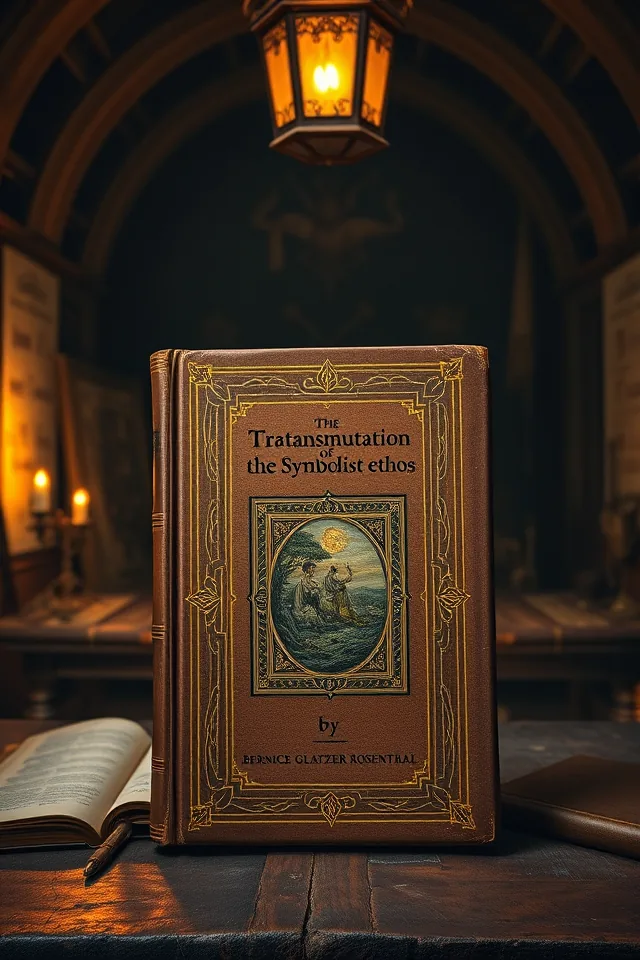
The transmutation of the symbolist ethos
 61
61

The transmutation of the symbolist ethos


In 'The Transmutation of the Symbolist Ethos,' Bernice Glatzer Rosenthal masterfully dissects the esoteric currents running through Russian literature, providing an invaluable resource for both scholars and spiritual seekers. Rosenthal's deep dive into the symbolist ethos reveals how authors like Andrei Bely and Alexander Blok used hidden symbols to convey profound truths. This book is a must-read for anyone interested in the intersection of literature and the occult, offering a unique perspective on the hermetic traditions that shaped Russian thought. Rosenthal's scholarly rigor and evocative prose make this work a standout in the field of esoteric studies.
📝 Description
61
Bernice Glatzer Rosenthal's 2001 study examines how Russian symbolism became a spiritual path.
In 'The Transmutation of the Symbolist Ethos,' Bernice Glatzer Rosenthal analyzes the evolution of Russian literary symbolism beyond a mere artistic style. She argues that for many Russian thinkers and artists in the late 19th and early 20th centuries, symbolism became a method for seeking spiritual knowledge and personal transformation. The book traces how this movement was connected to broader esoteric traditions, including mysticism and the occult.
Rosenthal details how writers and artists used symbolic language not just to represent ideas, but to access deeper realities and achieve a form of enlightenment. The work discusses the intellectual and cultural climate that fostered these ideas, showing how symbolist ideals intersected with spiritual quests. It is a study of how aesthetic concerns could merge with a search for hidden truths and the divine.
This book situates Russian symbolism within a wider European turn towards the occult and mystical at the fin de siècle. It connects the movement to hermeticism, theosophy, and other esoteric currents that sought alternative paths to knowledge and spiritual experience outside of established religion and rationalism. Rosenthal shows how these symbolist artists and writers believed that symbols could unlock hidden meanings and facilitate a connection to a transcendent reality, making their art a form of spiritual discipline.
💡 Why Read This Book?
Read 'The Transmutation of the Symbolist Ethos' to uncover the mystical underpinnings of Russian literature. Ideal for seekers of hidden knowledge, scholars of esoteric traditions, and practitioners of the occult, this book offers a rich exploration of symbolism and its transformative power. Rosenthal's insights into the symbolist ethos provide a deeper understanding of the hermetic arts and their influence on literary movements.
⭐ Reader Reviews
Honest opinions from readers who have explored this book.
❓ Frequently Asked Questions
What is the primary focus of 'The Transmutation of the Symbolist Ethos'?
The primary focus is the exploration of esoteric symbolism in Russian literature, particularly how it reflects hermetic and occult traditions.
Who is the intended audience for this book?
The intended audience includes scholars of literature and esotericism, spiritual seekers, and practitioners of the occult.
How does Bernice Glatzer Rosenthal approach the symbolist ethos?
Rosenthal delves into the mystical and hidden meanings behind symbolist literature, revealing the deeper spiritual and philosophical significance of these works.
What makes this book significant in the field of esoteric studies?
This book provides a unique perspective on the hermetic traditions that influenced Russian literature, making it a valuable resource for those interested in the occult.
Is this book suitable for beginners in esoteric studies?
While the book is rich in esoteric insights, it is best suited for those with some prior knowledge of occult and hermetic traditions.
🔮 Key Themes & Symbolism
The Hermetic Tradition
Rosenthal's work studies the hermetic traditions that influenced Russian symbolist literature, revealing the deep spiritual and philosophical underpinnings of these works. The book explores how symbols and metaphors were used to convey hidden knowledge and esoteric wisdom.
Symbolism and Its Transformative Power
The book examines how symbolism can transform both the writer and the reader, providing a pathway to spiritual enlightenment. Rosenthal's analysis of symbolist literature highlights the transformative power of symbols and their ability to reveal deeper truths.
The Esoteric Currents in Russian Literature
Rosenthal uncovers the esoteric currents running through Russian literature, particularly in the works of symbolist authors. The book reveals how these authors used hidden symbols to convey profound spiritual and philosophical ideas, making it a valuable resource for those interested in the occult.
💬 Memorable Quotes
Direct passages from the work, attributed to the author.
“The hermetic traditions provide a collection of symbols and metaphors that reveal hidden knowledge.”
— This highlights the depth of esoteric wisdom embedded in symbolist literature, making it a valuable resource for occult seekers.
“Through symbolism, authors can convey profound ideas that transcend the limitations of language.”
— This underscores the transformative power of symbolism, revealing its ability to reveal deeper truths.
“The occult traditions that influenced Russian literature provide a rich source of esoteric wisdom.”
— This highlights the value of Rosenthal's work in uncovering the mystical underpinnings of Russian literature.
💡 Key Ideas
Editorial paraphrase of the work's core concepts — not direct quotes.
Symbolism is the language of the soul, a means of transcending the limitations of the physical world.
This quote underscores the transformative power of symbolism, revealing its role in spiritual enlightenment.
The symbolist ethos is a gateway to deeper truths, inviting readers to explore the mystical areas of the human psyche.
This quote emphasizes the spiritual and philosophical significance of symbolism in Russian literature.
🌙 Esoteric Significance
Tradition
This book belongs to the hermetic and occult traditions, exploring how these ideas influenced Russian literature. The symbolist ethos is deeply rooted in the hermetic arts, where symbols and metaphors are used to convey hidden knowledge.
Symbolism
Key symbols in this work include the use of alchemical imagery, mystical numbers, and archetypal figures. These symbols are not merely decorative but carry deep esoteric meanings, revealing the spiritual and philosophical underpinnings of the symbolist movement.
Modern Relevance
Today, Rosenthal's insights into the symbolist ethos are relevant for modern practitioners of the occult and those interested in esoteric studies. Her work provides a valuable resource for understanding the hermetic traditions that continue to influence contemporary thought.
👥 Who Should Read This Book
Beginners in esoteric studies will find Rosenthal's work accessible and enlightening, offering a gateway to deeper understanding. Scholars of literature and esotericism will appreciate the depth of her analysis and the unique perspective she provides. Spiritual seekers will be drawn to the transformative power of symbolism and its ability to reveal deeper truths. Practitioners of the occult will find valuable insights into the hermetic traditions that shaped Russian thought, making this book a must-read for anyone interested in the mystical underpinnings of literature.
📜 Historical Context
The late 19th and early 20th centuries in Russia were a time of intellectual ferment, where esoteric and occult ideas flourished. The symbolist movement, with its emphasis on hidden meanings and spiritual enlightenment, was a reaction against the materialism of the time. Rosenthal's book provides a crucial historical context, showing how symbolist literature reflected the spiritual and philosophical currents of the era. This work was important when written for its revelation of the hermetic traditions that shaped Russian thought, and its influence can still be seen in modern esoteric studies.
📔 Journal Prompts
Reflect on how symbolism can transform your understanding of the world around you.
Consider the role of hidden knowledge in your spiritual journey.
Explore the hermetic traditions that influence your thoughts and beliefs.
How does the symbolist ethos resonate with your own spiritual practices?
Write about a symbol that holds deep personal meaning for you.
🗂️ Glossary
Hermetic Tradition
A philosophical and spiritual tradition that emphasizes the study of symbols and metaphors to reveal hidden knowledge.
Symbolist Ethos
The underlying principles and beliefs of the symbolist movement, which emphasize the use of symbols to convey deeper truths.
Occult
A broad term encompassing various esoteric and mystical traditions, often involving the study of hidden knowledge and spiritual practices.
Alchemical Imagery
Symbols and metaphors drawn from alchemy, which often represent spiritual and philosophical transformations.
Esoteric Wisdom
Knowledge that is hidden or revealed only to those who seek it, often involving spiritual and philosophical insights.
This book appears in 3 collections
🔮 Readers Also Liked
Browse all →







From the “Hermeticism” Collection
View all →









More Free Alchemy & Hermeticism Books
View all →