Alchemy

 62
62

Alchemy

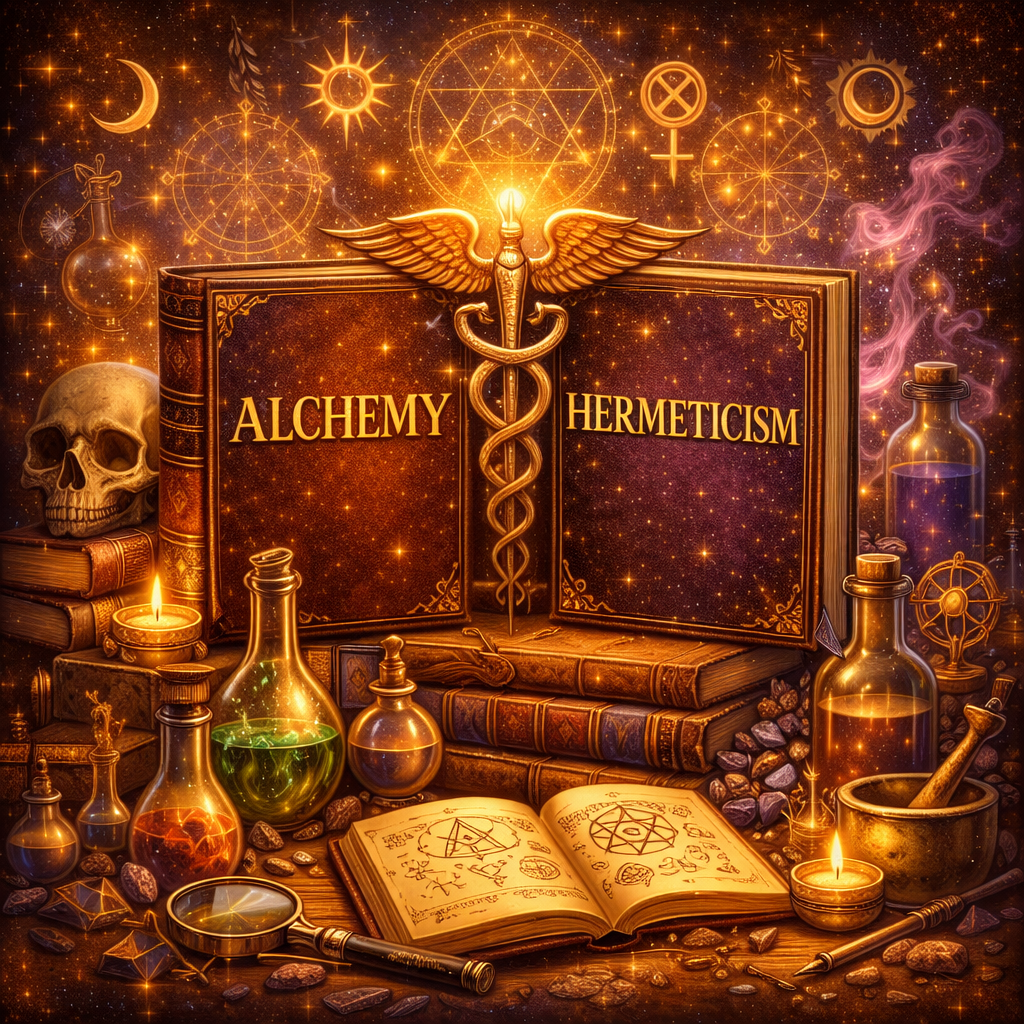

Paracelsus' 'Alchemy' is a profound exploration of the esoteric sciences, offering deep insights into the Hermetic tradition. This work is not merely a guide to chemical processes but a philosophical journey into the nature of transformation. The esoteric insights are both illuminating and thought-provoking, making it an invaluable resource for scholars and practitioners alike. The intended audience includes those with a keen interest in the mystical and occult, as well as those seeking a deeper understanding of the spiritual dimensions of alchemy.
📝 Description
62
Published in the 16th century, Paracelsus's work on alchemy reveals the principles of transmutation and cosmic order.
Paracelsus's treatise examines the practice of alchemy, detailing methods for material transformation and spiritual purification. The text is rich with symbolism, connecting the smallest alchemical operations to the broader structure of the cosmos. It addresses concepts such as the three primes (salt, sulfur, and mercury) and their role in both physical and spiritual processes. The author argues that understanding these principles offers insight into the fundamental nature of reality.
The book guides readers through the philosophical underpinnings of alchemical work. It discusses the importance of the practitioner's inner state and how it relates to external operations. Paracelsus aims to illuminate the hidden connections between the microcosm of the human being and the macrocosm of the universe. This work is intended for those who study esoteric traditions and seek a deeper comprehension of its symbolic language and practical applications.
This book belongs to the Hermetic tradition, which seeks knowledge through symbolic interpretation and practical experimentation. Alchemy, as practiced by figures like Paracelsus, was not merely metallurgy but a philosophical system concerned with the transformation of matter and the soul. It drew upon Neoplatonic ideas, Gnosticism, and early modern science. The goal was often a form of spiritual enlightenment achieved through the manipulation of material substances, reflecting a belief in the divine spark within all things.
💡 Why Read This Book?
Read 'Alchemy' by Paracelsus to gain a profound understanding of the mystical and esoteric arts. Ideal for seekers of hidden knowledge, scholars of Hermetic philosophy, and practitioners of the occult, this book offers a rich tapestry of symbolism and philosophical depth. It is a foundational text for those interested in the transformative power of alchemy, both in its literal and spiritual senses.
⭐ Reader Reviews
Honest opinions from readers who have explored this book.
❓ Frequently Asked Questions
What is the central theme of 'Alchemy' by Paracelsus?
The central theme revolves around the mystical and spiritual dimensions of alchemy, exploring the transformative power of the arcane arts.
Who is the intended audience for this book?
The book is intended for seekers of esoteric wisdom, scholars of Hermetic philosophy, and practitioners of the occult.
What makes this book significant in the field of alchemy?
'Alchemy' by Paracelsus is significant for its deep exploration of the symbolic and philosophical aspects of alchemy, providing insights into the spiritual dimensions of the practice.
Are there practical instructions for alchemical processes?
While the book delves into the philosophical and symbolic aspects of alchemy, it also provides practical instructions that are intertwined with spiritual teachings.
How does 'Alchemy' relate to other works in the Hermetic tradition?
'Alchemy' by Paracelsus is a cornerstone of the Hermetic tradition, offering a unique perspective on the transformative power of alchemy and its spiritual significance.
🔮 Key Themes & Symbolism
Transformation and Transmutation
Paracelsus studies the mystical process of transformation, both in the physical area of alchemy and the spiritual area of the soul. This theme explores the interconnectedness of all things and the potential for personal and cosmic transformation.
Symbolism and Hidden Knowledge
The book is rich in symbolism, offering readers a glimpse into the hidden knowledge of the Hermetic tradition. Each symbol and process is imbued with deeper meaning, inviting readers to uncover the mysteries of the universe.
Philosophical Depth
Paracelsus combines a philosophical range that explores the nature of reality, the interconnectedness of all things, and the spiritual dimensions of alchemy. This theme provides a profound understanding of the esoteric sciences.
💬 Memorable Quotes
Direct passages from the work, attributed to the author.
“Every element holds a secret, waiting to be unlocked.”
— Paracelsus encourages the exploration of hidden knowledge within the natural world.
“The true alchemist seeks not wealth but wisdom.”
— The pursuit of alchemy is about spiritual enlightenment rather than material gain.
“In the crucible of the soul, gold is forged.”
— This metaphor emphasizes the spiritual and transformative process of alchemy.
💡 Key Ideas
Editorial paraphrase of the work's core concepts — not direct quotes.
The alchemist is not making gold but seeking the divine within.
This quote highlights the spiritual dimension of alchemy, emphasizing the search for divine transformation.
Transformation is the key to understanding the universe.
This line underscores the transformative power of alchemy and its philosophical significance.
🌙 Esoteric Significance
Tradition
'Alchemy' by Paracelsus is a core part of the Hermetic tradition, which emphasizes the interconnectedness of all things and the transformative power of the arcane arts. This tradition draws on ancient wisdom and mystical practices to explore the spiritual dimensions of reality.
Symbolism
Key symbols in the book include the philosopher's stone, the alchemical crucible, and the transformative processes of distillation and sublimation. These symbols represent the spiritual journey of purification and enlightenment.
Modern Relevance
Today, 'Alchemy' continues to inspire modern practitioners of the occult and esoteric sciences. It provides a rich source of symbolism and philosophical depth, offering insights into the transformative power of alchemy. Contemporary scholars and seekers of hidden knowledge find it useful for understanding the mystical dimensions of reality.
👥 Who Should Read This Book
Beginners interested in the mystical and occult will find 'Alchemy' an accessible entry point into the Hermetic tradition. Scholars of Hermetic philosophy will appreciate the book's deep exploration of symbolic and philosophical themes. Spiritual seekers will be drawn to the transformative power of alchemy and its spiritual significance. Practitioners of the occult will find practical instructions and esoteric insights that enrich their practice.
📜 Historical Context
Written during the Renaissance, Paracelsus' 'Alchemy' emerged in an era of scientific and philosophical discovery. This period saw a renewed interest in the esoteric sciences, blending ancient Hermetic traditions with new scientific insights. The book's influence extended beyond alchemy, impacting fields such as medicine and philosophy. It remains a foundational text for those seeking to understand the mystical and occult dimensions of the Renaissance.
📔 Journal Prompts
How does the concept of transformation in alchemy relate to your personal spiritual journey?
What symbols in 'Alchemy' resonate with you the most and why?
Reflect on the interconnectedness of all things as described by Paracelsus.
How does the pursuit of alchemy differ from material gain, and what spiritual insights does it offer?
Consider the philosophical depth of 'Alchemy' and its relevance to modern esoteric practices.
🗂️ Glossary
Philosopher's Stone
A legendary alchemical substance said to transform base metals into gold and grant immortality.
Hermetic Tradition
A body of writings attributed to Hermes Trismegistus, emphasizing the interconnectedness of all things and the transformative power of the arcane arts.
Alchemical Crucible
A vessel used in alchemy for heating or containing chemical reactions, symbolizing the transformative process.
Sublimation
An alchemical process where a substance is transformed from a solid to a gas, bypassing the liquid state, symbolizing spiritual purification.
Distillation
A process of purifying a liquid by heating it to create vapor, then condensing the vapor back into a liquid, symbolizing the refinement of the soul.
This book appears in 3 collections
🔮 Readers Also Liked
Browse all →









More by Paracelsus
All books →





From the “Hermeticism” Collection
View all →








More Free Alchemy & Hermeticism Books
View all →