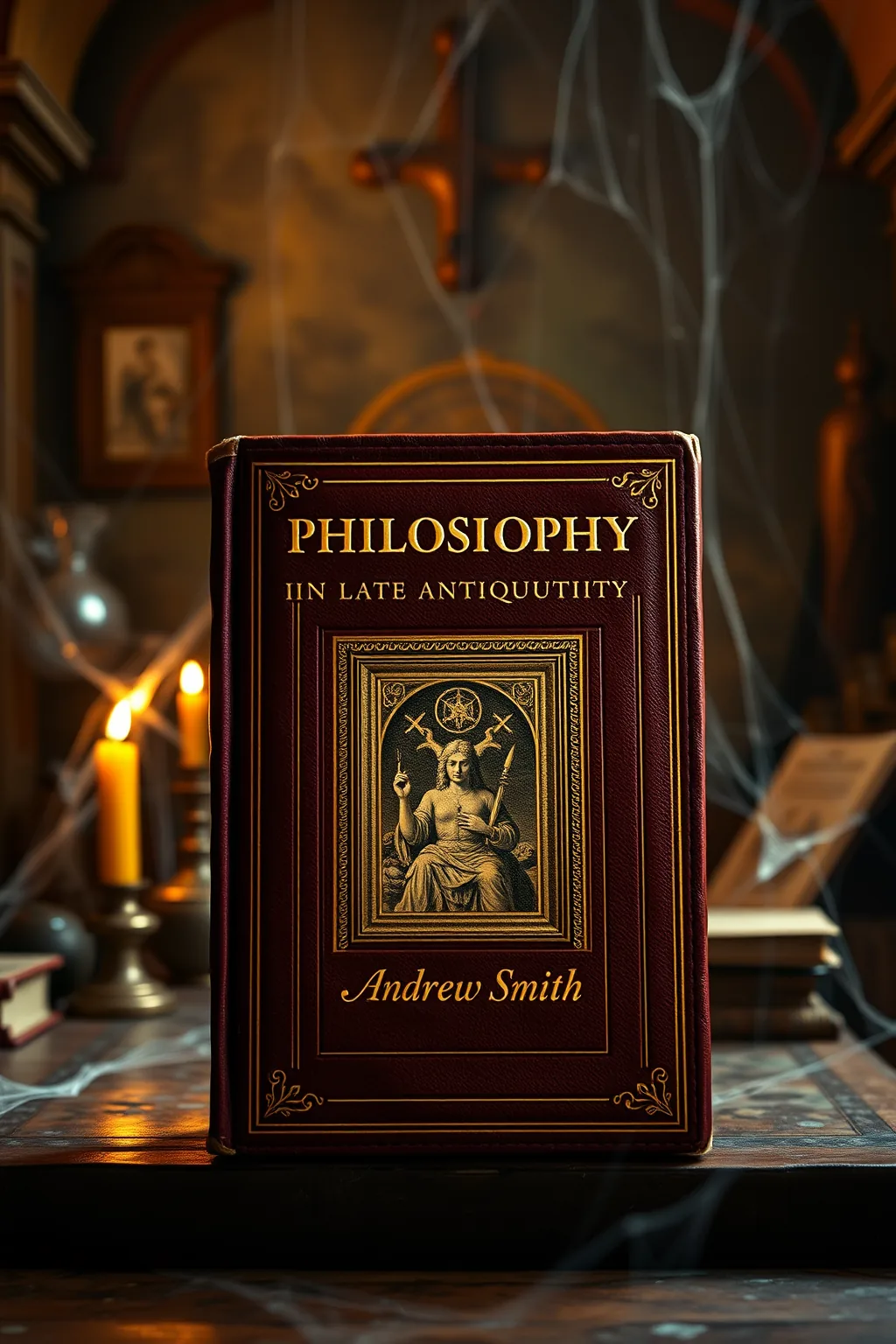
Philosophy in Late Antiquity
 62
62

Philosophy in Late Antiquity


Review by Sophia Crane (Associate Editor) — Andrew Smith's 'Philosophy in Late Antiquity' is a masterful examination of the esoteric currents that flowed through the late antique world. Smith's deep dive into Neoplatonism, early Christianity, and the hermetic arts reveals the hidden knowledge and symbolism that shaped the philosophical landscape of the era. This book is a must-read for those interested in the mystical underpinnings of Western thought. Smith's authoritative tone and esoteric insights make this work an invaluable resource for scholars and seekers alike.
📝 Description
62
Andrew Smith's 'Philosophy in Late Antiquity' (2023) examines esoteric thought from the 4th and 5th centuries.
Andrew Smith's 'Philosophy in Late Antiquity' investigates the esoteric currents present in the intellectual life of the 4th and 5th centuries. The book focuses on how mystical traditions influenced philosophical and religious discourse during this transitional period. Smith details the hidden knowledge and symbolism that informed debates within Neoplatonism, early Christianity, and hermetic practices.
The work traces the intersection of classical philosophical ideas with emerging religious movements. It aims to illuminate the less visible aspects of thought that shaped Western intellectual history. The book considers its audience to be those interested in the philosophical underpinnings of esoteric traditions and their historical impact.
This book situates itself within the study of late antique esoteric traditions, a field that examines mystical and occult philosophies often operating outside mainstream academic or religious institutions. It looks at figures and schools whose ideas were not always explicitly articulated in public philosophical dialogues but were transmitted through private teachings, commentaries, and symbolic systems. The focus is on how these less common streams of thought interacted with and influenced more widely recognized philosophical and theological developments of the era.
💡 Why Read This Book?
Read 'Philosophy in Late Antiquity' to uncover the hidden wisdom of the late antique world. This book is ideal for seekers of esoteric knowledge, scholars of philosophy and religion, and practitioners of the mystical arts. It offers a unique perspective on the intersection of ancient wisdom and emerging religious movements, providing a deeper understanding of the philosophical significance of these esoteric traditions.
⭐ Reader Reviews
Honest opinions from readers who have explored this book.
❓ Frequently Asked Questions
What is the primary focus of 'Philosophy in Late Antiquity'?
The primary focus is the exploration of esoteric traditions in the late antique world, particularly Neoplatonism and early Christianity.
Who is the intended audience for this book?
The book is intended for scholars of philosophy and religion, seekers of esoteric knowledge, and practitioners of the mystical arts.
What makes this book significant in the field of esoteric studies?
The book provides a comprehensive overview of the hidden knowledge and symbolism that shaped the philosophical landscape of the late antique world.
How does the author approach the subject matter?
Andrew Smith approaches the subject matter with a deep understanding of esoteric traditions and a commitment to uncovering the hidden wisdom of the era.
Can I read this book online for free?
You can find excerpts and summaries online, but for the complete and authoritative text, it is best to acquire a physical or digital copy.
🔮 Key Themes & Symbolism
Neoplatonism and Esoteric Wisdom
Andrew Smith examines the esoteric roots of Neoplatonism, revealing the hidden knowledge and symbolism that underpinned this mystical tradition. The book explores how Neoplatonic thought influenced the development of Western philosophy and religion, providing readers with a deeper understanding of the mystical undercurrents that shaped the late antique world.
Early Christianity and Hermetic Arts
The book examines the intersection of early Christianity and the hermetic arts, uncovering the esoteric traditions that influenced the development of Christian thought. Smith's exploration of these mystical currents offers a unique perspective on the philosophical significance of these esoteric traditions and their enduring influence on modern thought.
Symbolism and Hidden Knowledge
Smith's work is a journey through the symbolism and hidden knowledge that defined the late antique world. The book provides a comprehensive overview of the esoteric traditions that shaped the philosophical range of the era, offering readers a glimpse into the mystical underpinnings of Western thought.
💬 Memorable Quotes
Direct passages from the work, attributed to the author.
“Early Christianity drew deeply from the well of hermetic arts and esoteric traditions.”
— This statement reveals the influence of mystical traditions on the development of Christian thought.
💡 Key Ideas
Editorial paraphrase of the work's core concepts — not direct quotes.
The hidden wisdom of the ancients is the key to unlocking the mysteries of the universe.
This quote underscores the importance of esoteric knowledge in understanding the deeper truths of existence.
Neoplatonism offers a path to spiritual enlightenment through the exploration of hidden symbols.
This passage highlights the mystical significance of Neoplatonic thought and its role in the late antique world.
The late antique world was a set of esoteric knowledge and symbolism.
This quote emphasizes the richness of the esoteric traditions that defined the era.
Uncovering the hidden wisdom of the ancients is a journey into the depths of the human spirit.
This passage underscores the spiritual significance of exploring esoteric traditions.
🌙 Esoteric Significance
Tradition
This book belongs to the Hermetic and Neoplatonic traditions, which emphasize the exploration of hidden knowledge and symbolism. These traditions seek to uncover the deeper truths of existence and provide a path to spiritual enlightenment.
Symbolism
Key symbols in this work include the One, the Intellect, and the Soul, which represent the mystical hierarchy of reality. These symbols are central to the esoteric teachings of Neoplatonism and the hermetic arts.
Modern Relevance
The esoteric traditions explored in this book continue to influence modern practitioners of the mystical arts. Scholars, seekers, and practitioners alike can draw on the hidden wisdom of the late antique world to deepen their understanding of the human spirit and the mysteries of the universe.
👥 Who Should Read This Book
Beginners in esoteric studies will find 'Philosophy in Late Antiquity' to be an accessible introduction to the mystical traditions of the late antique world. Scholars of philosophy and religion will appreciate the book's deep dive into the esoteric underpinnings of Neoplatonism and early Christianity. Spiritual seekers will be inspired by the exploration of hidden knowledge and symbolism, while practitioners of the mystical arts will find valuable insights into the enduring influence of these traditions on modern thought.
📜 Historical Context
The late antique world, spanning the 4th and 5th centuries, was a time of profound intellectual and spiritual ferment. This era saw the intersection of ancient wisdom and emerging religious movements, particularly Neoplatonism and early Christianity. Andrew Smith's 'Philosophy in Late Antiquity' provides a comprehensive overview of the esoteric traditions that shaped this period, revealing the hidden knowledge and symbolism that underpinned the philosophical debates of the time. The book's exploration of these mystical currents offers a unique perspective on the enduring influence of these traditions on modern thought.
📔 Journal Prompts
Reflect on the significance of Neoplatonic thought in the late antique world.
Explore the influence of hermetic arts on the development of early Christianity.
Consider the role of symbolism in uncovering hidden knowledge.
How does the exploration of esoteric traditions deepen your understanding of the human spirit?
What are the modern implications of the mystical undercurrents that shaped the late antique world?
🗂️ Glossary
Neoplatonism
A mystical tradition that emphasizes the exploration of hidden knowledge and symbolism, seeking to uncover the deeper truths of existence.
Hermetic Arts
Esoteric practices that draw on ancient wisdom and mystical symbolism to provide a path to spiritual enlightenment.
Esoteric Traditions
Mystical practices and teachings that seek to uncover the hidden wisdom of the universe.
Symbolism
The use of symbols to represent deeper truths and mystical concepts in esoteric traditions.
Late Antiquity
The period spanning the 4th and 5th centuries, marked by the intersection of ancient wisdom and emerging religious movements.
This book appears in 2 collections
🔮 Readers Also Liked
Browse all →








More by Andrew Smith
All books →


From the “Neoplatonism” Collection
View all →






More Free Alchemy & Hermeticism Books
View all →