Charles Williams

 80
80

Charles Williams
Gavin Ashenden's exploration of Charles Williams is a sober, scholarly engagement that avoids the hagiography often associated with figures of the Inklings circle. Ashenden is particularly adept at dissecting Williams's distinctive theological vocabulary, such as "coinherence" and "thebeelding," demonstrating their roots in Christian mysticism and their application within Williams's imaginative fiction. The book's strength lies in its meticulous analysis of Williams's thematic concerns, particularly his exploration of romantic love as a divine force. A limitation, however, is the dense prose, which can occasionally obscure the very imaginative leaps Williams himself made. For instance, Ashenden's treatment of the concept of "thebeelding" as a spiritual apprehension of reality, while accurate, could benefit from more vivid illustration from the primary texts. Nonetheless, Ashenden provides a crucial scholarly reassessment of a writer whose work continues to challenge conventional literary and theological boundaries.
📝 Description
80
Gavin Ashenden's 2018 study examines Charles Williams's unique theological imagination.
This book critically examines the life and work of Charles Williams, a member of the Inklings circle whose writings carved out distinct theological and imaginative territories. Ashenden positions Williams not simply as a peer of C.S. Lewis and J.R.R. Tolkien, but as a singular voice in 20th-century literature. His work fused Christian theology with elements of romance, myth, and the supernatural, often in ways that challenged prevailing literary tastes.
The study situates Williams within the intellectual currents of early to mid-20th-century Britain, a period marked by figures like T.S. Eliot and W.H. Auden. Ashenden's analysis addresses the difficulties of merging Christian doctrine with imaginative fiction during a time of increasing secularization. The book also considers the often divisive critical reception Williams's work has received, placing him in literary history beyond the immediate influence of his more famous companions.
Ashenden's work places Charles Williams within a tradition of Christian esotericism, a path that seeks spiritual apprehension through imaginative experience. Williams's concept of 'thebeelding' suggests a direct, often intense, spiritual insight gained through art and imagination, a theme explored deeply in this study. The book also analyzes 'coinherence,' a doctrine of mutual indwelling, as it shapes Williams's fictional universes and character dynamics. This approach highlights a less conventional, mystical dimension of 20th-century British intellectual life.
💡 Why Read This Book?
• Understand "thebeelding": Learn how Charles Williams conceptualized intense imaginative experiences as a means of spiritual insight, a concept explored in depth within Ashenden's analysis. • Grasp "coinherence": Discover this theological principle of mutual indwelling and its complex portrayal in Williams's narratives, a core theme detailed by Ashenden. • Explore the Theology of Romanticism: Gain insight into how Williams used romantic love and chivalric ideals as channels for divine grace, a critical facet of his literary theology discussed in the book.
⭐ Reader Reviews
Honest opinions from readers who have explored this book.
❓ Frequently Asked Questions
What is "thebeelding" in Charles Williams's work?
"Thebeelding" is a term Charles Williams used to describe a profound spiritual apprehension of reality, often accessed through intense imaginative experiences or moments of heightened perception.
Who were the Inklings and how did Charles Williams relate to them?
The Inklings were an informal literary group in Oxford, including C.S. Lewis and J.R.R. Tolkien. Charles Williams was a member, contributing his unique theological and imaginative perspective, though his style differed significantly from Lewis and Tolkien.
When was Gavin Ashenden's book on Charles Williams first published?
Gavin Ashenden's study on Charles Williams was first published in 2008, offering a modern critical perspective on the author's oeuvre.
What is the concept of "coinherence" as applied by Charles Williams?
Coinherence, in Williams's context, refers to a theological concept of mutual indwelling and interdependence, where individuals and spiritual realities are deeply interconnected.
What literary movements influenced Charles Williams?
Williams was influenced by Christian mysticism, Arthurian legend, and the broader currents of early 20th-century English literature, blending these with his own theological explorations.
How does Ashenden's work position Charles Williams in literary history?
Ashenden positions Williams as a distinct theological and imaginative voice, separate from but contemporary with figures like C.S. Lewis and J.R.R. Tolkien, emphasizing his unique contribution to Christian fiction.
🔮 Key Themes & Symbolism
Theology of Romanticism
This theme explores how Charles Williams transmuted the ideals of romantic love and chivalry into a vehicle for divine grace and spiritual understanding. Ashenden's work highlights how Williams saw intense personal devotion and sacrifice, often found in romantic narratives, as mirroring the self-giving nature of God. This approach is central to understanding his fictional universes, where human relationships become crucibles for theological truths and cosmic order, departing from conventional allegorical methods.
Coinherence and Spiritual Interdependence
Ashenden illuminates Williams's sophisticated exploration of "coinherence," a theological concept emphasizing mutual indwelling and interconnectedness. In Williams's fiction, this principle moves beyond simple community to a mystical union where individuals participate in each other's spiritual lives and divine essence. This concept is crucial for grasping the often-complex dynamics and the profound spiritual implications of relationships within his imaginative landscapes.
Thebeelding and Imaginative Apprehension
Central to Williams's thought, and detailed by Ashenden, is "thebeelding" – the faculty of apprehending spiritual reality through intense imaginative experience. This isn't mere fantasy but a direct, often overwhelming, spiritual insight. The book examines how Williams integrated this concept into his narratives, suggesting that the imagination, when properly aligned, can provide access to divine truths that rational discourse alone cannot reach.
Arthurian Legend and Mythic Resonance
Charles Williams frequently drew upon Arthurian legend and other mythic structures to explore perennial theological and psychological themes. Ashenden's analysis points to how Williams used these ancient stories not as historical accounts but as archetypal frameworks for understanding human experience, divine intervention, and the eternal struggle between good and evil within a Christian context.
💬 Memorable Quotes
Direct passages from the work, attributed to the author.
“Thebeelding is the apprehension of reality by imagination.”
— This succinctly captures Williams's concept of "thebeelding," positing imagination not as escapism but as a vital tool for perceiving spiritual truths and the deeper nature of existence.
“Love is the great sign of the coming of God.”
— This statement emphasizes Williams's view that profound, often sacrificial, love between individuals can be a direct manifestation or indicator of divine presence and will in the world.
“There is no danger of the soul being lost, but of it not being found.”
— This highlights Williams's focus on spiritual engagement and the active pursuit of divine connection, suggesting that the true risk lies in spiritual inertia rather than external threats.
“Coinherence means that each soul is a universe, and each soul is a centre of the universe.”
— This interpretation of "coinherence" underscores the profound individuality and spiritual centrality of each person, while also suggesting an interconnectedness that makes each soul integral to the whole.
“Joy is the serious business of Heaven.”
— This implies that divine happiness or beatitude is not a passive state but an active, purposeful reality within the celestial realm, a state to which earthly existence can aspire.
🌙 Esoteric Significance
Tradition
Charles Williams's work, as analyzed by Ashenden, draws heavily from Christian mysticism and Neoplatonic thought, rather than strictly adhering to more codified esoteric traditions like Hermeticism or Kabbalah. His "Theology of Romanticism" and concepts like "coinherence" and "thebeelding" represent a unique synthesis, using traditional Christian doctrine as a foundation for exploring direct spiritual experience and the interconnectedness of souls, echoing Gnostic ideas of divine sparks within humanity.
Symbolism
Key symbols in Williams's work, illuminated by Ashenden, include the Tarot, though often reinterpreted through a Christian lens, and the concept of the "divine exchange" or "substitution," where suffering is willingly borne for another. The motif of the supernatural or magical object (like the Ring in *The Greater Trumps*) often serves as a focal point for spiritual testing and divine intervention, symbolizing the tangible presence of transcendent forces in the mundane world.
Modern Relevance
Contemporary thinkers exploring the intersection of spirituality and literature, particularly those interested in imaginative theology and the experiential aspects of faith, continue to draw from Williams's insights. His exploration of "coinherence" finds echoes in modern discussions of interconnectedness and collective consciousness, while "thebeelding" appeals to those seeking to validate intuitive and imaginative ways of knowing within spiritual practice.
👥 Who Should Read This Book
• Students of 20th-century literature: Those interested in the Inklings and their contemporaries will gain a deeper understanding of Williams's distinct literary and theological voice. • Scholars of Christian Esotericism: Readers exploring less conventional expressions of Christian spirituality and their integration into imaginative fiction will find value in Ashenden's analysis of Williams's unique concepts. • Aspiring Writers and Theologians: Individuals seeking to understand how to infuse theological concepts with imaginative power and explore the spiritual dimensions of human relationships will benefit from Williams's approach.
📜 Historical Context
Gavin Ashenden's study arrives in an era where literary criticism began to seriously re-evaluate the theological and philosophical contributions of figures beyond the most prominent members of the Inklings. Charles Williams, often overshadowed by C.S. Lewis and J.R.R. Tolkien, occupied a unique niche in early to mid-20th-century British letters. His work emerged during a period marked by a resurgence of interest in Christian apologetics and imaginative literature, influenced by thinkers like T.S. Eliot and the broader Neo-Orthodox theological movement. While figures like Evelyn Waugh explored religious themes with a different sensibility, Williams uniquely integrated Christian doctrine with the supernatural and the intensely personal. The study implicitly addresses the reception of Williams's work, which, while respected, was often seen as more challenging and less accessible than that of his contemporaries. Ashenden's analysis, published in 2008, situates Williams within this complex intellectual landscape, offering a detailed examination of his distinctive contributions.
📔 Journal Prompts
The concept of "thebeelding" as a spiritual apprehension.
Williams's exploration of "coinherence" in relationships.
The role of romantic love in his theological framework.
Arthurian motifs as conduits for divine truth.
The serious business of joy in the celestial realm.
🗂️ Glossary
Thebeelding
A term coined by Charles Williams to describe the imaginative apprehension of reality, a direct spiritual insight into the nature of things.
Coinherence
A theological concept denoting mutual indwelling and interdependence, where individuals are deeply connected and participate in each other's spiritual existence.
Theology of Romanticism
Williams's approach that views romantic love, chivalry, and intense personal devotion as significant pathways for experiencing divine grace and cosmic order.
The Greater Trumps
A significant novel by Charles Williams that uses a modern setting and Tarot-like cards to explore themes of fate, divine providence, and spiritual power.
The Inklings
An informal literary group in Oxford, active from the 1930s to the 1950s, whose members included C.S. Lewis, J.R.R. Tolkien, and Charles Williams.
Divine Exchange
A concept in Williams's work where one willingly takes on the burden or suffering of another, mirroring Christ's redemptive sacrifice.
Arthurian Legend
The body of stories and legends concerning King Arthur and his knights, which Charles Williams frequently adapted and reinterpreted theologically.
🔮 Readers Also Liked
Browse all →








More by Gavin Ashenden
All books →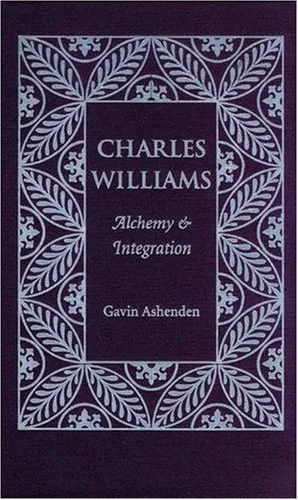
More Free Alchemy & Hermeticism Books
View all →