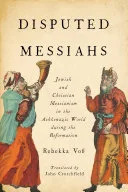
Disputed Messiahs
 76
76

Disputed Messiahs
Rebekka Voß's "Disputed Messiahs" is a significant contribution to the study of messianism, particularly for its rigorous comparison of Jewish and Christian eschatological expectations within the Ashkenazic world during the Reformation. The book's strength lies in its detailed archival research, which illuminates the often-overlooked dialogues and mutual influences between these communities. Voß effectively demonstrates how shared anxieties and hopes for redemption manifested differently yet were demonstrably interconnected. A particular strength is the chapter discussing Sabbatai Zevi's movement, showing how his 17th-century claims were perceived and reacted to by both Jewish and Christian observers, illustrating the complex interplay of prophecy and political reality. While the book is exceptionally thorough, its dense academic prose might present a challenge for readers less familiar with the historical period or specialized theological terminology. Despite this, the work provides an indispensable resource for understanding the messianic fervor of the era. "Disputed Messiahs" offers a compelling, scholarly argument for the interconnectedness of religious expectation in early modern Europe.
📝 Description
76
Rebekka Voß's 2019 study examines messianic thought and activism in the Ashkenazic world during the Reformation.
Rebekka Voß's "Disputed Messiahs" scrutinizes Jewish and Christian messianic ideas and actions during the Reformation. The book concentrates on the Ashkenazic Jewish communities and their interactions with surrounding Christian societies. Voß demonstrates how the expectations for the end times in these distinct groups influenced one another.
The Reformation period, from the early 16th to the mid-17th century, was a time of significant religious change and intellectual activity in Europe. Martin Luther's challenges to established doctrines in 1517 created a climate of intense theological debate. Within this context, "Disputed Messiahs" focuses on how Ashkenazic Jews and their Christian neighbors understood and expressed messianic hopes.
Voß presents messianism as a fluid concept, shaped by social, cultural, and political factors. The study emphasizes the mutual impact between Jewish and Christian eschatological views, showing they were not separate developments. Both communities interpreted prophecies and historical events through a messianic perspective, often reacting to contemporary events and possibilities.
This work engages with the historical development of messianic movements, a significant current within Jewish mysticism and Christian esotericism. It situates these beliefs within a specific historical moment characterized by intense religious speculation and social change. The book's focus on the reciprocal shaping of these messianic ideas highlights the dynamic interplay between different interpretive traditions during a period of profound upheaval.
💡 Why Read This Book?
• Gain a nuanced understanding of how Jewish and Christian end-time expectations of the Reformation era informed one another, moving beyond isolated interpretations. • Explore the specific social and religious contexts of the Ashkenazic world during the 16th century, revealing the practical impact of messianic thought. • Analyze the concept of messianism as a dynamic response to historical events, as detailed in the book's examination of Sabbatai Zevi's influence.
⭐ Reader Reviews
Honest opinions from readers who have explored this book.
❓ Frequently Asked Questions
What is the primary focus of "Disputed Messiahs"?
The book primarily examines Jewish and Christian messianic thought and activism within the Ashkenazic world during the Reformation era, exploring their mutual influences.
When was "Disputed Messiahs" first published?
The original German edition of "Disputed Messiahs" by Rebekka Voß was first published on November 30, 2021.
What historical period does "Disputed Messiahs" cover?
The book focuses on the Reformation era, a period of significant religious and intellectual change in Europe, roughly spanning the 16th and early 17th centuries.
Who is the author of "Disputed Messiahs"?
The author is Rebekka Voß, a scholar specializing in Jewish history and religious studies.
What is the main argument regarding Jewish and Christian messianism in the book?
Voß argues that Jewish messianism during this period was deeply situated within its broader Christian cultural context, and that the expressions of end-time expectations between the two groups were mutually informing.
What does 'Ashkenazic world' refer to in the context of this book?
The Ashkenazic world refers to the historical region and cultural sphere of the Jewish people in Central and Eastern Europe, particularly relevant during the Reformation period.
🔮 Key Themes & Symbolism
Messianic Expectations
The work scrutinizes the concept of messianism as a driving force in both Jewish and Christian communities during the Reformation. It moves beyond simplistic portrayals to reveal how these expectations were shaped by social, political, and theological currents of the 16th century. Voß illustrates how prophecies and historical events were interpreted through an eschatological lens, fueling activism and shaping communal identities in the Ashkenazic world.
Interreligious Dialogue
A central theme is the often-unacknowledged dialogue and mutual influence between Jewish and Christian messianic thought. The book demonstrates that these were not isolated intellectual traditions but were in constant, though sometimes indirect, conversation. This interaction is explored through an examination of how each group perceived and responded to the other's messianic claims and prophecies, particularly within the specific cultural milieu of the Ashkenazic regions.
Reformation Context
Voß situates the study firmly within the tumultuous religious field of the Reformation. The challenges to established religious authority and the widespread apocalyptic anxieties of this era provided fertile ground for messianic movements. The book highlights how the intense theological debates and social shifts of the 16th century influenced the articulation and dissemination of messianic ideas among both Jewish and Christian populations.
Ashkenazic Society
The book offers a focused look at the Ashkenazic Jewish communities, providing a comprehensive study of their messianic activities and thought within their broader societal context. It emphasizes the importance of understanding Jewish religious life not in isolation, but in dynamic relation to the surrounding Christian societies. This contextualization is key to appreciating the unique expressions of messianism within these communities during the Reformation.
💬 Memorable Quotes
Direct passages from the work, attributed to the author.
“Jewish messianism in the Ashkenazic world during the Reformation was deeply embedded within its broader Christian societal and religious contexts.”
— This statement captures the book's core argument: that Jewish religious expressions, particularly messianic fervor, cannot be understood in isolation but were significantly shaped by and interacted with the surrounding Christian culture of the Reformation era.
“Expressions of Jewish and Christian end-time expectation mutually informed one another.”
— This highlights the reciprocal nature of prophetic and apocalyptic thought. The book argues against a one-way influence, suggesting a dynamic exchange where both communities adapted and responded to each other's eschatological narratives.
“The Reformation era provided a unique climate for messianic movements due to widespread religious upheaval.”
— This interpretation points to the historical backdrop of the 16th century as crucial for understanding the proliferation and intensity of messianic beliefs. Social instability and theological questioning created an environment ripe for end-time expectations.
“The study situates Jewish messianism within its broader cultural, social, and religious contexts.”
— This emphasizes the methodological approach of the book, which seeks to understand Jewish religious phenomena not as isolated occurrences but as integral parts of a complex, interconnected early modern European society.
“Sabbatai Zevi's 17th-century messianic claims were met with diverse reactions from both Jewish and Christian observers.”
— This references a specific historical example, illustrating the book's focus on how prominent messianic figures and movements elicited responses that crossed religious boundaries, demonstrating the interconnectedness of the era's spiritual landscape.
🌙 Esoteric Significance
Tradition
While not strictly an esoteric text in the vein of Hermeticism or Kabbalah, "Disputed Messiahs" engages deeply with the mystical and prophetic dimensions of Jewish and Christian thought. It situates messianism as a potent spiritual and socio-political force, exploring how eschatological beliefs functioned as a form of applied theology. The work aligns with traditions that see history as divinely guided and humanity as poised for redemption, particularly within the context of late medieval and early modern apocalypticism.
Symbolism
The book implicitly engages with the symbolism of redemption and divine intervention inherent in messianic narratives. Concepts like the 'end of days,' the coming of a messianic figure, and the re-establishment of a divine kingdom are central motifs. These symbols, while interpreted through historical and social lenses, carry profound spiritual weight, representing ultimate hope, cosmic renewal, and the rectification of earthly suffering within both Jewish and Christian frameworks.
Modern Relevance
Contemporary studies in comparative religion, messianism, and the history of apocalyptic thought continue to draw upon the detailed contextualization provided by "Disputed Messiahs." Scholars examining the evolution of religious identity, the impact of historical crises on belief systems, and the dynamics of interfaith relations find Voß's analysis of the Reformation era particularly relevant for understanding enduring patterns of spiritual and social expectation.
👥 Who Should Read This Book
• Scholars of Jewish Studies and Reformation History: Gain access to a comprehensive study that breaks new ground by linking Ashkenazic Jewish messianism directly to its Christian environment. • Students of Comparative Religion: Develop a deeper understanding of how messianic expectations can be shaped by, and influence, neighboring religious traditions during periods of significant upheaval. • Researchers of Apocalyptic Thought: Explore the specific manifestations and mutual influences of end-time beliefs in the 16th century, moving beyond generalized interpretations of the era.
📜 Historical Context
The Reformation, ignited by Martin Luther in 1517, was a period of profound religious schism and intellectual ferment across Europe. This era witnessed intense theological debates, the fracturing of Western Christendom, and a pervasive sense of apocalyptic anticipation. Within this volatile climate, "Disputed Messiahs" examines the specific context of the Ashkenazic Jewish world. The work of scholars like Moshe Idel, who explored Jewish mysticism, provides a comparative backdrop, though Voß's focus is on the unique interrelationships between Jewish and Christian messianism during this time. The book argues that these end-time expectations were not formed in isolation but were in constant dialogue, influenced by shared anxieties and the broader societal shifts spurred by the Reformation.
📔 Journal Prompts
The concept of Jewish messianism during the Reformation era and its relationship to Christian expectations.
Rebekka Voß's analysis of mutual influence between end-time beliefs in the Ashkenazic world.
The social and religious contexts that amplified messianic thought in the 16th century.
The role of prophecy interpretation in shaping collective identity during the Reformation.
How the broader cultural field of the Ashkenazic world impacted Jewish messianism.
🗂️ Glossary
Messianism
Belief in a messiah, a divinely appointed savior figure who will bring about a period of peace, justice, and redemption, often associated with the end times or a radical transformation of the world.
Ashkenazic World
Refers to the historical regions and cultural sphere of Jewish communities in Central and Eastern Europe, particularly prominent during the medieval and early modern periods.
Reformation Era
The historical period in Europe, beginning in the early 16th century with Martin Luther, characterized by widespread religious upheaval, challenges to the Catholic Church, and the rise of Protestantism.
Eschatology
The theological study of the final events of history, or the ultimate destiny of humanity and the world, often involving concepts of the end times, judgment, and salvation.
Activism
In this context, refers to the actions taken by individuals or groups based on their messianic beliefs, including preaching, proselytizing, organizing communities, or even inciting political or social change.
End-time Expectation
A belief or anticipation concerning the events that will occur at the culmination of history, often involving divine intervention and the establishment of a new order.
Sabbatai Zevi
A 17th-century Kabbalistic mystic who proclaimed himself the Messiah, sparking a widespread and controversial messianic movement within Judaism that also attracted Christian attention.