Buddhism and Science
 81
81

Buddhism and Science
Wallace's compilation, Buddhism and Science, offers a nuanced, if sometimes uneven, exploration of how two vastly different epistemological systems approach fundamental questions about existence. The strength lies in the caliber of contributors, like the Dalai Lama, whose perspectives inherently carry weight. A particular highlight is the engagement with the concept of 'emergence' from both scientific and Buddhist viewpoints, challenging reductionist interpretations. However, the book occasionally suffers from an academic tone that can feel distant, and the sheer breadth of topics means some essays feel less developed than others. The 2003 publication date means some scientific discussions might feel dated to a contemporary reader. Despite these points, it remains a valuable resource for those seeking a serious dialogue between contemplative and empirical worldviews.
📝 Description
81
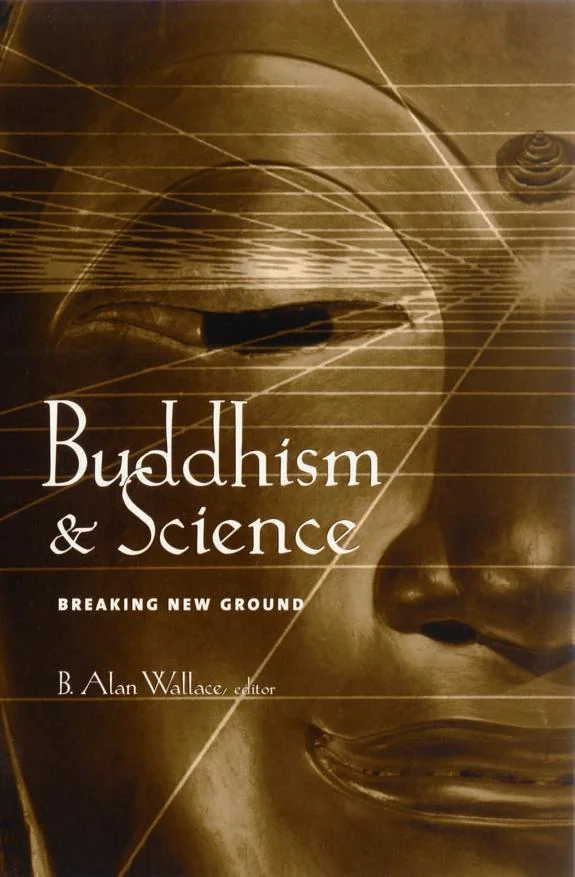
B. Alan Wallace's 2003 collection, Buddhism and Science, gathers essays from a 2001 dialogue between scientists and Buddhist scholars.
Published in 2003, Buddhism and Science is a collection of essays stemming from dialogues between Western scientific thought and Buddhist contemplative traditions. It features contributions from physicists, cognitive scientists, philosophers, and Buddhist scholars. The work seeks to identify areas of agreement and disagreement between these two distinct approaches to understanding reality.
The book is recommended for readers interested in the connections between science and spirituality, particularly those curious about Buddhist philosophy and practice. It will interest scholars of comparative religion, cognitive science, and the philosophy of mind, as well as individuals looking to integrate empirical observation with introspective insights. It is not an introductory text but a detailed examination for those prepared for complex arguments.
This collection originated from discussions facilitated by the Mind and Life Institute. His Holiness the Dalai Lama, a contributor, played a significant role in its conception. The initiative arose as the dialogue between science and contemplative traditions was growing, aiming to close perceived gaps. The book reflects a rising interest in the 21st century for serious intellectual engagement with non-Western ways of knowing, moving past superficial comparisons.
This book emerges from the lineage of inquiry that seeks to bridge the empirical methods of modern science with the introspective insights of contemplative traditions, particularly within Buddhism. It follows a historical trend, notably encouraged by figures like the Dalai Lama, to foster dialogue and mutual understanding between these seemingly disparate epistemologies. The work engages with the Buddhist philosophical concepts like shunyata and contrasts them with scientific models, positioning itself within a growing body of literature that explores the complementarity of subjective and objective modes of understanding the world.
💡 Why Read This Book?
• Gain specific insights into how Buddhist concepts like *shunyata* are examined alongside Western scientific models of consciousness, as discussed by contributors like the Dalai Lama. • Understand the historical impetus for cross-cultural scientific dialogues, as the book details its origins in Dharamsala, India, with the Mind and Life Institute. • Discover how contemplative practices are presented as potential complements to empirical research, moving beyond a purely objective scientific stance.
⭐ Reader Reviews
Honest opinions from readers who have explored this book.
❓ Frequently Asked Questions
When was Buddhism and Science first published and who inspired it?
Buddhism and Science was first published on March 17, 2003. The compilation was significantly inspired by a suggestion from His Holiness the Dalai Lama, who is also one of the contributing authors.
What is the Mind and Life Institute's role in this book?
The Mind and Life Institute sponsored a series of cross-cultural scientific dialogues in Dharamsala, India, which provided the foundational discussions for this book. The institute actively fosters dialogue between science and contemplative traditions.
Who are some of the key contributors to Buddhism and Science?
The book features distinguished philosophers, Buddhist scholars, physicists, and cognitive scientists. His Holiness the Dalai Lama is a prominent contributor, alongside other figures in the scientific and academic communities.
What is a central theme explored in Buddhism and Science?
A central theme is the examination of contrasts and connections between Western scientific paradigms and Eastern spiritual traditions, particularly Buddhism, focusing on understanding consciousness and reality.
Does the book present Buddhism as a science?
No, the book does not present Buddhism as a science. Instead, it explores areas of overlap and divergence in their methodologies and findings regarding the nature of mind, reality, and experience.
What kind of reader would benefit most from Buddhism and Science?
Readers interested in comparative philosophy, cognitive science, the intersection of spirituality and empirical research, and those familiar with or curious about Buddhist thought would benefit most.
🔮 Key Themes & Symbolism
Consciousness and Subjectivity
The collection critically examines the nature of consciousness from both scientific and Buddhist perspectives. It questions whether purely objective, third-person scientific methods can fully account for subjective, first-person experience. Contributors explore how Buddhist meditative practices offer alternative methodologies for investigating the mind, potentially yielding insights that complement or challenge empirical findings. The work probes the limits of current scientific models in explaining phenomena like qualia and intentionality, suggesting a need for broader epistemological frameworks.
Epistemological Methodologies
A core theme is the comparison of scientific and Buddhist approaches to knowledge acquisition. While science relies on empirical observation, experimentation, and falsifiability, Buddhism emphasizes introspective analysis, meditation, and the direct experience of mental states. The book discusses the validity and limitations of each method, exploring whether these different paths can converge on similar truths about reality or if they fundamentally address different aspects of existence. This comparative analysis is crucial for understanding the book's broader project.
The Nature of Reality
The compilation engages with profound questions about the fabric of reality, contrasting Buddhist concepts like emptiness (*shunyata*) with scientific cosmology and physics. It considers whether phenomena described by quantum mechanics, such as observer dependence, might find resonance in contemplative descriptions of reality. The essays examine the implications of these different understandings for how we perceive the universe and our place within it, moving beyond simplistic materialism.
Cross-Cultural Dialogue
The book is a product of intentional cross-cultural dialogue, specifically bridging Western scientific thought with Buddhist philosophy. It highlights the importance of such interdisciplinary conversations, initiated and supported by organizations like the Mind and Life Institute. The aim is to foster mutual understanding and to explore potential synergies between traditions that have historically operated in separate spheres, enriching both intellectual and spiritual inquiry.
💬 Memorable Quotes
Direct passages from the work, attributed to the author.
“The Dalai Lama suggested the dialogue between Buddhism and science.”
— This highlights the book's genesis, emphasizing the important role of the Dalai Lama's advocacy for integrating contemplative wisdom with scientific investigation, signaling a significant shift in the discourse.
“The work explores contrasts and connections between Western science and Eastern spirituality.”
— This statement captures the fundamental objective of the compilation: to map out both the differences and the potential common ground between empirical, objective inquiry and introspective, subjective wisdom traditions.
“Contributors include physicists, cognitive scientists, philosophers, and Buddhist scholars.”
— This diversity of expertise underscores the interdisciplinary nature of the project, aiming for a comprehensive examination of the subject from multiple scholarly vantage points.
“Dialogues were sponsored by the Mind and Life Institute.”
— This points to the institutional support and structured environment that facilitated the discussions, indicating a serious academic undertaking rather than informal musings.
“The book originated from scientific dialogues in Dharamsala, India.”
— This grounds the intellectual exploration in a specific geographical and cultural context, highlighting the meeting point of Eastern contemplative traditions and Western scientific inquiry.
🌙 Esoteric Significance
Tradition
While not directly aligned with a single Western esoteric lineage like Hermeticism or Kabbalah, Buddhism and Science engages with themes that resonate with esoteric traditions' focus on consciousness and hidden realities. It shares with Gnosticism an emphasis on inner knowledge and the critique of purely materialist understandings. The work contributes to a broader Neo-Theosophical interest in synthesizing Eastern wisdom with Western thought, presenting Buddhist contemplative methods as sophisticated tools for exploring the nature of existence beyond ordinary perception.
Symbolism
The book itself doesn't focus on overt symbolism in the Western esoteric sense. However, Buddhist concepts like *shunyata* (emptiness) function symbolically, representing the non-dual, interdependent nature of reality, which can be interpreted as a symbolic negation of solid, independent existence. The dialogue format itself can be seen as a symbolic bridge, representing the potential for disparate worldviews to meet and find common understanding, transcending conventional boundaries.
Modern Relevance
Contemporary thinkers and practitioners in fields like contemplative neuroscience, mindfulness-based interventions (MBIs), and consciousness studies frequently draw upon the foundational dialogues and concepts explored in this book. Researchers investigating the effects of meditation on brain function and well-being, as well as philosophers of mind seeking alternative models beyond computationalism, often cite the kind of interdisciplinary work exemplified by Buddhism and Science. It continues to inform discussions on the integration of subjective experience into scientific paradigms.
👥 Who Should Read This Book
• Scholars of comparative religion and philosophy of mind seeking rigorous comparisons between Buddhist epistemologies and Western scientific models. • Practitioners of Buddhist meditation interested in understanding how their contemplative practices are viewed and studied within scientific frameworks. • Individuals grappling with the perceived conflict between scientific materialism and spiritual or contemplative worldviews, looking for intellectual bridges.
📜 Historical Context
Published in 2003, Buddhism and Science emerged during a period of increasing academic interest in the dialogue between contemplative traditions and Western science. The initiative was propelled by the Mind and Life Institute's ongoing dialogues, notably influenced by His Holiness the Dalai Lama. This era saw a growing challenge to purely materialistic worldviews, with thinkers like Fritjof Capra in his earlier work, *The Tao of Physics* (1975), having already paved the way for exploring parallels between mysticism and modern physics. The book's reception reflected a desire within both scientific and spiritual communities to find common ground, though some critics from traditionalist Buddhist circles expressed skepticism about engaging with Western empirical methods. Its publication marked a significant step in formalizing these cross-cultural intellectual exchanges.
📔 Journal Prompts
The comparison of *shunyata* and scientific theories of reality.
The role of subjective experience in Buddhist epistemology versus scientific methodology.
Potential limitations of empirical observation for understanding consciousness.
The significance of the Dalai Lama's suggestion for fostering dialogue.
How contemplative practices might inform or challenge scientific models of the mind.
🗂️ Glossary
Shunyata
A central concept in Mahayana Buddhism, often translated as 'emptiness' or 'voidness.' It refers to the absence of inherent, independent existence in all phenomena, emphasizing interdependence and impermanence.
Epistemology
The branch of philosophy concerned with the theory of knowledge, investigating its nature, scope, and justification. It asks how we know what we know.
Cognitive Science
An interdisciplinary field that studies the mind and its processes, drawing on psychology, computer science, neuroscience, linguistics, philosophy, and anthropology.
Contemplative Practices
Mental training that involves focusing attention and awareness to achieve a mentally clear and emotionally calm state. Examples include meditation and mindfulness.
Qualia
The subjective, qualitative properties of experience, such as the 'redness' of red or the 'painfulness' of pain. These are notoriously difficult to explain purely in objective, scientific terms.
Emergence
The arising of novel and complex properties or patterns in a system that are not present in its individual components. It's a key concept in systems theory and philosophy of science.
Third-person perspective
An objective viewpoint, detached from personal experience, typically associated with scientific observation and description. Contrasts with the first-person subjective viewpoint.
This book appears in 1 collection
🔮 Readers Also Liked
Browse all →








From the “Dream Yoga” Collection
View all →









More Free Sacred Texts & Gnosticism Books
View all →