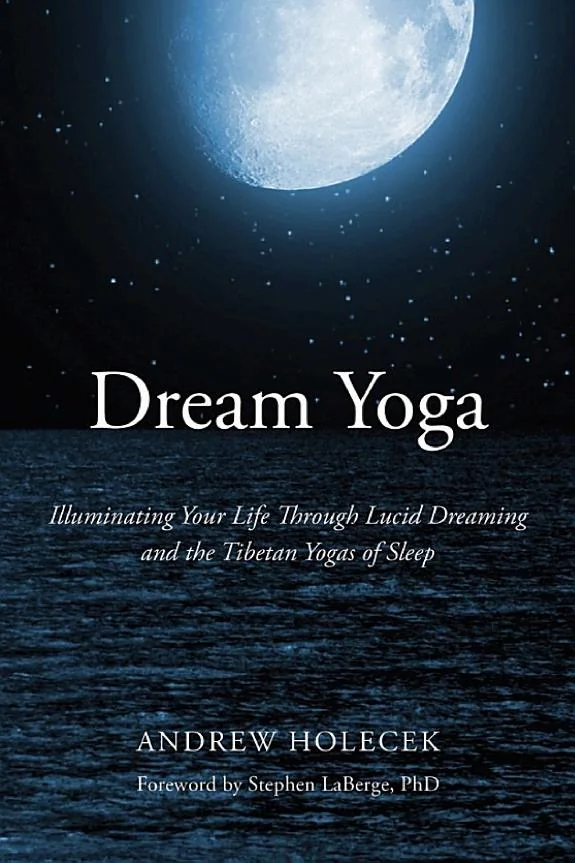
Dream Yoga
 79
79

Dream Yoga
Andrew Holecek’s *Dream Yoga* doesn't just present lucid dreaming; it frames it within a profound contemplative discipline. The strength of the book lies in its meticulous integration of Western lucid dreaming research, initiated by figures like Stephen LaBerge in the 1970s, with the sophisticated, millennia-old Tibetan Buddhist practices of dream yoga. Holecek’s explanation of the Six Yogas of Naropa, particularly as they relate to dream states, is remarkably clear. However, the sheer depth of the Tibetan material might feel dense for absolute beginners to meditation. A particularly striking passage discusses the "dream sign" concept, urging readers not just to notice anomalies but to investigate them with critical awareness, a principle applicable beyond the dream state. This is not a casual guide to fantastical dreaming; it's a serious manual for inner transformation.
📝 Description
79
Andrew Holecek's Dream Yoga connects modern lucid dreaming with ancient Tibetan practices.
This book offers a structured method for cultivating consciousness during sleep, drawing from both contemporary lucid dreaming research and traditional Tibetan Buddhist dream yoga. Holecek outlines techniques to achieve full awareness within the dream state, transforming it from a passive experience into an active arena for personal growth and spiritual development.
The work is intended for meditators wishing to extend their practice into sleep, lucid dreamers keen to explore nocturnal consciousness, and those interested in the nexus of psychology, spirituality, and altered states. It guides individuals to engage with their inner world systematically.
Holecek details how to recognize the dream world's illusory nature while remaining lucid. The book highlights the potential of dreams for gaining insight, resolving psychological issues, and achieving spiritual realization. Specific methods include setting clear intentions before sleep, identifying dream cues, and reframing challenging dream content.
Dream yoga, as practiced in Tibetan Buddhism for over a millennium, particularly within the Six Yogas of Naropa, focuses on using the dream state for spiritual advancement. Andrew Holecek bridges these esoteric traditions with modern Western lucid dreaming research, which saw increased interest in the late 20th century. This integration brings ancient methods of cultivating awareness in sleep into dialogue with contemporary psychological and scientific understandings of dreams.
💡 Why Read This Book?
• You will learn to transition from ordinary dreaming to lucid awareness by understanding the "dream sign" concept, a specific technique from Tibetan dream yoga, enabling you to recognize the illusory nature of your dream world while awake within it. • You will gain practical methods for transforming challenging dream content into opportunities for insight, a core tenet of the Six Yogas of Naropa, offering a unique approach to psychological integration absent in standard lucid dreaming guides. • You will discover how to use the dream state for spiritual development, drawing on traditions that view sleep not as a void but as a potent field for realizing the nature of mind, as explored in Holecek's synthesis of ancient wisdom and modern science.
⭐ Reader Reviews
Honest opinions from readers who have explored this book.
❓ Frequently Asked Questions
What is the primary difference between standard lucid dreaming and Tibetan dream yoga?
Standard lucid dreaming often focuses on exploration and personal experience. Tibetan dream yoga, as presented by Holecek, integrates lucidity with advanced meditative practices aimed at spiritual realization and understanding the nature of mind, drawing from traditions dating back over a thousand years.
Can someone with no prior meditation experience benefit from Dream Yoga?
While Holecek assumes some familiarity with meditation, the book provides foundational guidance. However, readers new to contemplation might find it beneficial to establish a basic meditation practice before diving deep into the dream yoga techniques presented, which build upon that foundation.
When was Andrew Holecek's Dream Yoga first published?
Andrew Holecek's *Dream Yoga* was first published on July 1, 2016, making it a contemporary synthesis of ancient practices and modern research.
Does the book cover techniques for overcoming nightmares using dream yoga?
Yes, the book addresses how to work with disturbing dream content. It teaches practitioners to recognize nightmares as opportunities for developing wisdom and transforming negative emotional responses, a key aspect of advanced dream yoga practice.
What are the Six Yogas of Naropa and how do they relate to dream yoga?
The Six Yogas of Naropa are advanced Tibetan Buddhist practices designed to achieve enlightenment. Dream yoga is one of these six, specifically focusing on maintaining consciousness and achieving spiritual insight during the sleep state, a concept Holecek elucidates.
Is this book suitable for practitioners of Western Esotericism?
Absolutely. Holecek's work bridges Eastern contemplative traditions with Western interests in consciousness exploration. Practitioners of Hermeticism or other esoteric paths may find valuable parallels and methods for inner work within the dream state.
🔮 Key Themes & Symbolism
Consciousness in Sleep
This work posits that the sleep state is not a mere void but a rich field for conscious exploration. It moves beyond the entertainment value of lucid dreaming to present it as a serious spiritual practice. Holecek details how to cultivate awareness during dreams, drawing parallels to the Tibetan Buddhist concept of clear light, the fundamental nature of mind accessible even in deep sleep. The book guides readers to recognize the dream state as illusory yet potent, a crucial step in understanding the nature of reality itself.
Integration of Traditions
A central theme is the synthesis of modern lucid dreaming research, pioneered by figures like Stephen LaBerge in the 1970s, with the ancient wisdom of Tibetan dream yoga. Holecek meticulously bridges these seemingly disparate fields, showing how contemporary understanding of the brain and consciousness complements the sophisticated techniques developed over centuries within Tibetan Buddhism. This fusion makes profound esoteric practices accessible to a wider audience interested in both psychology and spirituality.
Transformative Practice
Dream Yoga emphasizes the potential for profound personal and spiritual transformation through conscious dreaming. It frames dream experiences not just as passive occurrences but as active opportunities for insight, healing, and spiritual growth. The book provides practical methods for transforming disturbing dreams, working with archetypal imagery, and using the dream state as a training ground for developing wisdom, compassion, and ultimate realization, aligning with the goals of the Six Yogas of Naropa.
The Nature of Reality
By engaging deeply with the dream state, the book encourages a re-evaluation of waking reality. The techniques taught, rooted in the Vajrayana tradition, aim to dissolve the rigid perceived boundaries between the 'real' and the 'unreal.' Recognizing the dream as a fabrication helps practitioners understand that waking experience may also possess a similar, albeit more stable, illusory quality. This perspective is central to achieving liberation from conventional conceptual frameworks and realizing the ultimate nature of mind.
💬 Memorable Quotes
Direct passages from the work, attributed to the author.
“The dream state is a potent field for spiritual development.”
— This statement expresses the core thesis: sleep is not downtime but an active opportunity. It suggests that the otherwise passive hours of dreaming can be intentionally harnessed for significant personal and spiritual advancement, a concept central to dream yoga.
“Recognizing dream signs is crucial for lucidity.”
— This highlights a foundational technique in lucid dreaming and dream yoga. A 'dream sign' is an anomaly that signals you are dreaming. Becoming adept at spotting these signs is presented as a key gateway to achieving full conscious awareness within the dream environment.
“Transforming negative dream content leads to wisdom.”
— This points to the therapeutic and spiritual potential of dream work. Instead of merely avoiding or being disturbed by nightmares, the practice encourages confronting and integrating them, thereby extracting valuable insight and fostering psychological resilience.
“The goal is to realize the nature of mind, even in sleep.”
— This elevates dream yoga beyond mere exploration. It connects the practice to the ultimate aims of contemplative traditions: understanding the fundamental essence of consciousness itself, irrespective of the particular state (waking, dreaming, or deep sleep).
“Clarity in the dream state mirrors clarity in waking life.”
— This suggests a direct correlation between one's ability to maintain lucidity and awareness in dreams and the depth of their consciousness while awake. It implies that practices in one state directly enhance the other.
🌙 Esoteric Significance
Tradition
This work is situated within the Vajrayana Buddhist tradition, specifically drawing from the esoteric teachings known as the Six Yogas of Naropa. While not strictly Western Esotericism, its focus on manipulating consciousness, accessing subtle energies, and achieving liberation aligns with many esoteric goals. Holecek bridges this Eastern contemplative path with Western interests in psychology and consciousness, making profound yogic practices accessible without requiring adherence to the full religious framework.
Symbolism
Key symbols often explored in dream yoga include the 'dream sign'—an anomaly signaling lucidity—and the 'clear light,' representing the fundamental, luminous nature of mind. The practice involves recognizing the illusory nature of dream objects and scenarios, akin to seeing through a mirage. Disturbing dream figures are reframed not as threats but as manifestations of mind that can be transformed into wisdom, symbolizing the transmutation of negative psychic energy.
Modern Relevance
Contemporary thinkers and practitioners in fields ranging from transpersonal psychology to consciousness studies find value in Holecek's synthesis. His work speaks to those exploring the frontiers of consciousness, including researchers in lucid dreaming, meditation practitioners seeking deeper states, and individuals interested in non-dual philosophies. It offers a practical methodology for accessing altered states that complements modern scientific inquiry while retaining the depth of ancient contemplative traditions.
👥 Who Should Read This Book
• Meditators seeking to deepen their practice beyond waking states: You will learn how to extend mindfulness and insight cultivation into the dream realm, using techniques rooted in the Six Yogas of Naropa. • Aspiring lucid dreamers ready for advanced exploration: You will discover methods for achieving greater clarity and stability in dreams, moving beyond simple awareness to purposeful engagement and spiritual inquiry. • Students of comparative spirituality and consciousness: You will gain a practical understanding of how ancient Buddhist contemplative practices, specifically dream yoga, can be integrated with modern psychological concepts of the subconscious.
📜 Historical Context
Andrew Holecek’s *Dream Yoga*, published in 2016, arrives at a moment when interest in lucid dreaming had surged, partly due to the work of researchers like Stephen LaBerge beginning in the 1970s. Holecek, however, grounds his synthesis in the ancient Tibetan Buddhist tradition, specifically referencing the Six Yogas of Naropa, a lineage with practices dating back over a millennium. This work engages with a long history of contemplative inquiry into altered states, contrasting with purely psychological or neurological approaches to dreaming prevalent in Western academia. While figures like Carl Jung explored dream symbolism extensively, Holecek’s approach is more directly prescriptive for spiritual attainment within the dream state itself, drawing comparisons to esoteric practices found in Vajrayana Buddhism. The book seeks to revitalize these ancient methods for a contemporary audience, offering a path distinct from both purely secular lucid dreaming guides and traditional monastic training.
📔 Journal Prompts
The concept of 'dream signs' in your own nocturnal experiences.
Reflecting on the 'transforming negative dream content' principle.
The potential for 'clear light' realization during sleep.
Comparing your waking reality perceptions to dream fabrications.
How the practice of lucidity might alter your perception of waking life.
🗂️ Glossary
Lucid Dreaming
The state of becoming aware that one is dreaming while the dream is still in progress. This awareness allows for potential influence over the dream's narrative and environment.
Dream Yoga
A sophisticated set of practices within Tibetan Buddhism aimed at utilizing the dream state for spiritual development, insight, and realization of the nature of mind.
Six Yogas of Naropa
A collection of advanced Vajrayana Buddhist tantric practices, including dream yoga, tummo (inner heat), illusory body, bardo (intermediate state), phowa (consciousness transference), and luminosity.
Dream Sign
An unusual or impossible element within a dream that, when recognized, serves as a cue indicating that the dreamer is currently dreaming.
Clear Light (Ösel)
In Tibetan Buddhism, the fundamental, luminous, and empty nature of mind, considered the subtlest level of consciousness, which can be accessed during deep sleep and the dream state.
Bardo
An intermediate state between death and rebirth in Tibetan Buddhism, but also refers to transitional states within life, including the dream state.
Illusionary Body
A practice within dream yoga that involves recognizing the insubstantial nature of dream phenomena and transforming them into a vehicle for spiritual realization.
This book appears in 2 collections
🔮 Readers Also Liked
Browse all →








From the “Lucid Dreaming” Collection
View all →






More Free Sacred Texts & Gnosticism Books
View all →