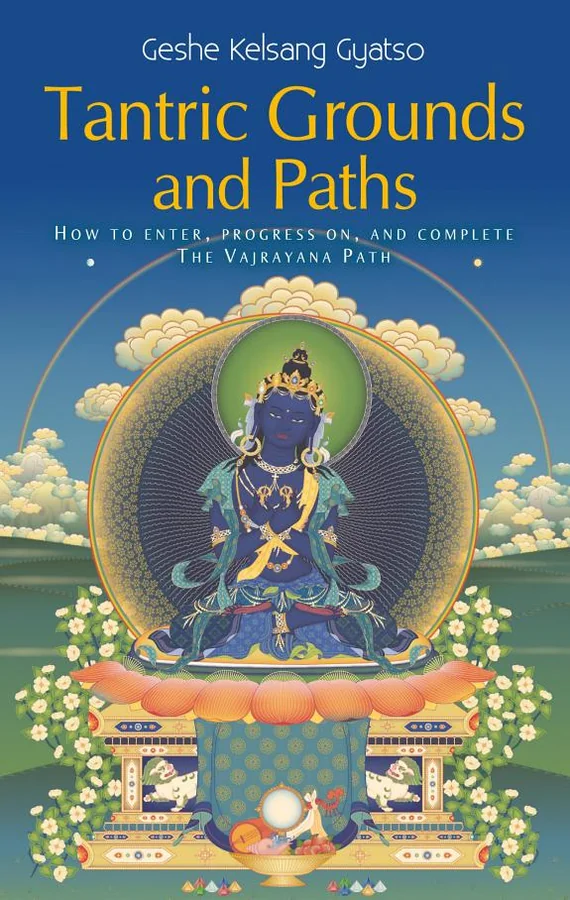
Tantric Grounds and Paths
 71
71

Tantric Grounds and Paths
Kelsang Gyatso's "Tantric Grounds and Paths" is an ambitious attempt to codify the intricate pathways of Tantric Buddhism. Its strength lies in its methodical exposition, presenting the four classes of Tantra with a clarity that attempts to bridge the gap between esoteric oral transmission and textual study. The author’s reliance on foundational figures like Je Tsongkhapa lends historical weight to the exposition. However, the very comprehensiveness that makes it a valuable reference can also feel overwhelming. For instance, the detailed breakdown of the generation and completion stages, while accurate, demands significant prior knowledge of Buddhist cosmology and philosophy. The work's limitation is that its academic rigor, while a virtue for serious students, may present a steep barrier for newcomers to Vajrayana. It offers a lucid map, but the terrain it describes is undeniably challenging. Ultimately, it serves as a comprehensive, if demanding, guide to Tantric theory and practice.
📝 Description
71
Kelsang Gyatso's 1994 text outlines the four classes of Tantra in Tibetan Buddhism.
First published in 1994, "Tantric Grounds and Paths" by Kelsang Gyatso presents a structured approach to Tantric Buddhism. The book details the stages and practices within the four classes of Tantra, aiming to clarify this often obscure spiritual discipline. It breaks down complex methods into understandable steps for those seeking advanced Buddhist practice.
The work is directed at practitioners of Tibetan Buddhism who have a grasp of core Buddhist philosophy and wish to engage with Tantric techniques. It also serves scholars of religion and mysticism interested in the theory and practice of Vajrayana Buddhism. The text promises a clear, sequential guide to Tantric procedures.
Emerging from the Gelug school of Tibetan Buddhism, known for its logical rigor, "Tantric Grounds and Paths" draws on the teachings of masters like Je Tsongkhapa. Geshe Kelsang Gyatso, founder of the New Kadampa Tradition, compiled this text during a period of growing Western interest in Tibetan Buddhism. The book situates Tantric practice within a lineage that emphasizes systematic study and contemplation.
💡 Why Read This Book?
• Gain a structured understanding of the four classes of Tantra, moving beyond general concepts to the specific 'generation and completion stages' as outlined by Geshe Kelsang Gyatso, offering a clear progression for dedicated practitioners. • Explore the historical lineage of Tantric teachings, tracing their transmission from figures like Je Tsongkhapa, providing context for the practices and their philosophical underpinnings within Tibetan Buddhism. • Discover the potential for profound spiritual transformation, understanding how the 'gateway to a blissful new world' is presented as an attainable reality through the systematic application of Tantric methods described in the text.
⭐ Reader Reviews
Honest opinions from readers who have explored this book.
❓ Frequently Asked Questions
What is the primary focus of "Tantric Grounds and Paths"?
The book's primary focus is to systematically explain the stages of the four classes of Tantra within Tibetan Buddhism, detailing the 'generation and completion stages' of practice, making these advanced teachings more accessible.
Who is Kelsang Gyatso and what is his background?
Kelsang Gyatso is a Tibetan Buddhist scholar and meditation master, the founder of the New Kadampa Tradition. He has authored numerous books on Buddhist philosophy and practice, drawing from the teachings of masters like Je Tsongkhapa.
When was "Tantric Grounds and Paths" first published?
The book "Tantric Grounds and Paths" was first published in 1994, making it a relatively modern interpretation and compilation of ancient Tantric teachings.
What are the 'four classes of Tantra' mentioned in the book?
The four classes of Tantra, as presented in the book, refer to Kriya, Carya, Yoga, and Anuttarayoga Tantra, each representing progressively subtler methods for achieving spiritual enlightenment within Vajrayana Buddhism.
Does the book explain how to perform Tantric rituals?
While the book explains the theoretical and practical stages, including the 'generation stage' involving visualization, its primary aim is to provide a comprehensive overview of the grounds and paths of Tantra, rather than a simple how-to manual for specific rituals.
Is "Tantric Grounds and Paths" suitable for absolute beginners in Buddhism?
The book is best suited for those with some existing foundation in Buddhist philosophy. While it aims for clarity, the subject matter of Tantra is inherently complex and builds upon core Buddhist principles.
🔮 Key Themes & Symbolism
Stages of Tantric Practice
The core of the book systematically outlines the progression through the 'four classes of Tantra'. It meticulously details the 'generation stage', where practitioners visualize themselves as enlightened beings and their environment as a pure realm, and the 'completion stage', which explores subtler internal energies and mind states. This structured approach explains the complex Tantric path, presenting it as a logical and achievable progression toward spiritual realization, as taught by masters like Je Tsongkhapa.
The Nature of Tantra
"Tantric Grounds and Paths" presents Tantra not as a mere collection of rituals, but as a profound spiritual path grounded in Buddhist philosophy. It reveals Tantra as a potent method for rapid transformation, capable of leading practitioners to a 'blissful new world' of enlightenment. The work emphasizes the lineage of transmission, where teachings are passed from accomplished masters to disciples, ensuring the integrity and efficacy of the practices.
Achieving Enlightenment
The ultimate goal articulated is the attainment of Buddhahood through the direct application of Tantric methods. The book explains how the 'generation and completion stages' serve as skillful means to purify the mind and body, leading to the realization of ultimate reality. This focus on direct realization distinguishes Tantra within the broader Buddhist framework, offering a path to profound peace and wisdom.
Lineage and Authority
Geshe Kelsang Gyatso grounds his exposition in the authority of revered Tibetan Buddhist masters, particularly Je Tsongkhapa. The emphasis on the unbroken lineage of teachings, passed down from Buddha to accomplished yogis, underscores the validity and power of the Tantric path. This respect for tradition and authoritative sources is crucial for working through the profound and potentially subtle practices described.
💬 Memorable Quotes
Direct passages from the work, attributed to the author.
“All the stages of the four classes of Tantra, giving a full explanation of generation and completion stages.”
— This statement highlights the book's systematic approach, promising a comprehensive breakdown of the Tantric path, from its foundational principles to its most advanced practices.
“Tantra is revealed as the gateway to a blissful new world.”
— This phrase expresses the transformative potential of Tantric practice, suggesting it offers a direct path to profound peace and spiritual liberation, a state far removed from ordinary worldly suffering.
“Since the time of Buddha, these secrets have been passed down from accomplished master to disciple largely by word of mouth.”
— This points to the oral transmission aspect of Tantric teachings, emphasizing the importance of a qualified guru and the lineage of knowledge, while also signaling the book's role in making these previously less accessible teachings more widely available.
“Now drawing from his own experience and the works of Je Tsongkhapa and other great Tibetan Yogis...”
— This indicates the dual foundation of the text: the author's practical experience and his scholarly grounding in the authoritative works of historical masters, lending credibility to the presented teachings.
“The mysteries of Tantra have engrossed countless meditators for centuries.”
— This opening sentiment acknowledges the enduring appeal and profound nature of Tantric practices, setting the stage for the book's detailed exploration of these ancient methods.
🌙 Esoteric Significance
Tradition
This work firmly sits within the Vajrayana Buddhist tradition, a branch of Mahayana Buddhism. It specifically adheres to the Gelug school's systematic presentation of Tantric paths, emphasizing logical reasoning and methodical practice. While Tantra exists in various forms across different Indian and Tibetan lineages, Gyatso's approach is rooted in the Tibetan scholastic tradition, making it distinct from, for example, the more mystical or ritualistic elements found in some Hermetic or Gnostic traditions.
Symbolism
Key symbolism includes the visualization practices central to the 'generation stage', where practitioners embody enlightened deities (like Tara or Manjushri) and their surroundings become pure realms. These deities are not merely figures but represent aspects of enlightened mind. The concept of 'bliss' itself is symbolic, representing a profound spiritual joy and freedom from suffering, attainable through the 'completion stage' practices involving subtle body energies.
Modern Relevance
Contemporary practitioners of Tibetan Buddhism, particularly those within the New Kadampa Tradition and similar organizations, continue to study and practice the methods outlined in "Tantric Grounds and Paths." The book's clear exposition also appeals to scholars of religion and comparative mysticism seeking to understand the theoretical underpinnings of advanced Buddhist practices in a systematic manner.
👥 Who Should Read This Book
• Dedicated students of Tibetan Buddhism seeking a comprehensive textual guide to the advanced practices of Tantra, including the 'generation and completion stages'. • Scholars of comparative religion and Eastern philosophies interested in understanding the structured approach to enlightenment within the Vajrayana tradition, referencing figures like Je Tsongkhapa. • Meditators looking for a systematic framework to deepen their practice beyond foundational Buddhist principles, aiming to understand the 'gateway to a blissful new world' described.
📜 Historical Context
Published in 1994, "Tantric Grounds and Paths" emerged during a period of significant global dissemination of Tibetan Buddhism. Geshe Kelsang Gyatso, a prominent figure in the Gelug school and founder of the New Kadampa Tradition, presented these teachings drawing extensively from the lineage of masters, most notably Je Tsongkhapa, the 14th-century reformer of Tibetan Buddhism. This era saw increased Western engagement with Buddhist philosophy and practice, often in contrast to more established Western spiritual or philosophical traditions. While specific reception events like major reviews or censorship are not widely documented for this particular title, Gyatso's prolific writing established him as a key proponent of making Tibetan Buddhist texts accessible to a global audience. His work offered a structured, lineage-based approach to complex Tantric concepts, differentiating it from more eclectic or syncretic forms of Western esotericism that were also gaining traction.
📔 Journal Prompts
Reflect on the concept of the 'generation stage' and its potential impact on cultivating divine pride.
Consider the 'completion stage' practices and how they might address subtler aspects of consciousness.
Analyze the role of Je Tsongkhapa's teachings as presented in understanding the four classes of Tantra.
Explore the idea of a 'gateway to a blissful new world' through the lens of the book's explanation of Tantra.
How does the emphasis on master-disciple transmission influence the understanding of these 'secrets'?
🗂️ Glossary
Tantra
A complex system within Vajrayana Buddhism that utilizes advanced techniques, including visualization, mantra, and subtle energy work, to achieve rapid spiritual realization and enlightenment.
Generation Stage
The initial phase of Tantric practice involving the visualization of oneself as an enlightened deity and one's surroundings as a pure land, cultivating divine pride and wisdom.
Completion Stage
The advanced phase of Tantric practice that focuses on subtler internal energies and mind states, aiming for profound transformation and the realization of ultimate reality.
Four Classes of Tantra
The categorization of Tantric practices within Tibetan Buddhism, generally including Kriya, Carya, Yoga, and Anuttarayoga Tantra, representing increasing levels of subtlety and efficacy.
Je Tsongkhapa
A highly influential Tibetan Buddhist scholar and saint (1357–1419) who founded the Gelug school, renowned for his systematic approach to Buddhist philosophy and practice.
Blissful New World
A metaphorical or literal state of profound spiritual joy, peace, and liberation from suffering, attainable through the successful practice of Tantric methods.
Vajrayana
The 'Diamond Vehicle' or 'Thunderbolt Vehicle,' a branch of Mahayana Buddhism that encompasses Tantric practices, known for its direct and potent methods for achieving enlightenment.
This book appears in 1 collection
🔮 Readers Also Liked
Browse all →




From the “Buddhism” Collection
View all →



More Free Sacred Texts & Gnosticism Books
View all →