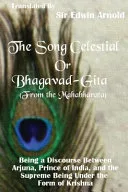
The Song Celestial Or Bhagavad-Gita (from the Mahabharata)
 79
79

The Song Celestial Or Bhagavad-Gita (from the Mahabharata)
Sir Edwin Arnold’s poetic rendering of the Bhagavad-Gita, first published in 1885, attempts to bridge the vast cultural and linguistic chasm between ancient India and Victorian England. Arnold’s greatest strength lies in his ability to imbue the Sanskrit verses with a lyrical quality that, for many early Western readers, made the philosophical depth of Krishna’s discourse accessible. The translation captures the emotional weight of Arjuna's despair before the Kurukshetra war and the divine reassurance offered by Krishna. However, Arnold’s Victorian sensibilities sometimes lead to interpretations that prioritize moralistic framing over the subtler nuances of the original. For instance, his emphasis on a singular, Western-aligned concept of 'duty' can flatten the complex, multifaceted nature of Dharma. A notable passage is Krishna's instruction to Arjuna to perform his duty as a warrior without attachment to the results, a principle Arnold renders with considerable dramatic flair. While it offers a beautiful entry point, readers seeking a strictly literal or academically rigorous translation might find Arnold's Victorian lens a significant, albeit artistic, filter. It remains a significant historical translation, a testament to the enduring power of the Gita's message across cultures.
📝 Description
79
Sir Edwin Arnold published his English translation of the Bhagavad-Gita, The Song Celestial, in 1885.
The Song Celestial is Sir Edwin Arnold's 1885 poetic translation of the Bhagavad-Gita, a dialogue from the Mahabharata. It centers on a conversation between the warrior Arjuna and Lord Krishna, who appears as his charioteer on the battlefield of Kurukshetra. This exchange moves beyond a simple narrative to become a philosophical discussion about duty, devotion, and the divine. Arnold's work aims to make the Bhagavad-Gita's core ideas accessible through evocative English verse.
This rendition is suitable for readers new to the Bhagavad-Gita's central teachings. It also holds interest for students of comparative religion and Indian philosophy, offering a look at how Eastern spirituality was perceived in the late 19th century West. The translation appeals to anyone considering the connection between spiritual understanding and ethical challenges, especially when facing difficult circumstances or existential questions.
Arnold's 1885 translation appeared as Western interest in Eastern religions grew, influenced by groups like the Theosophical Society. Before this, the Bhagavad-Gita was largely known only to Sanskrit scholars. Arnold's poetic version provided an accessible entry point, contributing to its wider recognition. While praised for its literary quality, Arnold's translation also included interpretive choices that drew attention from more academic readers.
💡 Why Read This Book?
• Grasp the concept of Dharma by examining Arjuna's ethical dilemma on the battlefield of Kurukshetra, understanding duty not as a rigid rule but as a dynamic principle of righteous action. • Explore the interplay of devotion (Bhakti Yoga) and knowledge (Jnana Yoga) as presented in Krishna's dialogue, offering distinct paths toward spiritual realization and inner peace. • Appreciate the historical significance of this 1885 translation, recognizing how Sir Edwin Arnold's poetic interpretation made the Bhagavad-Gita accessible to a Western audience, influencing global spiritual discourse.
⭐ Reader Reviews
Honest opinions from readers who have explored this book.
❓ Frequently Asked Questions
What is the historical significance of Sir Edwin Arnold's Bhagavad-Gita translation?
Published in 1885, Arnold's "The Song Celestial" was one of the first widely accessible English poetic translations of the Bhagavad-Gita, introducing the text to a broad Western audience during a period of increasing interest in Eastern philosophies.
Who are the main characters in The Song Celestial?
The primary characters are Prince Arjuna, an Indian warrior facing a moral crisis before a great battle, and Lord Krishna, the Supreme Deity who appears disguised as Arjuna's charioteer and guides him through philosophical and spiritual teachings.
What is the main setting of The Song Celestial?
The main setting is the battlefield of Kurukshetra, on the eve of a colossal war between the Kaurava and Pandava armies. This tense environment serves as the backdrop for the profound dialogue between Arjuna and Krishna.
What core philosophical concepts are discussed in The Song Celestial?
The text explores fundamental concepts such as Dharma (duty/righteousness), Karma (action and consequence), the nature of the soul (Atman), detachment from material desires, and various paths to spiritual liberation (Moksha).
Is The Song Celestial a literal translation of the Bhagavad-Gita?
No, Sir Edwin Arnold's work is a poetic interpretation and adaptation rather than a literal, word-for-word translation. It prioritizes lyrical flow and accessibility for English readers, sometimes taking interpretive liberties.
Where does the Bhagavad-Gita appear within the Mahabharata epic?
The Bhagavad-Gita is presented as an episode within the Bhishma Parva (the sixth book) of the vast Sanskrit epic, the Mahabharata, one of the most significant works of ancient Indian literature.
🔮 Key Themes & Symbolism
Dharma and Duty
The text centrally addresses Dharma, often translated as duty or righteous action. Arjuna's crisis stems from his reluctance to engage in battle against his kin, questioning the morality of his Kshatriya (warrior) dharma. Krishna's teachings reframe duty not as a rigid obligation but as an essential aspect of cosmic order and personal integrity, to be performed with detachment from its outcomes. This concept is crucial for understanding one's role within the universe and society.
The Nature of the Soul
A significant portion of the discourse focuses on the distinction between the physical body and the eternal, unchanging soul (Atman). Krishna explains that the Atman is indestructible, unaffected by birth, death, or physical harm. This understanding is presented as foundational for overcoming fear and attachment to the transient material world. The concept of reincarnation is implied, as the soul merely transmigrates from one body to another.
Paths to Liberation (Yoga)
The Bhagavad-Gita, as rendered by Arnold, outlines multiple paths to achieve spiritual liberation (Moksha). Krishna elucidates Karma Yoga (the path of selfless action), Bhakti Yoga (the path of devotion to the divine), and Jnana Yoga (the path of wisdom and self-knowledge). These are presented not as mutually exclusive but as complementary disciplines that can lead to union with the divine, catering to different temperaments and capacities.
Divine Manifestation
Krishna reveals his divine nature to Arjuna, not just as a teacher but as the Supreme Being. This revelation, particularly the cosmic vision described in Chapter 11, emphasizes the immanence and transcendence of the divine. The text explores the idea that the divine is present in all creation, yet also distinct from it, offering a complex theological perspective on God's relationship with the universe.
💬 Memorable Quotes
Direct passages from the work, attributed to the author.
“The soul that is not bound by the effects of its deeds.”
— This refers to the liberated soul, one who acts according to Dharma but remains detached from the fruits of their actions. Such an individual understands that the true self (Atman) is beyond the consequences of worldly deeds, thus achieving inner freedom.
“Thou hast the right to the action only, never to the fruits thereof.”
— A core tenet of Karma Yoga, this emphasizes focusing on the performance of one's duty or action itself, without being attached to or seeking specific outcomes. It promotes performing actions with diligence and integrity, accepting whatever results may arise.
“The mind is restless and turbulent, but by practice and detachment, O son of Kuru, it can be subdued.”
— This highlights the challenge of controlling the mind and the methods prescribed for achieving mental discipline. It points to the importance of consistent spiritual practice (Abhyasa) and non-attachment (Vairagya) in overcoming mental distractions and achieving inner peace.
💡 Key Ideas
Editorial paraphrase of the work's core concepts — not direct quotes.
Act, but act in the spirit of Sacrifice; This is the path to the death of desire.
This paraphrased concept highlights Krishna's teaching on Karma Yoga. It suggests that performing actions with an attitude of selfless offering, rather than for personal gain or attachment, is a way to transcend ego and the cycle of desire, leading towards spiritual purification.
Death is certain to him who has been born, and birth is certain to him who has died.
This paraphrased concept underscores the cyclical nature of existence as understood in Hindu philosophy. It speaks to the eternal nature of the soul (Atman), which transmigrates through different bodies, asserting that life and death are continuous processes.
🌙 Esoteric Significance
Tradition
While the Bhagavad-Gita is a foundational text within the Hindu Vaishnavism tradition, Arnold's translation brought its teachings to the attention of Western esoteric circles, including Theosophy and later New Age movements. It offered concepts like Karma Yoga and divine union that resonated with Hermetic and Neoplatonic ideas about cosmic order and spiritual ascent, providing a non-Western framework for understanding esoteric principles.
Symbolism
Key symbols include the battlefield of Kurukshetra, representing the inner struggle between higher and lower natures, or the soul's battleground against ignorance and desire. Krishna, the divine charioteer, symbolizes the guiding principle of divine wisdom or the higher self that directs the individual soul (Arjuna) through life's challenges. The chariot itself can symbolize the human being, with senses as horses and the mind as the reins, needing control by the intellect.
Modern Relevance
Contemporary practitioners of yoga and mindfulness often draw upon the Bhagavad-Gita's emphasis on detachment, selfless action (Karma Yoga), and devotion (Bhakti). Thinkers exploring comparative spirituality and the integration of Eastern philosophies into Western psychology and self-help methodologies frequently reference its teachings on the nature of consciousness and the path to inner peace.
👥 Who Should Read This Book
• Students of comparative religion and world literature seeking historical English interpretations of seminal Eastern texts. • Individuals grappling with ethical dilemmas or existential crises who wish to explore philosophical frameworks for duty and resilience. • Practitioners of yoga and meditation looking for poetic and philosophical context for concepts like Karma Yoga and the nature of consciousness.
📜 Historical Context
Sir Edwin Arnold's "The Song Celestial" arrived in 1885 during a period of intense Western fascination with Indian philosophy, largely driven by the Theosophical Society and scholars like Max Müller. This era saw a surge in translations and interpretations of Sanskrit texts, aiming to integrate Eastern wisdom into Western thought. Arnold's poetic rendition offered a more accessible and aesthetically pleasing version of the Bhagavad-Gita than previous scholarly translations, contributing significantly to its popularity among the general reading public. While celebrated for its literary merit, it also faced criticism from academic purists who noted Arnold's Victorian sensibilities and interpretive liberties, which sometimes colored the translation. This work emerged in dialogue with, and in contrast to, more literal scholarly efforts, positioning itself as a bridge between cultures, albeit one shaped by its time and translator’s perspective.
📔 Journal Prompts
Arjuna's despair on the battlefield and Krishna's response.
The concept of Dharma as duty, distinct from personal desire.
Krishna's teachings on the indestructible nature of the Atman.
The balance between action (Karma Yoga) and devotion (Bhakti Yoga).
Reflecting on detachment from the fruits of one's actions.
🗂️ Glossary
Bhagavad-Gita
A sacred Sanskrit scripture forming part of the Hindu epic Mahabharata, containing a philosophical dialogue between Prince Arjuna and Lord Krishna.
Mahabharata
One of the two major Sanskrit epics of ancient India, attributed to the sage Vyasa, which includes the Bhagavad-Gita as an episode.
Dharma
In Hinduism, the principle of cosmic order, righteousness, duty, and law that governs all things and beings.
Atman
The spiritual self or soul, considered by Hindu philosophy to be eternal, unchanging, and distinct from the physical body.
Karma Yoga
The spiritual path of selfless action performed without attachment to the results, as a means of spiritual purification and liberation.
Bhakti Yoga
The spiritual path of devotion, love, and surrender to the divine, often involving worship and chanting.
Moksha
Liberation or release from the cycle of birth, death, and rebirth (samsara) in Hindu philosophy.