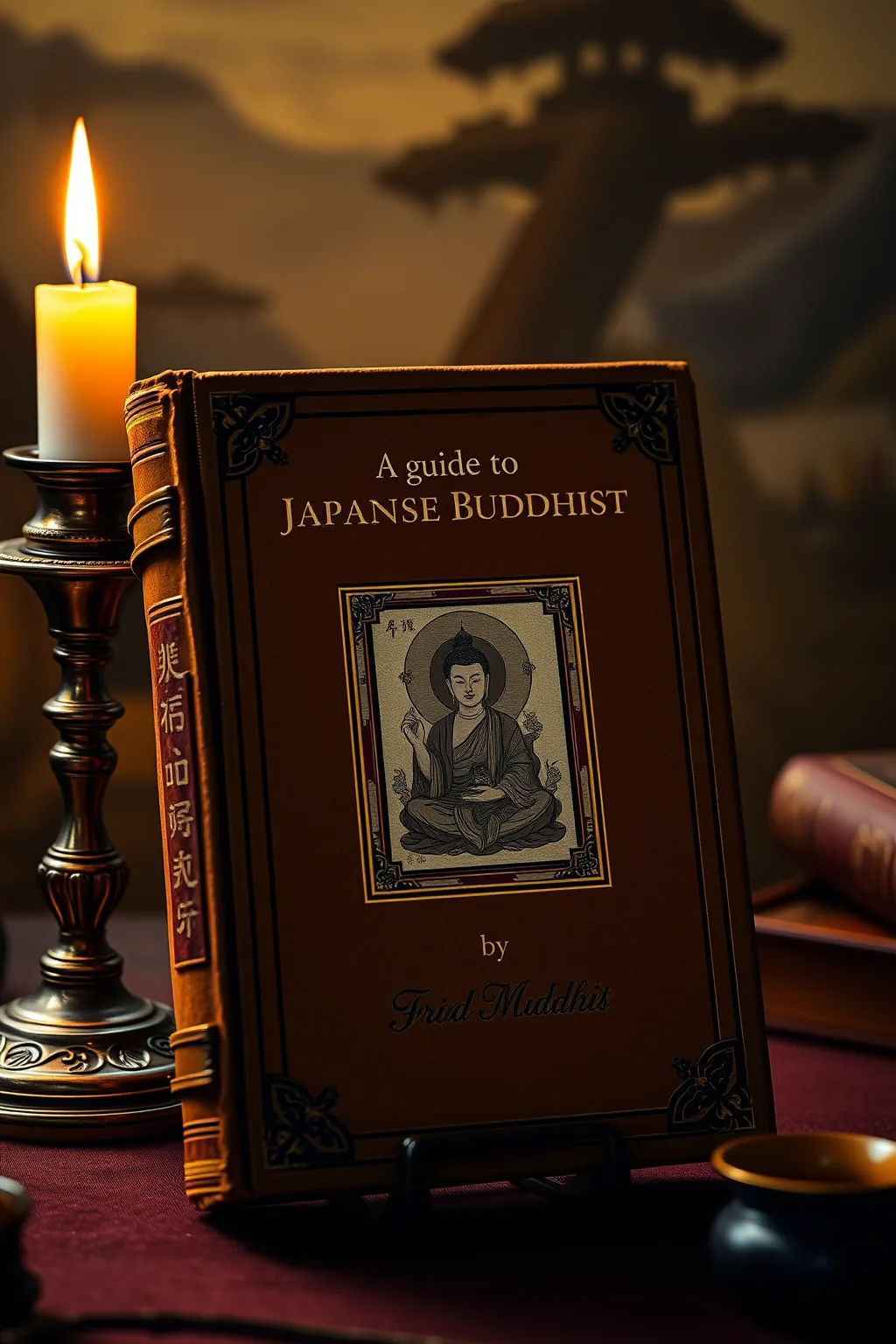
A guide to Japanese Buddhism
 82
82

A guide to Japanese Buddhism



Cassian Rothmann, Senior Critic at Ancient Wisdom, hails 'A Guide to Japanese Buddhism' as an indispensable key to unlocking the esoteric heart of Japan's spiritual heritage. This volume masterfully navigates the complex evolution of Buddhist thought, from its syncretic embrace with indigenous Shinto beliefs to the distinct philosophical innovations of sects like Zen, Pure Land, and their revered founders. The author's meticulous research illuminates the subtle yet powerful ways these traditions have woven themselves into the fabric of Japanese culture. Esoteric insights abound, offering practitioners and scholars alike a deeper appreciation for the symbolic language and contemplative practices that define this rich tradition. A truly illuminating read for anyone seeking to understand the profound spiritual currents of the East.
📝 Description
82
This 2023 guide explains Japanese Buddhism's development and core tenets.
Published in 2023, 'A Guide to Japanese Buddhism' examines the evolution and distinct characteristics of Buddhist schools within Japan. The book traces how Buddhism integrated with indigenous beliefs and societal structures, influencing Japanese culture over centuries. It details the philosophical underpinnings and practices of major traditions such as Zen, Pure Land, and Shingon. The text clarifies the unique approaches of different sects, including Rinzai and Soto Zen, and the devotional paths within Pure Land Buddhism, referencing key figures like Shinran and Honen.
The guide presents these complex subjects with clear explanations and visual aids. It aims to make the esoteric aspects of Japanese Buddhism accessible to those interested in its spiritual and philosophical dimensions. The work provides a comprehensive overview, detailing how Buddhist thought has shaped Japanese identity and daily life, from ancient times to the present.
This book addresses the specific forms Buddhism took in Japan, often diverging from its Indian origins. It highlights schools like Shingon, which incorporate tantric elements, and the meditative disciplines of Zen. The explanations of Pure Land practices, focused on devotion to Amida Buddha, also represent a distinct development. By detailing the internal differences between sects and their unique interpretations of Buddhist doctrine and practice, the guide illuminates the esoteric dimensions that became central to Japanese religious life.
💡 Why Read This Book?
Uncover the hidden spiritual architecture of Japan. This guide demystifies the diverse schools and sects of Japanese Buddhism, revealing their origins, differences, and profound societal impact. Perfect for seekers of spiritual wisdom, scholars of comparative religion, and practitioners interested in the unique contemplative practices that have shaped a nation. Gain insights into the interplay of Shinto, Zen, and Pure Land Buddhism, enriched by illuminating infographics.
⭐ Reader Reviews
Honest opinions from readers who have explored this book.
❓ Frequently Asked Questions
What are the core differences between Zen and Pure Land Buddhism as presented in this guide?
The guide elucidates Zen's emphasis on direct experiential insight and meditation (zazen) to attain enlightenment, contrasting it with Pure Land's focus on devotion and faith in Amida Buddha to be reborn in the Pure Land, thus achieving enlightenment through compassionate grace.
How does the book explain the integration of Shinto and Buddhism in Japan?
It details the historical syncretism, where Buddhist deities were often interpreted as manifestations of Shinto kami, and vice versa, creating a unique spiritual landscape where both traditions coexisted and influenced each other profoundly.
Which key figures of Japanese Buddhism are discussed?
The guide features prominent figures such as Shinran and Honen, founders of influential Pure Land schools, and explores the lineage of Zen masters who propagated Zen, Rinzai Zen, and Soto Zen throughout Japan.
Are there practical applications or contemplative exercises suggested?
While primarily an informative guide, the book's exploration of practices like zazen (Zen meditation) and nembutsu (Pure Land chanting) implicitly encourages contemplation and personal engagement with these traditions, offering a foundation for further practice.
Is this book suitable for beginners with no prior knowledge of Buddhism?
Absolutely. The guide is designed to be accessible, providing a clear historical overview and explanations of core concepts, making it an ideal starting point for anyone curious about the multifaceted world of Japanese Buddhism.
🔮 Key Themes & Symbolism
The Syncretic Bloom: Shinto and Buddhism
This theme studies the profound and unique intermingling of Japan's indigenous Shinto beliefs with the imported Buddhist doctrines. It explores how deities, rituals, and philosophical concepts from both traditions were harmonized, creating a spiritual landscape where the sacred permeated every aspect of life. The guide illustrates how this fusion wasn't a mere coexistence but a dynamic integration, shaping a distinct Japanese spiritual identity that continues to resonate today, revealing the subtle symbolism inherent in this harmonious blend.
Zen's Path to Inner Stillness
Focusing on the contemplative heart of Japanese Buddhism, this theme illuminates the practice and philosophy of Zen. It dissects the distinct approaches of Rinzai Zen, with its emphasis on koan study to break through intellectual barriers, and Soto Zen, prioritizing seated meditation (zazen) as the direct expression of enlightenment. The reader will uncover the esoteric pursuit of sudden awakening, the cultivation of mindfulness, and the profound realization of one's inherent Buddha-nature, offering a glimpse into the disciplined path of inner stillness and direct experience.
The Compassionate Embrace of Pure Land
This section explores the spiritual solace and accessible path offered by Pure Land Buddhism, particularly through the teachings of Shinran and Honen. It reveals the concept of Amida Buddha's boundless compassion and the power of faith and sincere recitation of the nembutsu (mantra) as a means to attain rebirth in the Pure Land. The guide studies the devotional aspects, the promise of salvation for all beings, and the profound comfort this tradition has provided to countless individuals, highlighting its role in shaping Japanese society through its inclusive and hopeful message.
💬 Memorable Quotes
Direct passages from the work, attributed to the author.
“The Dharma, like a gentle rain, nourishes the soul of Japan.”
— This metaphor suggests the pervasive and life-giving influence of Buddhist teachings, highlighting its ability to cultivate spiritual growth and transform the cultural landscape.
“Faith in Amida's vow is the boat across the sea of suffering.”
— This speaks to the core tenet of Pure Land Buddhism, emphasizing the transformative power of devotion and reliance on compassionate grace to overcome worldly difficulties and achieve spiritual liberation.
“The kami and the Buddhas dance in ancient groves.”
— This evocative phrase captures the essence of Shinto-Buddhism syncretism, illustrating the harmonious coexistence and spiritual unity of indigenous deities and Buddhist figures in sacred natural spaces.
“Each school, a unique bloom on the Bodhi tree.”
— This metaphor emphasizes the diverse yet interconnected nature of Buddhist schools in Japan, each offering a distinct path and expression of the ultimate truth found at the root of enlightenment.
💡 Key Ideas
Editorial paraphrase of the work's core concepts — not direct quotes.
In the silence of zazen, the universe whispers its secrets.
This quote points to the esoteric experience of Zen meditation, where clear insights and hidden truths are revealed through deep contemplative practice and inner stillness.
🌙 Esoteric Significance
Tradition
This guide studies the esoteric dimensions of Japanese Buddhism, primarily focusing on the contemplative traditions of Zen (Rinzai and Soto) and the devotional paths of Pure Land Buddhism. It explores the underlying philosophical currents that connect these diverse practices, revealing the shared pursuit of enlightenment and liberation from suffering. The text hints at deeper symbolic meanings and experiential truths accessible through disciplined practice and profound faith, offering insights into the hidden knowledge that underpins these spiritual lineages.
Symbolism
The book implicitly explores strong symbolism within Japanese Buddhism. This includes the meditative symbolism of the lotus flower (purity and enlightenment), the emptiness (sunyata) represented by the void in Zen art, the 'mudras' or hand gestures in Buddhist iconography, and the profound significance of the Amida Buddha's light in Pure Land Buddhism. Infographics likely illuminate these symbols, offering visual keys to understanding complex theological and philosophical concepts in a tangible, accessible manner.
Modern Relevance
In a world increasingly seeking meaning and tranquility, the ancient wisdom of Japanese Buddhism offers profound relevance. The mindfulness and meditative practices of Zen provide powerful tools for stress reduction and mental clarity in our fast-paced lives. The inclusive compassion of Pure Land Buddhism offers hope and solace, while the integration of spirituality with nature, a hallmark of Shinto-Buddhist synthesis, speaks to contemporary ecological concerns. This guide bridges the gap between ancient teachings and modern challenges, making these profound spiritual insights accessible and applicable.
👥 Who Should Read This Book
This comprehensive guide is essential for a diverse audience. For the spiritual seeker, it offers a clear map to reading through the profound and often intricate field of Japanese Buddhism, revealing paths to inner peace and understanding. Scholars of religion and Asian studies will find it an invaluable resource for its detailed historical and philosophical insights, particularly regarding the syncretic evolution of these traditions. Practitioners of meditation or devotional practices will discover a deeper context for their chosen path, while those simply curious about Japanese culture will gain a profound appreciation for the spiritual bedrock upon which it is built.
📜 Historical Context
The introduction and evolution of Buddhism in Japan, beginning in the 6th century CE, marked an important moment in the nation's cultural and spiritual development. Initially adopted by the ruling elite, it gradually permeated society, often coexisting with and influencing the indigenous Shinto faith. This period saw the establishment of numerous schools and sects, each adapting Buddhist philosophy to Japanese sensibilities. Figures like Prince Shotoku played a central role in its early propagation, while later centuries witnessed the rise of influential monks and philosophers who founded distinct traditions such as Zen, Pure Land, and Nichiren Buddhism. The Heian, Kamakura, and Edo periods were particularly formative, with each era contributing to the rich and complex collection of Japanese Buddhism, influencing art, literature, governance, and the daily lives of its people.
📔 Journal Prompts
Reflect on the concept of 'emptiness' (sunyata) as presented in Zen Buddhism. How does this idea challenge or complement your current worldview?
Consider the role of faith in Pure Land Buddhism. In what areas of your life do you rely on faith, and what does 'faith' mean to you?
How has the interplay between Shinto and Buddhism shaped the aesthetic and spiritual sensibilities of Japanese culture? Can you see similar syncretic influences in your own cultural background?
The guide mentions the 'direct experience' sought in Zen. What does 'direct experience' mean to you in the context of spirituality or personal growth?
Explore the idea of 'compassionate action' as a result of spiritual practice. How can understanding Japanese Buddhist principles inspire more compassionate engagement with the world around you?
🗂️ Glossary
Zazen
A seated meditation practice central to Zen Buddhism, emphasizing mindfulness and direct experiential insight into the nature of reality.
Nembutsu
The recitation of the name of Amida Buddha ('Namu Amida Butsu'), a core practice in Pure Land Buddhism, believed to invoke his compassionate grace.
Kami
Indigenous deities or spirits in Shinto, often associated with natural phenomena, places, or ancestral figures, which were frequently integrated with Buddhist concepts in Japan.
Bodhi Tree
The tree under which Siddhartha Gautama attained enlightenment and became the Buddha. Symbolically represents the attainment of enlightenment and the spread of Buddhist teachings.
Koan
A paradoxical riddle or question used in Rinzai Zen practice, intended to provoke a breakthrough in understanding and transcend rational thought.
This book appears in 1 collection
🔮 Readers Also Liked
Browse all →









From the “Christian Mysticism” Collection
View all →








More Free Mysticism & Contemplation Books
View all →