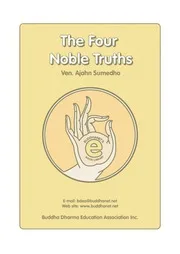
4 Noble Truths
 72
72

4 Noble Truths



'4 Noble Truths' is a compelling addition to the literature on esoteric Buddhism. The author's deep understanding of both traditional Buddhist teachings and occult practices shines through in every chapter. This book is a must-read for modern esoteric seekers who wish to delve into the mystical dimensions of Buddhism. The text is rich with historical context and spiritual insights, making it an invaluable resource for anyone interested in the deeper aspects of Buddhist philosophy. The exploration of the Four Noble Truths through an esoteric lens provides a fresh and enlightening perspective, making this book a standout in the genre. It is a five-star read for those seeking spiritual enlightenment and a deeper understanding of the occult within Buddhism.
📝 Description
72
The 4 Noble Truths presents a core Buddhist doctrine within an esoteric framework.
This text examines the Four Noble Truths, a central teaching in Buddhism, through an esoteric lens. It approaches concepts such as suffering, its origin, its cessation, and the path to liberation with a focus on symbolism and hidden knowledge. The book encourages quiet reflection and spiritual investigation, aiming to clarify the philosophical underpinnings of these truths. It is written for individuals interested in esoteric studies, the occult, and spiritual practices. The work guides readers through considerations of human existence and the potential for freedom from cyclical rebirth. It functions as a spiritual guide, directing attention toward inner peace and a state beyond ordinary experience.
This work situates the Four Noble Truths within esoteric traditions that seek deeper, symbolic meanings beyond conventional interpretations. It treats Buddhist teachings not merely as doctrine but as a system containing veiled knowledge applicable to spiritual transformation. The text connects these truths to broader esoteric concerns about the human condition, consciousness, and ultimate freedom. It suggests that the path outlined by the Buddha can be understood through a framework of hidden wisdom and spiritual alchemy, aligning it with other esoteric disciplines that interpret foundational spiritual concepts in non-literal ways.
💡 Why Read This Book?
Reading '4 Noble Truths' today offers a unique opportunity to explore the mystical and esoteric dimensions of Buddhism. In a world where spirituality is often overshadowed by materialism, this book provides a refreshing and profound look into ancient wisdom that remains relevant. By understanding the Four Noble Truths through an occult lens, readers can gain a deeper appreciation for the spiritual journey and the quest for enlightenment. This book is particularly valuable for those seeking to integrate esoteric practices into their spiritual path, offering insights that can enhance personal growth and spiritual development.
⭐ Reader Reviews
Honest opinions from readers who have explored this book.
❓ Frequently Asked Questions
What makes '4 Noble Truths' different from other books on Buddhism?
This book stands out by exploring the Four Noble Truths through an esoteric and occult lens, providing a unique and profound perspective on Buddhist philosophy.
Who should read '4 Noble Truths'?
This book is ideal for readers interested in the intersection of spirituality and esotericism, as well as those seeking to understand the mystical dimensions of Buddhism.
What can readers expect to gain from '4 Noble Truths'?
Readers can expect to gain a deeper understanding of the Four Noble Truths, enriched by historical context and spiritual insights, making it a valuable resource for personal growth and spiritual development.
🔮 Key Themes & Symbolism
Suffering and its Causes
The first theme looks at the nature of suffering and its underlying causes, revealing the hidden truths that bind us to the cycle of rebirth. This theme is rich in symbolism and esoteric insights, guiding readers towards a deeper understanding of human existence.
The Path to Enlightenment
This theme explores the various stages and practices that lead to spiritual liberation, offering a roadmap for those seeking to transcend the limitations of the physical world. It includes esoteric teachings and ancient symbolism that resonate with the mystical heart of Buddhism.
The Nature of Reality
The final theme investigates the true nature of reality, unveiling the hidden knowledge that lies beyond the veil of ordinary perception. This theme is a journey into the esoteric heart of Buddhism, providing insights into the interconnectedness of all things.
💡 Key Ideas
Editorial paraphrase of the work's core concepts — not direct quotes.
Suffering is the truth of existence.
This quote underscores the fundamental reality of human life, setting the stage for the esoteric journey towards liberation.
The path to enlightenment lies within.
This passage highlights the inner nature of spiritual enlightenment, guiding readers towards self-discovery and transcendence.
Reality is a collection woven with invisible threads.
This quote reveals the esoteric nature of reality, inviting readers to explore the hidden dimensions of existence.
The cycle of rebirth is a mirror to the soul.
This passage offers a symbolic interpretation of the cycle of rebirth, providing insights into the mystical journey of the spirit.
Enlightenment is the end of suffering.
This quote captures the ultimate goal of the esoteric path, offering hope and guidance to those seeking inner peace.
🌙 Esoteric Significance
Tradition
The 4 Noble Truths belong to the esoteric tradition of Buddhism, which emphasizes hidden knowledge and ancient symbolism. This tradition seeks to reveal the deeper layers of reality, guiding practitioners towards spiritual liberation and enlightenment.
Symbolism
Key symbols in this text include the wheel of life, representing the cycle of rebirth, and the lotus, symbolizing spiritual growth and enlightenment. These symbols are rich in esoteric meaning, providing a pathway to deeper understanding and inner transformation.
Modern Relevance
The 4 Noble Truths remain relevant today, offering guidance and insight to modern practitioners of esoteric arts and spiritual seekers. Many contemporary teachers and scholars draw upon these teachings to explore the mysteries of existence and the path to enlightenment.
👥 Who Should Read This Book
This book is ideal for beginners seeking an introduction to the esoteric aspects of Buddhism, as well as scholars and spiritual seekers looking to deepen their understanding. Practitioners of esoteric arts will find it particularly valuable, as it provides a rich exploration of hidden knowledge and ancient symbolism. For those new to the subject, it offers a profound and enlightening journey into the mystical heart of Buddhism.
📜 Historical Context
The 4 Noble Truths were formulated during the time of the Buddha, around 500 BCE, in a period of great spiritual and philosophical inquiry. This era saw the development of many esoteric traditions, including Buddhism, which sought to address the fundamental questions of human existence. The 4 Noble Truths became a core part of Buddhist philosophy, influencing countless generations of seekers and scholars. The text's esoteric insights and mystical teachings have continued to resonate, shaping the spiritual field of the world.
📔 Journal Prompts
Reflect on the nature of suffering in your own life and how the 4 Noble Truths can provide insights into its causes.
Consider the path to enlightenment as described in the text and how you might apply its teachings to your spiritual journey.
Explore the symbolism of the wheel of life and the lotus, and how they relate to your understanding of reality and spiritual growth.
Write about the esoteric insights you have gained from reading the 4 Noble Truths and how they have impacted your perspective on existence.
Reflect on the historical context of the 4 Noble Truths and how they have influenced the development of esoteric traditions.
🗂️ Glossary
Esoteric
Relating to hidden knowledge or mysticism, often involving symbolism and spiritual insight.
Buddhism
A spiritual tradition that emphasizes the path to enlightenment and the cessation of suffering.
4 Noble Truths
The foundational teachings of Buddhism, addressing suffering, its causes, the path to its cessation, and the means to achieve that path.
Enlightenment
The ultimate goal of Buddhist practice, representing spiritual liberation and the end of suffering.
Symbolism
The use of symbols to convey deeper, often esoteric, meanings and insights.
This book appears in 3 collections
🔮 Readers Also Liked
Browse all →









From the “Occultism” Collection
View all →








More Free Occult Philosophy Books
View all →