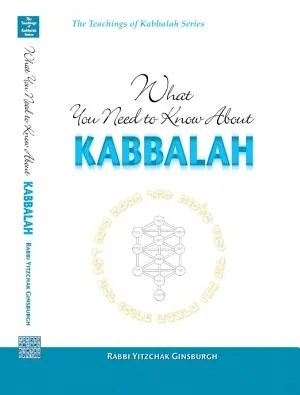
What You Need to Know about Kabbalah
 78
78

What You Need to Know about Kabbalah
Rabbi Ginsburgh's "What You Need to Know about Kabbalah" attempts to chart a course through the often labyrinthine landscape of Jewish mysticism. Its strength lies in its ambition to present Kabbalah as a unified intellectual system, a feat few authors manage with such clarity for the uninitiated. The explanation of how seemingly divergent Kabbalistic streams cohere into a larger structure is particularly well-articulated. However, the book occasionally feels more like a curated index to Ginsburgh's own extensive oeuvre than a standalone introduction for the absolute novice. For instance, while the discussion on the Sefirot is clear, its integration into his personal interpretative framework can leave one wishing for more direct engagement with classic texts like the Zohar without the intermediary lens. Nevertheless, for those ready to engage with a systematic approach to Kabbalah, this volume offers a valuable, albeit specialized, overview.
📝 Description
78
Rabbi Yitzchak Ginsburgh's 2006 book aims to present Kabbalah as a systematic structure.
First published in 2006, "What You Need to Know about Kabbalah" seeks to clarify the structure of Jewish mystical thought. Rabbi Ginsburgh's work presents Kabbalah not as a series of separate ideas, but as an ordered system. The book acts as an introduction to his wider writings on theology and philosophy.
This volume is suitable for newcomers to Kabbalah who want a clear explanation. It also offers advanced students of mysticism new viewpoints by showing how different Kabbalistic ideas connect. The book is especially useful for those curious about the philosophical foundations of Jewish tradition. It places Kabbalistic concepts within the history of Jewish mystical inquiry, explaining their development and internal logic.
This book engages with the tradition of Kabbalah, a form of Jewish mysticism that has developed over centuries. It addresses the historical perception of Kabbalistic schools as disconnected, providing a way to see their underlying unity. The work follows a period of renewed scholarly and popular interest in esoteric traditions, building on the work of scholars who have studied Jewish mysticism.
💡 Why Read This Book?
• Gain a structured understanding of Kabbalistic thought, moving beyond isolated concepts to see its systematic framework, as detailed in the explanation of parallel Kabbalistic systems. • Discover how seemingly contradictory Kabbalistic ideas can be reconciled within a larger, orderly structure, offering new analytical tools for your own esoteric studies. • Access an introduction to Rabbi Ginsburgh's extensive writings, providing context for his specific interpretations of Jewish mysticism and its philosophical underpinnings.
⭐ Reader Reviews
Honest opinions from readers who have explored this book.
❓ Frequently Asked Questions
What is the primary goal of Rabbi Ginsburgh's book on Kabbalah?
The primary goal is to present Kabbalah as a coherent, systematic structure, demystifying its complex ideas for both beginners and advanced students, and serving as an introduction to Rabbi Ginsburgh's wider body of work.
Is "What You Need to Know about Kabbalah" suitable for complete beginners?
Yes, the book is written in a clear and lucid manner intended for beginners, while still offering depth for those with prior knowledge of Kabbalistic concepts.
When was "What You Need to Know about Kabbalah" first published?
The book was first published in 2006, reflecting a period of renewed interest in esoteric studies.
How does Rabbi Ginsburgh address the complexity of Kabbalistic thought?
He explains how numerous parallel and seemingly contradictory systems within Kabbalistic thought are actually part of a larger, orderly, and systematic structure.
What is the relationship between this book and Rabbi Ginsburgh's other writings?
This volume is designed to serve as an introduction to all of Rabbi Ginsburgh's many other writings, providing a foundational understanding of his approach to Kabbalah.
What specific Kabbalistic concepts does the book explore?
While specific concepts are explored in depth within the book, it generally covers the systematic structure of Kabbalistic thought, the nature of divinity, creation, and the relationship between different Kabbalistic schools.
🔮 Key Themes & Symbolism
Systematic Kabbalistic Structure
The central theme is the presentation of Kabbalah not as a fragmented set of beliefs, but as an intricate, systematic, and orderly structure. Rabbi Ginsburgh elucidates how diverse and sometimes conflicting Kabbalistic traditions and concepts interlock to form a cohesive whole. This approach aims to provide a logical framework for understanding the divine emanations and the nature of reality as described in Jewish mysticism, moving beyond anecdotal mystical experiences to a more philosophical exposition.
Introduction to Ginsburgh's Works
This volume functions as a gateway to Rabbi Ginsburgh's extensive body of published works. By outlining the fundamental principles and systematic approach underpinning Kabbalah, the book prepares readers for deeper engagement with his specific commentaries and theological explorations. It establishes a common vocabulary and conceptual foundation necessary for appreciating the nuances of his individual writings on Jewish mysticism and philosophy.
Bridging Beginner and Advanced Study
A key aim is to cater to a broad audience, from novices to seasoned practitioners. The text employs clear, lucid language suitable for beginners, ensuring accessibility. Simultaneously, it offers fresh insights and advanced perspectives that will be valuable to those already immersed in Kabbalistic studies. This dual focus allows the book to serve as a foundational resource that grows with the reader's understanding.
Reconciling Kabbalistic Traditions
The book addresses the challenge posed by the multiplicity of Kabbalistic schools and interpretations. Rabbi Ginsburgh explains how these seemingly parallel and contradictory systems are, in fact, integral parts of a larger, unified understanding of divine reality. This theme emphasizes the interconnectedness of Kabbalistic thought and offers a method for harmonizing different streams of Jewish mystical interpretation.
💬 Memorable Quotes
Direct passages from the work, attributed to the author.
“The many parallel and seemingly contradictory systems of Kabbalistic thought are part of a larger systematic and orderly structure.”
— This statement captures the book's core thesis: Kabbalah is presented not as a chaotic collection of ideas, but as a unified, logical system. It suggests that apparent conflicts are reconcilable when viewed from a higher, systemic perspective.
“This volume is a basic resource for anyone interested in Kabbalah.”
— This highlights the book's intended function as a foundational text. It aims to equip readers, regardless of their prior knowledge, with the essential information and framework needed to begin studying Kabbalah seriously.
“Even the advanced student will find a wealth of new information and insight.”
— This emphasizes the book's depth, suggesting that it offers more than just elementary explanations. It promises advanced students novel perspectives and deeper understanding, indicating a layered complexity within the presented material.
“In essence this book is an introduction to all of Rabbi Ginsburgh's many writings.”
— This positions the book as a primer for the author's complete works. It suggests that mastering the concepts presented here is crucial for fully grasping the scope and depth of his subsequent theological and philosophical explorations.
💡 Key Ideas
Editorial paraphrase of the work's core concepts — not direct quotes.
Rabbi Ginsburgh explains how... systems... are part of a larger systematic and orderly structure.
This paraphrase points to the book's analytical approach, focusing on the author's method of deconstructing and then reconstructing Kabbalistic thought into a coherent whole. It stresses the intellectual rigor applied to mystical concepts.
🌙 Esoteric Significance
Tradition
This work is firmly rooted in the Kabbalistic tradition, specifically drawing from the Lurianic and Chassidic interpretations prevalent within modern Orthodox Judaism. It departs from purely historical or academic analyses by presenting Kabbalah as a living, systematic theology and cosmology. Unlike more syncretic or generalized esoteric systems, Ginsburgh's approach remains deeply embedded within Jewish law and philosophy, emphasizing the divine order and its manifestation in the world.
Symbolism
Central to Kabbalistic symbolism are the Sefirot, the ten divine emanations that structure reality, often visualized as a Tree of Life. Ginsburgh's work explores their interconnectedness and role in creation and revelation. Another key motif is the concept of Ein Sof (the Infinite), representing the unknowable divine essence beyond all manifestation, which serves as the ultimate source from which the Sefirot emerge, grounding the cosmology in a concept of absolute transcendence.
Modern Relevance
Rabbi Ginsburgh's systematic approach to Kabbalah finds resonance today among scholars, theologians, and practitioners within Jewish communities seeking a deeper understanding of their tradition's mystical dimension. His work is also referenced by contemporary thinkers exploring the intersection of spirituality, philosophy, and psychology, particularly those interested in structured contemplative practices and the metaphysical underpinnings of consciousness within a traditional framework.
👥 Who Should Read This Book
• Students of Jewish mysticism seeking a systematic overview of Kabbalistic thought, particularly those interested in how different schools of thought integrate. • Individuals exploring comparative religion or philosophy who wish to understand a specific, structured esoteric tradition within Judaism. • Practitioners or scholars of Rabbi Yitzḥaḳ Ginsburgh's existing works who need a foundational text to contextualize his broader theological and philosophical contributions.
📜 Historical Context
Published in 2006, "What You Need to Know about Kabbalah" emerged during a period of significant resurgence in both academic and popular interest in Jewish mysticism. The work of scholars like Gershom Scholem in the mid-20th century had already laid crucial groundwork for understanding Kabbalah's historical development and philosophical underpinnings. Rabbi Ginsburgh's text arrives as a contribution to this ongoing discourse, aiming to synthesize and clarify complex Kabbalistic ideas for a contemporary audience. It seeks to reconcile various streams of Kabbalistic thought, which historically could appear disparate, presenting them as components of a unified system. This approach contrasts with earlier, more fragmented popular introductions and engages with the intellectual legacy established by figures who sought to systematize Jewish mystical traditions, offering a resource that bridges the gap between historical texts and modern comprehension.
📔 Journal Prompts
The concept of Ein Sof as the unknowable divine essence.
Reconciling parallel and contradictory Kabbalistic systems.
The role of the Sefirot in structuring reality.
How the book introduces Rabbi Ginsburgh's broader writings.
The systematic vs. fragmented presentation of Kabbalah.
🗂️ Glossary
Kabbalah
A system of Jewish mysticism and esoteric theology that seeks to understand the divine nature, creation, and the relationship between God and the universe, often through symbolic interpretation of religious texts.
Sefirot
Ten divine attributes or emanations through which God reveals himself and interacts with the created world. They are often depicted as a Tree of Life and form a central concept in Kabbalistic cosmology.
Ein Sof
Literally 'Without End' or 'Infinite,' this term refers to the unknowable, transcendent aspect of God, the divine essence that exists beyond all comprehension and manifestation.
Jewish Mysticism
A broad term encompassing various esoteric traditions within Judaism that focus on direct experience of the divine, spiritual ascent, and understanding the hidden meanings of the Torah.
Systematic Structure
In the context of this book, refers to the organized, logical, and interconnected framework through which Rabbi Ginsburgh presents Kabbalistic concepts, emphasizing coherence over perceived contradictions.
Lurianic Kabbalah
A major school of Kabbalah developed by Isaac Luria in the 16th century, introducing concepts like Tzimtzum (contraction), Shevirat haKelim (shattering of the vessels), and Tikkun Olam (rectification of the world).
Chassidism
A spiritual movement within Orthodox Judaism that arose in the 18th century, emphasizing joyous worship, direct experience of God, and the teachings of charismatic leaders (Rebbes), often drawing heavily on Kabbalistic concepts.
🔮 Readers Also Liked
Browse all →









More Free Sacred Texts & Gnosticism Books
View all →







![L'évangile selon Thomas : [traduction et commentaire]](/img/thumb/lévangile-selon-thomas-traduction-et-commentaire-jacques-é-ménard-042100.webp)
