Santeria
 76
76

Santeria
Murphy’s "Santería" provides a clear, if somewhat dispassionate, academic overview of this vibrant religion. Its primary strength lies in its methodical tracing of the Yoruba roots through the brutal crucible of Cuban slavery to contemporary American practice. The book’s analysis of the Orishas, particularly the interrelationships and domains of figures like Eleggua and Oshun, is well-articulated. However, the work occasionally feels detached, prioritizing scholarly distance over the lived experience of practitioners, a common pitfall in early ethnographies of this kind. A passage detailing the intricate preparations for an *otán* (sacred stone) consecration is particularly illustrative of the book’s meticulous, if dry, approach. The author successfully demystifies complex rituals for the uninitiated, but some readers might yearn for a more visceral engagement with the spiritual power it describes. It is a solid, if reserved, scholarly introduction.
📝 Description
76
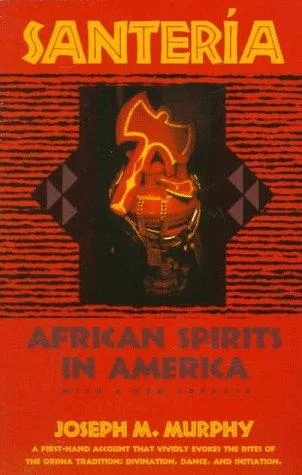
Joseph M. Murphy's 2011 book examines Santería, an African-Cuban religious tradition.
Joseph M. Murphy's "Santería" provides an academic examination of the African-Cuban religious tradition, detailing its origins and development. The work explains the theological and ritual framework that arose from the blending of Yoruba spirituality with Catholic practices during colonial times. It documents how West African belief systems adapted under the conditions of slavery, showing the endurance of these spiritual practices.
The book places Santería within the larger history of African diasporic religions. Murphy's work, published in 2011, builds on earlier scholarship and addresses the impact of the transatlantic slave trade. It discusses the Orishas, divine figures in Yoruba belief that influence nature and human life. The text also covers the system of divination, such as using diloggún (cowrie shells), and the significance of initiation rites and spirit possession.
This book situates Santería within the study of African diasporic religions, a field that gained academic attention in the mid-20th century. It explores the adaptation and persistence of West African spiritual systems under colonial pressures, specifically the forced relocation of Yoruba people to the Americas. The work details core concepts like the Orishas and ritual practices, offering a scholarly view of a tradition that blends indigenous beliefs with imposed Catholicism.
💡 Why Read This Book?
• Learn about the historical trajectory of Santería, specifically its journey from West African Yoruba origins through the transatlantic slave trade to its current presence in America, a narrative crucial for understanding the religion's resilience. • Understand the core pantheon of the Orishas, such as Obatala and Yemaya, and their specific roles and attributes within the Santería cosmology, offering a structured view of divine forces. • Grasp the significance of key ritual practices and divination methods, including the use of the diloggún, providing concrete examples of how practitioners interact with the sacred.
⭐ Reader Reviews
Honest opinions from readers who have explored this book.
❓ Frequently Asked Questions
What are the origins of Santería as described in Joseph M. Murphy's book?
Joseph M. Murphy's "Santería" traces the religion's origins to the West African Yoruba people. It details how their spiritual traditions were preserved and adapted by enslaved Africans in Cuba over nearly two centuries, leading to the syncretic form practiced today.
Who is Joseph M. Murphy and what is his connection to Santería?
Joseph M. Murphy is presented as a professional academic and a participant in the Santería community in the Bronx for several years. This dual perspective allows him to offer both scholarly analysis and an insider's understanding of the religion.
What is the role of the Orishas in Santería according to this book?
The book explains that the Orishas are divine manifestations of Olodumare, the supreme God. They govern various aspects of nature and human existence, and practitioners interact with them through rituals, offerings, and divination.
How does the book discuss the influence of Catholicism on Santería?
Murphy's work highlights the syncretic nature of Santería, explaining how enslaved Africans fused their Yoruba deities and practices with Catholic saints and doctrines under duress. This created a unique religious expression that masked indigenous spirituality.
What is the diloggún mentioned in Joseph M. Murphy's Santería?
The diloggún is a divination system using cowrie shells, as described in Murphy's book. It is a primary method through which priests, or *babalawos*, communicate with the Orishas and receive guidance for individuals and the community.
When was Joseph M. Murphy's book on Santería first published?
Joseph M. Murphy's book titled "Santería" was first published on August 1, 2011. This edition represents a scholarly account of the religion's history and practices.
🔮 Key Themes & Symbolism
Yoruba Spiritual Continuity
The work meticulously details the persistence of West African Yoruba spiritual concepts and practices, emphasizing their survival despite the violent disruption of the transatlantic slave trade. It highlights how core tenets, such as the belief in a supreme creator and the pantheon of Orishas, were maintained and adapted by enslaved populations in the New World, particularly Cuba. This theme underscores the resilience of indigenous African cosmologies under extreme pressure.
Syncretism and Adaptation
Murphy explores the profound syncretism that defines Santería, specifically the fusion of Yoruba deities with Catholic saints. This strategic adaptation allowed practitioners to mask their traditional worship while maintaining spiritual continuity. The book illustrates how figures like Eleggua became associated with Saint Anthony or Saint Michael, demonstrating a complex negotiation between imposed religion and ancestral faith.
The Orisha Pantheon
Central to the book is an exposition of the Orishas, the divine intermediaries of Olodumare. Murphy details their individual characteristics, domains (e.g., Oshun for love and rivers, Ogun for iron and war), and their relationships within the cosmic order. Understanding the Orishas is presented as crucial for comprehending the structure and practice of Santería, from divination to ceremonial offerings.
Ritual and Divination
The text examines the critical role of ritual and divination in Santería. It describes initiation ceremonies, the importance of sacred objects like *otáns* (stones), and the function of spirit possession. Particular attention is given to the diloggún, the system of divination using cowrie shells, as a primary means of communication with the Orishas for guidance and spiritual counsel.
💬 Memorable Quotes
Direct passages from the work, attributed to the author.
“A professional academic and himself a participant in the Santería community of the Bronx.”
— This describes the author's unique position, combining rigorous scholarly methodology with firsthand experience within the tradition he studies, aiming for a nuanced and informed perspective.
“Santería represents the first in-depth, scholarly account of a profound way of wisdom.”
— This statement frames the book's significance as a pioneering academic work that aims to provide a comprehensive and rigorous introduction to Santería for a wider audience.
“Analysis of this African/Cuban religion.”
— This concise phrase points to the book's analytical approach, focusing on the specific cultural and historical context of Santería as a product of African and Cuban influences.
“Tracing the survival of an ancient spiritual path.”
— This captures the historical dimension of the book, emphasizing its focus on tracking the lineage and transformations of Santería's spiritual elements across time and geography.
💡 Key Ideas
Editorial paraphrase of the work's core concepts — not direct quotes.
The survival of an ancient spiritual path from its West African Yoruba origins.
This paraphrased concept highlights the book's central thesis: demonstrating how deeply rooted Yoruba traditions managed to endure and evolve under the oppressive conditions of slavery and colonization in the Americas.
🌙 Esoteric Significance
Tradition
While not strictly adhering to a Western esoteric lineage like Hermeticism or Kabbalah, Santería represents a powerful indigenous spiritual tradition born from the forced displacement and resilience of the Yoruba people. Its esoteric nature lies in its complex cosmology, its sophisticated system of communication with the divine (Orishas), and its initiation rites that transform the practitioner's relationship with the sacred and the community.
Symbolism
Key symbols in Santería, as explored in the book, include the *otán* (sacred stone), which serves as a tangible vessel for an Orisha's energy and presence, embodying the divine in physical form. Cowrie shells, used in the diloggún divination system, symbolize communication, destiny, and the wisdom of the Orishas. The colors associated with specific Orishas, such as the vibrant yellow of Oshun or the blue and white of Yemaya, also carry deep symbolic meaning related to their domains and personalities.
Modern Relevance
Murphy's work provides a crucial academic lens for understanding Santería's contemporary relevance. Thinkers and practitioners in fields like comparative religion, diaspora studies, and even psychology of religion draw on such analyses to grasp the enduring power of indigenous spiritual systems. Modern practitioners, both within established communities and those newly exploring the tradition, use scholarly works to deepen their understanding of its historical roots and theological underpinnings.
👥 Who Should Read This Book
• Students of comparative religion and African diaspora studies seeking a scholarly examination of Santería's historical development and core beliefs. • Individuals interested in the phenomenology of religion, particularly how spiritual traditions adapt and persist under conditions of oppression and cultural exchange. • Practitioners of Santería looking for an academic perspective that contextualizes their lived experience within a broader historical and anthropological framework.
📜 Historical Context
Published in 2011, Joseph M. Murphy's "Santería" emerged at a time when academic interest in African diaspora religions had matured significantly, moving beyond early descriptive ethnography. Murphy’s work positions itself as a scholarly examination, building on a foundation laid by earlier researchers like Lydia Cabrera and later scholars such as Margarite Fernandez Olmos. The book implicitly engages with the legacy of the transatlantic slave trade, which forcibly transplanted Yoruba populations and their religious systems to Cuba, leading to the syncretic development of Santería. This occurred against a backdrop where indigenous spiritual practices were often suppressed or misunderstood. While Murphy’s work is not a direct critique of competing schools of thought, it contributes to the ongoing scholarly discourse on religious syncretism and the resilience of African spiritual traditions in the Americas, a field that gained considerable traction from the mid-20th century onwards.
📔 Journal Prompts
The historical survival of Yoruba spiritual paths under slavery.
The symbolic meanings of the Orishas like Eleggua and Oshun.
The function of the diloggún divination system in Santería.
The process of syncretism between Yoruba beliefs and Catholicism.
Personal reflections on the resilience of spiritual traditions.
🗂️ Glossary
Orisha
Divine manifestations of Olodumare (the supreme God) in Santería, each governing specific aspects of nature, human life, and destiny. They are intermediaries between humans and the divine.
Olodumare
The supreme creator God in Yoruba religion and Santería, considered the ultimate source of all existence, from whom the Orishas emanate.
Diloggún
A divination system in Santería that uses cowrie shells. Through specific patterns cast on a mat, priests (*babalawos*) interpret messages from the Orishas.
Otán
A sacred stone that serves as a physical dwelling or representation for an Orisha. It is consecrated during initiation and becomes a focal point for worship and communication.
Babalowo
A high priest in Santería, particularly one skilled in divination using the diloggún or the more complex Ifá system. They guide practitioners and interpret spiritual messages.
Yoruba
An ethnic group of West Africa, primarily from Nigeria and Benin, whose religious and cultural traditions form the foundation of Santería and other Afro-Caribbean religions.
Syncretism
The blending of different religious beliefs and practices. In Santería, this refers to the fusion of Yoruba traditions with Catholicism during the colonial period.