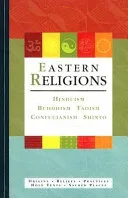
Eastern Religions
 72
72

Eastern Religions
Vasudha Narayanan's "Eastern Religions" presents a necessary, if somewhat compressed, overview of five monumental traditions. Its strength lies in its clear, introductory style, particularly in its handling of the historical spread of Buddhism and the modern prominence of Hinduism. The section on Taoism's influence on Western thought is a welcome, though brief, addition. However, the book's conciseness, while an asset for beginners, occasionally leaves the reader yearning for deeper exploration of the more nuanced philosophical debates within each tradition. For instance, the discussion on the Four Noble Truths in Buddhism, while accurate, could benefit from more extensive contextualization within the broader Mahayana or Theravada schools. Despite this limitation, the volume provides a solid, well-organized foundation. It serves as a competent, if not exhaustive, primer for those new to the subject.
📝 Description
72
Vasudha Narayanan's 2009 book surveys five major Eastern religions with illustrations.
This volume offers a focused look at Buddhism, Hinduism, Taoism, Confucianism, and Shinto. Narayanan details the core beliefs and historical paths of each tradition. The book acknowledges Buddhism's global reach and Hinduism's presence in Western countries, especially among expatriate groups.
It also addresses Taoism's influence on Western philosophy. The author shows how these traditions, while different, give unique views on life, ethics, and the universe. Narayanan uses clear writing and images to explain complex spiritual and philosophical ideas. The book is a resource for understanding these ancient and current belief systems.
As a survey of major Eastern religions, this book enters a field concerned with contemplative practices and philosophical systems that differ from Western monotheistic traditions. It touches upon concepts like the cyclical nature of existence found in Hinduism and Buddhism, and the emphasis on harmony with nature in Taoism. The study of these traditions often involves understanding their mystical dimensions, the pursuit of enlightenment, and the inner transformation of the individual.
💡 Why Read This Book?
• Gain a foundational understanding of Buddhism, Hinduism, Taoism, Confucianism, and Shinto, as presented in Narayanan's concise survey, enabling informed comparison of their core doctrines. • Comprehend the historical spread and modern relevance of these traditions, such as the expatriate communities fostering Hinduism in the West, offering context for their contemporary influence. • Grasp key concepts like the Four Noble Truths of Buddhism or the foundational principles of Taoism, as explained with illustrative clarity, providing specific entry points for further personal study.
⭐ Reader Reviews
Honest opinions from readers who have explored this book.
❓ Frequently Asked Questions
What is the main focus of Vasudha Narayanan's "Eastern Religions"?
The book provides a concise, illustrated introduction to five major world religions: Buddhism, Hinduism, Taoism, Confucianism, and Shinto, aiming to explain their core tenets and historical significance.
Which religions are covered in "Eastern Religions"?
The volume covers Buddhism, Hinduism, Taoism, Confucianism, and Shinto, offering an overview of each tradition's fundamental beliefs and practices.
When was "Eastern Religions" first published?
The book "Eastern Religions" by Vasudha Narayanan was first published in 2005.
Does the book discuss the influence of these religions on Western thought?
Yes, the work specifically notes the significant influence of Taoism on Western philosophical thinking, among other cross-cultural impacts.
Is "Eastern Religions" suitable for beginners?
Yes, the book is designed as an introductory volume, using clear explanations and illustrations to make complex spiritual and philosophical ideas accessible to a general audience.
What kind of illustrations does the book contain?
The book features illustrations to aid in understanding the concepts and traditions discussed, enhancing the reader's comprehension of these Eastern religions.
🔮 Key Themes & Symbolism
Foundational Beliefs
The work meticulously outlines the core philosophical and spiritual underpinnings of Buddhism, Hinduism, Taoism, Confucianism, and Shinto. For Buddhism, this includes the Four Noble Truths and the concept of karma. Hinduism's vast pantheon and the pursuit of moksha are explored, while Taoism's emphasis on the Tao and wu wei is presented. Confucianism's ethical framework and Shinto's connection to nature spirits (kami) are also detailed, offering a comparative glimpse into diverse paths of spiritual inquiry.
Historical Trajectories
Narayanan traces the historical development and geographical spread of these traditions. The dissemination of Buddhism from India across Asia is a key narrative, alongside the enduring legacy of Hinduism within the Indian subcontinent and its diaspora. The evolution of Taoist and Confucian thought in China, and the indigenous development of Shinto in Japan, are presented to provide chronological and cultural context for their present forms.
Cross-Cultural Impact
A significant aspect of the book is its examination of how these Eastern religions have influenced global thought and practice. The text highlights the increasing familiarity of the West with Hinduism through Indian communities and points to Taoism's notable impact on Western philosophical discourse. This theme underscores the interconnectedness of spiritual traditions and their capacity to transcend geographical boundaries.
Spiritual Practice and Ethics
Beyond doctrine, the volume touches upon the practical application of these faiths in daily life and ethical conduct. It explores how concepts like dharma in Hinduism, the Eightfold Path in Buddhism, and the principles of filial piety in Confucianism guide adherents. The focus is on understanding the lived experience of these traditions and their role in shaping moral and social structures.
💬 Memorable Quotes
Direct passages from the work, attributed to the author.
“Buddhism attracts millions of modern-day followers.”
— This observation highlights the enduring vitality and global appeal of Buddhist teachings, emphasizing its continued relevance in contemporary spiritual landscapes beyond its historical origins.
“Hinduism... is increasingly well known in the West through expatriate Indian communities.”
— This points to the dynamic process of cultural exchange and the role of diaspora in familiarizing Western societies with the ancient traditions of Hinduism, fostering greater understanding and integration.
“Taoism has been an important influence on Western thinking.”
— This statement underscores the philosophical cross-pollination between Eastern and Western thought, indicating that Taoist concepts have found resonance and application within Western intellectual traditions.
“A concise, illustrated introduction to five of the great religious traditions.”
— This describes the book's primary function: to offer a brief yet visually supported overview, making complex subjects like Buddhism and Hinduism more accessible to newcomers.
“One of the world's great religious traditions.”
— This phrase, applied to Buddhism, signifies its immense historical impact, widespread adoption, and profound influence on global culture and philosophy, marking it as a major spiritual force.
🌙 Esoteric Significance
Tradition
While "Eastern Religions" is primarily an academic introduction, its focus on core tenets and historical development positions it as a foundational text for those engaging with Eastern traditions from an esoteric perspective. It serves as a bridge, offering verifiable historical and philosophical frameworks that esotericists can then explore for deeper symbolic and practical application, moving beyond mere popularization.
Symbolism
The book implicitly engages with symbolism by introducing key concepts. For example, the concept of 'Tao' in Taoism, often represented by the Yin and Yang symbol, signifies the fundamental, ineffable principle of the universe. Similarly, the 'Eightfold Path' in Buddhism is a symbolic map guiding practitioners toward enlightenment, representing a structured approach to spiritual liberation.
Modern Relevance
Contemporary thinkers and practitioners involved in mindfulness, meditation, and integral spirituality often draw upon the foundations presented in works like Narayanan's. Modern Buddhist scholars, Western practitioners of yoga and Vedanta, and those exploring Daoist principles in leadership or personal development can use this book as a reliable starting point for understanding the original contexts of these practices.
👥 Who Should Read This Book
• Beginning students of comparative religion seeking a clear, illustrated overview of major Eastern spiritual and philosophical systems. • Individuals curious about the origins and core beliefs of Buddhism, Hinduism, Taoism, Confucianism, and Shinto before exploring more specialized texts. • Those interested in understanding the cultural and historical impact of these traditions on global thought and practice, particularly from a scholarly yet accessible viewpoint.
📜 Historical Context
Published in 2005, Vasudha Narayanan's "Eastern Religions" emerged during a period of intensified global interest in comparative religion and spirituality. The early 21st century saw continued academic and popular engagement with Eastern philosophies, partly fueled by increased globalization and the accessibility of information. This era followed significant scholarly works that had begun to deconstruct Western-centric views of religion, such as those by Mircea Eliade, though Narayanan's work itself is more introductory. The book entered a landscape where Theosophy and New Age movements had already popularized certain interpretations of Eastern thought, sometimes leading to syncretic or simplified understandings. Narayanan's approach, grounded in academic scholarship, aimed to provide a more structured and historically informed perspective, differentiating itself from more esoteric or popular interpretations prevalent at the time.
📔 Journal Prompts
The Four Noble Truths of Buddhism: What is their practical implication for confronting suffering?
The concept of Tao: How might an understanding of wu wei inform daily decision-making?
The role of expatriate Indian communities: How does cultural transmission shape religious understanding?
The influence of Taoism on Western thinking: Identify a specific philosophical idea and trace its potential roots.
The significance of kami in Shinto: Reflect on the relationship between nature and the divine.
🗂️ Glossary
Buddhism
A religion and philosophy originating in ancient India, centered on the teachings of Siddhartha Gautama (the Buddha), emphasizing enlightenment through the Four Noble Truths and the Eightfold Path.
Hinduism
A diverse system of religious, philosophical, and ritualistic traditions originating in the Indian subcontinent, characterized by concepts like dharma, karma, reincarnation, and the pursuit of moksha.
Taoism
A philosophical and religious tradition that emphasizes living in harmony with the Tao (the Way), often associated with concepts of naturalness, simplicity, and wu wei (non-action).
Confucianism
An ethical and philosophical system developed from the teachings of Confucius, emphasizing personal and governmental morality, justice, kindness, and sincerity, particularly focused on social harmony and filial piety.
Shinto
The indigenous religion of Japan, characterized by the worship of kami (spirits or deities) and a focus on rituals, purity, and a deep connection to nature.
Four Noble Truths
The foundational teachings of Buddhism, stating that suffering exists, suffering arises from attachment, suffering ceases when attachment ceases, and the path to the cessation of suffering is the Noble Eightfold Path.
Wu Wei
A Taoist concept literally meaning 'non-action' or 'effortless action.' It refers to acting in accordance with the natural flow of the universe, without forcing or striving.