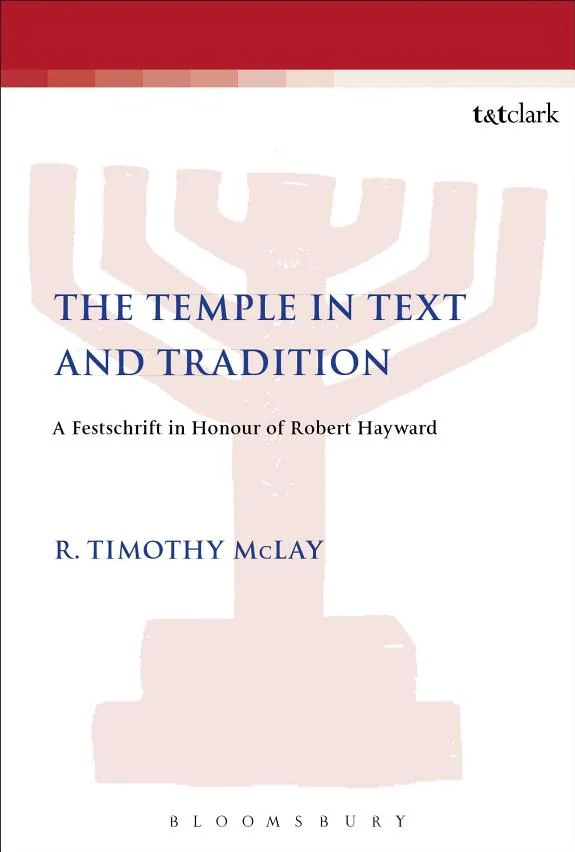
The Temple in Text and Tradition
 75
75

The Temple in Text and Tradition
R. Timothy McLay's "The Temple in Text and Tradition" offers a meticulously researched account of literary development during the Second Temple period. Its strength lies in the detailed examination of how texts were produced, interpreted, and transmitted across diverse Jewish communities. McLay effectively demonstrates the fluidity of textual authority and the impact of Hellenistic and Roman rule on Jewish literary endeavors. A particular point of clarity is his discussion of the transition from Temple-centric worship to text-based observance for diasporic communities. However, the dense academic prose, while precise, may present a barrier for readers less familiar with the specific terminology of biblical scholarship. The work could benefit from more explicit connections drawn between specific textual developments and their broader implications for subsequent religious movements. Ultimately, McLay provides an essential, albeit demanding, scholarly resource for understanding a foundational era of Western religious literature.
📝 Description
75
R. Timothy McLay's 2015 book traces Jewish textual production during the pivotal Second Temple period.
"The Temple in Text and Tradition" by R. Timothy McLay examines the Second Temple period, a time of intense literary activity and evolving Jewish thought. The book analyzes how Jewish texts were created, edited, and passed down as communities expanded beyond Israel and redefined their connection to the Jerusalem Temple.
McLay shows how these writings both reflected and influenced developing Jewish identities. He discusses the interaction between oral traditions and written scripture, the effects of Jewish dispersion on text creation, and the various ways scribes and scholars interpreted religious ideas. The book also considers how the idea of textual authority changed and how the Temple itself functioned as a central literary and symbolic point, even as its physical role varied for different groups.
While not strictly an esoteric text itself, "The Temple in Text and Tradition" illuminates a period crucial to later esoteric developments within Judaism and Christianity. The Second Temple era saw the formation of many texts that would later be interpreted through mystical or allegorical lenses. McLay's focus on the Temple as a symbolic locus and the dynamic interplay of textual authority and interpretation provides background for understanding how concepts of divine presence, cosmic order, and hidden meanings were embedded in the religious thought of the time, influencing subsequent mystical traditions.
💡 Why Read This Book?
• Gain a nuanced understanding of the Second Temple period (c. 516 BCE – 70 CE), moving beyond simplistic narratives of religious development by exploring McLay's analysis of textual creation and transmission. • Discover how the geographical spread of Jewish communities beyond Israel directly influenced the role and interpretation of sacred texts, as detailed in McLay's exploration of diaspora. • Grasp the complex relationship between the physical Temple and the evolving textual traditions, understanding how the 'transition period from Temple to texts' reshaped Jewish identity and practice.
⭐ Reader Reviews
Honest opinions from readers who have explored this book.
❓ Frequently Asked Questions
What is the primary focus of "The Temple in Text and Tradition"?
The book focuses on the Second Temple period (c. 516 BCE – 70 CE), examining the explosion of Jewish literary production, textual interpretation, and transmission during an era of significant cultural and political change.
When was "The Temple in Text and Tradition" first published?
The first publication date for "The Temple in Text and Tradition" by R. Timothy McLay was February 12, 2015.
What historical events influenced the literary output discussed in the book?
The book covers the literary impact of Persian, Hellenistic, and Roman rule over Judea, as well as the growth of Jewish communities beyond the borders of Israel during the Second Temple period.
Does the book discuss the Dead Sea Scrolls?
While not explicitly detailed in the provided blurb, the Second Temple period is the historical context for the Dead Sea Scrolls, and the book's focus on textual production and interpretation likely includes relevant discussions.
Who is R. Timothy McLay?
R. Timothy McLay is the author of "The Temple in Text and Tradition," a scholar specializing in the literature and history of ancient Judaism during the Second Temple period.
What does the book say about conflicting interpretations of texts?
The original blurb mentions that the transition from Temple to texts was accompanied by conflicting interpretations, a theme McLay explores through the diverse ideologies and transmission of Jewish writings.
🔮 Key Themes & Symbolism
Textual Production and Redaction
McLay investigates the complex processes by which Jewish texts were created, edited, and disseminated during the Second Temple era. This includes examining scribal practices, the influence of different languages (Hebrew, Aramaic, Greek), and the challenges of textual transmission across diverse geographical and ideological landscapes. The work highlights that texts were not static but underwent continuous development and adaptation by various communities and scholars.
Temple as Symbol and Locus
The book addresses the shifting significance of the Jerusalem Temple. While a central physical and spiritual locus for many, the Temple's role evolved, particularly for Jewish communities established beyond Israel's borders. McLay explores how texts either reinforced the Temple's importance or compensated for its diminishing direct influence, demonstrating the Temple's enduring symbolic power in Jewish thought and literature.
Ideological Diversity in Judaism
A key contribution of the work is its illumination of the broad spectrum of thought within Judaism during the Second Temple period. McLay details how the literary output reflects varied theological perspectives, social concerns, and political contexts. This diversity challenges monolithic views of ancient Judaism, showcasing a vibrant intellectual environment where different interpretations of law, prophecy, and tradition coexisted and competed.
Diaspora and Textual Authority
The expansion of Jewish communities outside of Judea is presented as a crucial factor in the development of textual traditions. McLay analyzes how distance from the Temple and engagement with foreign cultures necessitated new ways of understanding and maintaining religious identity, often through a greater reliance on written scriptures and their interpretation. This section explores the evolving nature of textual authority in the absence of immediate Temple centrality.
💬 Memorable Quotes
Direct passages from the work, attributed to the author.
“The creation, redaction, interpretation, and transmission of Jewish texts represented a virtual explosion in literature.”
— This highlights the Second Temple period as a uniquely prolific era for Jewish writing, emphasizing not just the production of new works but also their subsequent modification and circulation.
“The growth of the Jewish community beyond the borders of Israel meant the Temple played a diminishing role for some.”
— This points to the impact of the diaspora, illustrating how geographical dispersion led to a re-evaluation of the Temple's centrality and a potential shift towards textual or other forms of religious practice.
“The transition period from Temple to texts was accompanied by conflicting interpretations.”
— This suggests that as the focus shifted from the physical Temple to written traditions, diverse and sometimes opposing viewpoints emerged regarding the meaning and application of religious texts and practices.
“Texts represented diverse languages and ideologies.”
“The creation of many of these writings coincided with the expansion of Jewish communities beyond Israel.”
— This links the flourishing of Jewish literature directly to the historical process of diaspora, suggesting that the needs and experiences of dispersed communities spurred literary innovation and textual development.
🌙 Esoteric Significance
Tradition
While primarily a work of historical and textual scholarship on ancient Judaism, "The Temple in Text and Tradition" touches upon themes relevant to Hermetic and Gnostic studies through its examination of symbolic interpretation and the transmission of sacred knowledge. The focus on the Temple as a symbolic locus, and the diverse ideologies present, offers insights into the archetypal structures that underpin various esoteric traditions. It contributes to understanding the pre-Christian roots of symbolic systems that would later be integrated into Hermetic and Gnostic thought.
Symbolism
The central symbol is the Temple itself, representing divine presence, cosmic order, and the axis mundi. McLay's work explores how the concept of the Temple, even when physically distant or destroyed, continued to function as a potent symbol within Jewish texts, representing an idealised spiritual reality. The 'text' itself becomes a symbolic conduit for divine revelation and communal identity, particularly in the diaspora, mirroring esoteric traditions where sacred writings often serve as keys to hidden truths.
Modern Relevance
Contemporary scholars and practitioners interested in the origins of Western esotericism, comparative religion, and the historical development of biblical interpretation find value in McLay's work. It informs studies on the evolution of scriptural authority, the interplay of exoteric and esoteric meanings within religious traditions, and the hermeneutical strategies employed to maintain continuity amidst cultural change. Thinkers exploring the roots of Kabbalistic symbolism or early Christian mystical thought can draw parallels from the textual dynamics described.
👥 Who Should Read This Book
["• Academic researchers in Jewish studies and ancient history: Gain access to rigorous textual analysis and historical contextualization of the Second Temple period's literary output.", '• Students of comparative religion: Understand the diverse ideological field of Second Temple Judaism, providing crucial background for the emergence of Christianity and Rabbinic Judaism.', '• Lay readers interested in the origins of Western religious texts: Explore how foundational Jewish scriptures were created, interpreted, and transmitted during a formative era.']
📜 Historical Context
R. Timothy McLay's "The Temple in Text and Tradition" is firmly rooted in the Second Temple period, spanning roughly from the rebuilding of the Jerusalem Temple after Babylonian exile (c. 516 BCE) to its destruction by the Romans in 70 CE. This era witnessed profound transformations in Jewish life under successive empires: Persian, Hellenistic, and Roman. The intellectual currents were dynamic, influenced by Greek philosophy and the realities of imperial administration. McLay's work emerged in a scholarly landscape increasingly focused on the diversity within Second Temple Judaism, moving beyond earlier, more monolithic portrayals. Key contemporaries in the study of this period include scholars like E.P. Sanders and Geza Vermes, who have also illuminated the historical Jesus and early rabbinic Judaism. McLay's analysis engages with the textual evidence that formed the bedrock for later rabbinic Judaism and early Christianity, contributing to ongoing debates about the formation of these traditions.
📔 Journal Prompts
The transition from Temple to texts: Reflect on a modern parallel where a physical center of power or focus has been replaced by a virtual or textual one.
Diverse ideologies within Judaism: Consider how contemporary religious or philosophical movements contain a wide spectrum of beliefs and practices.
Textual transmission challenges: Explore the difficulties in accurately preserving and interpreting information in the digital age compared to ancient scribal practices.
The Temple as a symbol: Analyze how symbolic representations of sacred spaces or concepts continue to hold meaning even when the original context is lost.
Diaspora and identity formation: Reflect on how communities living away from their cultural or religious origins maintain their distinctiveness through shared texts or traditions.
🗂️ Glossary
Second Temple Period
The historical era in Jewish history spanning from the completion of the Second Temple in Jerusalem (c. 516 BCE) until its destruction by the Roman Empire in 70 CE.
Redaction
The process by which an editor or compiler shapes, modifies, and arranges existing texts or traditions into a new literary work, often imbuing it with a particular perspective or purpose.
Textual Transmission
The process by which written texts are copied, circulated, and preserved over time, often involving variations, errors, or intentional alterations introduced by scribes or editors.
Diaspora
The dispersion of a people from their original homeland, specifically referring to Jewish communities established outside of ancient Israel, particularly during and after the Babylonian exile.
Ideologies
Systems of ideas and ideals, especially one which forms the basis of economic or political theory and policy, or in this context, diverse religious, philosophical, and social viewpoints within Judaism.
Hellenistic Period
The period of Mediterranean history between the death of Alexander the Great (323 BCE) and the emergence of the Roman Empire (c. 31 BCE), characterized by the spread of Greek culture and influence.
Scribal Practices
The methods, conventions, and techniques employed by ancient scribes in the writing, copying, and editing of manuscripts.
This book appears in 1 collection
🔮 Readers Also Liked
Browse all →








From the “Apocrypha” Collection
View all →


More Free Sacred Texts & Gnosticism Books
View all →