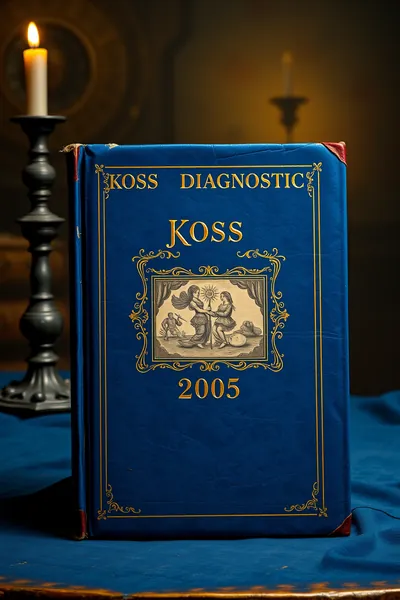
Did Jesus Really Say

 79
79

Did Jesus Really Say
Louis Sefer's "Did Jesus Really Say" offers a necessary corrective to a singular view of early Christian discourse. By foregrounding texts often sidelined in mainstream theology, the book provides a valuable resource for understanding the vibrant, often contradictory, spiritual currents of the 1st and 2nd centuries CE. The inclusion of the Gospel of Bartholomew, for instance, presents a different emphasis on Jesus' post-resurrection appearances and teachings than the canonical accounts. While the selection is broad, the lack of extensive scholarly commentary directly within the text might leave some readers wanting deeper analysis of the provenance and textual variants of these ancient documents. The strength lies in its direct presentation of the material, allowing for individual contemplation, though a more robust contextualization would have elevated its scholarly utility. This collection serves as a vital, if sometimes stark, reminder of the multifaceted origins of Christian thought.
📝 Description
79
Published in 2023, 'Did Jesus Really Say' gathers early Christian scriptures outside the New Testament canon.
'Did Jesus Really Say' collects texts attributed to Jesus that did not make it into the canonical Gospels. The book includes well-known apocryphal works like the Gospel of Thomas and the Gospel of Mary Magdalene, alongside less common documents such as the Gospel of the Nazarenes and the Gospel of Bartholomew. The author's aim is to give readers direct access to a wider range of sayings and teachings that circulated in early Christian communities.
This volume is for students of esoteric Christianity, scholars of early religious movements, and anyone interested in the diversity of thought within the first few centuries CE. It appeals to those who question established narratives and want to explore alternative views on Jesus' words and deeds as recorded by various ancient authors. The compilation is situated within scholarly discussions of non-canonical Christian literature, highlighting the fluid nature of early Christian doctrine.
This book engages with the Gnostic and proto-Gnostic movements that flourished in early Christianity. These traditions often emphasized inner knowledge and direct spiritual experience, sometimes diverging significantly from the developing orthodox doctrines. The texts included here, such as the Gospel of Thomas, offer a glimpse into alternative interpretations of Jesus' message, focusing on spiritual wisdom and direct transmission of teachings, often challenging later patriarchal structures within Christianity.
💡 Why Read This Book?
• Gain direct exposure to the sayings and teachings found in the Gospel of Thomas, offering a perspective on Jesus' wisdom distinct from the canonical Gospels. • Understand the significance of Mary Magdalene's role as presented in the Gospel of Mary Magdalene, challenging later interpretations of her discipleship. • Explore the teachings within the Gospel of the Nazarenes, providing insight into early Jewish-Christian communities and their unique theological expressions.
⭐ Reader Reviews
Honest opinions from readers who have explored this book.
❓ Frequently Asked Questions
What is the primary difference between the texts in 'Did Jesus Really Say' and the New Testament Gospels?
Texts like the Gospel of Thomas and Gospel of Mary Magdalene are considered apocryphal, meaning they were not included in the final canon of the New Testament. They often present different theological emphases and narratives, focusing more on Gnostic ideas or the mystical teachings of Jesus.
When were the earliest texts presented in 'Did Jesus Really Say' likely written?
Scholarly estimates suggest that some texts, like the Gospel of Thomas, may have originated as early as the mid-1st century CE, potentially existing alongside or even predating some of the canonical Gospels.
Are these texts considered historically accurate accounts of Jesus' life?
Historians and theologians debate their historical accuracy. They are invaluable for understanding the beliefs and practices of various early Christian groups, rather than as direct biographical records.
What is the significance of the Gospel of Mary Magdalene?
The Gospel of Mary Magdalene highlights Mary Magdalene as a key disciple, privy to special teachings from Jesus and a leader among the apostles, offering a contrasting view to her later, often diminished, portrayal.
Does this book include the Gospel of Judas?
While 'Did Jesus Really Say' features a range of early Christian texts, the specific inclusion of the Gospel of Judas would depend on the exact compilation by Louis Sefer. However, it aims to cover significant apocryphal gospels.
What does 'apocryphal' mean in the context of these Gospels?
'Apocryphal' refers to texts whose authenticity or authority was questioned by early Church leaders, leading to their exclusion from the accepted biblical canon. They often represent diverse theological viewpoints.
🔮 Key Themes & Symbolism
Gnostic Interpretations
The book looks at texts often associated with Gnosticism, presenting a spiritual path focused on inner knowledge and direct experience of the divine. This contrasts sharply with later orthodox interpretations that emphasized hierarchical structures and external sacraments. Selections like the Gospel of Thomas focus on esoteric meanings within Jesus' parables, suggesting a hidden wisdom accessible to initiates, aligning with Gnostic principles of salvation through gnosis (knowledge).
The Role of Women in Early Christianity
Several included texts, notably the Gospel of Mary Magdalene, elevate female disciples to positions of spiritual authority and leadership. This challenges the patriarchal narratives that became dominant in later Christianity. The book showcases how women like Mary Magdalene were seen by some early communities not just as followers, but as recipients of profound revelations and teachers in their own right, vital to the transmission of Jesus' message.
Logia and Spiritual Transmission
A significant focus is placed on the 'logia' – the sayings of Jesus – as the core of spiritual transmission. The collection emphasizes how these sayings were preserved and interpreted across various early Christian groups. The book implies that the essence of Jesus' teachings might be better understood through a diverse collection of these sayings, rather than relying solely on the narratives of the four canonical Gospels, highlighting a more fluid and decentralized early transmission process.
Diversity of Early Christian Beliefs
By presenting texts like the Gospel of the Nazarenes alongside others, the work underscores the vast spectrum of beliefs present in the formative centuries of Christianity. It moves beyond a monolithic view, revealing a complex range of Jewish-Christian sects, proto-Gnostic movements, and other spiritual explorations. This diversity illustrates that early Christianity was not a single, unified religion but a dynamic confluence of evolving ideas and practices.
💬 Memorable Quotes
Direct passages from the work, attributed to the author.
“Jesus said, 'Let him who seeks continue seeking until he finds. When he finds, he will marvel; when he marvels, he will reign; and having reigned, he will rest.'”
— This saying from the Gospel of Thomas emphasizes a path of active spiritual seeking leading to profound realization and eventual spiritual sovereignty. It frames enlightenment not as a passive gift but as the culmination of dedicated inner work and discovery.
“The Gospel of Bartholomew speaks of Jesus revealing mysteries after his resurrection.”
— This highlights a focus in certain early texts on Jesus' post-resurrection teachings as a period where deeper, more esoteric knowledge was imparted to his disciples, expanding the understanding of his salvific mission beyond the crucifixion.
“If you bring forth what is within you, what you bring forth will save you.”
— This potent Gnostic-leaning statement, found in texts like the Gospel of Thomas, suggests that salvation or liberation comes from within, through the realization and expression of one's own divine potential or inner truth.
“The Nazarenes sought to live according to the Law while embracing Jesus as Messiah.”
— This interpretation points to the Gospel of the Nazarenes representing a bridge tradition, attempting to synthesize Jewish legal observance with Messianic belief in Jesus, illustrating the complex origins of Christian identity.
💡 Key Ideas
Editorial paraphrase of the work's core concepts — not direct quotes.
Peter said to Mary, 'Sister, we know that the Savior loved you more than the rest of women. Tell us the words of the Savior which you remember...' (interpretation)
This passage from the Gospel of Mary Magdalene suggests Mary's unique spiritual connection and privileged access to Jesus' teachings, positioning her as a key interpreter and transmitter of his wisdom, even over the male apostles like Peter.
🌙 Esoteric Significance
Tradition
This work aligns strongly with the Gnostic and Hermetic traditions within esotericism. It champions the idea of 'gnosis' – direct, intuitive knowledge of the divine – as central to spiritual realization, mirroring Gnostic emphasis on inner awakening. The focus on Jesus' sayings as keys to unlocking hidden truths speaks to Hermetic principles of correspondence and the transmission of esoteric wisdom through aphorisms and allegories.
Symbolism
Key symbols include light (representing divine knowledge or the inner Christ), water (often symbolizing purification, the subconscious, or the flow of spiritual life), and the Kingdom of Heaven (interpreted not as a future afterlife but as an attainable inner state of consciousness). The 'perfect man' or 'true self' is another motif, signifying the divine potential within each individual that awaits recognition and realization.
Modern Relevance
Contemporary esoteric practitioners, particularly those involved in Gnostic studies, Sophia spirituality, and psychological approaches to mysticism, draw heavily on these texts. Thinkers exploring embodied spirituality and the integration of feminine divine principles find resonance in figures like Mary Magdalene as presented in these Gospels. The emphasis on personal revelation over dogma also appeals to modern seekers disillusioned with institutional religion.
👥 Who Should Read This Book
• Students of comparative religion and early Christian history seeking to broaden their understanding beyond canonical texts. • Esoteric practitioners interested in Gnostic teachings and alternative interpretations of Jesus' message, looking for primary source material. • Individuals curious about the historical and theological debates surrounding the formation of the Christian canon and the nature of early spiritual movements.
📜 Historical Context
Published in 2023, Louis Sefer's "Did Jesus Really Say" engages with a long-standing scholarly tradition of examining early Christian apocrypha, a field significantly advanced by scholars like Wilhelm Schneemelcher and his 'New Testament Apocrypha' series. The texts presented, such as the Gospel of Thomas, were known in antiquity but largely excluded from the canon that solidified by the 4th century CE. The 20th century saw renewed interest, particularly from scholars like Elaine Pagels who explored Gnostic texts and their implications for understanding early Christianity's diversity. The publication taps into contemporary discourse questioning traditional religious narratives and seeking alternative spiritual perspectives. While not directly engaging with specific censorship events, the very act of compiling these 'lost' texts implicitly addresses the historical processes of canon formation and the subsequent marginalization of these writings by emerging orthodoxies.
📔 Journal Prompts
The concept of 'finding' as described in the Gospel of Thomas.
Mary Magdalene's role as a spiritual leader in the Gospel of Mary.
The contrast between inner revelation and external authority in these texts.
Jesus' parables and their potential hidden meanings (logia).
The implications of a diverse early Christian landscape.
🗂️ Glossary
Logia
Greek term for 'sayings' or 'words'. In the context of early Christian texts like the Gospel of Thomas, it refers to collections of Jesus' reported utterances, often emphasizing wisdom teachings over narrative.
Apocrypha
Texts, typically religious, that were not accepted into the canonical scriptures of Judaism or Christianity. They often contain narratives or teachings considered spurious or unorthodox by the mainstream religious authorities of the time.
Gnosticism
A diverse set of religious beliefs and movements prominent in the first few centuries CE, characterized by the belief that salvation is achieved through esoteric knowledge (gnosis) of the divine, often involving a dualistic worldview.
Canonical Gospels
The four Gospels (Matthew, Mark, Luke, and John) accepted as authoritative and included in the New Testament canon by the early Christian Church.
Gospel of Thomas
An early collection of sayings attributed to Jesus, discovered in Nag Hammadi, Egypt. It focuses on esoteric interpretations of Jesus' teachings, emphasizing inner spiritual knowledge.
Gospel of Mary Magdalene
A Gnostic text featuring Mary Magdalene as a central figure, receiving special teachings from Jesus and conveying them to the other disciples, highlighting her spiritual authority.
Nazarenes
Refers to early Jewish Christians who maintained Jewish customs and laws while accepting Jesus as the Messiah. Texts attributed to them offer insight into the Jewish roots of Christianity.
This book appears in 1 collection
🔮 Readers Also Liked
Browse all →







From the “Gnostic Gospels” Collection
View all →








More Free Sacred Texts & Gnosticism Books
View all →