Masters of Psalmody (bimo)
 73
73

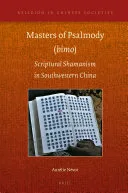
Masters of Psalmody (bimo)
Aurélie Névot's Masters of Psalmody (bimo) offers a rare window into the intricate religious life of the Yi-Sani people of southwestern China. The author's meticulous ethnographic data illuminates a fascinating system of 'scriptural shamanism,' where ritual efficacy is inextricably bound to a secret, labile writing system handled exclusively by bimo.
Névot's strength lies in her detailed exposition of the bimo's metaphysics, particularly how blood sacrifices and chants function within their text-based ritual framework. The analysis of lineage continuity through this unique textual tradition is compelling. However, the book's dense academic prose, while precise, might present a barrier for readers less familiar with anthropological theory or advanced linguistic analysis of ritual.
Read more ↓
A particularly striking aspect is the description of the bimo's secret script, which Névot argues is not static but 'labile,' changing with ritual context and practitioner. This challenges conventional notions of sacred texts. The work ultimately provides a rigorous, scholarly account of a little-understood spiritual system.
📝 Description
73
Aurélie Névot's Masters of Psalmody analyzes Yi-Sani scriptural shamanism in southwestern China.
This book offers an ethnographic and theoretical look at the Yi-Sani people of southwestern China. It specifically examines the role of blood sacrifices and chants performed by ritualists called bimo. These practices are closely tied to a unique writing system that is secret and fluid. Aurélie Névot's research stems from fieldwork in the early 21st century, a time when global interest in shamanic practices grew. The work connects with existing scholarship on Chinese minority cultures and the phenomenology of religious experience. It positions the Yi-Sani bimo within wider discussions of ritual specialists and their textual traditions, especially when compared to traditions like Tibetan Buddhism or Daoism.
The central concept is "scriptural shamanism," where shamanic ritual effectiveness depends on the handling and recitation of sacred texts. The book discusses the bimo's function as keepers of a secret, changing script. It also covers the metaphysical reasons behind their blood sacrifice rituals. The continuation of bimo lineages, which relies on this textual transmission, is a vital aspect of their tradition.
Masters of Psalmody engages with traditions where ritual power is intrinsically linked to specific textual forms and their correct manipulation. The Yi-Sani bimo, as ritual specialists, embody a form of shamanism where the written word is not merely symbolic but an active agent in spiritual efficacy. This contrasts with more common understandings of shamanism that might focus solely on ecstatic trance or direct spirit communication. The book situates this practice within a framework where language, sacrifice, and metaphysical understanding form a cohesive system for influencing reality, a common thread in many esoteric traditions.
💡 Why Read This Book?
• Gain insight into the unique concept of 'scriptural shamanism' as practiced by the Yi-Sani bimo, understanding how sacred texts, even those with a 'labile' nature, become central to ritual power. • Explore the specific role of blood sacrifice and chants within a non-Western esoteric framework, moving beyond typical analyses of Eastern or Western magical traditions. • Understand the critical importance of textual continuity for ritualist lineages, as demonstrated by the bimo tradition in southwestern China, offering a distinct model for preserving esoteric knowledge.
⭐ Reader Reviews
Honest opinions from readers who have explored this book.
❓ Frequently Asked Questions
What is the primary focus of Aurélie Névot's Masters of Psalmody (bimo)?
The book focuses on the scriptural shamanism of the Yi-Sani people in southwestern China, analyzing their blood sacrifices and chants, which are tied to a secret, mutable writing system used by ritualists called bimo.
Who are the 'bimo' in the context of the Yi-Sani people?
The bimo are the ritualists among the Yi-Sani who handle a secret and fluid writing system. They are central figures in performing the religious, political, and theoretical aspects of their shamanic practices.
What is unique about the writing system used by the bimo?
The writing system is described as 'secret and labile,' meaning it is not fixed but can change, likely adapting to specific ritual contexts or the needs of the bimo practitioners themselves.
What kind of data does Aurélie Névot use in her analysis?
Névot employs ethnographic data, drawing from direct observation and study of the Yi-Sani people's practices, to present the bimo metaphysics and their text-based ritual system.
What is the significance of blood sacrifices and chants in Yi-Sani shamanism?
Blood sacrifices and chants are core components of the Yi-Sani scriptural shamanism, as analyzed in the book. They are performed by the bimo and are integral to the efficacy and continuity of their ritual system.
When was Masters of Psalmody (bimo) first published?
The book was first published on August 26, 2019.
🔮 Key Themes & Symbolism
Scriptural Shamanism
The central thesis revolves around 'scriptural shamanism,' a paradigm where the power and efficacy of shamanic rituals are derived from and mediated by written texts. Unlike shamanic traditions that might rely solely on oral transmission or ecstatic states, the Yi-Sani bimo utilize a secret, 'labile' script. This textuality is not merely an adjunct to ritual but its very foundation, shaping the bimo's metaphysical understanding and the continuity of their lineage.
The Lability of Sacred Texts
A core concept is the 'labile' nature of the bimo's secret writing. This suggests a fluid, adaptable script, possibly changing based on ritual context, practitioner, or even the spiritual forces being invoked. This contrasts sharply with the often static and canonical nature of sacred texts in many other traditions, presenting a unique model of textual dynamism in ritual practice.
Blood Sacrifice and Ritual Efficacy
The book meticulously details the role of blood sacrifices and chants within the Yi-Sani bimo tradition. These are not presented as mere symbolic acts but as vital components of the ritual system, directly contributing to its efficacy. Névot explores the theoretical and religious implications of these practices, linking them to the bimo's unique metaphysical worldview and their connection to spiritual realms.
Lineage Continuity Through Text
The transmission of knowledge and ritual practice among bimo is critically dependent on their secret writing system. The work highlights how the continuity of each bimo lineage is ensured through the handling and perpetuation of this specific textual tradition. This emphasizes the bookish, rather than purely experiential, foundation of their shamanic authority and practice.
💬 Memorable Quotes
Direct passages from the work, attributed to the author.
“The bimo handle a secret and labile writing.”
— This concise statement expresses the unique nature of the Yi-Sani shamanic tradition, highlighting the central role of a hidden and adaptable script in their ritual practices and metaphysical beliefs.
“Chants based on a secret and labile writing handled only by ritualists called bimo.”
— This phrase underscores the exclusivity of the bimo's access to their sacred texts and the performative aspect of their tradition, where chants are directly interwoven with this esoteric script.
“The author presents the still little known bimo metaphysics.”
— This indicates the book's contribution to scholarship by unveiling the complex philosophical and spiritual underpinnings of the bimo's worldview, which were previously obscure to external researchers.
“The continuity of each bimo lineage relies on this text-based ritual system.”
— This highlights the foundational importance of the written tradition for the survival and transmission of shamanic knowledge and practice within the Yi-Sani community across generations.
“Religious, political and theoretical issues of a scriptural shamanism.”
— This frames the scope of Névot's study, showing that the bimo's practices are not solely spiritual but also encompass social, political, and theoretical dimensions within their unique form of shamanism.
🌙 Esoteric Significance
Tradition
Masters of Psalmody (bimo) engages with traditions that blur the lines between anthropology and esoteric studies, particularly concerning shamanism and the power of sacred language. While not directly aligning with Western Hermeticism or Kabbalah, it offers a comparative model for understanding how esoteric knowledge is encoded, transmitted, and activated through ritual. The concept of a 'labile script' challenges notions of fixed divine texts, suggesting a more dynamic, living gnosis accessible through specialized ritualists.
Symbolism
The primary symbols are the 'bimo' themselves as keepers of esoteric knowledge and the 'secret and labile writing' as the vessel of that knowledge. Blood sacrifices represent a potent form of energetic exchange or communication with spiritual forces, a common motif in many ancient and esoteric traditions signifying transformation, covenant, or appeasement. The chants, inseparable from the script, symbolize the sonic manifestation of divine or spiritual power.
Modern Relevance
Contemporary practitioners of animism, neo-shamanism, and comparative mythology find resonance in Névot's work. Thinkers exploring the phenomenology of ritual, the power of language in altered states, and non-Western epistemologies can draw parallels. The book's focus on a text-based, yet fluid, esoteric tradition offers a unique perspective for those interested in the evolving nature of ritual technology and the intersection of cultural specificity with universal spiritual principles.
👥 Who Should Read This Book
• Anthropologists and religious studies scholars specializing in East Asian cultures or shamanism, who will find detailed ethnographic data and theoretical frameworks for understanding the Yi-Sani bimo. • Esoteric practitioners and theorists interested in comparative religion, particularly those exploring non-Western systems of magic, ritual efficacy, and the power of sacred language. • Researchers focused on the relationship between writing systems, ritual practice, and the transmission of esoteric knowledge, offering a case study of 'scriptural shamanism' and its unique characteristics.
📜 Historical Context
Aurélie Névot's research on the Yi-Sani bimo, culminating in the 2019 publication, emerged during a period of intensified academic interest in shamanism and East Asian religious traditions. The early 21st century saw scholars like Piers Vitebsky and Rane Willerslev exploring shamanic cosmologies and practices globally, often highlighting the intricate relationship between humans, animals, and spirits. Névot's work distinguishes itself by focusing on a specific form of 'scriptural shamanism' among the Yi-Sani people of southwestern China, a region with a complex history of cultural interaction and assimilation. While Daoism and Buddhism are more widely studied in China, Névot's investigation into the bimo tradition offers a crucial counterpoint, revealing a distinct spiritual system where ritual efficacy is deeply rooted in a secret, 'labile' writing. Her ethnographic approach grounds the study in contemporary fieldwork, contributing vital data to the understanding of minority religious practices in China.
📔 Journal Prompts
The bimo's 'labile' script: How might the adaptability of sacred texts influence ritual efficacy compared to static canons?
Reflection on blood sacrifice: Consider the symbolic and practical roles of sacrifice in Yi-Sani ritual versus other traditions.
The role of the bimo: Analyze the authority derived from exclusive access to secret texts and rituals.
Text-based shamanism: How does the reliance on written word shape the metaphysical understanding of the bimo?
Lineage continuity: Explore the methods by which knowledge is preserved and transmitted through the bimo's textual system.
🗂️ Glossary
Bimo
The Yi-Sani ritualists who are the sole handlers of the secret and labile writing system central to their scriptural shamanism.
Scriptural Shamanism
A form of shamanism where the efficacy of rituals and the shaman's power are directly tied to the use, recitation, and manipulation of sacred texts.
Labile Writing
A term used to describe the Yi-Sani bimo's secret script, implying that it is not fixed but fluid, adaptable, and potentially changes based on context or practitioner.
Yi-Sani
An ethnic group, likely a subgroup of the Yi people, residing in southwestern China, among whom Aurélie Névot conducted her ethnographic research.
Blood Sacrifice
Ritual offerings involving blood, a key practice analyzed in the book as integral to the efficacy and metaphysical framework of Yi-Sani shamanism.
Chants
Vocalized recitations, performed by the bimo, that are based on their secret writing and form a crucial part of their ritual system.
Bimo Metaphysics
The underlying philosophical and spiritual beliefs that inform the practices and worldview of the bimo, as presented in Névot's study.