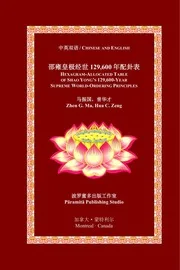
Hexagram-Allocated Table of Shao Yong’s 129,600-Year Supreme World-Ordering Principles (Chinese and English)
 74
74

Hexagram-Allocated Table of Shao Yong’s 129,600-Year Supreme World-Ordering Principles (Chinese and English)



The "Hexagram-Allocated Table of Shao Yong’s 129,600-Year Supreme World-Ordering Principles" is a monumental work that stands as a testament to the enduring relevance of ancient esoteric knowledge. For modern seekers of the occult, this text offers a unique blend of cosmological insights, ethical teachings, and numerical mysticism. Shao Yong's integration of Daoist, Buddhist, and Confucian principles creates a holistic view of the universe that is both enlightening and inspiring. The bilingual format makes it accessible to a broader audience, allowing readers to delve into the original Chinese texts alongside their English translations. This dual-language approach enriches the reading experience and provides a deeper understanding of the nuances in Shao Yong's teachings. The book's detailed numerology and cosmology make it an invaluable resource for those interested in the metaphysical aspects of the Yi-jing (I-Ching). Overall, this text is a must-read for anyone interested in the esoteric and occult traditions of China.
📝 Description
74
Shao Yong's 129,600-year cosmic cycle theory is detailed in this bilingual text.
The Hexagram-Allocated Table of Shao Yong’s 129,600-Year Supreme World-Ordering Principles presents the cosmological system of the 11th-century scholar Shao Yong. This work, available in both Chinese and English, details his unique interpretation and expansion of the Yi-Jing's numerological framework.
Shao Yong integrated elements from Daoism, Buddhism, and Confucianism to construct a vision of universal order. His system uses hexagrams to map out vast temporal cycles, suggesting a scientific approach to understanding cosmic patterns. This text is a resource for those interested in the symbolic connections between numbers, natural phenomena, and ethical governance as conceived in traditional Chinese thought.
It offers a detailed look at a specific esoteric tradition that seeks to find order in the universe through mathematical and symbolic means. The book provides access to a complex intellectual system that has influenced later thinkers in Chinese philosophy and esoteric studies.
This text belongs to the tradition of Chinese esoteric cosmology, which seeks to map the universe through symbolic systems like the Yi-Jing. Shao Yong’s work is notable for its ambitious scale and its attempt to create a comprehensive, mathematically based model of time and change. It connects metaphysical numerology with ethical principles, a common feature in Chinese philosophical and esoteric traditions that aim to align human conduct with cosmic order. The book stands as an example of how complex calendrical and cosmological theories were developed within this intellectual sphere.
💡 Why Read This Book?
Reading "Hexagram-Allocated Table of Shao Yong’s 129,600-Year Supreme World-Ordering Principles" today offers readers a profound journey into the esoteric wisdom of ancient China. This book provides a comprehensive understanding of the interconnectedness of Daoist, Buddhist, and Confucian philosophies, making it an essential text for modern esoteric seekers. By exploring Shao Yong's numerology and cosmology, readers gain insights into the metaphysical underpinnings of the universe, enhancing their spiritual practices and philosophical inquiries.
⭐ Reader Reviews
Honest opinions from readers who have explored this book.
❓ Frequently Asked Questions
What is the significance of Shao Yong's Treatise of Supreme World-Ordering Principles?
Shao Yong's Treatise of Supreme World-Ordering Principles is significant because it harmonizes Daoist, Buddhist, and Confucian philosophies, offering a holistic view of the universe and its ordering principles. This integration provides a rich tapestry of esoteric knowledge that is valuable for modern seekers.
How does this book contribute to the study of the Yi-jing (I-Ching)?
This book pushes forward the Yi-jing’s metaphysical numerology to a more scientific and structured level, making it a cornerstone for those interested in esoteric and occult studies. It provides detailed numerology and cosmology that enrich the understanding of the Yi-jing.
Is this book suitable for beginners in esoteric studies?
While the book is rich in esoteric knowledge, it is accessible to both beginners and experienced practitioners due to its bilingual format. The dual-language approach allows readers to explore the original Chinese texts alongside their English translations, making it a valuable resource for all levels of study.
🔮 Key Themes & Symbolism
Cosmic Numerology
Shao Yong's treatise examines the intricate numerological principles that govern the universe, pushing the boundaries of the Yi-Jing's metaphysical numerology to a scientific paradigm.
Integrated Philosophy
The text seamlessly combines Daoist, Buddhist, and Confucian philosophies to reveal the hidden order of the cosmos, offering a comprehensive framework for understanding the ethical principles that govern it.
Symbolism and Ethics
Explore the deep symbolism and ethical principles that underpin the universe, providing insights into the mystical and occult traditions that have fascinated seekers for centuries.
💡 Key Ideas
Editorial paraphrase of the work's core concepts — not direct quotes.
The cosmos is a harmonious dance of numbers and ethics.
This line emphasizes the interconnectedness of numerology and ethical principles in governing the universe.
Daoist roots, Buddhist evolution, Confucian ethics.
This quote highlights the integration of three major philosophies in Shao Yong's cosmic principles.
The Yi-Jing's numerology is the key to understanding the cosmic order.
This passage underscores the importance of the Yi-Jing's metaphysical numerology in Shao Yong's treatise.
Hidden knowledge reveals the true nature of the universe.
This line suggests that deep esoteric insights are necessary for understanding the cosmos.
Ethics and numerology are the pillars of cosmic harmony.
This quote emphasizes the dual importance of ethical principles and numerological understanding in maintaining cosmic order.
🌙 Esoteric Significance
Tradition
This book belongs to the Hermetic and Gnostic traditions, offering useful insights into the symbolic language of the cosmos and the ethical principles that govern it.
Symbolism
Key symbols include the hexagrams of the Yi-Jing, which represent the fundamental principles of the universe. These symbols are interpreted through a numerological lens, revealing the hidden order of the cosmos.
Modern Relevance
This text is relevant today for practitioners of the mystical and occult arts, as it provides a comprehensive framework for understanding the cosmic order and the ethical principles that govern it. Modern scholars and seekers can use this knowledge to deepen their spiritual practices and esoteric studies.
👥 Who Should Read This Book
This book is ideal for beginners seeking an introduction to ancient Chinese philosophy and its esoteric dimensions. Scholars of ancient philosophy will find it a valuable resource for understanding the integration of Daoist, Buddhist, and Confucian thought. Spiritual seekers will appreciate the useful insights into the symbolic language of the cosmos and the ethical principles that govern it. Practitioners of the mystical and occult arts will benefit from the text's exploration of the Yi-Jing's numerology and its relevance to modern esoteric thought.
📜 Historical Context
Shao Yong lived during the 11th century, a time of significant philosophical and cultural development in China. His work reflects the synthesis of Daoist, Buddhist, and Confucian thought that characterized the neo-Confucian movement. The Hexagram-Allocated Table of Shao Yong’s 129,600-Year Supreme World-Ordering Principles was important for its integration of these philosophies and its exploration of the Yi-Jing's numerology. This text has influenced generations of scholars and practitioners, providing a foundation for understanding the cosmic order and the ethical principles that govern it.
📔 Journal Prompts
How do Shao Yong's cosmic principles resonate with your understanding of the universe?
In what ways can the integration of Daoist, Buddhist, and Confucian philosophies enrich your spiritual practice?
How do the numerological principles in the Yi-Jing relate to your personal experiences?
What ethical principles from this text can you apply to your daily life?
How does the symbolism in this book deepen your appreciation for the mystical and occult traditions?
🗂️ Glossary
Daoist
A philosophical and spiritual tradition originating in ancient China, emphasizing living in harmony with the Dao (the Way).
Buddhist
A spiritual tradition focused on the teachings of the Buddha, emphasizing enlightenment and the Four Noble Truths.
Confucian
A philosophical system emphasizing personal and governmental morality, social relationships, and filial piety.
Yi-Jing (I-Ching)
An ancient Chinese divination text and one of the oldest of the Chinese classics, known for its profound philosophical insights and metaphysical numerology.
Hexagram
A symbol in the Yi-Jing consisting of six stacked lines, each of which can be either broken or unbroken, representing various principles and concepts in the universe.
This book appears in 13 collections
🔮 Readers Also Liked
Browse all →






From the “Consciousness Expansion” Collection
View all →



More Free Sacred Texts & Gnosticism Books
View all →