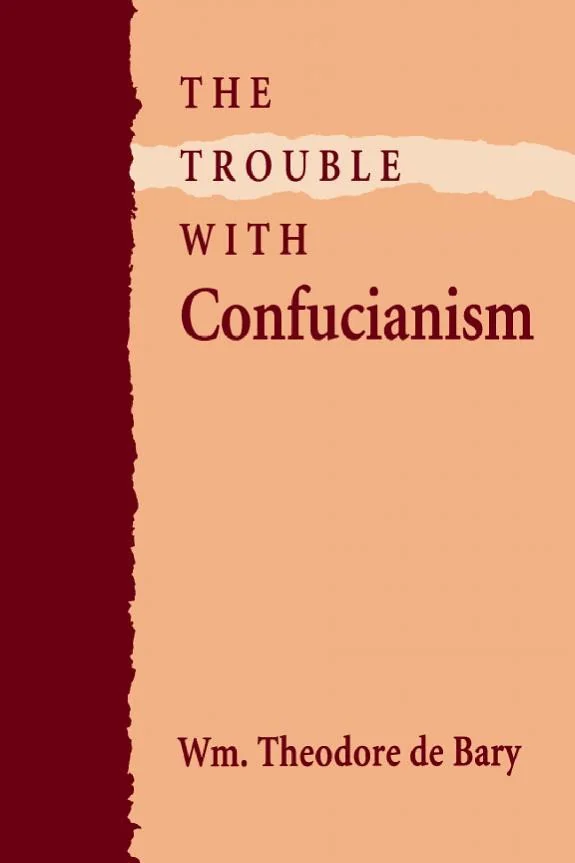
The Trouble with Confucianism
 73
73

The Trouble with Confucianism
William Theodore De Bary’s exploration of Confucianism’s modern predicaments is less a celebration and more a critical autopsy. The author astutely highlights the inherent dualities in Confucianism’s reception, noting its capacity to be both a bulwark against authoritarianism and a tool for it. A particular strength lies in De Bary’s meticulous tracing of how concepts like *li* are adapted, sometimes uneasily, to fit democratic frameworks, a point he articulates with clarity when discussing its role in the late 20th century.
However, the book occasionally feels weighted by its academic rigor, at times sacrificing narrative flow for exhaustive dissection. While the intellectual arguments are compelling, the human element, the lived experience of those navigating these conflicting traditions, could have been more vividly rendered. Despite this, De Bary offers a vital corrective to superficial understandings of Confucianism’s ongoing influence. It’s a sober, necessary examination for anyone serious about East Asian intellectual history.
📝 Description
73
William Theodore de Bary's 1996 book questions the contemporary relevance of Confucian thought.
Published in 1996, "The Trouble with Confucianism" addresses how Confucian principles are interpreted and applied in modern Asian societies. The book examines the tension between viewing Confucianism as a vestige of the past or as a viable source for ethics and social order. It scrutinizes the adaptation and evolution of Confucian ideas amidst modernization and global influences.
De Bary's work engages with significant debates concerning traditional values and their place in East Asian development and governance. It specifically responds to discussions surrounding Confucianism's political implications after events like the Tiananmen Square crackdown and considers the intellectual currents shaped by both proponents and critics of Confucian revival. The book asks how core virtues like benevolence (*ren*), propriety (*li*), and filial piety (*xiao*) are reconfigured today.
It analyzes the conflict between Confucian ideals of social harmony and the modern emphasis on individual rights, particularly in relation to democratic principles. The book also looks at the impact of Neo-Confucianism and its current forms. This study is for those who seek a deeper understanding of how traditional philosophies interact with contemporary life, moving beyond simplistic portrayals.
While not strictly esoteric in the sense of occult or mystical traditions, this book engages with the complex and often contested interpretations of a major philosophical and ethical system. It operates within the tradition of critical intellectual history, examining how foundational texts and ideas are received, debated, and transformed by later generations. The focus is on the internal tensions and external challenges to a tradition, revealing the difficulties inherent in preserving and adapting ancient wisdom for new eras. This approach is common in scholarship that seeks to understand the living legacy of classical thought.
💡 Why Read This Book?
• Gain a concrete understanding of how Confucian concepts like *ren* and *li* are debated and reinterpreted in modern Asia, moving beyond simplistic portrayals. • Grasp the specific historical tensions, particularly evident around the 1996 publication, between Confucianism’s ethical framework and the rise of democratic ideals. • Learn to critically assess how traditional philosophies adapt to contemporary governance, recognizing the "trouble" in applying ancient virtues to modern states.
⭐ Reader Reviews
Honest opinions from readers who have explored this book.
❓ Frequently Asked Questions
What is the core tension explored in "The Trouble with Confucianism"?
The core tension lies in Confucianism's dual role in modern Asia: simultaneously viewed as a symbol of a restrictive past and a source of valuable ethical principles for contemporary society.
Who is William Theodore De Bary and why is his perspective important?
William Theodore De Bary was a prominent scholar of East Asian philosophy and culture, renowned for his work on Confucianism. His perspective offers a deep, scholarly engagement with the subject matter.
When was "The Trouble with Confucianism" first published?
The book was first published in February 1996, positioning its analysis within the specific intellectual and political climate of the mid-1990s.
How does the book address the concept of 'li' (propriety)?
The work examines how the traditional Confucian concept of 'li,' or proper conduct and ritual, is reinterpreted and sometimes challenged in modern Asian societies grappling with new social norms and political systems.
Does the book offer solutions to the 'trouble' with Confucianism?
Rather than offering definitive solutions, the book aims to illuminate the complexities and ongoing debates surrounding Confucianism's place in the modern world, encouraging critical reflection.
What is the significance of the year 1996 for this book's subject matter?
1996 marked a period of significant re-evaluation of East Asian traditions and their impact on modernization, making De Bary's critical examination particularly timely and relevant.
🔮 Key Themes & Symbolism
Confucianism's Modern Duality
The book confronts the paradoxical reception of Confucianism in contemporary Asia. It highlights how the philosophy is simultaneously lauded for its ethical system, promoting social harmony and discipline, and condemned as a symbol of a rigid, hierarchical past. This duality is explored through case studies and intellectual history, demonstrating how figures like Confucius himself are re-evaluated through lenses of modernity and tradition.
Adaptation of Ethical Virtues
A central theme is the reinterpretation and application of core Confucian virtues such as *ren* (benevolence) and *li* (propriety). The work scrutinizes how these ancient principles are adapted, often with difficulty, to fit the demands of modern political structures, individual rights discourse, and globalized economies. It questions whether these virtues can maintain their integrity when transplanted into radically different social and political soil.
Tradition vs. Modernity
The text grapples with the perennial conflict between tradition and modernity as embodied by Confucianism. It examines the pressures placed upon Confucian societies to reconcile their heritage with Western-influenced notions of democracy, secularism, and individualism. The 'trouble' arises from this friction, as societies try to retain cultural identity while embracing globalizing forces.
Political and Social Discipline
The book investigates the role of Confucianism in shaping political and social order. It analyzes how its emphasis on hierarchy, duty, and collective well-being can be invoked to support both authoritarian governance and civic responsibility. The work questions the implications of this emphasis on discipline for democratic development and individual freedoms in East Asia.
💬 Memorable Quotes
Direct passages from the work, attributed to the author.
“Confucius is seen by some as the symbol of a reactionary and repressive past.”
— This highlights one extreme view of Confucianism, where its historical association with imperial structures and rigid social hierarchies leads to its rejection in the modern era.
“Others admire him as a humanist, valuing his ethical system and discipline.”
— This presents the opposing perspective, emphasizing Confucianism's enduring appeal through its focus on moral cultivation, personal integrity, and the structure it provides for social interaction.
“The meaning of Confucianism in modern Asia is a subject of ongoing debate.”
— This statement underscores the central thesis of the book: that Confucianism is not a static doctrine but a dynamic force subject to continuous reinterpretation and contestation.
“De Bary questions the applicability of ancient virtues like *xiao* (filial piety) in vastly altered social landscapes.”
— This interpretation reflects the author's critical inquiry into whether traditional Confucian values, such as deep respect for elders and family obligations, can effectively translate to the complexities of modern, often urbanized and individualistic, life.
💡 Key Ideas
Editorial paraphrase of the work's core concepts — not direct quotes.
The work explores the tension between Confucian emphasis on social harmony and modern concepts of individual rights.
This paraphrased concept points to a key conflict examined, where the traditional collectivist ethos of Confucianism clashes with the liberal emphasis on individual autonomy prevalent in many contemporary societies.
🌙 Esoteric Significance
Tradition
While not strictly an esoteric text in the Western Hermetic sense, "The Trouble with Confucianism" engages with a tradition that shares common ground with esoteric philosophies: the cultivation of inner virtue and its outward manifestation in social order. Confucianism, particularly its Neo-Confucian developments, shares with Gnosticism and Hermeticism an interest in self-perfection and the alignment of the individual with a higher (or societal) order. De Bary's work explores this lineage by examining how ethical systems are constructed and maintained across generations.
Symbolism
Key symbolic concepts include *Ren* (仁), often translated as benevolence or humaneness, representing the ideal inner state of moral perfection. *Li* (禮), encompassing ritual, propriety, and social norms, acts as the external manifestation and ordering principle of society. The relationship between *Ren* and *Li* symbolizes the esoteric principle of aligning inner spiritual or ethical development with outer social conduct and cosmic order, a common theme in various mystical traditions.
Modern Relevance
Contemporary thinkers grappling with virtue ethics, communitarianism, and the philosophy of education often draw upon the nuanced understanding of Confucianism that De Bary provides. Scholars exploring the intersection of tradition and globalization, particularly in East Asian contexts, find his analysis crucial for understanding how ancient ethical frameworks are being reinterpreted to address modern challenges like political legitimacy, social cohesion, and cultural identity in the digital age.
👥 Who Should Read This Book
• Students of East Asian philosophy and history: Gain a critical perspective on the enduring influence and contested meanings of Confucianism beyond introductory texts. • Comparative religion and ethics scholars: Understand the complexities of applying traditional ethical systems to modern globalized societies and democratic frameworks. • Policymakers and cultural analysts: Appreciate the deep historical roots influencing contemporary governance and social dynamics in East Asian nations.
📜 Historical Context
Published in 1996, "The Trouble with Confucianism" arrived at a critical juncture in East Asian intellectual history. The preceding decades had seen Confucianism invoked both to explain the 'economic miracle' of the Asian Tigers and, conversely, blamed for hindering democratic reforms. De Bary’s work engaged directly with the burgeoning field of Neo-Confucian studies, particularly the scholarship of figures like Tu Wei-ming, who sought to revitalize Confucianism for the modern age. It also implicitly responded to critiques from liberal democratic theorists who viewed Confucianism’s emphasis on hierarchy and social order as incompatible with individual freedoms. The book emerged in an intellectual climate where scholars were actively debating whether Confucianism represented a viable foundation for post-colonial governance or an obstacle to modernization, a debate heightened by events such as the 1989 Tiananmen Square protests.
📔 Journal Prompts
The tension between *Ren* and *Li* in modern governance.
Confucius as a symbol of past repression versus ethical guide.
Reinterpreting *Xiao* (filial piety) in contemporary family structures.
The challenge of reconciling Confucian social harmony with Western individualism.
Evaluating the political utility of Confucian discipline in the 21st century.
🗂️ Glossary
Ren (仁)
A core Confucian virtue, often translated as benevolence, humaneness, or goodness. It signifies the ideal ethical quality of a person and is central to harmonious social relations.
Li (禮)
Encompasses ritual, propriety, etiquette, and social norms. It refers to the established practices and codes of conduct that regulate social interactions and maintain order.
Xiao (孝)
Filial piety; the virtue of respect for one's parents, elders, and ancestors. It is a fundamental tenet of Confucian ethics, emphasizing familial loyalty and duty.
Neo-Confucianism
A philosophical movement that emerged in China during the Tang dynasty and became prominent during the Song dynasty, attempting to harmonize the ethical and social aspects of Confucianism with metaphysical and cosmological concepts.
Humanism
A philosophical stance that emphasizes the value and agency of human beings, individually and collectively. In the context of Confucianism, it refers to the focus on ethical conduct, self-cultivation, and social responsibility.
Reactionary
A person or belief that advocates a return to a previous political or social order. In this context, it implies viewing Confucianism as clinging to outdated, oppressive traditions.
Discipline
In a Confucian context, this refers to adherence to moral principles, social norms, and hierarchical structures, fostering self-control and order within individuals and society.
This book appears in 1 collection
🔮 Readers Also Liked
Browse all →




From the “Confucianism” Collection
View all →




More Free Sacred Texts & Gnosticism Books
View all →