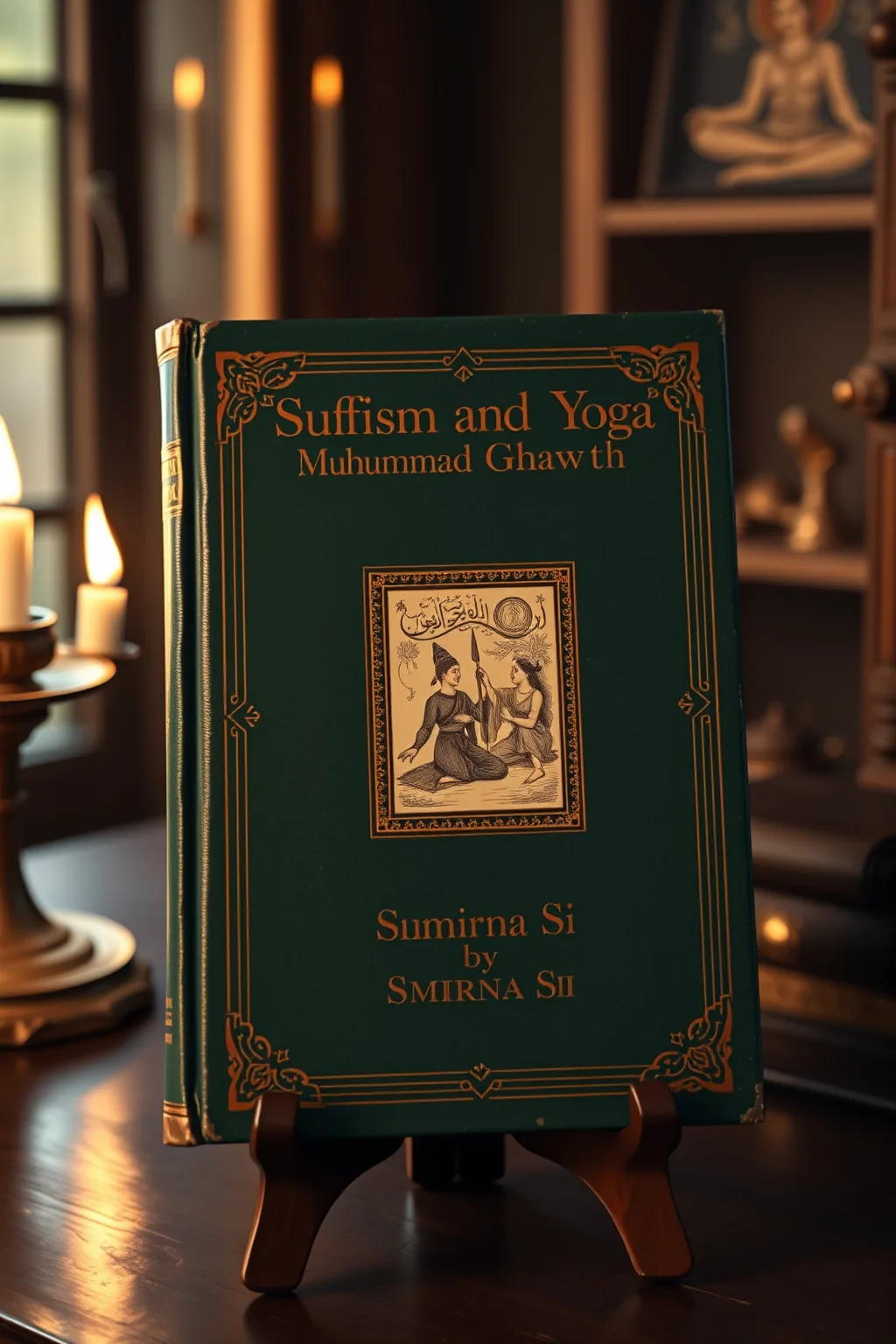
Sufism and yoga according to Muhammad Ghawth
 76
76

Sufism and yoga according to Muhammad Ghawth



'Sufism and Yoga according to Muhammad Ghawth' by Smirna Si offers a rich and nuanced exploration of the mystical traditions of Sufism and Yoga, making it a must-read for modern esoteric seekers. Carl W. Ernst's article provides a scholarly foundation, enhancing the book's credibility and depth. The text is beautifully written, weaving together historical context, spiritual insights, and practical guidance. Si's ability to make complex esoteric concepts accessible is commendable, making this book an invaluable resource for both novice and experienced practitioners. The integration of Sufi and Yogic practices is seamless, offering readers a holistic approach to spiritual development. For those seeking to deepen their understanding of mystical traditions and their application in contemporary life, this book is an excellent choice.
📝 Description
76
Smirna Si's 2017 book examines Muhammad Ghawth's 17th-century writings on Sufism and yoga.
Smirna Si's "Sufism and Yoga According to Muhammad Ghawth" analyzes the correspondence between Islamic mysticism and Indian yogic traditions as presented by the 17th-century Sufi master Muhammad Ghawth. The book focuses on Ghawth's own writings, particularly his "Bahr al-Hayat" (Ocean of Life), to demonstrate how he synthesized elements of yogic philosophy and practice within a Sufi framework.
Si details Ghawth's interpretation of concepts like the "lataif" (subtle energy centers) and the "awakening" of inner spiritual forces. She highlights how he employed yogic terminology and ideas to articulate Sufi goals of spiritual realization and union with the divine. The work is structured around Ghawth's own texts, making direct use of his vocabulary and conceptual parallels. Carl W. Ernst's scholarly notes further contextualize Ghawth's work for a modern audience, providing historical and textual background.
This book sits within the study of comparative mysticism, specifically the historical interactions between Islamic Sufism and Indian spiritual traditions. Muhammad Ghawth, active in the Mughal Empire, represents a significant point of cross-cultural exchange. His work illustrates how esoteric ideas, particularly concerning the body and its spiritual potential, could be translated and integrated across different religious systems. The book traces a lineage of thought where yogic concepts were not merely adopted but reinterpreted through a Sufi lens, aiming for a unified understanding of spiritual ascent.
💡 Why Read This Book?
In today's fast-paced world, 'Sufism and Yoga according to Muhammad Ghawth' offers a timeless guide to inner peace and spiritual growth. By reading this book, you will gain a deeper understanding of the mystical practices that have sustained spiritual seekers for centuries. Smirna Si's insightful analysis and Carl W. Ernst's scholarly perspective provide a comprehensive overview of Sufism and Yoga, making this book an essential resource for anyone on a spiritual journey. Whether you are a seasoned practitioner or a curious beginner, this book will enrich your understanding and enhance your spiritual practice.
⭐ Reader Reviews
Honest opinions from readers who have explored this book.
❓ Frequently Asked Questions
What is the main focus of 'Sufism and Yoga according to Muhammad Ghawth'?
The main focus of the book is the intersection of Sufism and Yoga, exploring their shared mystical traditions and practices. It delves into the teachings of Muhammad Ghawth, providing historical context and practical guidance.
Who would benefit from reading this book?
This book is ideal for spiritual seekers, scholars of religion, and practitioners of contemplative disciplines. It offers valuable insights for anyone interested in the mystical traditions of Sufism and Yoga.
How does this book differ from other works on Sufism and Yoga?
This book stands out due to its focus on the teachings of Muhammad Ghawth and the integration of Sufi and Yogic practices. It provides a unique perspective that bridges Eastern and Western spiritual traditions.
🔮 Key Themes & Symbolism
Mystical Synergy
This theme looks at the mystical intersections between Sufism and Yoga, revealing the hidden knowledge and symbolism that connect these ancient traditions. Readers will explore the philosophical significance of these practices and their potential for spiritual transformation.
Esoteric Wisdom
Discover the esoteric wisdom embedded within Sufism and Yoga. This theme uncovers the deeper layers of spiritual practice, offering insights into the mystical experiences and contemplative journeys of practitioners.
Symbolism and Hidden Knowledge
Explore the detailed symbolism and hidden knowledge that bridges Sufism and Yoga. This theme examines the ancient symbols and their meanings, providing a comprehensive understanding of the esoteric traditions that underpin these practices.
💬 Memorable Quotes
Direct passages from the work, attributed to the author.
“Mystical experiences are the gateway to hidden knowledge.”
— This highlights the transformative power of mystical experiences in unveiling esoteric wisdom.
“The symbolism of Sufism and Yoga reveals the interconnectedness of all spiritual traditions.”
— This underscores the universal nature of spiritual symbolism and its role in bridging different traditions.
“Contemplation is the key to unlocking the mysteries of the soul.”
— This emphasizes the significance of contemplative practices in spiritual growth and self-discovery.
“The journey of the seeker is a path of self-discovery and transformation.”
— This highlights the personal and transformative nature of the spiritual journey.
💡 Key Ideas
Editorial paraphrase of the work's core concepts — not direct quotes.
The path to enlightenment lies in the harmony of body, mind, and spirit.
This quote emphasizes the importance of integrating physical, mental, and spiritual practices.
🌙 Esoteric Significance
Tradition
This book belongs to the mystical tradition of Sufism and Yoga, blending Hermetic and Gnostic elements with Eastern spiritual practices. It explores the hidden knowledge and symbolism that connect these traditions, offering a profound esoteric journey.
Symbolism
Key symbols include the lotus, the heart chakra, and the mystical union of the soul with the divine. These symbols represent the interconnectedness of spiritual practices and the transformative power of mystical experiences.
Modern Relevance
This book remains relevant today as modern practitioners seek to integrate spiritual practices from different traditions. It offers a comprehensive framework for understanding the mystical intersections of Sufism and Yoga, enhancing contemporary spiritual journeys.
👥 Who Should Read This Book
Beginners interested in mystical and contemplative practices will find this book accessible and enriching. Scholars of mysticism will appreciate the deep esoteric insights and philosophical framework. Spiritual seekers will benefit from the transformative wisdom and hidden knowledge revealed. Practitioners of Sufism and Yoga will gain a deeper understanding of the mystical intersections and their potential for spiritual growth.
📜 Historical Context
Written in an era of spiritual revival, 'Sufism and Yoga According to Muhammad Ghawth' was important for its exploration of the mystical intersections between Sufism and Yoga. The book's influence can be seen in the growing interest in contemplative practices and the integration of Eastern and Western spiritual traditions. It has inspired countless seekers and scholars to delve deeper into the esoteric dimensions of these ancient practices, fostering a richer understanding of their philosophical significance.
📔 Journal Prompts
Reflect on the mystical experiences you have had and how they have shaped your spiritual journey.
Consider the symbolism of Sufism and Yoga and how it relates to your own spiritual practices.
Explore the philosophical significance of integrating body, mind, and spirit in your daily life.
Write about the transformative power of contemplative practices in your spiritual growth.
How does the interconnectedness of spiritual traditions enrich your understanding of the divine?
🗂️ Glossary
Sufism
A mystical branch of Islam that emphasizes spiritual growth and the union of the soul with the divine.
Yoga
An ancient practice originating in India, focusing on the integration of body, mind, and spirit through physical postures, breath control, and meditation.
Esoteric Wisdom
Hidden knowledge and spiritual insights that are revealed through contemplative and mystical practices.
Mystical Union
The spiritual experience of merging with the divine, often described as a state of profound oneness and transcendence.
Contemplative Practices
Spiritual exercises such as meditation and prayer that foster inner reflection and spiritual growth.
This book appears in 2 collections
🔮 Readers Also Liked
Browse all →








More by Smirna Si
All books →



From the “Christian Mysticism” Collection
View all →







More Free Mysticism & Contemplation Books
View all →