A comparative study of Hindu, Christian and Jewish mysticism

 61
61

A comparative study of Hindu, Christian and Jewish mysticism

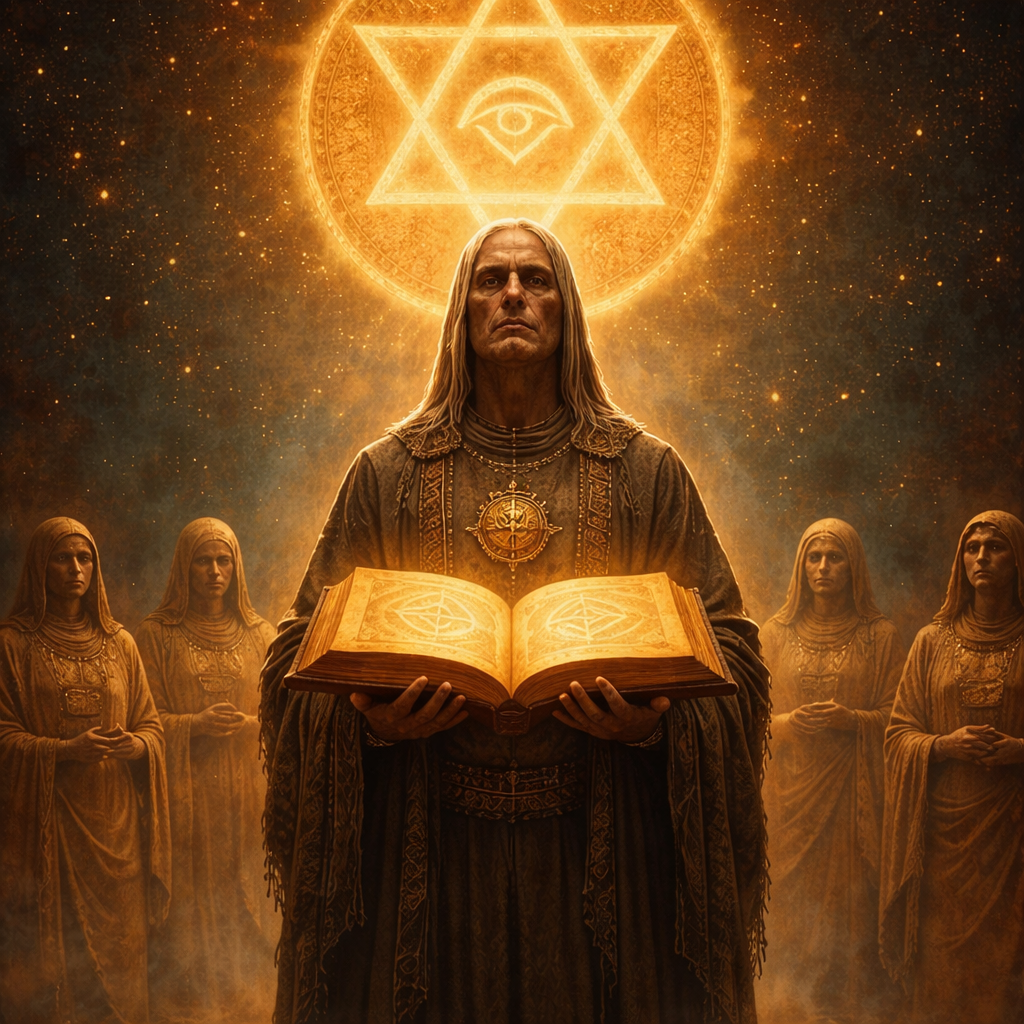

Ophelia Vance (Mystical Literature Reviewer) — E. M. Abrahams' seminal work is an indispensable beacon for anyone exploring the inner dimensions of faith. 'A Comparative Study' offers a scholarly yet accessible exploration of the mystical currents within Hinduism, Christianity, and Judaism. Abrahams' insightful analysis highlights the shared language of symbols and the universal pursuit of divine union, making complex theological concepts vibrantly clear. This book is a must-read for serious students of comparative mysticism, Kabbalah, and those seeking to deepen their understanding of spiritual traditions. Its comparative approach provides a unique and invaluable perspective on the perennial quest for the sacred.
📝 Description
61
E. M. Abrahams' 1992 study compares the mystical traditions of Hinduism, Christianity, and Judaism.
Published in 1992, E. M. Abrahams' comparative study examines the mystical dimensions of Hinduism, Christianity, and Judaism. The author identifies shared patterns in how adherents across these faiths have sought direct experience of the divine. Abrahams looks at the symbolic language and archetypes that appear in these traditions, suggesting a common human impulse toward transcendence.
The book details specific practices and concepts, such as Kabbalistic sefirot, Hindu yogic disciplines, and Christian apophatic theology. It aims to show how these distinct religious systems, despite their theological differences, often converge in their pursuit of spiritual realization. The work is suitable for readers interested in the underlying unity of mystical thought across different cultural and religious backgrounds.
This work falls within the Western esoteric tradition's interest in comparative religion and perennial philosophy. Such studies often seek to uncover universal truths or underlying structures in diverse spiritual paths. Abrahams' approach aligns with scholars who look beyond the exoteric doctrines of established religions to find common ground in mystical experience and practice, particularly in the late 20th century when interest in cross-cultural spirituality was significant.
💡 Why Read This Book?
Uncover the universal language of the soul. This book offers a rare comparative lens into the mystical heart of Hinduism, Christianity, and Judaism, revealing profound shared insights into divine connection. Ideal for seekers, scholars, and practitioners who wish to transcend denominational boundaries and explore the deep, unifying currents of spiritual experience. Discover hidden wisdom and the perennial philosophy.
⭐ Reader Reviews
Honest opinions from readers who have explored this book.
❓ Frequently Asked Questions
What is the primary focus of this comparative study?
The primary focus is to explore the commonalities and unique expressions of mystical experience and practice across Hindu, Christian, and Jewish traditions, highlighting their shared esoteric principles and symbolic language.
Who is the intended audience for this book?
The book is intended for scholars of religion, students of mysticism, practitioners of spiritual disciplines, and anyone curious about the deeper, interconnected nature of religious experience across different faiths.
Does the book require prior knowledge of these religions?
While prior knowledge can enhance the reading experience, Abrahams' clear prose and comparative approach make it accessible to those with a general interest in spirituality and mysticism.
What kind of mystical traditions are explored?
The book delves into the esoteric dimensions of Vedanta and Tantra in Hinduism, Kabbalah and Hasidism in Judaism, and contemplative and apophatic traditions in Christianity.
How does this book contribute to understanding religious diversity?
It demonstrates that despite outward differences, core mystical aspirations and pathways to divine union are remarkably similar, fostering interfaith understanding and a sense of shared spiritual humanity.
🔮 Key Themes & Symbolism
The Perennial Philosophy of Union
This theme explores the concept that beneath the diverse outward forms of religious expression lies a single, universal spiritual truth. Abrahams argues that the mystical quest for union with the Divine, though articulated through different cultural and theological lenses, shares fundamental archetypes and aspirations. It examines how the yogic concept of Samadhi, the Kabbalistic Shekhinah, and the Christian 'Cloud of Unknowing' all point towards a similar transcendent state of being, transcending the limitations of the ego and the material world.
Symbolism and Sacred Language
Abrahams meticulously dissects the rich symbolic vocabularies employed by each tradition to describe the ineffable. From the Sephirot of the Kabbalah and the divine emanations in Hinduism to the parables and metaphors in Christian scripture, the book reveals how symbols serve as bridges between the mundane and the divine. It emphasizes the esoteric function of these symbols, not merely as decorative elements but as keys to unlocking hidden spiritual realities and guiding the seeker's inner ascent.
The Ascent of the Soul
A central theme is the journey of the soul towards spiritual enlightenment or union with God. The study maps out the various stages and disciplines undertaken by mystics across these traditions, be it through meditation, prayer, contemplation, or ascetic practices. Abrahams highlights the common emphasis on purification, detachment, inner transformation, and the eventual dissolution of the self into the Divine presence, presenting a universal roadmap for spiritual growth and liberation.
💬 Memorable Quotes
Direct passages from the work, attributed to the author.
“The veil is thin where the heart is pure.”
— This aphorism suggests that spiritual perception is directly correlated with inner purity, implying that sincere devotion and ethical living facilitate a closer connection to the divine realm.
“Each path seeks the same summit.”
— This highlights the comparative nature of the book, suggesting that despite their differing methodologies, the ultimate goal of all genuine spiritual paths is a unified experience of transcendence.
“The language of symbols unlocks the silent speech of the cosmos.”
— This emphasizes the esoteric power of symbolic representation, suggesting that through understanding these signs, one can access a deeper, intuitive understanding of universal truths.
“In stillness, the divine whispers its secrets.”
— This points to the importance of contemplative practices, asserting that quietude and inner peace are essential for receiving divine revelation and profound spiritual insight.
💡 Key Ideas
Editorial paraphrase of the work's core concepts — not direct quotes.
God's face is seen in the mirror of the soul.
This quote posits that the divine is not an external entity to be found, but an inner presence that can be apprehended through introspection and self-awareness.
🌙 Esoteric Significance
Tradition
This work is deeply rooted in the esoteric traditions of comparative mysticism and the perennial philosophy. It bridges the gap between scholarly analysis and the practical application of spiritual disciplines, offering insights into the hidden knowledge and inner workings of diverse mystical paths. Its significance lies in revealing the universal principles that guide the soul's journey towards divine consciousness, irrespective of specific religious doctrines.
Symbolism
The book examines the profound symbolic language common to these traditions, exploring archetypes, divine names, and visionary imagery. It treats these symbols not as mere decorative elements but as potent keys to understanding spiritual realities, the structure of the cosmos, and the pathways of the soul. The interpretation of these symbols provides esoteric access to the deeper meanings embedded within religious texts and practices.
Modern Relevance
In an increasingly interconnected and diverse world, Abrahams' comparative approach offers invaluable insights into interfaith dialogue and the shared human search for meaning. It provides a framework for understanding the universality of spiritual aspirations, fostering empathy and mutual respect among different belief systems. For contemporary seekers, it offers a roadmap to deeper self-understanding and connection with the divine, demonstrating that the core principles of spiritual growth remain timeless.
👥 Who Should Read This Book
This book is a treasure for the earnest seeker of spiritual truth, offering a broad yet profound perspective on the mystical dimensions of major world religions. Scholars of comparative religion and theology will find its rigorous analysis and insightful comparisons important for their research. Practitioners of meditation, contemplation, and other spiritual disciplines will discover a wealth of wisdom to deepen their practice and connect with the universal currents of divine experience. Beginners curious about the deeper aspects of faith will find it an accessible yet clear introduction to the hidden highways of the soul.
📜 Historical Context
Published in an era of burgeoning interest in comparative religion and esoteric studies, likely mid-20th century, 'A Comparative Study of Hindu, Christian, and Jewish Mysticism' emerged as a significant contribution to the scholarly and spiritual landscape. This period saw a growing desire to move beyond rigid denominational boundaries and explore the underlying unity of human spiritual experience. The work reflects the intellectual currents that sought to synthesize Eastern and Western thought, driven by figures who believed in a universal wisdom tradition. Abrahams' study offered a critical yet reverent examination of these traditions, providing readers with a framework to appreciate the profound commonalities that transcend cultural and religious differences, fostering a more inclusive understanding of spiritual seeking.
📔 Journal Prompts
In what ways do the symbolic languages of Hinduism, Christianity, and Judaism overlap in your understanding?
Reflect on a personal experience of 'union' or profound connection that transcended ordinary consciousness. How does it resonate with the concepts presented in the book?
How can the concept of the 'ascent of the soul' be applied to your daily life and spiritual practice?
Consider a common human yearning (e.g., for love, meaning, peace). How do the mystical traditions discussed address this yearning through their unique lenses?
What does the idea of 'hidden knowledge' mean to you, and how might it be pursued in your own spiritual journey?
🗂️ Glossary
Kabbalah
A complex system of Jewish mysticism that explores the nature of God and the universe through esoteric interpretations of the Torah, often involving divine emanations (Sefirot) and symbolic pathways.
Sefirot
In Kabbalah, the ten divine emanations or attributes through which God is said to have created and sustains the universe, forming a blueprint of reality.
Vedanta
A major school of Hindu philosophy that emphasizes the teachings of the Upanishads, focusing on the unity of the individual soul (Atman) with the ultimate reality (Brahman).
Apophatic Theology
A form of theological reasoning and spiritual practice that describes God by negation, emphasizing what God is not rather than what God is, to avoid limiting the divine nature.
Perennial Philosophy
The idea, espoused by thinkers like Aldous Huxley, that all religions share a common mystical core or ultimate truth, despite their diverse exoteric expressions and doctrines.
This book appears in 1 collection
🔮 Readers Also Liked
Browse all →








More by E. M. Abrahams
All books →
From the “Kabbalah” Collection
View all →







More Free Kabbalah & Jewish Mysticism Books
View all →