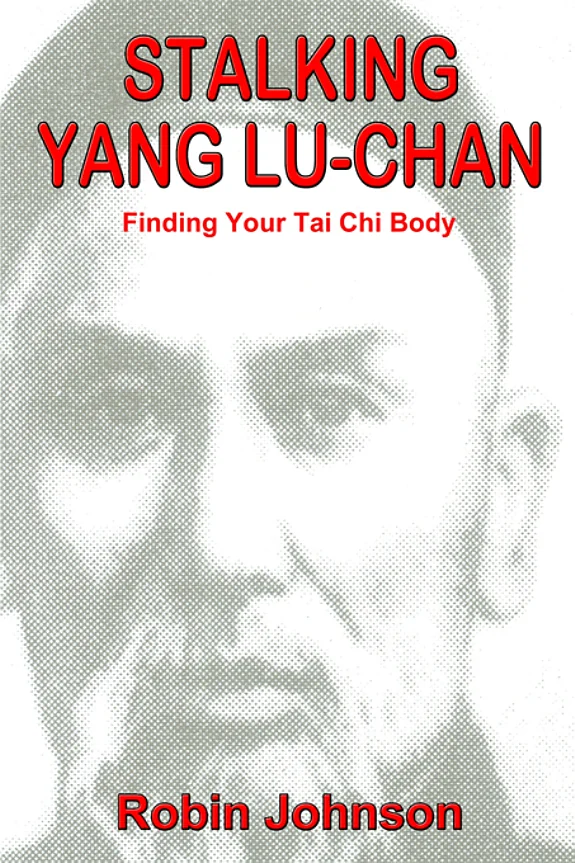
Stalking Yang Lu-Chan
 80
80

Stalking Yang Lu-Chan
Robin Johnson’s *Stalking Yang Lu-Chan* bypasses the usual platitudes surrounding Tai Chi, offering instead a starkly analytical approach to its internal mechanics. The book’s strength lies in its systematic deconstruction of movement, particularly its focus on identifying and cultivating the elusive “Tai Chi body.” Johnson doesn't shy away from the demanding nature of these internal methods, presenting them as rigorous disciplines rather than mystical pronouncements. However, the text's analytical tone, while laudable for its precision, can sometimes feel detached, lacking the visceral immediacy one might expect from a practice centered on embodied experience. A particularly striking passage details the subtle energetic shifts required to maintain root while yielding, a concept often glossed over in less rigorous manuals. For those seeking a detailed, almost anatomical breakdown of internal martial principles, this work provides a valuable, albeit challenging, resource.
📝 Description
80
Robin Johnson's 2015 book examines the internal mechanics of Tai Chi attributed to Yang Lu-Chan.
This book offers a detailed study of the internal mechanics of Tai Chi, specifically the principles associated with Yang Lu-Chan. It goes beyond the outward appearance of movements to address the energetic and structural integrity necessary for genuine Tai Chi practice. The author outlines a process for identifying, cultivating, and embodying what is termed a "Tai Chi body," a state of unified physical and energetic readiness.
This text is written for dedicated practitioners of internal martial arts. It is for those who wish to move past superficial techniques and understand the core energetic and structural directives of Tai Chi. Readers interested in Qi Gong, internal alchemy, and the integration of mind and body will find valuable information here. The work implicitly addresses the current discussions on how classical Chinese martial arts are transmitted and practiced today.
Drawing inspiration from Yang Lu-Chan, a significant figure in the mid-19th century development of Tai Chi Chuan, this book places its techniques within the lineage of internal martial arts. Yang Lu-Chan is credited with transforming Tai Chi from a family art into a widely practiced system for health and self-defense. The book engages with the ongoing dialogue about the authentic transmission and practice of classical Chinese martial arts in the contemporary world.
💡 Why Read This Book?
• Learn to identify and cultivate the specific energetic and structural integrity of a "Tai Chi body," moving beyond superficial forms as described in the chapter on "Internal Mechanics." • Understand the practical application of principles like "yielding to overcome" and "mind-intent guiding Qi" as demonstrated through detailed structural analysis. • Gain a deeper appreciation for the historical lineage of Tai Chi, specifically the innovations of Yang Lu-Chan in the mid-19th century, and their implications for contemporary practice.
⭐ Reader Reviews
Honest opinions from readers who have explored this book.
❓ Frequently Asked Questions
What distinguishes the "Tai Chi body" discussed in *Stalking Yang Lu-Chan* from standard physical fitness?
The "Tai Chi body" in this work refers to a state of integrated physical and energetic readiness, emphasizing internal alignment and Qi flow, rather than muscular strength or cardiovascular conditioning alone.
Is this book suitable for absolute beginners in Tai Chi?
While informative, the book's analytical and in-depth approach to internal mechanics makes it more suitable for practitioners with some foundational experience in Tai Chi or similar internal arts.
What historical figure is the book's methodology inspired by?
The methods presented are inspired by the skills of Yang Lu-Chan, often called "Yang the Invincible," a pivotal figure in the development and popularization of Tai Chi Chuan in the 19th century.
Does the book provide step-by-step instructions for movements?
The book focuses more on the underlying principles and energetic structures that inform movement, rather than providing a sequence of physical steps. It explains *how* to achieve the internal state for movement.
What is the primary focus of the internal methods presented?
The primary focus is on the internal mechanics and energetic cultivation required to embody authentic Tai Chi movement, aiming to develop a "moving body" integrated with mind-intent.
When was *Stalking Yang Lu-Chan* first published?
The book *Stalking Yang Lu-Chan* by Robin Johnson was first published in 2005.
🔮 Key Themes & Symbolism
The Cultivation of the Tai Chi Body
This theme centers on the book's core objective: to guide practitioners in developing what is termed the "Tai Chi body." This is presented not as mere posture, but as a dynamic state of internal integration, energetic coherence, and structural integrity. The author meticulously breaks down the components necessary to achieve this state, emphasizing the subtle yet crucial energetic shifts and alignments that differentiate authentic internal practice from superficial physical execution. It explores how mind-intent directs Qi, manifesting a body capable of effortless power and profound sensitivity.
Principles of Internal Movement
The work dissects fundamental principles governing effective internal movement, moving beyond descriptive labels to analytical explanations. Concepts such as yielding to overcome, rooting through connection, and the interplay between stillness and motion are examined. The book provides frameworks for understanding how these abstract principles translate into tangible physical and energetic phenomena. It addresses the mechanics of force generation, absorption, and redirection, rooted in an internal energetic matrix rather than external muscular force.
Historical Lineage and Authentic Transmission
By invoking Yang Lu-Chan, the book grounds its methods in a specific historical context and lineage. It implicitly addresses the challenges of preserving and transmitting authentic internal martial arts principles across generations. The author's approach suggests a commitment to the integrity of these practices, seeking to uncover and articulate the core essence of Yang Lu-Chan's legendary skill. This focus serves to situate the manual within the broader tradition of classical Chinese internal arts.
Mind-Intent and Qi Dynamics
A significant theme is the crucial role of mind-intent (Yi) in directing Qi (energy) and shaping physical form. The book explores how conscious intention, refined through specific internal practices, can guide the flow of vital energy throughout the body. This energetic guidance is presented as the primary driver of effective Tai Chi movement, enabling power, sensitivity, and resilience. The interplay between mental focus and the resulting energetic and physical manifestation is a recurring analytical point.
💬 Memorable Quotes
Direct passages from the work, attributed to the author.
“Identifying the structures and techniques of a moving body.”
— This phrase captures the analytical core of the book, emphasizing a methodical approach to understanding the mechanics of Tai Chi movement at a fundamental level, rather than relying solely on tradition or intuition.
“The author presents core components of Tai Chi movement.”
— Highlights the book's function as a pedagogical tool, systematically breaking down complex internal principles into understandable, actionable components for dedicated practitioners.
“Finding and training a Tai Chi body.”
— This expresses the ultimate goal of the methods described: the cultivation of a specific internal state and physical readiness unique to authentic Tai Chi practice.
“Internal methods inspired by the skills of Yang the Invincible.”
— Establishes the historical and stylistic lineage of the book's content, linking its practical applications to the legendary prowess of Yang Lu-Chan.
“Reveals key elements in finding and training a Tai Chi body.”
— This statement underscores the book's purpose as an expository guide, aiming to unlock essential knowledge for practitioners focused on developing genuine internal Tai Chi capabilities.
🌙 Esoteric Significance
Tradition
This work engages with the esoteric dimensions of internal martial arts, particularly within the lineage tracing back to Yang Lu-Chan. While not overtly mystical, it operates within the framework of cultivating internal energy (Qi) and harmonizing mind-intent (Yi) with physical form, concepts central to Taoist internal alchemy and Neidan practices. It departs from purely physical interpretations by focusing on energetic cultivation as the foundation for martial efficacy and profound embodiment, aligning with Hermetic principles of correspondence between the microcosm (body) and macrocosm (energy/universe).
Symbolism
The primary symbolic resonance lies in the concept of the "Tai Chi body" itself – a microcosm representing the balanced interplay of Yin and Yang, stillness and movement, emptiness and fullness. The name "Yang Lu-Chan" (Yang the Invincible) symbolizes the peak of martial attainment through internal cultivation. The act of "stalking" implies a patient, focused pursuit of this elusive state, mirroring alchemical processes of refinement and transformation through diligent practice.
Modern Relevance
Contemporary practitioners of various internal arts, including Tai Chi, Qi Gong, and Xing Yi Quan, continue to seek deeper understanding of energetic principles. Thinkers and schools focusing on somatic intelligence, embodied cognition, and the intersection of mind-body practices draw upon the meticulous analytical approach found in works like Johnson's. The book's emphasis on structural integrity and energetic coherence remains relevant for those exploring authentic transmission of classical martial arts in a world increasingly dominated by superficiality.
👥 Who Should Read This Book
• Dedicated Tai Chi practitioners seeking to understand the underlying energetic and structural principles beyond superficial form. • Students of internal martial arts, including Qi Gong and Xing Yi Quan, interested in comparative analysis of body-mind cultivation methods. • Researchers and practitioners of esoteric traditions focusing on the practical application of energy cultivation and mind-intent in physical disciplines.
📜 Historical Context
Published in 2005, *Stalking Yang Lu-Chan* emerged during a period of increasing global interest in traditional Chinese martial arts, alongside a growing academic and practitioner focus on their internal aspects. This era saw a proliferation of books on Tai Chi, but many focused on health benefits or simplified forms. Johnson's work positioned itself against this trend by offering a rigorous, analytical examination of the internal mechanics attributed to Yang Lu-Chan, the mid-19th century master credited with systematizing Tai Chi Chuan and transforming it from a family secret into a widely practiced art. While the martial applications of Tai Chi were debated, often overshadowed by its perceived health benefits, Johnson’s text implicitly championed a return to understanding the art's martial roots and energetic principles. Contemporary authors like Robert Smith, who explored the martial dimensions of Tai Chi in the late 20th century, paved the way for such detailed technical explorations, though Johnson's approach is notably more focused on the internal structural dynamics.
📔 Journal Prompts
The cultivation of the "Tai Chi body" requires specific internal alignment. How does this concept challenge your current understanding of physical practice?
Analyze the principle of "yielding to overcome" as presented in the text. Where have you observed this dynamic in nature or other disciplines?
Reflect on the role of "mind-intent guiding Qi" in your own physical or energetic practices.
Consider the historical context of Yang Lu-Chan. What might have been the primary motivations behind his innovations in Tai Chi?
Identify one structural technique described in the book that seems counterintuitive. Explore its potential energetic function.
🗂️ Glossary
Tai Chi Body
A state of integrated physical structure, energetic flow (Qi), and mental intention (Yi) cultivated through specific internal martial arts practices, distinct from ordinary physical conditioning.
Yang Lu-Chan
An important 19th-century martial artist credited with systematizing and popularizing Tai Chi Chuan, known for his legendary skill and emphasis on internal principles.
Qi
The vital life force or energy believed in traditional Chinese culture to animate all living things and be fundamental to health, vitality, and martial power.
Mind-Intent (Yi)
The faculty of consciousness or will that directs energy (Qi) and guides physical movement in internal martial arts and meditative practices.
Internal Mechanics
The study and application of the underlying energetic, structural, and intentional principles that govern effective movement in practices like Tai Chi, as opposed to external physical techniques.
Yielding to Overcome
A martial principle central to Tai Chi, emphasizing the strategic use of receptivity and redirection of force rather than direct confrontation.
Rooting
The energetic and structural principle of maintaining stability and connection to the ground, enabling the efficient transfer and absorption of force.
This book appears in 1 collection
🔮 Readers Also Liked
Browse all →![A high-school algebra wallet-sized proof, of the Bieberbach conjecture After L. Weinstein]](/img/thumb/a-high-school-algebra-wallet-sized-proof-of-the-bieberbach-conjecture-after-l-weinstein-shalosh-b-ekhad.webp)









From the “Tai Chi” Collection
View all →






More Free Occult Philosophy Books
View all →