Taichi
 76
76

Taichi
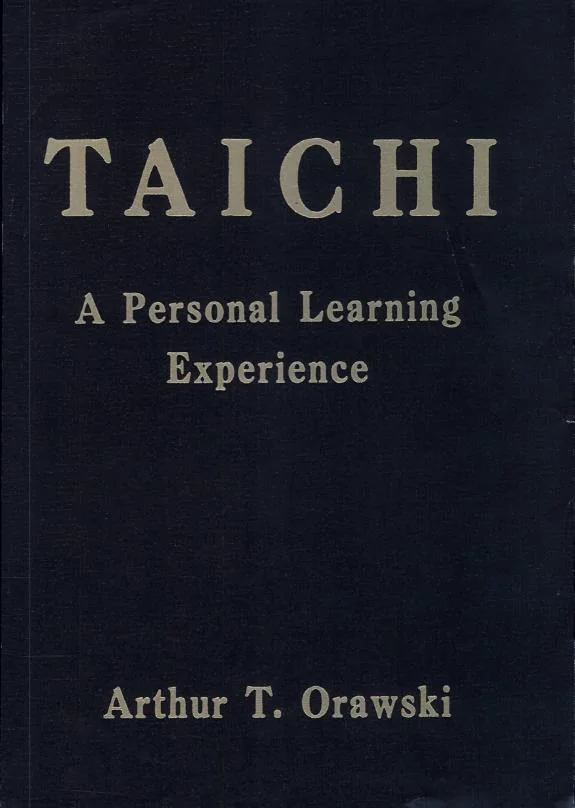
Arthur T. Orawski's "Taichi" presents a remarkably clear exposition of an often-opaque subject. The book excels in its methodical dissection of Tai Chi's philosophical underpinnings, particularly its detailed exploration of Yin-Yang principles and their manifestation in movement. This analytical approach is a significant strength, offering readers a framework for understanding beyond rote memorization of forms. However, the text occasionally leans towards overly academic language, which may present a barrier for absolute beginners seeking only practical instruction. A passage discussing the subtle interplay of *Geng* (bone) and *Rou* (flesh) in maintaining energetic integrity, for instance, is illuminating but demands careful rereading. Ultimately, "Taichi" serves as a valuable intellectual companion for dedicated students of the art.
📝 Description
76
Arthur T. Orawski's "Taichi" was published in 1996, moving beyond physical techniques to detail the art's energetic and cosmological frameworks.
Published in 1996, Arthur T. Orawski's "Taichi" offers a systematic examination of the principles behind the Chinese martial art and philosophical system. The book aims to clarify the internal mechanics and philosophical ideas, making them understandable for those unfamiliar with traditional martial arts. Orawski's work goes beyond simple physical movements to explain the deeper energetic and cosmological structures that shape Tai Chi practice. This approach is designed to demystify the discipline for a wider audience.
This text is best suited for dedicated Tai Chi students wanting to grasp the philosophical origins and energetic theories of their practice. It also offers comparative insights for practitioners of other internal arts like Qigong or Baguazhang. Researchers focusing on comparative religion, esoteric philosophy, or East Asian studies will find its structured analysis useful for understanding how mind, body, and spirit integrate within a specific cultural framework.
Emerging in the late 20th century, a period of growing global interest in Eastern philosophies, Orawski's "Taichi" contributed to Western comprehension of these practices. While earlier figures popularized Chinese martial arts, Orawski's focus was on Tai Chi's introspective and philosophical aspects, distinguishing it from combat-focused material. The book appeared as interest in mind-body practices was increasing, serving to bridge cultural and philosophical differences and connect with the esoteric traditions informing these arts.
💡 Why Read This Book?
• Gain a structured understanding of the energetic principles behind Tai Chi, moving beyond physical form to grasp the cultivation of Qi as described in its chapters on internal mechanics. • Explore the philosophical integration of Yin and Yang within the practice, learning how these concepts inform every movement and transition, as detailed in its early sections. • Understand Tai Chi as a meditative discipline, recognizing its potential for mental clarity and spiritual development, a perspective Orawski develops throughout the text.
⭐ Reader Reviews
Honest opinions from readers who have explored this book.
❓ Frequently Asked Questions
When was Arthur T. Orawski's book "Taichi" first published?
Arthur T. Orawski's "Taichi" was first published in 1996, making it a relatively contemporary exploration of the ancient art.
What is the primary focus of "Taichi" by Arthur T. Orawski?
The book primarily focuses on the philosophical and energetic principles underlying Tai Chi, aiming to provide a deeper understanding beyond mere physical technique.
Is "Taichi" suitable for absolute beginners?
While it aims for accessibility, its in-depth exploration of concepts like Qi and Yin-Yang may be best appreciated by those with some foundational understanding or a strong desire for detailed theoretical knowledge.
Does the book discuss the combat applications of Tai Chi?
The book's emphasis is predominantly on the philosophical, energetic, and meditative aspects rather than explicit combat applications, though these are implicitly linked through its discussion of principles.
What esoteric traditions does "Taichi" draw upon?
It draws heavily upon traditional Chinese Taoist philosophy and concepts integral to internal martial arts, particularly those related to Qi cultivation and energetic balance.
Where can I find more information on Arthur T. Orawski's other works?
Information on Orawski's other works, if available, would typically be found through academic databases, esoteric libraries, or publisher archives that document publications from the late 20th century.
🔮 Key Themes & Symbolism
Qi Cultivation and Flow
The book meticulously details the concept of Qi, or vital energy, as the fundamental force animating Tai Chi. Orawski explains its circulation through the body's energetic pathways, often referencing principles found in traditional Chinese medicine. The text emphasizes that effective Tai Chi practice involves not just the movement of limbs but the directed flow and cultivation of this internal energy, a concept central to Taoist philosophy and internal alchemy.
Yin and Yang Dynamics
A core theme is the pervasive influence of Yin and Yang duality. Orawski applies this principle to every aspect of Tai Chi, from the opposition of stillness and movement, expansion and contraction, to the subtle shifts in weight and intention. Understanding this dynamic interplay is presented as crucial for achieving balance, harmony, and the characteristic yielding power of Tai Chi, reflecting its deep roots in the I Ching and broader Taoist cosmology.
Internal Structure and Intention
The work distinguishes Tai Chi from external martial arts by focusing on the importance of internal structure and mental intention. Orawski argues that true power and efficacy stem from cultivating a relaxed yet connected skeletal framework and directing the mind's focus. This internal focus allows for the generation of force originating from the center and propagating outwards, a concept often described as 'mind leading Qi'.
Meditative and Philosophical Dimensions
Beyond its physical aspects, "Taichi" highlights the practice's profound meditative and philosophical benefits. It frames Tai Chi as a method for developing mindfulness, cultivating inner peace, and achieving a state of energetic and mental equilibrium. The book connects these aspects to broader Taoist aims of aligning with the natural order (the Tao) and fostering holistic well-being, presenting it as a path to self-discovery.
💬 Memorable Quotes
Direct passages from the work, attributed to the author.
“The body's energetic pathways are not merely anatomical structures but conduits for vital force.”
— This highlights the book's focus on the unseen energetic dimension of Tai Chi, moving beyond a purely physiological understanding to embrace the concept of Qi as described in esoteric traditions.
“Stillness is not the absence of motion, but the potential within it.”
— This interpretation underscores the dynamic nature of Yin and Yang as presented in the text, suggesting that true stillness is a pregnant pause, full of latent energy and intention, rather than mere inactivity.
“Intention directs Qi; Qi animates the form.”
— This concisely captures the book's emphasis on the primacy of mental focus and energetic direction in Tai Chi, positioning the mind as the initiator of movement and power.
“Harmony is achieved when internal structure supports external expression.”
— This suggests that the efficacy and beauty of Tai Chi arise from the integrated alignment of the practitioner's inner energetic state and their outward physical movements.
“The principles of the Tao are mirrored in the circle of Tai Chi.”
— This interpretation links the practice directly to its philosophical roots in Taoism, implying that Tai Chi serves as a microcosm for understanding the fundamental laws of the universe.
🌙 Esoteric Significance
Tradition
This work is firmly rooted in the Taoist tradition, particularly as it informs the internal martial arts lineage of Tai Chi. It departs from purely physical interpretations by emphasizing the cultivation and circulation of Qi, aligning with concepts found in Neidan (internal alchemy) and traditional Chinese medicine. It situates Tai Chi not merely as a fighting system but as a path toward energetic balance and spiritual cultivation, consistent with broader Taoist aims of achieving harmony with the Tao.
Symbolism
The most prominent symbol is the Taijitu (Yin-Yang symbol), which Orawski uses to explain the fundamental duality and interplay of opposing yet complementary forces within the practice. Another key motif is the concept of the 'Dan Tian,' the energetic center often located in the lower abdomen, which is presented as the source and repository of Qi. The circular movements themselves symbolize continuous flow, transformation, and the interconnectedness of all things within the Taoist worldview.
Modern Relevance
Contemporary practitioners of Tai Chi, Qigong, and even various forms of somatic psychology and energy healing often draw upon the foundational principles articulated in works like Orawski's. His detailed explanations of Qi dynamics and internal structure provide a theoretical backbone for those seeking to deepen their practice beyond superficial movements. The book's emphasis on mind-body integration remains highly relevant in a world increasingly focused on holistic wellness and the therapeutic applications of contemplative movement practices.
👥 Who Should Read This Book
• Dedicated Tai Chi practitioners seeking to understand the philosophical and energetic underpinnings of their art, moving beyond form to principle. • Students of internal martial arts like Baguazhang or Xingyiquan interested in comparative energetic theories and concepts of Qi cultivation. • Scholars and enthusiasts of comparative religion and Eastern philosophy investigating the practical application of Taoist principles in a physical discipline.
📜 Historical Context
Arthur T. Orawski's "Taichi" emerged in 1996, a period marked by burgeoning Western interest in Eastern philosophies and practices. The late 20th century saw a significant academic and popular engagement with martial arts, meditation, and holistic health. While figures like Lin Yutang had previously introduced Taoist concepts, Orawski's work contributed to a more specialized understanding of Tai Chi's internal dimensions. It arrived at a time when comparative studies of mind-body disciplines were gaining traction, offering a detailed analysis distinct from more generalized introductions to Qigong or martial arts. The book navigated a landscape where Western interpretations sometimes simplified or exoticized Eastern traditions; Orawski's approach, though academic, aimed for a more faithful exposition of the underlying principles, aligning with a growing scholarly desire for authenticity. The era also saw the rise of the internet, which would later facilitate wider dissemination of such specialized knowledge, but in 1996, books like this were crucial for serious students seeking depth.
📔 Journal Prompts
The interplay of Yin and Yang in your Tai Chi movements.
Cultivating Qi through intention, as discussed in the text.
The significance of the Dan Tian as an energetic center.
How internal structure supports external expression in practice.
Connecting the circularity of Tai Chi to the broader Tao.
🗂️ Glossary
Qi (Chi)
Vital life force or energy believed to flow through all living beings and the universe. In Tai Chi, its cultivation and circulation are central to practice.
Yin and Yang
The fundamental Taoist concept of dualistic, complementary, and interdependent forces that shape the natural world and its phenomena. In Tai Chi, they represent qualities like stillness/motion, yielding/asserting.
Dan Tian
Literally 'elixir field,' an energy center in the body, typically located in the lower abdomen, considered a reservoir and source of Qi.
Tao (Dao)
The fundamental principle of the universe in Taoism; the natural order, the Way. Tai Chi practice is often seen as a method to align oneself with the Tao.
Neidan
Taoist internal alchemy, a system of practices aimed at cultivating and transforming Qi, Jing (essence), and Shen (spirit) for health, longevity, and spiritual attainment.
Meridians
Channels or pathways through which Qi is believed to flow in the body, as described in traditional Chinese medicine and esoteric practices.
Geng and Rou
Concepts referring to 'bone' (strength, structure) and 'flesh' (softness, pliability). Effective Tai Chi involves the harmonious integration of these qualities.
This book appears in 1 collection
🔮 Readers Also Liked
Browse all →







From the “Tai Chi” Collection
View all →








More Free Occult Philosophy Books
View all →