Season of the Witch
 78
78

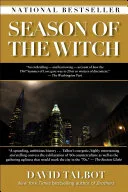
Season of the Witch
David Talbot’s "Season of the Witch" offers a potent, if at times overwhelming, mosaic of San Francisco’s most volatile decades. The book excels in its granular portrayal of individuals caught in the city’s swirling currents of idealism and despair. Talbot avoids hagiography, presenting flawed heroes and complex villains with equal measure. A particularly striking section details the escalating tensions surrounding the Zodiac Killer's reign of terror, juxtaposed with the city's burgeoning political radicalism, illustrating the pervasive sense of unease beneath the surface of utopian aspirations. However, the sheer density of characters and events can occasionally lead to a narrative that feels somewhat breathless, demanding considerable reader attention to track the intricate threads. Despite this, the work provides an indispensable, unflinching look at a city that was, and arguably remains, a bellwether for American cultural evolution. It stands as a vital historical document.
📝 Description
78
David Talbot's 2013 book chronicles San Francisco's turbulent cultural and political shifts from the late 1960s to the early 1980s.
David Talbot's "Season of the Witch" chronicles San Francisco's dramatic cultural and political shifts between the late 1960s and early 1980s. The book focuses on the individuals whose lives, struggles, and triumphs became intertwined with the city's evolving identity during this turbulent period. It examines the era that birthed countercultural movements and grappled with significant societal changes, moving beyond a simple timeline to understand the city's soul.
Set against the backdrop of San Francisco's transformation, from the idealistic "Summer of Love" in 1967 to the devastating AIDS crisis of the 1980s, this work details radical political movements, the rise of gay liberation, and new spiritual seekers. Talbot captures the city as a global epicenter for social experimentation and cultural upheaval, a place where utopian dreams often collided with harsh realities and systemic inequalities. The narrative highlights the complex interplay between political radicalism and spiritual seeking that characterized San Francisco during this era.
While not strictly an esoteric text, "Season of the Witch" touches upon the spiritual seeking and alternative belief systems that flourished in San Francisco during the late 20th century. It documents the rise of new religious movements, communes inspired by utopian ideals, and the broader cultural shifts that questioned established norms. The book acknowledges the city as a hub for experimentation in consciousness and community, reflecting a period when many individuals looked beyond traditional structures for meaning and connection.
💡 Why Read This Book?
• Gain a granular understanding of San Francisco's transformation from 1967's "Summer of Love" to the early 1980s AIDS crisis, learning how specific events shaped its identity. • Analyze the complex relationship between political activism and spiritual seeking through figures like the Diggers and the rise of the gay liberation movement. • Appreciate the nuanced portrayal of urban resilience and vulnerability as the city grappled with crises like the Jonestown massacre and the burgeoning AIDS epidemic.
⭐ Reader Reviews
Honest opinions from readers who have explored this book.
❓ Frequently Asked Questions
What is the main focus of David Talbot's "Season of the Witch"?
The book chronicles San Francisco's dramatic cultural and political evolution from the late 1960s to the early 1980s, focusing on the lives and struggles of individuals who defined this transformative era.
Which historical periods does "Season of the Witch" cover?
It covers the period from the "Summer of Love" in 1967 through the escalating challenges of the AIDS crisis in the early 1980s, a time of immense social and political upheaval.
Who are some key groups or movements discussed in the book?
The book explores various movements including the Diggers, the Black Panthers, the gay liberation movement, and the impact of events like the Jonestown massacre.
What makes this history of San Francisco unique?
Talbot's approach is unique in its focus on the personal narratives and lived experiences of the city's inhabitants, showing how individual lives intersected with major historical forces.
Is "Season of the Witch" a political or cultural history?
It is both. The book intricately links San Francisco's political radicalism, countercultural movements, and spiritual seeking with the city's unique social fabric and its response to crises.
When was "Season of the Witch" first published?
The book was first published on May 8, 2012, offering a retrospective look at a defining period in American history.
🔮 Key Themes & Symbolism
Counterculture's Shadow
The work examines the idealistic fervor of the late 1960s counterculture in San Francisco, epitomized by events like the "Summer of Love." It doesn't shy away from the darker consequences and disillusionment that followed, exploring how the initial utopian visions gave way to societal fragmentation, political radicalism, and new forms of social strife. The book details the complex legacy of this era, questioning its ultimate impact on American society and the city's identity.
Political Awakening and Radicalism
"Season of the Witch" studies the intense political climate of San Francisco during the 1970s and early 1980s. It highlights the rise of various radical movements, including the Black Panthers and the burgeoning gay liberation front, illustrating their struggles and the city's often volatile response. The book connects these political battles to broader shifts in American society, showing how San Francisco became a focal point for activism and resistance.
Urban Crisis and Resilience
The narrative confronts the profound crises that tested San Francisco's spirit, such as the mass hysteria surrounding the Jonestown massacre and the devastating onset of the AIDS epidemic. Talbot portrays the city's capacity for both fear and compassion, examining how communities mobilized in the face of overwhelming challenges. This theme underscores the resilience of the human spirit amidst social upheaval and public health emergencies.
The Shifting Psyche of a City
This book is fundamentally about the psychic transformation of San Francisco. It tracks the city's evolution from a symbol of liberation and experimentation to a site grappling with violence, disease, and political polarization. Talbot illustrates how the city's unique geography and diverse population contributed to its role as a cultural bellwether, reflecting broader American anxieties and aspirations.
💬 Memorable Quotes
Direct passages from the work, attributed to the author.
“The city became a stage for America's deepest contradictions.”
— This statement captures the essence of Talbot's narrative, suggesting San Francisco in the 1970s and early 80s was a microcosm where the nation's ideals clashed violently with its realities.
“Idealism often met a brutal reckoning.”
— This interpretation highlights the book's exploration of how utopian aspirations, prevalent in the counterculture, frequently encountered harsh opposition and negative consequences.
“San Francisco served as a crucible for modern American identity.”
— This concept suggests the city's intense experiences during this time forged elements of what would become contemporary American culture, politics, and social consciousness.
“The narrative traces the collision of spiritual quests and political battles.”
— This interpretation emphasizes the book's focus on how the era's spiritual explorations and its intense political activism were not separate but deeply intertwined forces shaping the city.
💡 Key Ideas
Editorial paraphrase of the work's core concepts — not direct quotes.
The era birthed both profound connection and chilling isolation.
This paraphrase points to the duality of the period covered, where movements fostering community and solidarity existed alongside events that engendered fear and social fragmentation.
🌙 Esoteric Significance
Tradition
While not strictly adhering to a single esoteric lineage, "Season of the Witch" engages with the spirit of Gnosticism and Neo-Paganism that flourished in the San Francisco Bay Area during the period it covers. The book documents the intense search for alternative spiritual truths and communal living, reflecting a Gnostic impulse to escape perceived societal corruption and discover hidden knowledge. It captures the era's fascination with mysticism, occultism, and the re-emergence of earth-centered spiritualities, aligning with the broader Neo-Pagan revival.
Symbolism
The "Summer of Love" itself acts as a potent symbol, representing a peak of collective idealism and a temporary suspension of conventional societal norms. The Diggers' free stores symbolize radical generosity and a rejection of materialism, embodying utopian ideals. Conversely, the pervasive fear generated by the Zodiac Killer symbolizes the intrusion of chaos and malevolence into even the most seemingly liberated spaces, representing the shadow aspect of the era's transformations.
Modern Relevance
Contemporary thinkers exploring the legacy of the counterculture and its impact on modern spirituality and activism find "Season of the Witch" invaluable. It provides historical context for current discussions on social justice, alternative lifestyles, and the enduring tension between idealism and pragmatism in societal change. Modern practitioners of Neo-Paganism and those interested in the historical roots of contemporary spiritual movements can draw parallels between the era documented and current spiritual landscapes.
👥 Who Should Read This Book
• Students of American counterculture and social history seeking a narrative that connects idealism with its complex aftermath. • Readers interested in urban sociology and the development of progressive cities, particularly San Francisco's role as a cultural crucible. • Individuals exploring the intersection of political activism, spiritual seeking, and societal upheaval in the late 20th century.
📜 Historical Context
David Talbot's "Season of the Witch" emerged in 2012, reflecting on the seismic shifts in San Francisco from the late 1960s through the early 1980s. This period was a fertile ground for radical social and political experimentation, heavily influenced by the burgeoning counterculture and subsequent movements like gay liberation and feminist activism. San Francisco became a global symbol of utopian ideals and cultural rebellion. The era was also marked by significant violence and tragedy, including the Zodiac Killer's reign of terror and the Jonestown massacre, events that cast long shadows. Contemporaries like Joan Didion, in her own explorations of California's darker undercurrents, captured a similar sense of societal unease. The book's reception highlighted a renewed interest in understanding the complex legacy of the 1960s and 70s, a time when alternative spiritualities and political ideologies profoundly challenged mainstream American values.
📔 Journal Prompts
The collision of spiritual quests and political battles in San Francisco.
America's deepest contradictions as a stage.
The era's dual capacity for profound connection and chilling isolation.
Idealism's brutal reckoning.
The city's role as a crucible for modern American identity.
🗂️ Glossary
Summer of Love
A social phenomenon and cultural event that occurred in the summer of 1967, when tens of thousands of young people converged on San Francisco's Haight-Ashbury district, drawn by a spirit of peace, love, and communal living.
Diggers
A radical group active in San Francisco in the late 1960s, known for their free stores, free performances, and anarchist-inspired philosophy aimed at challenging capitalist structures and promoting a society of abundance.
Zodiac Killer
An unidentified serial killer who operated in Northern California in the late 1960s and early 1970s, whose crimes and taunting letters to the press created widespread fear and paranoia in the Bay Area.
Gay Liberation Front (GLF)
A radical political and social movement formed in the late 1960s, advocating for the rights and liberation of lesbian, gay, bisexual, and transgender people, challenging societal norms and homophobia.
Jonestown Massacre
The 1978 mass murder-suicide of over 900 members of the Peoples Temple cult, led by Jim Jones, in Jonestown, Guyana, an event that profoundly shocked and disillusioned many involved in the progressive movements of the era.
AIDS Crisis
The epidemic of Acquired Immunodeficiency Syndrome that emerged in the early 1980s, disproportionately affecting the gay community in San Francisco and leading to widespread fear, discrimination, and a desperate search for understanding and treatment.
Counterculture
A subculture whose values and norms of behavior differ substantially from those of mainstream society, often in opposition to the established cultural patterns, particularly prevalent in the 1960s.