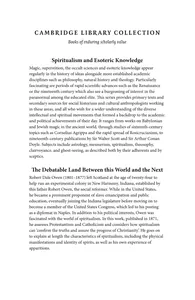
The Report on Unidentified Flying Objects
 71
71

The Report on Unidentified Flying Objects



Cassian Rothmann, Senior Critic, Ancient Wisdom: Ruppelt's 'Report' is a landmark in understanding the ethereal dimensions of our reality. Far from a simple collection of sightings, it offers a rare, unvarnished glimpse into the early, often disquieted, efforts to grapple with phenomena that challenge established paradigms. His insider perspective grants access to the subtle currents of doubt and wonder that permeated official investigations. For the discerning seeker, this book illuminates the profound philosophical implications of unexplained aerial phenomena, hinting at cosmic intelligences and realities beyond our immediate grasp. A foundational text for serious students of the otherworldly.
📝 Description
71
Edward Ruppelt's 1956 report details the US Air Force's early investigations into UFOs.
Edward Ruppelt, who led Project Blue Book, wrote 'The Report on Unidentified Flying Objects' in 1956. It covers the period from 1947 to 1953, a time marked by intense public interest in aerial phenomena. Ruppelt details the official investigations conducted by the U.S. Air Force, including the challenges faced by the personnel involved. He discusses witness accounts from pilots and radar operators, along with the procedures used to gather and analyze evidence.
The book moves beyond simple descriptions of sightings, examining the difficulties inherent in classifying and explaining these events. Ruppelt describes the bureaucratic hurdles and the skepticism encountered by investigators. His account provides an insider's view of the early days of UFO research, aiming to present a reasoned assessment of the available data. It addresses the public's fascination with these unexplained occurrences and the government's response.
While not overtly esoteric, Ruppelt's report touches upon the societal fascination with the unknown and the potential for these phenomena to suggest realities beyond conventional understanding. The period of intense UFO sightings coincided with broader cultural interests in spiritualism and paranormal experiences. Ruppelt's methodical approach, juxtaposed with the inexplicable nature of some reports, invites contemplation on the limits of current scientific paradigms and the human desire to find meaning in mysterious events, sometimes linking them to broader cosmological questions.
✍️ Author
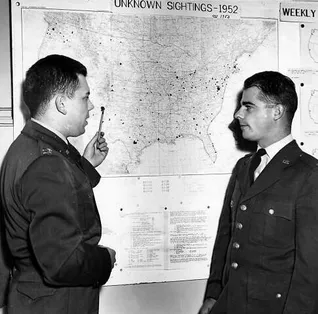
Edward Ruppelt
Edward James Ruppelt (July 17, 1923 – September 15, 1960) was a United States Air Force officer probably best known for his involvement in Project Blue Book, a formal governmental study of unidentified flying objects (UFOs). He is generally credited with c…
💡 Why Read This Book?
This essential work offers a rare, insider's perspective on early UFO investigations, moving beyond sensationalism to explore the profound questions raised by unexplained phenomena. It is vital for seekers of hidden knowledge, historical scholars of the paranormal, and practitioners interested in the intersection of consciousness and cosmic mysteries. Unlock a deeper understanding of humanity's relationship with the unknown.
⭐ Reader Reviews
Honest opinions from readers who have explored this book.
❓ Frequently Asked Questions
What makes Ruppelt's account unique?
Ruppelt was the director of Project Blue Book, the official U.S. Air Force UFO investigation. His firsthand experience provides an unparalleled, insider's view, detailing the investigative process and the challenges faced by military personnel in understanding these phenomena.
Does the book present definitive answers about UFOs?
No, the book's strength lies in its honest portrayal of the ambiguous evidence and the ongoing search for understanding, rather than offering concrete, definitive conclusions. It emphasizes the complexity and mystery.
Is this book suitable for beginners in UFO studies?
Absolutely. Ruppelt's clear, accessible writing style makes complex investigations understandable, serving as an excellent introduction to the historical and investigative aspects of the UFO phenomenon.
What is the historical significance of 'The Report on Unidentified Flying Objects'?
Published in 1956, it was one of the first comprehensive, insider accounts of official UFO investigations, shaping public perception and academic interest in the subject for decades to come.
Does the book touch upon esoteric or metaphysical themes?
While grounded in factual reporting, the book implicitly invites contemplation on the nature of reality, consciousness, and humanity's place in the cosmos, resonating with esoteric inquiry into the unknown.
🔮 Key Themes & Symbolism
The Unseen Directorate
Study the clandestine world of official investigations, where the mundane bureaucracy of military operations grappled with phenomena that transcended earthly explanations. Ruppelt illuminates the 'behind-the-scenes' efforts to rationalize the unexplainable, hinting at a hidden hand guiding the narrative or a profound ignorance within the established order. This theme explores the tension between materialist science and the persistent reality of the anomalous, suggesting that true knowledge often lies just beyond the reach of conventional inquiry, requiring a shift in perspective.
Whispers from the Void
Beyond radar blips and pilot testimonies, Ruppelt's account captures the profound psychological and philosophical impact of encountering the unknown. The 'unidentified' becomes a mirror reflecting humanity's deepest questions about its origins, destiny, and the nature of consciousness itself. This theme explores how these encounters disrupt our perceived reality, opening portals to contemplation of cosmic intelligence and the vastness of existence, echoing ancient esoteric quests for higher truths and hidden dimensions.
The Alchemy of Evidence
Witness the painstaking, almost alchemical process by which evidence of the extraordinary was collected, analyzed, and often dissolved back into the mundane by official channels. Ruppelt details the transformation of bewildered reports into categorized data, and the struggle to transmute ambiguous sightings into digestible explanations. This theme highlights the inherent limitations of empirical methods when faced with phenomena that may operate on different planes of existence, and the esoteric art of discerning truth amidst illusion.
💬 Memorable Quotes
Direct passages from the work, attributed to the author.
“There are things in the sky that we cannot explain.”
— A stark admission of the limits of scientific and military knowledge when confronted with persistent, anomalous aerial phenomena, opening the door to speculative and esoteric interpretations.
“The evidence was there, but it didn't fit.”
— This highlights the intellectual struggle and the shift in thinking required to accept data that contradicts established beliefs, a common challenge in both scientific and esoteric pursuits.
“We were looking for answers, but found more questions.”
— A classic narrative arc of discovery, where the pursuit of definitive solutions leads to a deeper, more profound sense of mystery, characteristic of esoteric journeys into the unknown.
“The implications were enormous, but we could only report the facts.”
— This speaks to the tension between the potential cosmic significance of UFO sightings and the constrained mandate of official inquiry, leaving the deeper meaning to the area of interpretation and contemplation.
💡 Key Ideas
Editorial paraphrase of the work's core concepts — not direct quotes.
The Air Force simply didn't know what to do with the UFOs.
This quote expresses the core dilemma of official investigations: the inability of established systems to categorize or comprehend phenomena that defy existing frameworks, hinting at a reality beyond current understanding.
🌙 Esoteric Significance
Tradition
This work resonates deeply with the esoteric tradition of questioning perceived reality and exploring hidden dimensions of existence. It aligns with Gnostic inquiries into the nature of the divine and the material world, and with Hermetic principles that suggest 'as above, so below,' implying that anomalies in our skies may reflect deeper cosmic truths or influences. The book serves as a bridge for those drawn to the mysteries of consciousness, ancient wisdom, and the possibility of non-human intelligences interacting with our plane.
Symbolism
The 'Unidentified Flying Object' itself becomes a potent symbol of the unknown, the 'other,' and the limits of human knowledge. It represents a disruption of the mundane, a messenger from realms beyond our grasp, akin to archetypal symbols of divine intervention or cosmic messengers found in ancient mythologies. The act of investigation symbolizes humanity's eternal quest for understanding, the 'alchemy' of transforming ignorance into awareness, and the struggle to reconcile empirical evidence with intuitive knowing.
Modern Relevance
In an age saturated with information yet often lacking in genuine understanding, Ruppelt's grounded yet open-minded approach remains profoundly relevant. It encourages critical thinking, skepticism tempered with curiosity, and a willingness to consider evidence that challenges conventional paradigms. The book's exploration of the unknown speaks to contemporary interests in consciousness, quantum physics, and the search for meaning in a complex universe, urging readers to look beyond the surface and contemplate the deeper mysteries that continue to unfold.
👥 Who Should Read This Book
This important work is essential for a broad spectrum of readers. **Beginners** will find a clear, authoritative introduction to the history of UFO investigations and the fundamental questions they raise. **Scholars** of history, sociology, and parapsychology will appreciate the primary source material and Ruppelt's analytical rigor. **Seekers** of hidden knowledge and esoteric truths will connect with the implicit philosophical implications and the exploration of phenomena that transcend ordinary explanation. **Practitioners** interested in consciousness studies and the nature of reality will find fertile ground for contemplation on the intersection of the material and the immaterial.
📜 Historical Context
Published in 1956, 'The Report on Unidentified Flying Objects' emerged during the early years of the Cold War and the dawn of the Space Age. This era was marked by intense geopolitical anxiety, a fervent belief in technological advancement, and a burgeoning public fascination with the unknown, fueled by early science fiction and a series of widely reported UFO sightings. The book arrived at a key moment, offering an insider's perspective on the U.S. government's initial, often bewildered, attempts to understand and control the narrative surrounding these perplexing aerial phenomena. Ruppelt's work provided a crucial, early foundation for the study of UFOs, influencing subsequent research, popular culture, and the ongoing societal debate about extraterrestrial visitation and the potential for realities beyond our immediate comprehension.
📔 Journal Prompts
Reflect on a time you encountered something inexplicable. How did you process it, and what did it reveal about your own perceptions?
Consider the 'unidentified' in your own life. What aspects of yourself or your reality remain unexamined, and what might they symbolize?
If UFOs represent a cosmic message, what do you believe that message might be, and why would it be delivered in such an enigmatic way?
Explore the concept of 'official narratives' versus personal experiences. How do we reconcile the two when they conflict, especially concerning anomalous phenomena?
Imagine you were tasked with investigating a truly inexplicable event. What 'esoteric' tools or perspectives would you employ beyond standard scientific methods?
🗂️ Glossary
Project Grudge
An early U.S. Air Force study of unidentified flying objects, preceding Project Blue Book. It aimed to determine if UFOs posed a threat to national security, often characterized by skepticism and a desire for quick dismissals.
Project Blue Book
The third and final U.S. Air Force study of UFOs, conducted from 1952 to 1969. Its stated goal was to determine if UFOs were a threat to national security and to scientifically analyze UFO-related data.
Ambiguous Evidence
Information or data that is unclear, uncertain, or open to multiple interpretations, making it difficult to draw definitive conclusions, a common characteristic of UFO reports.
Shift in thinking
A fundamental change in the basic concepts and experimental practices of a scientific discipline or a field of inquiry, often necessary when confronted with phenomena that cannot be explained by the existing framework.
Sensationalism
The use of exciting or shocking stories or details in order to attract public interest and attention, often seen in early media coverage of UFO sightings.
This book appears in 2 collections
🔮 Readers Also Liked
Browse all →









From the “Transcendental Meditation” Collection
View all →









More Free Esoteric History & Biography Books
View all →