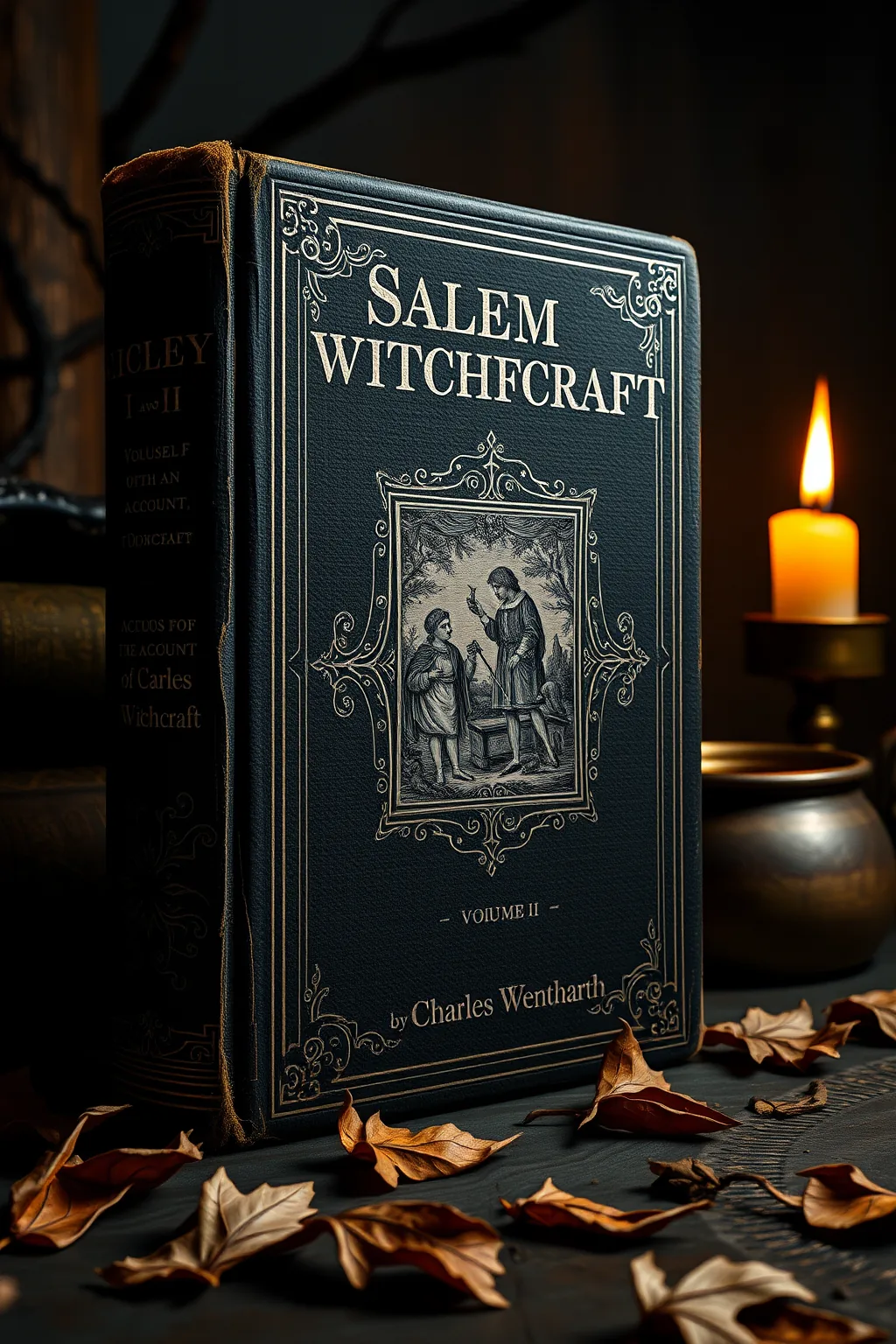
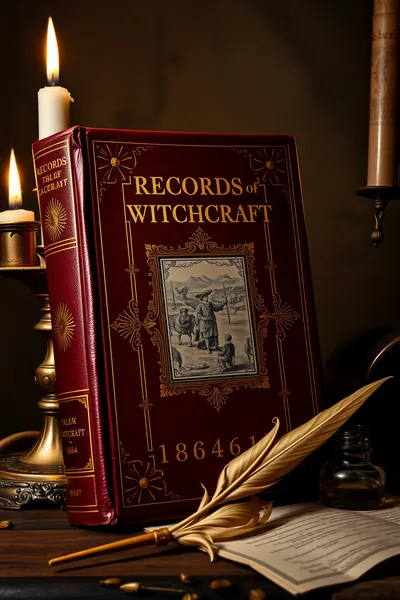
Salem Witchcraft, Volumes I and II: With an Account of Salem Village and a History of Opinions on Witchcraft and Kindred Subjects
 71
71

Salem Witchcraft, Volumes I and II: With an Account of Salem Village and a History of Opinions on Witchcraft and Kindred Subjects


Charles Wentworth Upham's 'Salem Witchcraft, Volumes I and II,' is a foundational text for anyone interested in the esoteric and occult history of the Salem Witch Trials. Published in the 19th century, this work provides an unparalleled depth of research and narrative, making it a valuable resource for modern esoteric seekers. Upham's detailed accounts of the trials and the societal context surrounding them offer a unique perspective on the power of superstition and religious fervor. The books are meticulously documented, providing a comprehensive understanding of the events and the beliefs that drove them. For those exploring the occult or paganism, this text is a treasure trove of historical insight and cultural context. Upham's writing style is engaging and informative, making the complex and often disturbing subject matter accessible to a wide audience. The value of this text lies in its ability to bridge the gap between historical fact and esoteric belief, offering readers a deeper understanding of the human condition.
📝 Description
71
Charles Wentworth Upham published his two-volume history of Salem Witchcraft in 1867.
Charles Wentworth Upham's "Salem Witchcraft, Volumes I and II" examines the notorious events of the 1692 trials. Upham, a former mayor of Salem, approached the subject with extensive research, aiming to understand the societal and psychological factors at play. He presents accounts of the accused and accusers, alongside a history of beliefs about witchcraft that predated and followed the trials. The work details the village's social structure and the religious climate that contributed to the hysteria.
Beyond a simple chronicle, Upham also discusses the intellectual history surrounding witchcraft accusations. He traces opinions on the matter from ancient times through his own era. This historical perspective seeks to contextualize the Salem events within a broader pattern of human belief and fear regarding the supernatural. The author's intent was to provide a thorough, if sometimes speculative, account for those interested in the period and its enduring questions.
Upham's work is situated within the historical study of witchcraft, a topic that has long fascinated those on the fringes of mainstream religious and philosophical thought. While not a practitioner's guide, it examines the historical manifestation of beliefs that often informed esoteric traditions. The book addresses the cultural context in which supernatural explanations for misfortune were common, touching upon concepts that resonate with folkloric and occult studies. It presents the Salem events as a case study in societal fear and the perception of unseen forces, contributing to a broader understanding of historical occult beliefs.
✍️ Author
Upham, Charles Wentworth
Classic literature author · Public Domain
💡 Why Read This Book?
Reading 'Salem Witchcraft, Volumes I and II,' today offers a unique opportunity to explore the esoteric and occult history of the Salem Witch Trials. This book provides invaluable insights into the societal and cultural context that led to one of history's most infamous episodes of mass hysteria. For modern esoteric seekers, it offers a rich understanding of the beliefs and superstitions that have shaped human history. Whether you are a historian, an occult enthusiast, or simply curious about the darker aspects of human belief, this text will enrich your knowledge and deepen your appreciation for the complex interplay between religion, superstition, and society.
⭐ Reader Reviews
Honest opinions from readers who have explored this book.
❓ Frequently Asked Questions
What is the main focus of 'Salem Witchcraft, Volumes I and II?'
The main focus of this book is the historical account of the Salem Witch Trials and the societal context that led to the hysteria surrounding witchcraft. It also explores historical opinions on witchcraft and related subjects.
Who should read this book?
This book is ideal for historians, occult enthusiasts, and anyone interested in the darker aspects of human belief and the history of Salem. It is also valuable for those exploring paganism and esoteric studies.
Is this book suitable for beginners in esoteric studies?
Yes, while the book is rich in historical detail, Upham's writing style is engaging and informative, making it accessible to both beginners and experienced esoteric seekers.
🔮 Key Themes & Symbolism
The Occult Roots of the Salem Witch Trials
Upham studies the mystical and symbolic dimensions of the Salem Witch Trials, revealing the hidden knowledge and esoteric practices that fueled the hysteria. This theme explores how the trials were a manifestation of deeper spiritual and psychological conflicts within the community.
Symbolism and Witchcraft
The book examines the detailed symbolism associated with witchcraft, offering insights into the rituals, beliefs, and practices of those accused of witchcraft. Upham's exploration of these symbols provides a deeper understanding of the mystical worldview of colonial New England.
The Psychological Dimensions of Fear and Superstition
Through a philosophical lens, Upham analyzes the psychological underpinnings of the Salem Witch Trials, revealing how fear and superstition can drive irrational behavior. This theme highlights the enduring struggle between light and darkness in human experience.
💬 Memorable Quotes
Direct passages from the work, attributed to the author.
“The trials were a crucible of fear and superstition.”
— Upham's words underscore the psychological dimensions of the trials, revealing the deep-seated fears that drove the hysteria.
“Witchcraft was a manifestation of deeper spiritual conflicts.”
— Upham's insights into the esoteric dimensions of witchcraft offer a profound understanding of the trials' mystical significance.
“The trials were a battle between light and darkness.”
— Upham's philosophical exploration of the trials reveals the enduring struggle between good and evil in human experience.
💡 Key Ideas
Editorial paraphrase of the work's core concepts — not direct quotes.
The veil between worlds seemed thin in Salem.
This passage highlights the mystical atmosphere of colonial New England, where the supernatural was a tangible presence.
The symbolism of witchcraft reveals hidden truths.
This quote emphasizes the detailed symbolism associated with witchcraft, providing a deeper understanding of the mystical worldview of the time.
🌙 Esoteric Significance
Tradition
Salem Witchcraft belongs to the Hermetic tradition, which emphasizes the study of hidden knowledge and the pursuit of spiritual enlightenment. Upham's work studies the mystical and symbolic dimensions of witchcraft, offering insights into the esoteric practices and beliefs of the time.
Symbolism
Key symbols in the book include the pentacle, the broomstick, and the black cat, each with its own mystical significance. These symbols represent the hidden knowledge and esoteric practices associated with witchcraft, providing a deeper understanding of the mystical worldview of colonial New England.
Modern Relevance
Today, Salem Witchcraft remains relevant for modern practitioners of witchcraft and paganism, offering valuable insights into the occult roots of historical events. Scholars and seekers of hidden knowledge continue to study Upham's work, finding relevance in its exploration of the mystical and symbolic dimensions of witchcraft.
👥 Who Should Read This Book
Beginners interested in the occult may find the depth of esoteric content challenging, but it is an invaluable resource for scholars of witchcraft and paganism. Spiritual seekers will appreciate the philosophical insights and mystical themes, while practitioners will benefit from the detailed symbolism and hidden knowledge presented in the book.
📜 Historical Context
The Salem Witch Trials, which took place in 1692, were a dark chapter in American history marked by hysteria, fear, and the persecution of alleged witches. Upham's work was written in the mid-19th century, providing a contemporary analysis of the events that had occurred over a century earlier. His book was important for its time as it offered one of the first comprehensive examinations of the trials, looking at the occult and mystical underpinnings that fueled the hysteria. Upham's influence can still be seen today in the ongoing study of witchcraft and the occult, making his work a foundational text for scholars and practitioners alike.
📔 Journal Prompts
Reflect on the psychological dimensions of fear and superstition as explored in Salem Witchcraft.
How does the symbolism of witchcraft reveal hidden truths about the mystical worldview of colonial New England?
In what ways do the Salem Witch Trials represent the enduring struggle between light and darkness?
Consider the occult roots of the trials and their significance in the study of witchcraft and the occult.
How does Upham's work contribute to our understanding of the mystical and symbolic dimensions of historical events?
🗂️ Glossary
Pentacle
A five-pointed star enclosed in a circle, often used in witchcraft and paganism as a symbol of protection and spiritual power.
Broomstick
A traditional tool associated with witchcraft, symbolizing the ability to fly and transcend the physical world.
Black Cat
A common symbol in witchcraft, representing mystery, magic, and the supernatural.
Hermetic Tradition
A mystical and philosophical tradition that emphasizes the study of hidden knowledge and the pursuit of spiritual enlightenment.
Salem Witch Trials
A series of hearings and prosecutions of people accused of witchcraft in colonial Massachusetts, marking a dark chapter in American history.
This book appears in 2 collections
🔮 Readers Also Liked
Browse all →







More by Upham, Charles Wentworth
All books →From the “Witchcraft” Collection
View all →



More Free Witchcraft & Paganism Books
View all →