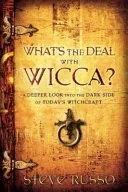
What's the Deal with Wicca?
 76
76

What's the Deal with Wicca?
Steve Russo’s "What's the Deal with Wicca?" approaches its subject with a fervor that is immediately apparent. The author wastes no time in establishing his critical stance, offering a direct challenge to the spiritual foundations of Wicca. One of the book's strengths lies in its unambiguous presentation of the author's perspective, leaving no room for misinterpretation regarding his theological conclusions. However, the work’s primary limitation is its overtly polemical nature; it reads less as an objective analysis and more as a sermon aimed at conversion or reinforcement of existing beliefs. Russo's assertion that "Christianity is the only way to address the needs in the lives of teenagers" is a bold claim that, while central to his argument, may alienate readers seeking a more balanced comparative study. Ultimately, the book functions as a robust apologetic for Christian exclusivity, rather than a neutral exploration of Wicca.
📝 Description
76
Steve Russo’s 2005 book examines modern Wicca, questioning its origins and narratives.
Published in 2005, Steve Russo’s "What's the Deal with Wicca?" offers a critical look at the modern Wiccan movement. Russo aims to expose what he sees as inconsistencies and shortcomings within Wicca, presenting Christianity as the answer to the spiritual needs of teenagers. The book directly challenges common interpretations of Wicca, proposing an alternative spiritual viewpoint.
This book targets parents and youth leaders concerned about Wicca’s influence on young people. It will also interest those skeptical of or opposed to Neopaganism who seek to understand its perceived flaws. Readers looking for a direct, faith-based critique that contrasts Wicca with Christian beliefs will find Russo’s arguments relevant. It functions as a counterpoint for individuals exploring Christianity and seeking arguments against other belief systems.
Russo wrote this book during a time of increased visibility for Wicca in popular culture, following figures like Gerald Gardner and the rise of feminist spirituality. The early 2000s saw continued growth in Neopagan communities and ongoing theological discussions. Russo's focus on teenagers' spiritual needs reflects a wider concern in conservative religious circles about secularization and the appeal of alternative faiths to younger generations. His critique echoes earlier arguments from Christian apologists about historical accuracy and theological claims.
This work engages with the discourse surrounding Neopagan religions, specifically Wicca, from a conservative Christian perspective. It addresses the visibility of Wicca in the late 20th and early 21st centuries, a period marked by the growth of alternative spiritualities. Russo's critique positions Wicca as a movement with questionable historical claims and theological foundations, contrasting it with what he presents as the singular solution offered by Christianity for adolescent spiritual development. The book reflects a broader trend of religious apologetics seeking to counter the appeal of newer spiritual paths.
💡 Why Read This Book?
• Understand a specific Christian apologetic perspective on Wicca, particularly how Russo frames its historical claims against Christian doctrine, offering insights into faith-based critiques of Neopaganism. • Gain exposure to Russo's argument concerning the spiritual needs of teenagers in the post-millennial era, and how he posits Christianity uniquely fulfills these needs. • Examine Russo's critique of Wiccan origins, specifically his challenge to the historical lineage of witchcraft as presented by figures like Gerald Gardner.
⭐ Reader Reviews
Honest opinions from readers who have explored this book.
❓ Frequently Asked Questions
What is the main argument Steve Russo makes against Wicca in "What's the Deal with Wicca?"
Russo's central argument is that Wicca lacks authentic spiritual roots and that its historical claims are deceptive. He contends that Christianity is the only valid spiritual path capable of meeting the needs of teenagers.
When was "What's the Deal with Wicca?" first published?
The book was first published in 2005.
Who is the target audience for this book?
The book is primarily intended for parents, youth leaders, and individuals concerned about the influence of Wicca on teenagers, as well as those seeking a Christian perspective critical of Neopaganism.
Does Russo provide historical evidence for his claims about Wicca?
Russo's work focuses on critiquing the historical narratives presented by Wicca, arguing they are fabricated. He contrasts these with what he presents as the established historical and spiritual validity of Christianity.
What alternative does Russo propose to Wicca?
Russo strongly advocates for Christianity as the sole and complete spiritual solution, particularly for addressing the needs and questions of adolescents in contemporary society.
Is this book an academic study of Wicca?
No, "What's the Deal with Wicca?" is written from a specific theological and apologetic viewpoint, aiming to critique Wicca from a Christian perspective rather than providing a neutral academic analysis.
🔮 Key Themes & Symbolism
Wiccan Origins and Deception
Russo scrutinizes the foundational narratives of Wicca, particularly the claims of direct lineage to ancient pagan witchcraft. He argues that these origins are not historically verifiable and are, in fact, a modern construction. The book posits that this lack of authentic roots constitutes a form of deception, making Wicca an unreliable spiritual path. Russo contrasts this perceived lack of historical depth with what he views as the millennia-old, divinely ordained truth of Christianity.
Christianity as the Sole Solution
A central tenet of Russo's argument is that Christianity is the only spiritual system capable of addressing the fundamental needs of individuals, especially teenagers. He contends that the perceived spiritual vacuum in modern society, particularly among youth, is a critical issue that Wicca fails to resolve. Russo presents Christian theology and practice as the definitive answer, offering salvation, purpose, and guidance that he believes are absent in other belief systems, including Wicca.
Spiritual Needs of Teenagers
The book specifically targets the spiritual needs of adolescents, framing them as particularly vulnerable to alternative spiritual movements like Wicca. Russo suggests that teenagers are seeking meaning, belonging, and answers to existential questions, and that Wicca offers superficial or harmful responses. He asserts that the structured faith and community found within Christianity are uniquely suited to provide the comprehensive spiritual support required during these formative years.
Apologetics and Counter-Arguments
"What's the Deal with Wicca?" functions as a work of Christian apologetics, aiming to defend Christian beliefs by critiquing opposing viewpoints. Russo employs rhetorical strategies to expose perceived flaws in Wiccan doctrine and practice. The book serves as a resource for those wishing to understand common arguments against Wicca from a conservative Christian perspective and to equip themselves with counter-arguments.
💬 Memorable Quotes
Direct passages from the work, attributed to the author.
“Russo lays bare the spiritual roots and exposes the deception of Wicca.”
— This statement captures the author's intention to critically analyze Wicca's origins, suggesting they are fabricated or misleading, and to reveal perceived falsehoods within the religion.
“He also demonstrates that Christianity is the only way to address the needs in the lives of teenagers.”
— This highlights Russo's core theological assertion: that Christian faith offers the exclusive and complete solution for the spiritual and existential challenges faced by young people.
“Russo contrasts the perceived superficiality of Wicca with the depth of Christian faith.”
— This reflects the author's view that Wicca offers only surface-level spiritual answers, whereas Christianity provides profound, life-altering theological substance.
💡 Key Ideas
Editorial paraphrase of the work's core concepts — not direct quotes.
The work questions the historical authenticity of Wiccan traditions.
This paraphrase points to Russo's critical examination of Wicca's claims to ancient lineage, suggesting a lack of verifiable historical evidence for its purported origins.
The book frames Wicca as a potentially harmful spiritual influence.
This summarizes Russo's concern that exposure to Wicca can lead individuals, especially impressionable youth, away from what he considers the true spiritual path of Christianity.
🌙 Esoteric Significance
Tradition
While not aligning with a specific esoteric lineage like Hermeticism or Gnosticism, Russo's work operates within the framework of Christian apologetics, a tradition deeply rooted in defending and articulating Christian doctrine. It engages with esoteric subjects by critiquing them from a firmly orthodox Christian standpoint, viewing Wicca as a deviation from divine truth rather than a valid spiritual path within a broader esoteric spectrum.
Symbolism
The book's core symbolism revolves around a stark dichotomy: the perceived 'deception' and 'lack of roots' associated with Wicca versus the 'truth,' 'salvation,' and 'spiritual sufficiency' offered by Christianity. Symbols inherent to Wicca, such as its purported connection to ancient nature worship or pagan deities, are reinterpreted by Russo as misrepresentations or fabrications, lacking the divine authority he attributes solely to Christian symbols and narratives.
Modern Relevance
In contemporary discussions, Russo's work remains relevant for those within conservative Christian communities seeking arguments against Wicca and other Neopagan paths. It represents a particular strain of religious critique that continues to inform debates about spirituality, particularly concerning its influence on youth. While not directly influencing esoteric practitioners, its existence highlights the ongoing cultural and theological friction between traditional monotheistic religions and emergent spiritual movements.
👥 Who Should Read This Book
• Parents and guardians concerned about their teenagers' potential involvement with Wicca or similar alternative spiritualities, seeking arguments to guide their children toward Christian faith. • Christian youth leaders and educators looking for resources to understand and address common questions or misconceptions about Wicca from a faith-based perspective. • Individuals interested in comparative religion from a critical, apologetic standpoint, specifically examining Christian arguments against Neopagan movements like Wicca.
📜 Historical Context
Steve Russo's "What's the Deal with Wicca?" emerged in 2005, a period when Wicca, having gained public visibility through figures like Gerald Gardner in the mid-20th century, was increasingly discussed in popular culture and academic circles. The book entered a landscape populated by both academic studies of Neopaganism and ongoing theological debates. It reflects a continuation of Christian apologetic efforts against alternative spiritualities, a trend present since the rise of the New Age movement in the late 20th century. Russo's specific focus on addressing the spiritual needs of teenagers can be seen as a response to the perceived secularization of society and the growing influence of diverse belief systems on younger generations. While not engaging directly with academic scholars by name in its initial blurbs, the work implicitly contests the findings of those who presented Wicca as a legitimate modern religion, such as scholars influenced by comparative religion studies. The book's reception likely aligned with existing Christian circles concerned about the proliferation of non-Christian faiths.
📔 Journal Prompts
The perceived deception of Wicca's spiritual roots.
Christianity's unique ability to address teenage spiritual needs.
Critiquing Wicca's historical lineage claims.
The author's definition of 'spiritual roots'.
Comparing Russo's view of Wicca with your own understanding.
🗂️ Glossary
Wicca
A modern, nature-based religion that draws on pre-Christian European traditions. It typically involves reverence for nature, deities (often a God and Goddess), and the practice of magic.
Neopaganism
A broad term for modern spiritual movements that seek to revive or re-interpret ancient pagan religions. Wicca is one of the most well-known forms of Neopaganism.
Apologetics
The branch of Christian theology concerned with defending Christian beliefs against objections and presenting a reasoned basis for faith.
Spiritual Roots
In Russo's context, this refers to the perceived authentic, historical, and divinely ordained origins of a religion, contrasted with modern or fabricated foundations.
Gerald Gardner
Considered the father of modern Wicca, he founded the first Wiccan coven in the mid-20th century and codified many of its practices and beliefs.
Deception
In the context of the book, this term is used by Russo to describe what he views as false claims or misleading doctrines within Wicca regarding its origins and spiritual efficacy.
Christian Doctrine
The fundamental teachings and beliefs of Christianity, including concepts such as the Trinity, the divinity of Jesus Christ, salvation, and the authority of the Bible.