Upham, Charles Wentworth
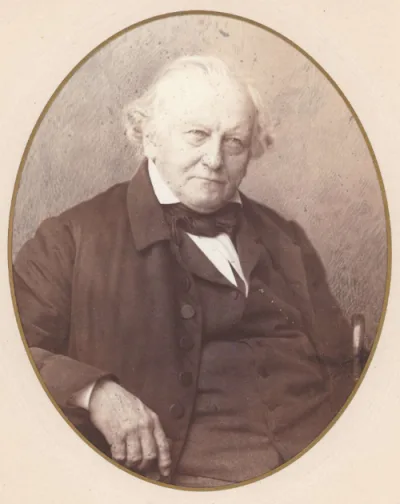
Charles Wentworth Upham was a writer and anthologist involved in a landmark US copyright case.
Charles Wentworth Upham, a writer and anthologist, was involved in the significant 19th-century US copyright case Folsom v. Marsh (1841). Upham had compiled and published a two-volume work that included substantial portions of a 12-volume biography of George Washington, originally published by Charles Folsom. Folsom sued Upham's publisher, Bela Marsh, for copyright infringement. The case, decided by Judge Joseph Story, became foundational for the concept of "fair use" in American copyright law. Upham's actions led to a legal debate about whether his compilation constituted piracy or a legitimate new work. The court ultimately found that while the letters were copyrightable, Upham's use was not fair, thereby establishing key principles for copyright exceptions.
Background of the Case
The legal dispute originated when Charles Wentworth Upham, identified as a writer and anthologist, created a two-volume work by excerpting 353 pages from a 12-volume biography of George Washington. This biography had been published by Charles Folsom. Upham's compilation was published by Bela Marsh. Folsom initiated a lawsuit against Marsh, alleging copyright "piracy." Upham's defense presented several arguments, including the claim that the letters were not copyrightable as they belonged to a deceased author and were not private property. Additionally, it was argued that as works of the President, they belonged to the United States. Finally, the defense contended that Upham's use was fair because it resulted in a substantially new creation.
Establishing Fair Use
Judge Joseph Story's opinion in Folsom v. Marsh addressed the copyrightability of the letters, affirming that even partial copying could be infringement if it diminished the original work's value or appropriated the author's labor. This ruling expanded the scope of copyright law by acknowledging the potential for derivative works. Crucially, the court accepted the concept of "fair use" as a defense but determined that Upham's specific instance did not qualify. Judge Story articulated four factors to assess fair use: the purpose and character of the use, the quantity and value of the materials used, and the potential prejudice to the sale or profits of the original work. These factors, though refined over time, remain central to fair use analysis today and were later codified in the Copyright Act of 1976.
Notable Quotes
“Patents and copyrights approach, nearer than any other class of cases belonging to forensic discussions, to what may be called the metaphysics of law, where the distinctions are, or at least may be, very subtile and refined, and, sometimes, almost evanescent.”
“It is certainly not necessary, to constitute an invasion of copyright, that the whole of a work should be copied, or even a large portion of it, in form or in substance. If so much is taken, that the value of the original is sensibly diminished, or the labors of the original author are substantially to an injurious extent appropriated by another, that is sufficient, in point of law, to constitute a piracy pro tanto.”
“In short, we must often ... look to the nature and objects of the selections made, the quantity and value of the materials used, and the degree in which the use may prejudice the sale, or diminish the profits, or supersede the objects, of the original work.”
Books by Upham, Charles Wentworth
2 free public domain books · Read online or download