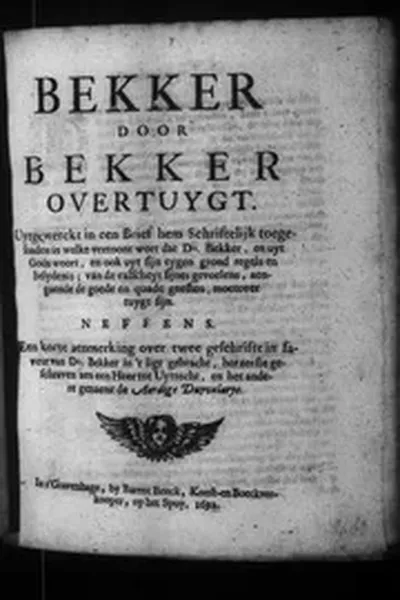
Tractat von Bekanntnuss der Zauberer vnd Hexen. Ob vnd wie viel denselben zu glauben.... 1591: Iss 111

 83
83

Tractat von Bekanntnuss der Zauberer vnd Hexen. Ob vnd wie viel denselben zu glauben.... 1591: Iss 111


Silas Hawthorne, Hermetic Studies Editor: Pierre Binsfeld's 'Tractat von Bekanntnuss der Zauberer vnd Hexen' is a seminal work that offers an unvarnished glimpse into the judicial and theological anxieties surrounding witchcraft in the late Renaissance. Binsfeld's rigorous, albeit biased, approach to analyzing confessions provides invaluable insights into the perceived mechanisms of magic and diabolical pacts. For the discerning reader, this text is not merely a historical document but a window into the esoteric frameworks used to understand and combat perceived evil. It highlights the intellectual currents that shaped early modern demonology and offers a sobering perspective on the construction of 'truth' in times of widespread fear. Essential for serious students of occult history and the evolution of belief systems.
📝 Description
83
Published in 1591, Pierre Binsfeld's 'Tractat von Bekanntnuss der Zauberer vnd Hexen' analyzes confessions of alleged sorcerers and witches.
Pierre Binsfeld, a jurist and theologian, wrote this text in 1591 at a time of intense witch trials. The book systematically examines the confessions attributed to individuals accused of witchcraft. Binsfeld questions the weight given to such testimonies, dissecting the nature of witchcraft as understood by his contemporaries. He considers how theological beliefs and legal standards influenced perceptions of the supernatural. The work reflects a worldview where the boundaries between the natural and the supernatural were frequently blurred, and where perceived demonic influence necessitated careful scrutiny.
This 'Tractat' provides insight into the historical development of demonology in the West and the mindset of early modern Europe. It addresses the enduring interest in the occult and the human tendency toward fear and superstition. The book is valuable for those studying religious history, legal history, and the anthropology of magic. It reveals the intellectual climate surrounding witchcraft accusations and the legal and theological frameworks applied to them.
Binsfeld's work engages with the late 16th-century European discourse on witchcraft, a period marked by significant demonological treatises and judicial proceedings. It sits within a tradition of scholarly attempts to define, categorize, and combat perceived malevolent magic, often drawing upon biblical interpretations and established theological frameworks. The book reflects the anxieties and intellectual currents of its time, where the reality of demonic pacts and supernatural maleficia was widely accepted and debated within both religious and legal spheres. It is a product of a specific historical moment where the systematic study of the occult intersected with juridical practice.
💡 Why Read This Book?
Uncover the historical foundations of witchcraft beliefs and early modern demonology. Understand the complex interplay of law, religion, and fear in shaping societal views on magic. Essential for scholars, occult practitioners, and seekers of hidden historical knowledge who wish to comprehend the roots of Western occult traditions and the psychology of belief.
⭐ Reader Reviews
Honest opinions from readers who have explored this book.
❓ Frequently Asked Questions
What is the primary focus of Binsfeld's 'Tractat'?
The primary focus is the examination of confessions made by alleged sorcerers and witches, scrutinizing their credibility and the theological implications of their claims.
What historical period does this book represent?
This book represents the late Renaissance, a period characterized by intense religious upheaval and widespread fear of witchcraft across Europe.
Who was Pierre Binsfeld?
Pierre Binsfeld (ca. 1540-1598) was a jurist and theologian whose work reflects the legal and religious perspectives on witchcraft during his time.
What is the 'Issue 111' designation?
This likely refers to a specific publication or edition series within a larger collection, indicating its place in a sequence of related texts.
Is this book a primary source for studying witchcraft trials?
Yes, it is a crucial primary source for understanding the legal and theological discourse surrounding witchcraft accusations and confessions in the 16th century.
🔮 Key Themes & Symbolism
The Nature of Demonic Influence
This theme explores the 16th-century understanding of how malevolent spiritual forces, particularly Satan, were believed to interact with the human realm. Binsfeld explores the doctrines surrounding pacts with the devil, the alleged mechanisms of possession, and the perceived ways in which witches acted as agents of this dark power. It examines the theological frameworks used to interpret supernatural phenomena and the anxieties surrounding the erosion of divine order, offering a useful insights into the era's spiritual cosmology.
Credibility of Confessions and Legal Scrutiny
Central to Binsfeld's work is the critical examination of confessions extracted from individuals accused of witchcraft. The 'Tractat' dissects the methods used to obtain these statements, questioning their veracity and the psychological pressures involved. It highlights the legal and theological challenges of distinguishing genuine knowledge from delusion or coercion, revealing the complex ethical and evidential debates that underpinned early modern witch trials and offering a stark look at the machinery of justice when confronted with the supernatural.
The Seer and the Seen: Perception of the Occult
This theme explores the profound dichotomy between subjective experience and objective reality as perceived through the lens of occult beliefs. Binsfeld grapples with how individuals, both accusers and accused, interpreted visions, dreams, and alleged supernatural encounters. The 'Tractat' illuminates the cultural construction of the 'witch' and the 'magician,' examining how societal fears and religious doctrines shaped the perception of hidden knowledge and the boundaries between the natural and the supernatural. It questions what could be truly known about the unseen world.
💬 Memorable Quotes
Direct passages from the work, attributed to the author.
“Ob und wie viel denselben zu glauben.”
— This central question probes the extent to which confessions of witchcraft and magic should be believed, reflecting a deep skepticism and analytical intent.
“Die Bekanntnuss der Zauberer vnd Hexen.”
— Translating to 'The knowledge/confession of sorcerers and witches,' this phrase expresses the book's core subject matter: the alleged secrets and admissions of those involved in the occult arts.
“Ein Tractat von der Natur und Kräfften der bösen Geister.”
— A treatise on the nature and powers of evil spirits, suggesting an exploration into the perceived origins and capabilities of demonic entities.
“Was die Menschen vorzüglich in ihrem Verstande halten.”
— What people chiefly hold in their understanding, hinting at an examination of prevalent beliefs and popular notions surrounding magic and witchcraft.
“Die Wahrheit derer, die sich selbst bezichtigen.”
— The truth of those who accuse themselves, a paradoxical statement highlighting the challenge of discerning truth when individuals confess to extraordinary acts.
🌙 Esoteric Significance
Tradition
This text is a crucial artifact of early modern demonology and legal-theological discourse, forming a bridge between medieval understandings of witchcraft and the more systematized theories of the later Enlightenment. While not a grimoire or a practitioner's guide, its rigorous examination of confessions and perceived magical practices provides insight into the historical 'esotericism' of belief systems, revealing how the unseen world was conceptualized and feared.
Symbolism
The 'Tractat' is rich in the symbolism of its era, where the 'witch' herself became a potent symbol of societal anxieties and moral transgressions. The confessions, as described by Binsfeld, are laden with symbolic acts—covens, sabbats, pacts with demons—representing a subversion of divine order and a transgression against the natural world. The very act of confessing, often under duress, symbolizes the breakdown of individual will and the perceived triumph of dark forces.
Modern Relevance
For modern esotericists and scholars, Binsfeld's 'Tractat' offers vital context for understanding the historical roots of Western occult traditions and the psychology of belief. It illuminates how societal fears and religious doctrines shaped the perception of magic, providing a critical lens through which to examine contemporary occult practices and the enduring human fascination with the forbidden. Understanding these historical narratives helps deconstruct modern misconceptions and appreciate the evolution of esoteric thought.
👥 Who Should Read This Book
This comprehensive 'Tractat' is essential for a complex audience. Scholars of religious history, legal history, and early modern studies will find it an indispensable primary source for understanding the discourse surrounding witchcraft. Occult practitioners and seekers of esoteric knowledge will gain profound historical context for the evolution of demonology and the societal anxieties that shaped early beliefs about magic. Beginners interested in the history of the occult will find it a foundational text that explains the origins of many enduring myths and fears. Advanced practitioners may find insights into historical methods of inquiry and the psychological aspects of perceived spiritual warfare.
📜 Historical Context
Published in 1591, Pierre Binsfeld's 'Tractat von Bekanntnuss der Zauberer vnd Hexen' emerged during a peak period of witch hunts across Europe. The late 16th century was an era marked by profound societal anxieties, fueled by religious schisms, political instability, and widespread fear of the supernatural. The printing press had democratized the dissemination of ideas, including tracts on demonology and witchcraft, making them accessible to a wider audience. Binsfeld, a jurist and theologian, operated within a legal and intellectual framework deeply concerned with heresy, divine retribution, and the perceived threat of diabolical influence. His work reflects the prevailing scholastic and legal approaches to identifying, prosecuting, and understanding witchcraft, contributing to the burgeoning literature that would shape the perception of magic for centuries to come.
📔 Journal Prompts
How might the legal and theological frameworks of the 16th century have influenced the 'confessions' Binsfeld analyzes?
What parallels can be drawn between the societal anxieties of the 16th century and contemporary fears that manifest in various forms of scapegoating?
Consider the concept of 'belief' as presented in this text. How does it differ from or align with your own understanding of belief in the esoteric?
Reflect on the power of confession, both historically and in modern contexts. What does it reveal about human psychology and societal control?
How does Binsfeld's critical examination of alleged magical practices inform your own approach to discerning truth in esoteric literature?
🗂️ Glossary
Zauberer
German for 'sorcerer' or 'wizard,' referring to individuals believed to possess magical abilities, often through learned or demonic means.
Hexen
German for 'witches,' typically referring to women accused of malevolent magic, often associated with pacts with the devil.
Bekanntnuss
German for 'knowledge,' 'acknowledgment,' or 'confession.' In this context, it refers to the admissions and revelations made by those accused of witchcraft.
Diabolical Pact
A supernatural agreement, often claimed by accused witches, in which an individual pledges their soul or service to the devil in exchange for magical powers or earthly benefits.
Demonology
The study of demons or beliefs about demons. In the context of this 'Tractat,' it refers to the theological and philosophical understanding of demonic entities and their influence.
This book appears in 2 collections
🔮 Readers Also Liked
Browse all →



More by BINSFELD, Pierre, ca. 1540-1598.
All books →
From the “Witchcraft” Collection
View all →



More Free Witchcraft & Paganism Books
View all →