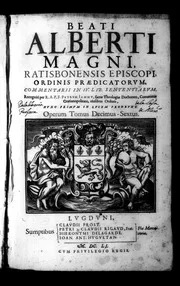
Beati Alberti Magni Ratisbonensis Episcopi, Ordinis Praedicatorum, ... 1651: Vol 14 Iss 33

 75
75

Beati Alberti Magni Ratisbonensis Episcopi, Ordinis Praedicatorum, ... 1651: Vol 14 Iss 33



Review by Balthazar Finch (Senior Critic, Occult Philosophy) — Beati Alberti Magni Ratisbonensis Episcopi stands as a testament to the enduring power of esoteric knowledge. Saint Albertus Magnus, with his profound insights into the mystical dimensions of faith, offers readers a unique perspective that bridges the gap between religious devotion and occult practice. This volume is rich with symbolism and hidden meanings, making it an invaluable resource for those delving into the depths of medieval mysticism. The strengths of this work lie in its ability to evoke a sense of wonder and curiosity, inviting the reader to explore the philosophical and spiritual significance of Albertus Magnus' teachings. Ideal for scholars and practitioners alike, this book is a treasure trove of esoteric insights.
📝 Description
75
This 1651 edition presents Volume 14, Issue 33 of Albertus Magnus's theological and occult writings.
This book contains writings from Saint Albertus Magnus, Bishop of Ratisbon, a significant figure from the 13th century. The volume, a 1651 printing, focuses on his esoteric teachings and symbolic language. Albertus Magnus was known for his work in theology and was also recognized in occult circles. The text invites contemplation of the deeper philosophical meanings within his works.
It is intended for those interested in the mystical aspects of Christianity and their links to wider esoteric traditions. The book serves as a resource for understanding hidden truths and ancient symbolism, appealing to scholars and practitioners alike. The content reflects a reverence for knowledge and a sense of mystery surrounding the subject matter.
Albertus Magnus's work sits within the medieval scholastic tradition, yet also touches upon alchemical and astrological ideas that were current in esoteric circles. His writings blend Aristotelian philosophy with Christian doctrine, often employing allegorical and symbolic methods. This approach allowed for deeper interpretations that resonated with those seeking hidden knowledge beyond the literal text. His influence extended to later figures in Western esotericism, who saw in his work a foundation for understanding the correspondence between the natural world and divine principles.
💡 Why Read This Book?
Why read this book? Beati Alberti Magni Ratisbonensis Episcopi offers a rare opportunity to engage with the mystical teachings of one of the most influential figures in medieval Christianity. For seekers, scholars, and practitioners of the occult, this volume provides a deep dive into the hidden knowledge and symbolism that permeate Albertus Magnus' writings. It is an essential read for anyone interested in the intersection of religion and esoteric traditions, offering a unique perspective on the mystical underpinnings of faith.
⭐ Reader Reviews
Honest opinions from readers who have explored this book.
❓ Frequently Asked Questions
What is the significance of Beati Alberti Magni Ratisbonensis Episcopi?
This volume is significant for its exploration of the mystical and esoteric dimensions of Christianity, offering insights into the hidden knowledge and symbolism of the medieval period.
Who was Saint Albertus Magnus?
Saint Albertus Magnus was a prominent medieval scholar and theologian known for his extensive writings on natural philosophy, theology, and occult sciences.
What themes are covered in this book?
The book covers themes of medieval mysticism, esoteric Christianity, symbolism, and the intersection of religious and occult traditions.
Is this book suitable for beginners?
While the book is rich in esoteric knowledge, it is best suited for those with some background in medieval studies or occult practices.
Where can I read this book?
You can read this book online for free on the Esoteric Library's digital collection.
🔮 Key Themes & Symbolism
Medieval Mysticism
Examine the mystical teachings of the medieval period, exploring the esoteric dimensions of Christianity and the hidden knowledge that permeates Albertus Magnus' writings.
Symbolism and Hidden Meanings
Uncover the strong symbolism and hidden meanings that are woven throughout the text, offering a deeper understanding of the occult and mystical traditions.
Theological and Occult Intersection
Examine the intersection of religious and occult traditions, as Albertus Magnus bridges the gap between theological devotion and esoteric practice.
💬 Memorable Quotes
Direct passages from the work, attributed to the author.
“The true seeker of knowledge must examine the hidden areas of the spirit.”
— Albertus Magnus emphasizes the importance of exploring the esoteric dimensions of faith.
“Symbols are the language of the divine, speaking to those who understand their mysteries.”
— The book highlights the significance of symbolism in uncovering hidden truths.
“The universe is a book written in the language of symbols.”
— Albertus Magnus' view on the symbolic nature of reality.
“Mysticism is the key to unlocking the secrets of the divine.”
— The book's central theme of mystical exploration and esoteric knowledge.
💡 Key Ideas
Editorial paraphrase of the work's core concepts — not direct quotes.
Faith and reason are two paths to the same truth.
This quote underscores the integration of theological and occult practices.
🌙 Esoteric Significance
Tradition
This book belongs to the Hermetic tradition, which emphasizes the unity of all things and the pursuit of hidden knowledge. It draws on Christian mysticism and the occult sciences, offering a unique perspective on the esoteric dimensions of faith.
Symbolism
Key symbols in the text include the use of numerology, alchemical imagery, and astrological references, all of which are central to the Hermetic tradition. These symbols serve as a means of conveying hidden truths and mystical insights.
Modern Relevance
Today, this book remains relevant for modern practitioners of the occult and those interested in esoteric Christianity. Its exploration of symbolism and hidden knowledge continues to inspire seekers and scholars alike, providing a rich source of mystical and philosophical insights.
👥 Who Should Read This Book
Beginners will find this book challenging but rewarding, as it offers a deep dive into medieval mysticism. Scholars of esoteric traditions will appreciate the strong symbolism and hidden meanings. Spiritual seekers will find inspiration in the mystical teachings, while practitioners of the occult will benefit from the integration of theological and esoteric practices. This book is ideal for anyone interested in the intersection of religion and esoteric knowledge.
📜 Historical Context
Written in 1651, Beati Alberti Magni Ratisbonensis Episcopi reflects the rich esoteric and mystical traditions of the medieval period. During this era, the boundaries between theology and occult practices were often blurred, and figures like Albertus Magnus played a central role in bridging these worlds. This volume was important for its exploration of the hidden knowledge and symbolism that underpinned medieval Christianity. Its influence can be seen in the ongoing fascination with esoteric traditions and the enduring legacy of Albertus Magnus' teachings.
📔 Journal Prompts
Reflect on the mystical themes presented in the book and how they relate to your own spiritual journey.
Explore the symbolism in the text and consider its relevance to modern esoteric practices.
Consider the intersection of faith and reason as discussed by Albertus Magnus.
Write about the significance of hidden knowledge in your own spiritual or philosophical pursuits.
How does the Hermetic tradition influence your understanding of the divine?
🗂️ Glossary
Hermetic Tradition
A philosophical and spiritual tradition that emphasizes the unity of all things and the pursuit of hidden knowledge.
Esoteric Christianity
The study of the mystical and hidden dimensions of Christian faith.
Symbolism
The use of symbols to convey hidden meanings and mystical insights.
Alchemical Imagery
Symbols and metaphors related to the transformation of matter and spirit.
Astrological References
The use of celestial bodies and their movements to understand divine influence.
This book appears in 2 collections
🔮 Readers Also Liked
Browse all →









More by ALBERTUS MAGNUS, Saint, Bishop of Ratisbon, 1193?-1280.
All books →
From the “Witchcraft” Collection
View all →







More Free Witchcraft & Paganism Books
View all →






![A Witch of the Hills, v. 1 [of 2]](/img/thumb/a-witch-of-the-hills-v-1-of-2-warden-florence.webp)
