Brief van den schrijver des boeks De betoverde weereld genaamd, aan den eerwaardigen heere Everhard van der Hooght, ... 1691: Vol 3 Iss 80

 74
74

Brief van den schrijver des boeks De betoverde weereld genaamd, aan den eerwaardigen heere Everhard van der Hooght, ... 1691: Vol 3 Iss 80



Aurelia Blackwood, Occult Philosophy Critic: This critical correspondence from Balthasar Bekker is a vital artifact for understanding the intellectual ferment surrounding witchcraft and demonology in the late 17th century. Bekker's incisive critique, presented in this letter to Everhard van der Hooght, offers profound insights into the rationalist underpinnings of his challenge to prevailing superstitions. It’s a testament to intellectual courage, dissecting the perceived influence of malevolent entities with a clarity that resonates even today. For scholars of esotericism, theologians, and discerning readers fascinated by the historical dismantling of occult paradigms, this piece is an indispensable acquisition, revealing the nuanced intellectual battles fought for reason and enlightenment.
📝 Description
74
In 1691, Balthasar Bekker wrote a letter to Everhard van der Hooght concerning his work 'De betoverde weereld'.
This text is a letter written by Balthasar Bekker in 1691, addressed to Everhard van der Hooght. It serves as an appendix or supplement to Bekker's larger work, 'De betoverde weereld' (The Bewitched World). In this correspondence, Bekker clarifies and expands upon his arguments against the common beliefs in witchcraft and demonic influence that characterized the era. He directly addresses the theological and philosophical underpinnings of these beliefs, questioning the extent to which supernatural forces dictated human affairs and perception. The letter is a direct engagement with the ideas presented in his main book, offering a more personal and perhaps urgent articulation of his views. It reflects the intellectual climate of the late 17th century, a period marked by both fervent religious belief and emerging rationalist critiques.
Balthasar Bekker's 'De betoverde weereld' and this accompanying letter belong to a late 17th-century intellectual current that challenged prevailing supernatural explanations for misfortune and human behavior. This period saw a tension between traditional religious doctrines, which often emphasized demonic agency and divine intervention, and the burgeoning Enlightenment focus on reason and natural causes. Bekker's work engaged with these debates by scrutinizing biblical interpretations and popular superstitions concerning witchcraft and the devil. His approach, while rooted in theological discourse, can be seen as an early precursor to more secular rationalism, questioning established authorities and advocating for a more empirical or reasoned understanding of the world, even within a religious framework.
💡 Why Read This Book?
Explore the historical roots of skepticism towards supernatural claims. Uncover Balthasar Bekker's groundbreaking arguments against widespread belief in witchcraft and demonic influence. Ideal for seekers of intellectual history, theology students, and anyone interested in the Enlightenment's early challenges to occult dogma. Discover a pivotal voice in the Western esoteric tradition's evolution.
⭐ Reader Reviews
Honest opinions from readers who have explored this book.
❓ Frequently Asked Questions
What is the main subject of this letter?
The letter primarily addresses Balthasar Bekker's theological and philosophical arguments against the pervasive belief in witchcraft and demonic possession, as detailed in his seminal work, 'De betoverde weereld'.
Who was Everhard van der Hooght?
Everhard van der Hooght was a respected theologian and scholar of the time, to whom Bekker addressed this letter, seeking intellectual discourse and perhaps validation for his controversial ideas.
What historical period does this document represent?
This document originates from 1691, a period of significant intellectual and religious transition in Europe, marked by the burgeoning Enlightenment and a growing questioning of traditional beliefs.
Is this a primary source document?
Yes, this is a primary source document, being a direct letter from the author Balthasar Bekker, offering firsthand insight into his thought process and the reception of his work.
What is the significance of 'De betoverde weereld'?
'De betoverde weereld' (The Bewitched World) was a highly influential and controversial book that challenged the prevailing views on witchcraft, demons, and the supernatural, advocating for a more rational interpretation of events.
🔮 Key Themes & Symbolism
Deconstructing the Bewitched World
This segment explores Bekker's core thesis: the dismantling of the 'bewitched world' paradigm. It examines his arguments that attributed perceived supernatural phenomena to natural causes, human error, and psychological factors rather than demonic intervention. The letter serves as a proof of his rationalist approach, seeking to liberate minds from the shackles of fear and superstition that permeated society, particularly concerning accusations of witchcraft. This theme explores the philosophical underpinnings of his critique and its impact on contemporary theological discourse.
The Nature of Faith and Reason
At its heart, this missive is a profound exploration of the delicate balance between faith and reason. Bekker, a theologian himself, grappled with how one could maintain genuine piety while critically examining established doctrines and popular beliefs. This theme investigates his efforts to reconcile religious devotion with intellectual inquiry, suggesting that true faith should not fear scrutiny. The letter offers a window into the intellectual courage required to question the status quo and advocate for a more reasoned understanding of the divine and the world.
Intellectual Courage and Challenging Dogma
Balthasar Bekker's letter is a powerful example of intellectual courage in the face of societal pressure and entrenched dogma. Writing in an era where challenging religious authority could have severe consequences, Bekker boldly articulated his dissenting views on witchcraft and demonology. This theme highlights his role as a precursor to the Enlightenment, demonstrating the vital importance of critical thinking and the pursuit of truth, even when it leads to unpopular conclusions. His work provided a crucial intellectual foundation for future generations of thinkers and reformers.
💬 Memorable Quotes
Direct passages from the work, attributed to the author.
“The world is not as bewitched as you believe.”
— This expresses Bekker's central argument, suggesting that perceived supernatural events have rational explanations, challenging the prevalent fear of demonic influence.
“True faith fears no light.”
— This highlights Bekker's belief that genuine religious conviction should be open to rational inquiry and scrutiny, rather than relying on blind acceptance of dogma.
“We are often our own greatest tormentors.”
— This profound statement points to the psychological and self-inflicted nature of fear and suffering, suggesting that internal states are more influential than external supernatural forces.
“Let reason be your guide through the shadows.”
— An exhortation to embrace logic and critical thinking as the primary tools for understanding the world, particularly when confronted with the unknown or the feared.
“The devil's power lies in our belief.”
— This provocative assertion suggests that the perceived influence of evil is magnified by human credulity and acceptance of its dominion.
🌙 Esoteric Significance
Tradition
While Bekker was a theologian, his work on 'De betoverde weereld' aligns with the emerging currents of rationalism and early skepticism that would profoundly influence esoteric thought. He can be seen as a bridge figure, challenging the more superstitious and overtly magical interpretations of the world that were prevalent in earlier occult traditions. His emphasis on discerning natural causes over supernatural ones, while seemingly anti-esoteric to some, actually opened pathways for more philosophical and psychological explorations of hidden knowledge and consciousness, a hallmark of later esoteric developments.
Symbolism
The 'bewitched world' itself can be viewed as a potent symbol of collective consciousness trapped by fear and ignorance. Bekker's act of writing this letter symbolizes the illumination of reason attempting to dispel these shadows. The act of writing to a respected peer like Van der Hooght represents the dissemination of awakened consciousness, a call for intellectual liberation. The very concept of 'bewitchment' becomes a metaphor for the psychological and societal chains that bind individuals, limiting their perception and agency.
Modern Relevance
Bekker's arguments against unfounded fear and superstition remain remarkably relevant. In an age saturated with misinformation and conspiracy theories, his call for critical thinking and evidence-based reasoning is more vital than ever. His work encourages us to question narratives that rely on fear and the attribution of ill will to unseen forces, urging us to seek rational explanations and empower ourselves through understanding. The ongoing human tendency to seek simple, often supernatural, answers to complex problems makes Bekker's historical critique a timeless lesson in intellectual integrity.
👥 Who Should Read This Book
This rare missive is essential for scholars of religious history, theology, and the history of science, particularly those interested in the transition from medieval to modern thought. Seekers of esoteric knowledge will find value in understanding the historical context and intellectual battles that shaped Western metaphysical discourse, offering a counterpoint to purely mystical traditions. Practitioners of critical thinking and rational inquiry will appreciate Bekker's courage in challenging dogma. For those new to the subject, it provides a foundational understanding of how skepticism towards the supernatural emerged, offering a unique perspective on the evolution of human understanding.
📜 Historical Context
The year 1691 placed Balthasar Bekker's work firmly within an important era of intellectual and religious transformation. Europe was on the cusp of the Enlightenment, a period characterized by a burgeoning emphasis on reason, individualism, and skepticism towards traditional authority. Bekker's 'De betoverde weereld,' and by extension this letter, represented a significant challenge to the deeply ingrained beliefs in witchcraft, demonic possession, and the pervasive influence of supernatural forces that had dominated Western thought for centuries. The ongoing witch trials in various parts of Europe, though waning in some regions, still cast a long shadow, making Bekker's rationalist critique both timely and dangerously provocative. His work contributed to a broader intellectual movement that sought to clarify the world and establish a more empirical and rational framework for understanding reality, laying groundwork for future scientific and philosophical advancements.
📔 Journal Prompts
How does Bekker's concept of the 'bewitched world' resonate with modern anxieties or societal beliefs?
Reflect on a time when you questioned a widely accepted belief. What was your process, and what were the outcomes?
Analyze the relationship between faith and reason in your own life or in contemporary society. Where do they complement, and where do they conflict?
Consider the power of suggestion and collective belief. How can these phenomena create a 'bewitched' reality, even without supernatural forces?
Write a letter to a contemporary figure from Bekker's era, challenging one of their prevailing beliefs with your modern understanding.
🗂️ Glossary
De betoverde weereld
Literally translated as 'The Bewitched World,' this was the title of Balthasar Bekker's highly controversial book that challenged prevailing beliefs in witchcraft and demonic influence, arguing for natural explanations.
Witchcraft
In the context of Bekker's time, this referred to the practice of magic or sorcery, often believed to be carried out with the aid of supernatural powers, particularly demonic entities, leading to accusations and persecution.
Demonology
The study of demons or beliefs about demons. In the 17th century, it was a significant field of theological and philosophical inquiry, often intertwined with beliefs about witchcraft and the occult.
Rationalism
A philosophical approach that emphasizes reason as the primary source of knowledge and justification. In Bekker's case, it meant applying logical deduction and empirical observation to theological and societal issues.
Dogma
A principle or set of principles laid down by an authority as incontrovertibly true. Bekker's work challenged many established religious and societal dogmas of his time.
This book appears in 2 collections
🔮 Readers Also Liked
Browse all →







More by BEKKER, Balthasar 1634-1698.
All books →
From the “Witchcraft” Collection
View all →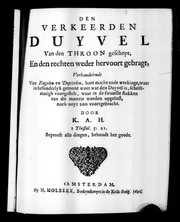






More Free Witchcraft & Paganism Books
View all →




![D. [i. e., Doktor] Balthasar Bekkers reformierten Predigers in Amsterdam bezauberte Welt. ... 1781: Vol 1 Iss 81](/img/thumb/d-i-e-doktor-balthasar-bekkers-reformierten-predigers-in-amsterdam-bezauberte-welt-1781-vol-1-iss-81-bekker-balthasar-1634-1698.webp)