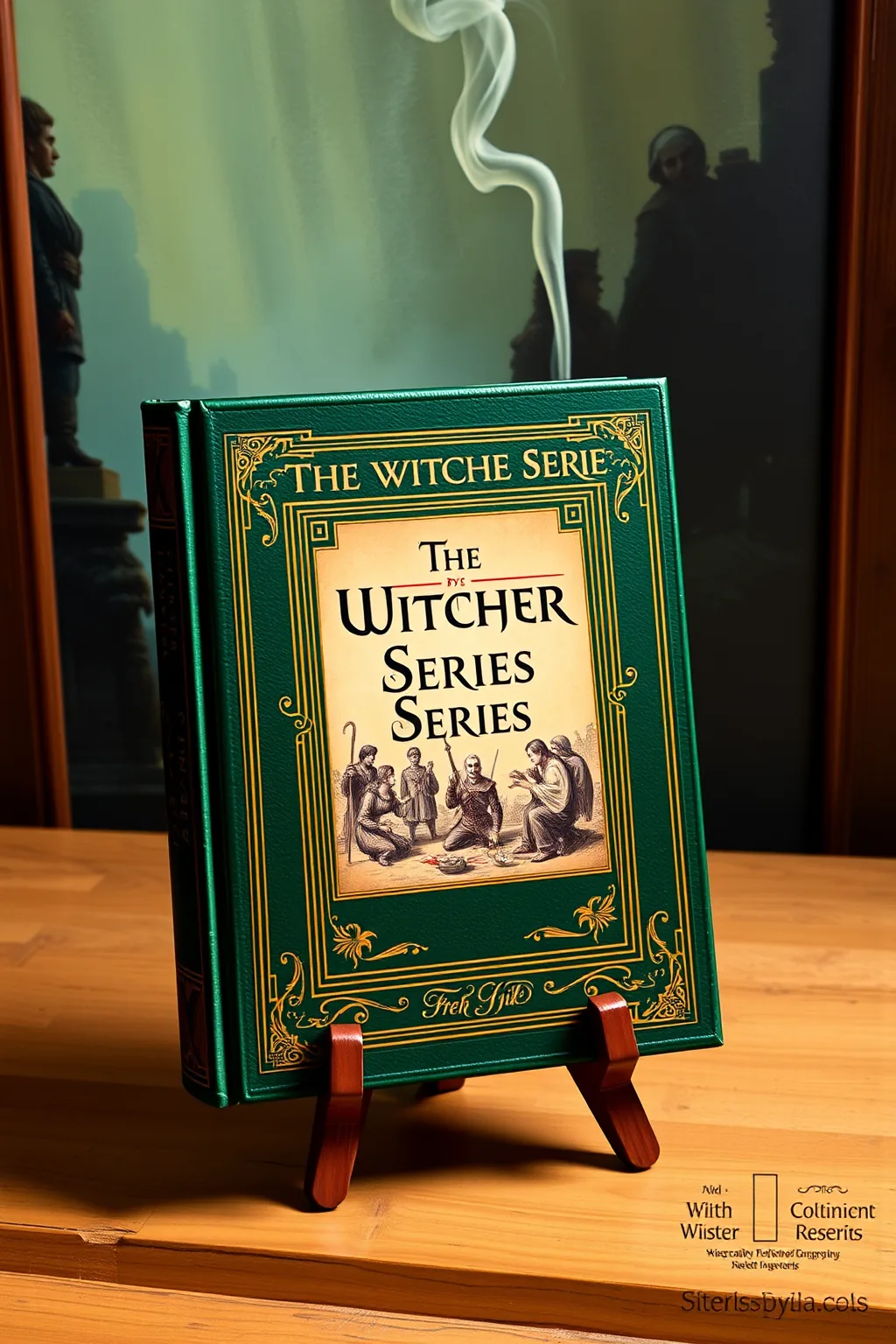
The Witcher Series
 73
73

The Witcher Series



The Witcher Series by Andrzej Sapkowski is a masterclass in blending esoteric themes with compelling narrative. For modern esoteric seekers, the series provides a rich tapestry of occult practices, witchcraft, and pagan rituals that are seamlessly integrated into the storyline. Sapkowski's world-building is meticulous, drawing from Slavic folklore and medieval history to create a believable and immersive setting. The characters, particularly Geralt of Rivia, are complex and relatable, grappling with moral dilemmas and the consequences of their actions. The series explores the delicate balance between nature and nurture, and the enduring power of ancient beliefs in a world that is rapidly changing. For those interested in the occult, the Witcher Series offers a unique perspective on the role of witchcraft and paganism in society, and the ways in which these traditions have shaped our understanding of the world. The Witcher Series is a must-read for anyone seeking a deeper understanding of the esoteric and the occult.
📝 Description
73
Andrzej Sapkowski's Witcher saga began in 1986 with a short story contest submission.
The Witcher series follows Geralt of Rivia, a genetically mutated monster hunter for hire in a medieval fantasy world. These stories examine the complex relationships between humans and nonhumans, often portraying monsters as victims or products of human cruelty. Geralt, a professional outsider, is frequently caught between warring factions and moral ambiguities. The narratives weave together folklore, fairy tales, and original mythology to create a rich, often dark, world.
The books explore consequences of choice, the nature of power, and the blurred lines between good and evil. Geralt's profession forces him into situations where he must confront not only monstrous beasts but also the darker aspects of human nature and society. The series questions traditional notions of heroism and monstrosity, presenting a world where survival often requires difficult ethical compromises.
While not strictly a text of occult doctrine, the Witcher series draws heavily on Slavic folklore and mythology, traditions often considered esoteric due to their roots in pre-Christian beliefs and folk magic. The concept of the witcher itself, a being altered to hunt supernatural creatures, touches on themes of ritualistic transformation and the boundary between humanity and the monstrous. The integration of curses, prophecies, and magical beings reflects a worldview where the unseen forces and ancient pacts significantly shape mortal lives, aligning with a broader interest in folk magic and animistic perspectives.
💡 Why Read This Book?
Reading the Witcher Series today offers a unique opportunity to explore the rich tapestry of esoteric and occult themes within a compelling narrative. Modern readers will gain a deeper understanding of the enduring power of ancient beliefs and the ways in which they continue to influence our world. The series provides a fresh perspective on the role of witchcraft and paganism in society, and the complex interplay between nature and nurture. For those interested in the occult, the Witcher Series is a treasure trove of esoteric knowledge and folklore, presented in a way that is both entertaining and enlightening.
⭐ Reader Reviews
Honest opinions from readers who have explored this book.
❓ Frequently Asked Questions
Is the Witcher Series suitable for beginners in esoteric studies?
Yes, the Witcher Series is accessible to beginners in esoteric studies, offering a rich introduction to witchcraft and paganism through engaging storytelling.
How does the Witcher Series compare to other occult-themed literature?
The Witcher Series stands out for its deep integration of esoteric themes into a complex and immersive narrative, drawing from Slavic folklore and medieval history.
What can readers expect to learn about witchcraft from the Witcher Series?
Readers can expect to learn about the role of witchcraft in society, the enduring power of ancient beliefs, and the ways in which esoteric practices have shaped our understanding of the world.
🔮 Key Themes & Symbolism
The Struggle Between Good and Evil
The Witcher Series studies the eternal struggle between good and evil, exploring the moral ambiguities and complexities that define human nature. Through the character of Geralt, readers are invited to question their own perceptions of right and wrong, and the true nature of heroism.
Destiny and Free Will
The series examines the concept of destiny and free will, raising questions about whether our paths are predetermined or shaped by our choices. This theme is particularly poignant in Geralt's journey, as he grapples with his role as a witcher and the consequences of his actions.
The Power of Magic
Magic is a central theme in The Witcher Series, serving as both a tool and a curse. The narrative explores the ancient rituals and hidden knowledge associated with magic, highlighting its dual nature as a source of power and danger.
💡 Key Ideas
Editorial paraphrase of the work's core concepts — not direct quotes.
The world is a dangerous place, not because of those who do evil, but because of those who look on and do nothing.
This quote underscores the series' exploration of morality and the responsibility of individuals to act against injustice.
Magic is neither good nor evil. It is a tool, like a sword or a hammer.
This line highlights the dual nature of magic and the importance of intent in its use.
Destiny is a matter of choice, not chance.
This quote emphasizes the theme of free will and the power of personal choice in shaping one's destiny.
The heart of a witcher is a lonely place.
This line reflects the isolation and sacrifice inherent in Geralt's role as a witcher, highlighting the series' exploration of solitude and sacrifice.
Knowledge is power, but it is also a burden.
This quote underscores the series' examination of the dual nature of knowledge and the responsibilities that come with it.
🌙 Esoteric Significance
Tradition
The Witcher Series belongs to the Hermetic and pagan traditions, drawing on ancient rituals and symbolism to create a wide range of hidden knowledge. The narrative explores the dual nature of magic and the struggle between good and evil, making it a valuable resource for scholars and practitioners of the occult.
Symbolism
Key symbols in the series include the sword, representing power and justice, and the wolf, symbolizing wilderness and primal instincts. The series also studies the symbolism of ancient rituals and hidden knowledge, inviting readers to explore the deeper meanings behind these esoteric elements.
Modern Relevance
The Witcher Series remains relevant today, offering insights into ancient rituals and hidden knowledge that are still practiced by modern occultists. The series' exploration of moral ambiguity and the struggle between good and evil appeals to contemporary readers, making it a timeless addition to any esoteric library.
👥 Who Should Read This Book
Beginners in the occult will find The Witcher Series an accessible and engaging introduction to esoteric themes and hidden knowledge. Scholars of the occult will appreciate the series' deep exploration of ancient rituals and symbolism, while spiritual seekers will find inspiration in the narrative's examination of destiny and free will. Practitioners of witchcraft and paganism will benefit from the series' wide range of magical traditions and rituals.
📜 Historical Context
The Witcher Series draws inspiration from Slavic folklore and medieval European history, creating a rich and immersive world that blends myth and reality. Written in the late 20th and early 21st centuries, the series reflects a growing interest in the occult and esoteric traditions, offering a unique perspective on ancient rituals and hidden knowledge. The Witcher Series has had a significant influence on modern fantasy literature, inspiring numerous adaptations and a dedicated fan base.
📔 Journal Prompts
Reflect on the concept of destiny in The Witcher Series. How does Geralt's journey challenge your understanding of free will?
Explore the dual nature of magic in the series. How does the narrative highlight the responsibilities that come with knowledge and power?
Consider the theme of the struggle between good and evil. How do the characters in The Witcher Series embody this eternal conflict?
Examine the symbolism of the sword and the wolf in the series. What deeper meanings do these symbols hold?
Reflect on the isolation and sacrifice inherent in Geralt's role as a witcher. How does this theme resonate with your own spiritual journey?
🗂️ Glossary
Witcher
A witcher is a solitary figure tasked with protecting humanity from supernatural threats, often through the use of magic and ancient rituals.
Ancient Rituals
Ancient rituals in The Witcher Series refer to the esoteric practices and ceremonies that draw on hidden knowledge and mystical traditions.
Hidden Knowledge
Hidden knowledge in the series encompasses the secret wisdom and esoteric teachings that are passed down through generations of occult practitioners.
Symbolism
Symbolism in The Witcher Series refers to the use of symbols and metaphors to convey deeper meanings and esoteric truths.
Occult
The occult in the series encompasses the study and practice of esoteric traditions, including magic, ritual, and hidden knowledge.
This book appears in 2 collections
🔮 Readers Also Liked
Browse all →







From the “Witchcraft” Collection
View all →








More Free Witchcraft & Paganism Books
View all →