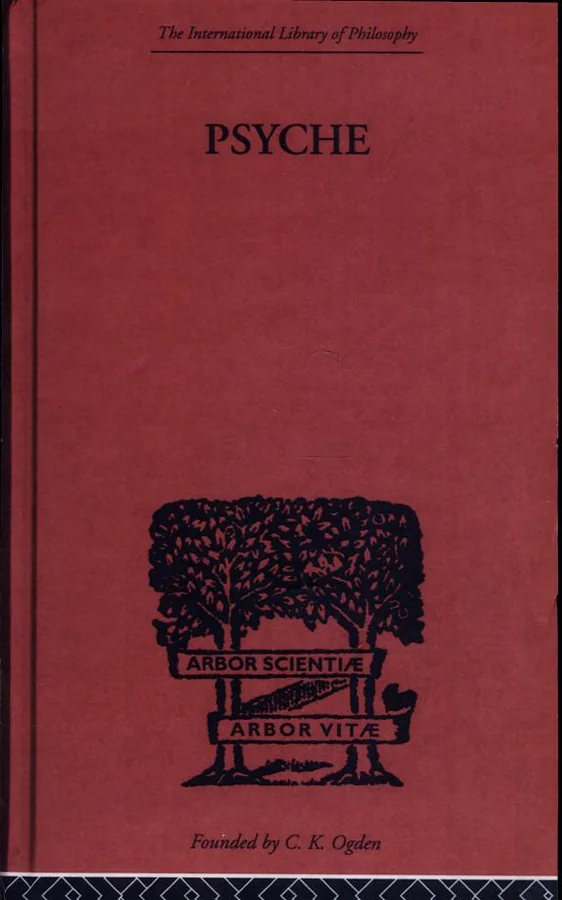
Psyche
 71
71

Psyche
Erwin Rohde's Psyche offers a meticulously researched exploration into the ancient Greek understanding of the soul, charting its conceptual evolution with remarkable scholarly depth. The book excels in its detailed reconstruction of how beliefs surrounding death, the afterlife, and ecstatic experience transformed from the Homeric era through the rise of mystery cults. Rohde’s strength lies in his extensive engagement with primary texts, presenting a compelling argument for the influence of Orphism and Pythagoreanism on these shifting perspectives. However, the dense academic prose and late 19th-century scholarly approach, even in this 2000 edition, can present a significant barrier to readers unfamiliar with classical philology. A specific passage detailing the Orphic view of the soul as a divine, imprisoned entity provides a potent example of Rohde's analytical power but also highlights the work's specialized nature. Psyche is an indispensable resource for scholars, though its accessibility remains a considerable challenge for the general esoteric reader.
📝 Description
71
Erwin Rohde's Psyche examined Greek religious thought on the soul from antiquity to the Hellenistic age.
Published in 2000, Erwin Rohde's Psyche is a detailed historical and philosophical study of how the ancient Greeks understood the soul. It is not a guide to occult practices but a scholarly analysis of their beliefs concerning the afterlife, ecstatic experiences, and the nature of consciousness itself. Rohde traces these ideas from pre-classical times through the Hellenistic period. The book appeals to serious students of classical antiquity, comparative religion, and the history of ideas. Scholars, researchers, and advanced undergraduates interested in the intellectual foundations of Western thought, particularly regarding the soul, death, and religious experience, will find this work valuable. It is for readers who appreciate rigorous philological and historical argumentation.
Rohde's work originates from a late 19th-century intellectual environment interested in the beginnings of religion and consciousness. While it appeared in 2000, its academic foundations are older, engaging with thinkers like Friedrich Nietzsche and tracing concepts that later influenced psychology and anthropology. The book addresses the shift from Homeric values to the Orphic and Pythagorean mystery traditions. Its central theme is the changing Greek conception of the soul, or psyche, moving from a simple life-force to a more complex entity tied to personality and immortality. Rohde discusses ecstatic states, potential shamanistic influences, and the Dionysian cults as significant factors in this evolution, especially concerning the Orphic mysteries.
While Psyche is primarily a work of classical scholarship, it touches upon themes relevant to esoteric traditions. Rohde's examination of Greek mystery cults like Orphism and the Dionysian rites engages with practices that sought altered states of consciousness and explored beliefs about the soul's fate after death. His tracing of ecstatic phenomena and potential shamanistic parallels connects to broader historical inquiries into non-ordinary states of awareness found across various spiritual traditions. The book provides historical context for the development of ideas about the psyche that would later resonate in various Western esoteric movements.
💡 Why Read This Book?
• Gain a scholarly perspective on the evolution of the Greek concept of 'psyche' from a life-force to a complex immortal entity, as detailed in Rohde's analysis of Homeric versus Orphic beliefs. • Understand the historical role of Dionysian cults and mystery religions, such as the Orphics, in shaping ancient Greek ideas about ecstasy and the soul's post-mortem fate, a key focus of the work. • Appreciate the intellectual lineage connecting late 19th-century scholarship to modern psychology and religious studies, by examining Rohde's engagement with classical thought and its precursors.
⭐ Reader Reviews
Honest opinions from readers who have explored this book.
❓ Frequently Asked Questions
When was Erwin Rohde's Psyche originally published?
The work 'Psyche' by Erwin Rohde was first published in 2000 by Routledge, though its scholarly foundations were laid much earlier in the late 19th century.
What is the main subject of Erwin Rohde's Psyche?
The book's main subject is the historical and philosophical development of the concept of the soul (psyche) in ancient Greek religion and thought, from early periods to the Hellenistic era.
Does Psyche offer practical esoteric techniques?
No, Erwin Rohde's Psyche is a scholarly historical and philosophical study, not a guide to practical esoteric techniques or rituals. It analyzes ancient beliefs.
What ancient Greek concepts does Rohde explore in Psyche?
Rohde explores concepts such as the soul (psyche), death, the afterlife, ecstatic states, shamanism, and the influence of mystery cults like Orphism and Pythagoreanism.
Who is the publisher of the 2000 edition of Psyche?
The 2000 edition of Erwin Rohde's 'Psyche' is published by Routledge, which is noted as an imprint of Taylor & Francis.
Is Psyche suitable for beginners in esoteric studies?
While foundational, Psyche is a dense academic work. It is best suited for advanced students of classics, comparative religion, or philosophy rather than absolute beginners in esoteric studies.
🔮 Key Themes & Symbolism
Evolution of the Psyche Concept
The central theme of Psyche is the dynamic transformation of the Greek 'psyche.' Rohde meticulously traces its conceptual journey from the Homeric notion of a mere vital breath or shadow in Hades to a more complex, conscious, and potentially immortal entity. This shift is linked to the influence of Orphic and Pythagorean doctrines, which posited the soul as a divine spark trapped in the body, seeking liberation through purification and reincarnation.
Ecstasy and Religious Experience
Rohde dedicates significant attention to the role of ecstatic states in shaping religious consciousness. He examines the ecstatic practices associated with Dionysian cults, interpreting them as expressions of a desire to transcend ordinary limitations and achieve a temporary union with the divine. This theme connects the individual's subjective experience to broader shifts in understanding the soul's potential and its relationship to the cosmos.
Mystery Cults and the Afterlife
A crucial element of Psyche is its exploration of the Orphic and Eleusinian mysteries. Rohde argues that these cults offered new perspectives on the afterlife, moving beyond the grim, undifferentiated Hades of early Greek belief. They provided pathways for attaining salvation, often through specific rituals and ascetic practices, promising a more favorable fate for the soul after death, thereby influencing the trajectory of Western religious thought.
Shamanistic Influences
Rohde posits potential connections between early Greek religious phenomena and shamanistic traditions. He suggests that certain practices, such as trance states and visions described in relation to Orphic figures, may reflect influences from Eurasian shamanism. This comparative perspective helps contextualize the development of ecstatic and visionary elements within Greek spirituality, linking it to broader patterns of ancient religious expression.
💬 Memorable Quotes
Direct passages from the work, attributed to the author.
“The belief in the immortality of the soul was not originally part of the Greek conception.”
— This statement highlights Rohde's central thesis: that the idea of a conscious, immortal soul was a later development in Greek thought, not an inherent feature of their earliest religious outlooks.
“Dionysus represents the ecstatic element that seeks to break through the boundaries of the individual self.”
— This captures Rohde's view of the Dionysian cults as central to understanding ecstatic religious experience in ancient Greece, where the god embodies a force of dissolution and ecstatic union.
“The Homeric Hades was a place of shadows, devoid of the personal consciousness or moral judgment found later.”
— This points to the contrast Rohde draws between early Greek ideas of the underworld, where souls were passive shades, and later conceptions that involved more individualized experiences and potential rewards or punishments.
“The transformation of the psyche concept reflects a deeper shift in Greek philosophical and religious inquiry.”
— This interpretation underscores that Rohde sees the evolution of the soul concept not in isolation, but as indicative of broader intellectual and spiritual changes occurring within ancient Greek civilization.
💡 Key Ideas
Editorial paraphrase of the work's core concepts — not direct quotes.
The Orphic doctrines introduced a new conception of the soul as a divine being imprisoned in the body.
This paraphrase emphasizes the Orphic innovation that Rohde extensively discusses: the soul as a distinct, potentially divine entity suffering a corporeal existence, aiming for release.
🌙 Esoteric Significance
Tradition
While not a text of practical esotericism, 'Psyche' is foundational for understanding the historical roots of Western esoteric thought, particularly its concepts of the soul and immortality. It situates the development of these ideas within ancient Greek religion and philosophy, providing context for later Hermetic, Neoplatonic, and Gnostic traditions that heavily relied on Greek philosophical frameworks. Rohde's work traces the intellectual lineage that would later be reinterpreted and integrated into various esoteric systems.
Symbolism
The book extensively examines symbols associated with the soul's journey. The 'psyche' itself, initially a breath or shade, evolves into a symbol of consciousness and divine essence. Symbols of entrapment (the body as a prison, as in Orphism) and liberation (purification rituals, ascetism) are central. The figure of Dionysus, representing ecstatic dissolution and divine madness, becomes a potent symbol for the transcendence of mundane existence sought by many esoteric traditions.
Modern Relevance
Contemporary scholars of religion, comparative mythology, and depth psychology continue to engage with Rohde's arguments. His analysis of ecstatic states and the evolution of the soul concept informs modern discussions on altered states of consciousness, the archetypal feminine divine (through figures like Persephone), and the philosophical underpinnings of Western esotericism. Thinkers in fields like Jungian psychology and those studying the history of consciousness often cite 'Psyche' as a key text.
👥 Who Should Read This Book
• Students of Classical Antiquity: Those studying ancient Greek history, literature, and philosophy will find Rohde's detailed analysis of the 'psyche' indispensable for understanding the intellectual and religious landscape. • Comparative Religion Scholars: Researchers interested in the origins of concepts like the soul, afterlife beliefs, and ecstatic religious experience will benefit from Rohde's historical tracing across different Greek periods and cults. • Esoteric History Enthusiasts: Individuals seeking to understand the historical and philosophical foundations upon which later Western esoteric traditions were built will find this work provides crucial context for concepts of immortality and spiritual journeys.
📜 Historical Context
Erwin Rohde's 'Psyche,' despite its 2000 publication date, is a product of late 19th-century German classical scholarship, a period marked by intense interest in the origins of religion, mythology, and consciousness. Its intellectual milieu was shaped by figures like Friedrich Nietzsche, whose 'The Birth of Tragedy' (1872) also explored the Dionysian and Apollonian impulses in Greek culture. Rohde’s work engaged with and responded to prevailing theories about the influences of Eastern or shamanistic traditions on early Greek thought. The book was a significant departure from earlier scholarship that often viewed Greek religion as static. Its reception was substantial within academic circles, though its dense philological approach made it less accessible to a general audience. Rohde’s rigorous analysis of sources, particularly in tracing the development of the soul concept through Orphic and Pythagorean thought, solidified its place as a foundational text in the study of ancient Greek religious consciousness.
📔 Journal Prompts
The Orphic concept of the soul's imprisonment. How does this differ from earlier Greek views of the afterlife?
Dionysian ecstasy as a means of transcending the self. What parallels, if any, exist in modern spiritual practices?
Rohde's argument for the evolution of the 'psyche.' Map the key stages of this conceptual shift.
The Eleusinian Mysteries promised a better fate for the soul. What rituals or beliefs contributed to this promise?
Reflect on the relationship between ecstatic experience and the concept of divine possession discussed in the text.
🗂️ Glossary
Psyche
In ancient Greek thought, initially the vital principle or breath of life; later evolving to mean the soul, consciousness, mind, and the seat of personality and immortality.
Hades
The ancient Greek underworld, typically depicted as a gloomy realm for all the dead, ruled by the god Hades. Early conceptions saw it as a place of passive existence for souls.
Orphism
A set of religious beliefs and practices associated with the mythical poet Orpheus, emphasizing the soul's divine origin, its fall into bodily existence, and the need for purification and reincarnation to achieve salvation.
Pythagoreanism
A philosophical and religious movement founded by Pythagoras, which also emphasized the immortality of the soul, reincarnation, and a life of asceticism and purification.
Dionysian Cults
Religious groups devoted to the worship of Dionysus, the god of wine, fertility, ecstasy, and theatre. Their rituals often involved ecstatic dance, music, and intoxication, aiming for a dissolution of individual boundaries.
Ecstasy
A state of being outside oneself, characterized by intense emotion or spiritual fervor. In ancient Greek religion, often associated with divine possession or a temporary transcendence of ordinary consciousness.
Hellenistic Period
The historical era following the conquests of Alexander the Great (roughly 323 BCE to 31 BCE), characterized by the spread of Greek culture and ideas across the ancient world.
This book appears in 1 collection
🔮 Readers Also Liked
Browse all →







From the “Immortality” Collection
View all →







More Free Esoteric History & Biography Books
View all →