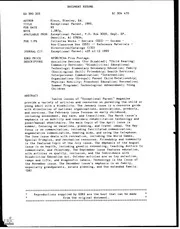
Revelation and Reason in Islam
 83
83

Revelation and Reason in Islam
Arthur John Arberry's "Revelation and Reason in Islam" provides a clear, if somewhat dry, survey of a critical juncture in Islamic intellectual history. The book's signal achievement is its comprehensive English-language overview of the "Scholastic Problem," detailing how Islamic thinkers navigated the perceived chasm between scripture and philosophy. Arberry excels at delineating the distinct approaches of figures associated with Kalam, Falsafa, and Sufism, showcasing their varied attempts to bridge this divide. A particular strength lies in his discussion of figures like Al-Ghazali, whose critique of philosophers underscored the stakes of this debate. While the prose is academically rigorous, it occasionally lacks the evocative power to fully convey the philosophical and spiritual urgency of these historical debates. The focus remains squarely on intellectual history, with less emphasis on the lived or mystical dimensions of these conflicts. Nonetheless, for its detailed historical exposition and clear analysis of complex theological and philosophical arguments, the book remains an indispensable resource.
📝 Description
83
Arthur John Arberry's 1957 study examines the tension between divine law and human intellect in Islam.
Published in 1957, Arthur John Arberry's "Revelation and Reason in Islam" analyzes a core intellectual struggle within Islamic thought: the "Scholastic Problem." This debate, concerning how to reconcile divine law with human intellect, predates similar discussions in Christian Europe, beginning in the 9th century.
Arberry details how various Islamic intellectual traditions approached this dilemma. He investigates the methods and arguments of theology (kalam), philosophy (falsafa), mysticism (Sufism), and legalism. The book shows how these schools sought to create a cohesive worldview that honored both scripture and rational inquiry. It is a study for those interested in the historical development of religious thought and the relationship between faith and reason across traditions.
While this work centers on intellectual history, it touches upon the perennial mystical quest for divine knowledge through both external revelation and internal contemplative reason. Sufism, as one of the traditions discussed, represents an esoteric path seeking direct experience of the divine, often engaging with philosophical and theological frameworks to articulate that experience. Arberry's examination of the "Scholastic Problem" indirectly illuminates how even within more orthodox rational and legal systems, there was an ongoing negotiation with modes of understanding that sought deeper, perhaps more intuitive, apprehension of truth.
💡 Why Read This Book?
• Gain a precise understanding of the "Scholastic Problem" in Islam, specifically how thinkers debated the relationship between divine revelation and human intellect before the 12th century. • Analyze the differing strategies employed by Islamic theology (kalam), philosophy (falsafa), and mysticism (Sufism) to reconcile religious doctrine with rational inquiry, as presented by Arberry. • Appreciate the historical parallels and divergences between Islamic and medieval Christian scholasticism through Arberry's comparative framework, offering unique cross-cultural insights.
⭐ Reader Reviews
Honest opinions from readers who have explored this book.
❓ Frequently Asked Questions
When was "Revelation and Reason in Islam" originally published?
Arthur John Arberry's seminal work, "Revelation and Reason in Islam," was first published in 1957, making it the earliest English survey of its kind on the subject.
What is the "Scholastic Problem" discussed in the book?
The "Scholastic Problem" refers to the centuries-long debate within Islam concerning the compatibility and integration of divine revelation (wahy) with human reason ('aql), a dilemma also explored in medieval Christianity.
Which intellectual traditions within Islam does Arberry examine?
Arberry's study investigates the approaches of Islamic theology (kalam), philosophy (falsafa), mysticism (Sufism), and authoritarianism in addressing the revelation versus reason conflict.
Is this book suitable for beginners in Islamic studies?
While academically thorough, the book is best suited for those with some prior knowledge of Islamic intellectual history or philosophy due to its detailed analysis of complex debates.
Does the book offer solutions to the conflict between revelation and reason?
Rather than providing definitive solutions, the book meticulously documents and analyzes the historical attempts made by various Islamic schools of thought to resolve this enduring tension.
Who was Arthur John Arberry?
Arthur John Arberry (1905-1969) was a distinguished British scholar of Arabic and Persian literature and Islamic studies, known for his extensive translations and scholarly works.
🔮 Key Themes & Symbolism
Harmony of Faith and Intellect
The central theme is the historical Islamic endeavor to reconcile divine revelation with rational understanding. Arberry details how theologians (mutakallimun), philosophers (falasifa), and mystics (Sufis) grappled with this challenge. The work examines the tools and arguments each group employed, from dialectical reasoning in Kalam to philosophical proofs and intuitive knowledge in Sufism, showcasing the diverse intellectual landscape shaped by this foundational tension.
The "Scholastic Problem"
This refers to the specific historical debate concerning the relationship between religious law and philosophical inquiry that preoccupied Islamic scholars for centuries. Arberry frames this not merely as a theological dispute but as a fundamental intellectual crisis that influenced the development of Islamic thought, predating similar debates in the West and offering a unique perspective on the evolution of religious epistemology.
Methodologies of Reconciliation
The book dissects the distinct methods adopted by different Islamic schools to address the revelation-reason dilemma. It contrasts the systematic theological arguments of Kalam, the speculative reasoning of Falsafa, and the experiential approach of Sufism. This comparative analysis highlights how varying epistemological frameworks led to different resolutions, demonstrating the richness and complexity of Islamic intellectual traditions.
Influence of Greek Philosophy
Arberry implicitly and explicitly addresses the impact of Greek philosophical traditions, particularly Aristotelianism and Neoplatonism, on Islamic thought. The work explores how Muslim philosophers integrated these foreign ideas into their theological and metaphysical frameworks, often creating tensions with scriptural interpretations and sparking debates about the limits of reason in matters of faith.
💬 Memorable Quotes
Direct passages from the work, attributed to the author.
“The "Scholastic Problem" was the focus of much debate in Islam for some centuries before it became the chief crux of learned discussion in medieval Christianity.”
— This statement highlights the pioneering nature of Islamic intellectual engagement with the faith-reason dichotomy, positioning it as a foundational discourse that influenced later Western scholastic traditions.
“It reviews the conflict within Islam between Revelation and Reason...”
— This expresses the core analytical task of the book: to trace and explain the fundamental intellectual tension between divine pronouncements and human logic that characterized much of Islamic scholarship.
“...examines the attempts made by theology, philosophy, mysticism and authoritarianism to resolve the dilemma.”
— This indicates the book's comprehensive scope, detailing the diverse strategies and schools of thought—from rationalist theology to mystical experience—that sought to bridge the gap between scripture and intellect.
“When originally published this volume was the first survey of the subject to appear in English.”
— This emphasizes the book's historical significance as a foundational text in English scholarship, making a complex area of Islamic intellectual history accessible to a wider academic audience for the first time.
💡 Key Ideas
Editorial paraphrase of the work's core concepts — not direct quotes.
The relationship between the Quran and the Aristotelian tradition.
This paraphrased concept points to a key area of investigation, where Arberry likely explores how Islamic thinkers attempted to synthesize the teachings of the Quran with the philosophical systems inherited from ancient Greece.
🌙 Esoteric Significance
Tradition
While not strictly an esoteric text in the vein of Hermeticism or Kabbalah, "Revelation and Reason in Islam" looks at the philosophical and theological underpinnings that have historically informed esoteric interpretations within Islam, particularly Sufism. It examines the intellectual frameworks that Sufis operated within, often seeking to harmonize their direct experiential knowledge of the divine with the established religious and philosophical doctrines of their time.
Symbolism
The work implicitly engages with the symbolic dimensions of reconciling revelation and reason. Concepts like 'reason' ('aql) itself can be seen as a symbol of the human capacity to apprehend truth, while 'revelation' (wahy) symbolizes divine guidance. The attempts to harmonize them reflect a deeper symbolic quest for unity between the immanent human spirit and the transcendent divine.
Modern Relevance
Contemporary thinkers exploring interfaith dialogue, the philosophy of religion, and the integration of spiritual experience with rational understanding can draw significant insights from Arberry's work. It provides a historical precedent for grappling with the perceived dichotomy between faith and reason, a tension that remains relevant in modern philosophical and theological discourse across various traditions.
👥 Who Should Read This Book
• Students of Islamic intellectual history: Gain a foundational understanding of the core debates concerning revelation and reason that shaped Islamic philosophy and theology from the early Abbasid period onwards. • Comparative religion scholars: Analyze the parallels and divergences between Islamic and Western medieval scholasticism in their approaches to harmonizing faith and reason. • Philosophy of religion enthusiasts: Explore historical case studies of how different intellectual traditions have attempted to integrate scriptural authority with rational inquiry and metaphysical speculation.
📜 Historical Context
Arthur John Arberry's "Revelation and Reason in Islam" emerged in 1957, a period when Western scholarship was increasingly engaging with the depth and sophistication of Islamic intellectual traditions. The book directly addresses the "Scholastic Problem," a debate that animated Islamic thinkers from figures like Al-Kindi and Al-Farabi in the 9th and 10th centuries, through the critical interventions of Al-Ghazali in the 11th century, and continuing onward. This internal Islamic discourse on reconciling divine law with philosophical reason predated and, in many ways, informed the parallel developments within medieval European scholasticism. Arberry’s work was groundbreaking as the first English survey to systematically detail these internal Islamic debates, offering scholars like Ernest Renan (who famously characterized Islamic philosophy somewhat dismissively) a more nuanced perspective. The book contextualizes these intellectual currents against a backdrop of rich theological and philosophical inquiry that shaped Islamic civilization for centuries.
📔 Journal Prompts
The tension between 'aql and wahy: How might contemporary intellectual frameworks approach this historical dilemma?
Al-Ghazali's critique of the philosophers: What were the core arguments and their lasting impact?
Mysticism's role in resolving intellectual conflicts: How did Sufi approaches differ from Kalam or Falsafa?
The "Scholastic Problem" in Islam: What are its implications for understanding medieval intellectual history broadly?
Comparing Islamic and Christian approaches to revelation and reason: What commonalities and differences emerge from Arberry's analysis?
🗂️ Glossary
Kalam
Islamic dialectical theology, concerned with articulating and defending Islamic theological doctrines using rational methods and argumentation.
Falsafa
Islamic philosophy, heavily influenced by Greek thought (especially Aristotle and Neoplatonism), focusing on metaphysics, logic, and natural sciences.
Sufism
Islamic mysticism, emphasizing direct personal experience of God, spiritual purification, and the cultivation of inner knowledge.
Wahy
Revelation, specifically divine revelation as understood in Islam, primarily referring to the Quran.
'Aql
Intellect or reason, the human capacity for rational thought, understanding, and discernment.
Mutakallimun
The practitioners or proponents of Kalam; Islamic dialectical theologians.
Falasifa
The practitioners or proponents of Falsafa; Islamic philosophers.
This book appears in 1 collection
🔮 Readers Also Liked
Browse all →








From the “Revelation” Collection
View all →








More Free Sacred Texts & Gnosticism Books
View all →