The Grammar of Messianism
 74
74

The Grammar of Messianism
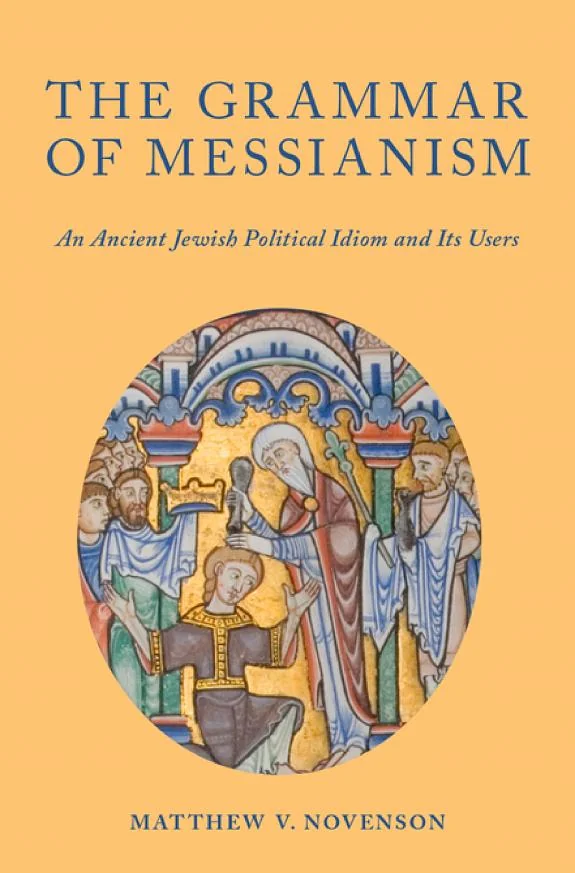
Matthew V. Novenson’s *The Grammar of Messianism* offers a compellingly revisionist perspective on how ancient Jews and Christians understood the figure of the messiah. Rather than a static theological concept, Novenson argues convincingly that ‘messiah’ served as a versatile linguistic tool for conceptualizing political order and divine intervention. He demonstrates how this term operated as a "manner of speaking" rooted in scriptural interpretation. A particular strength lies in his meticulous analysis of how scriptural texts were deployed to articulate these ideas, moving beyond anachronistic doctrinal assumptions. The limitation, for some readers, might be the dense academic prose, which, while precise, can be demanding. The discussion around the semantic range of messianic language, particularly how it differed from later fixed theological definitions, is exceptionally lucid. This work fundamentally challenges ingrained perceptions of early messianism.
📝 Description
74
Matthew V. Novenson's 2017 book argues 'messiah' was primarily a rhetorical device.
Published in 2017, The Grammar of Messianism by Matthew V. Novenson reassesses the concept of messianism in ancient Jewish and Christian thought. Novenson challenges the view of messianism as a static theological doctrine. Instead, he proposes that for its earliest followers, the term 'messiah' functioned more as a tool for rhetoric and scripture. This work is aimed at scholars and serious students of biblical studies, ancient history, and religious history. It will attract those interested in the development of religious ideas and language, particularly during the Second Temple period and early Christianity.
The book places its analysis in the late Second Temple period, a time of significant political and religious upheaval in Judea. The idea of a messianic figure was important for various Jewish groups' responses to Roman rule and their hopes for divine action. Novenson examines writings from figures like Josephus and Philo, alongside early Christian texts, to chart the varied meanings of 'messiah'. He highlights how messianic language was fluid and dependent on context, not a single, fixed title. It was a flexible term used to express hopes for political leadership, divine kingship, and eschatological change. The work underscores the role of scriptural interpretation in shaping these expectations and how language itself formed these roles.
This work engages with the historical and textual roots of messianic expectation, a concept that has long resonated within esoteric traditions. While not strictly an esoteric text itself, its focus on the semantic and rhetorical flexibility of 'messiah' touches upon how foundational religious terms acquire varied interpretations across different historical and intellectual currents. By examining the scriptural and political contexts that shaped these ideas in antiquity, Novenson's analysis provides a scholarly lens on the very mechanisms that can lead to divergent, and sometimes hidden, meanings within religious discourse.
💡 Why Read This Book?
• Gain a precise understanding of the linguistic function of 'messiah' in antiquity, moving beyond modern theological assumptions, as explored in Novenson's analysis of scriptural figures of speech. • Discover how ancient texts, particularly those from the Second Temple period, were actively used to shape political expectations and divine visions, as detailed in the book's historical context. • Reframe your view of early religious concepts by learning how terms like 'messiah' evolved and adapted, demonstrating the dynamic interplay between language, belief, and political hope.
⭐ Reader Reviews
Honest opinions from readers who have explored this book.
❓ Frequently Asked Questions
What is the primary argument of The Grammar of Messianism regarding the term 'messiah'?
Novenson argues that for ancient Jews and Christians, 'messiah' was primarily a scriptural figure of speech and a flexible manner of speaking, not a fixed article of faith or a singular theological doctrine.
What historical period does The Grammar of Messianism focus on?
The book concentrates on the late Second Temple period, examining how the term 'messiah' was used by ancient Jews and early Christians during this era of significant political and religious activity.
Does Novenson present a new theological interpretation of messianism?
No, Novenson's work is a historical and linguistic analysis, offering a revisionist account of how the *term* messianism was used and understood in antiquity, rather than a theological exegesis of the concept itself.
Who would benefit most from reading The Grammar of Messianism?
Scholars and students of biblical studies, ancient history, comparative religion, and linguistics would benefit from its detailed analysis of the semantics and historical usage of messianic language.
What is the significance of Novenson's 'grammatical' approach?
The 'grammatical' approach emphasizes the function and usage of the word 'messiah' within its original linguistic and historical context, treating it as a tool for thought and expression rather than a fixed label.
When was The Grammar of Messianism first published?
The book was first published in 2017, contributing to contemporary scholarship on early Jewish and Christian messianic expectations.
🔮 Key Themes & Symbolism
Messianism as Rhetoric
Novenson challenges the notion of messianism as a monolithic doctrine, instead framing it as a dynamic rhetorical strategy. The work details how the term 'messiah' functioned as a flexible linguistic instrument for ancient Jews and Christians. It was a 'manner of speaking' employed to articulate expectations about political order, divine justice, and future redemption, deeply embedded within scriptural discourse and evolving historical circumstances.
Scriptural Figures of Speech
A central thesis is that 'messiah' operated as a scriptural figure of speech, rather than a fixed theological title. This perspective emphasizes how interpreters in antiquity drew upon and reinterpreted biblical narratives and prophecies. The book explores how this linguistic practice allowed for diverse understandings of messianic roles, adapting the concept to various political and social contexts without requiring a uniform definition.
The Politics of Language
The book illuminates the intricate relationship between language, power, and expectation in the ancient world. By analyzing the 'grammar' of messianism, Novenson demonstrates how linguistic choices shaped perceptions of legitimate authority and divine action. The work highlights the political implications of employing specific scriptural language to envision future leadership and societal transformation, particularly under Roman rule.
Evolution of Religious Concepts
Novenson's study offers a model for understanding the evolution of religious concepts. It illustrates how terms and ideas are not static but are continually redefined through usage, interpretation, and historical context. The work shows that the fluidity of the term 'messiah' in antiquity is key to understanding its development into more fixed doctrinal forms in later traditions.
💬 Memorable Quotes
Direct passages from the work, attributed to the author.
“a messiah was not an article of faith but a manner of speaking”
— This core assertion reframes 'messiah' from a fixed belief to a flexible linguistic tool used by ancient writers to discuss political and divine authority.
“a scriptural figure of speech useful for thinking kinds of political order”
— This highlights how the concept of a messiah served as a conceptual framework, derived from scripture, for imagining and articulating desired forms of governance and justice.
“The grammar of messianism concerns how the ancient Jews and Christians used the term 'messiah'.”
— This statement underscores the book's methodological focus on linguistic usage and historical context, prioritizing the practical application of the term over abstract theological definitions.
“Messianism in antiquity was not a singular, unified doctrine.”
— This challenges anachronistic views, emphasizing the diversity and fluidity of messianic ideas and their varied expressions across different Jewish and early Christian groups.
“The term 'messiah' was a part of a broader set of scriptural resources.”
— This positions the concept of messiah within a larger ecosystem of biblical language and interpretation, suggesting its meaning was derived and sustained through continuous engagement with sacred texts.
🌙 Esoteric Significance
Tradition
While not explicitly aligned with a single esoteric lineage, *The Grammar of Messianism* appeals to Hermetic and Gnostic traditions that emphasize the power of language, symbolic interpretation, and the hidden meanings within scripture. It speaks to traditions that view religious texts not merely as historical records but as coded systems of knowledge, where understanding the 'grammar' unlocks deeper levels of meaning concerning divine order and human potential.
Symbolism
The central symbol is the 'messiah' itself, not as a fixed figure but as a fluid symbol of anticipated liberation, justice, and divine authority. Novenson's analysis treats scriptural narratives and prophetic pronouncements as symbolic resources. The 'grammar' of messianism functions as a symbolic key, suggesting that the structure and usage of language are themselves potent forces capable of shaping reality and consciousness.
Modern Relevance
Contemporary esoteric thinkers and practitioners interested in linguistic magic, the power of sacred texts, and the deconstruction of rigid belief systems find relevance here. It informs modern discussions on how archetypal figures and narratives can be reinterpreted to address contemporary political and spiritual aspirations, moving beyond literal interpretations to engage with the symbolic and psychological dimensions of religious language.
👥 Who Should Read This Book
['• Academic researchers in biblical studies and ancient history seeking to understand the semantic range and historical usage of messianic language.', '• Students of comparative religion interested in how religious concepts evolve and are shaped by linguistic and political contexts.', '• Esoteric practitioners and scholars exploring the power of language in shaping belief and the interpretation of sacred texts beyond literalism.']
📜 Historical Context
Published in 2017, *The Grammar of Messianism* emerged within a robust academic conversation about messianism in Second Temple Judaism and early Christianity. This period, roughly from 200 BCE to 100 CE, was marked by significant political upheaval under Roman and Hellenistic rule, fostering diverse expectations of divine intervention and leadership. Scholars like E.P. Sanders had previously emphasized the political dimensions of Jesus's movement, while others debated the precise nature and origins of messianic beliefs. Novenson’s work engages with this discourse by focusing on the linguistic function of the term, proposing that its flexibility was crucial for articulating hopes during times of uncertainty. He contrasts his view with more static, doctrinal interpretations prevalent in some earlier scholarship. The book implicitly addresses debates surrounding the diversity of Jewish messianic expectations, a topic explored by numerous scholars of the era.
📔 Journal Prompts
Analyze the function of 'messiah' as a scriptural figure of speech in your own understanding of historical or contemporary movements.
Reflect on how a 'manner of speaking' can shape perceptions of authority and political order.
Consider the evolution of a key term in your own field of study: how has its meaning and usage changed?
Explore the relationship between scriptural interpretation and the articulation of hope for future change.
How does the 'grammar' of a concept influence its perceived fixedness or fluidity?
🗂️ Glossary
Messianism
In the context of this book, refers to the discourse and expectations surrounding anointed figures (messiahs) in ancient Judaism and early Christianity, viewed primarily as linguistic and scriptural phenomena rather than fixed doctrines.
Scriptural Figure of Speech
A term or phrase used in a text that derives its meaning and function from its specific context within scripture, often carrying symbolic or rhetorical weight beyond a literal definition.
Second Temple Period
The historical era in Jewish history spanning from the rebuilding of the Second Temple in Jerusalem (c. 516 BCE) to its destruction by the Romans (70 CE).
Manner of Speaking
Refers to the way a term or concept is used and functions within a specific linguistic and cultural context, emphasizing its practical application and rhetorical force.
Article of Faith
A core belief or tenet that is considered essential to a particular religious doctrine or system of faith, presented as a non-negotiable truth.
Political Order
The structure, organization, and governing principles of a society or state, often a subject of discussion and aspiration in messianic discourse.
Semantics
The branch of linguistics and philosophy concerned with meaning, particularly the relationship between signs, words, and phrases and what they stand for.
This book appears in 1 collection
🔮 Readers Also Liked
Browse all →









From the “Messianism” Collection
View all →







More Free Sacred Texts & Gnosticism Books
View all →