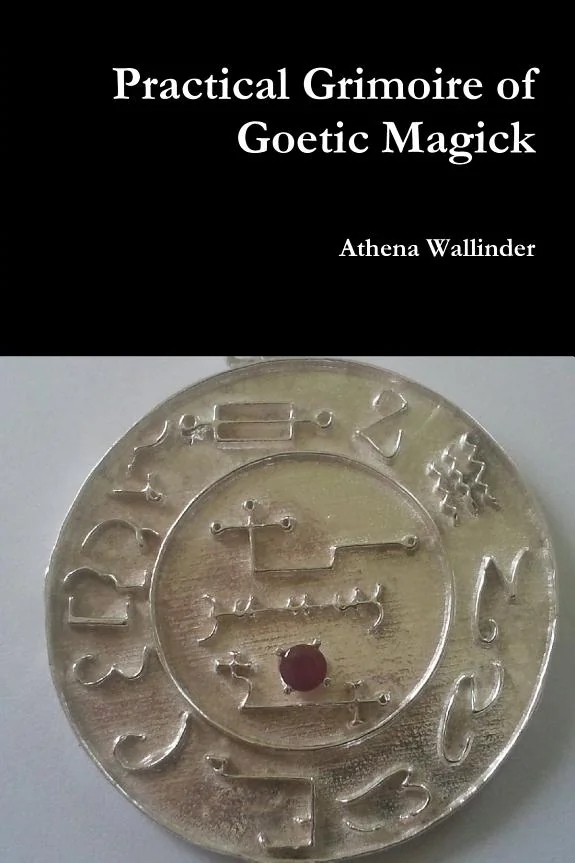
Practical Grimoire of Goetic Magick
 79
79

Practical Grimoire of Goetic Magick
Athena Wallinder’s *Practical Grimoire of Goetic Magick* tackles the formidable task of rendering the obscure workings of the Lemegeton accessible. The book distinguishes itself by offering alternate, yet viable, methods alongside interpretations of the original grimoire’s often-confusing instructions. Wallinder’s step-by-step approach is a notable strength, particularly for those intimidated by the raw, unvarnished texts of Solomon. However, the full-color edition, while visually appealing, sometimes distracts from the textual density of the ritual instructions, a minor point in an otherwise solid presentation. The explanation of the ritual circle and the preparation of tools, for instance, is commendably clear. This work serves as a functional bridge between historical grimoire study and contemporary magical practice. It’s a useful manual for serious students of Goetia.
📝 Description
79
Athena Wallinder's Practical Grimoire of Goetic Magick provides direct instructions for working with the 72 Daemons of the Lesser Key of Solomon.
This volume serves as a practical manual for engaging with the Daemons of the Goetia. Wallinder presents clear instructions for invoking and working with the 72 spirits detailed in the Lesser Key of Solomon. The book aims to clarify the often dense and obscure original grimoire texts, offering a systematic approach to ritual practice.
It is written for practitioners of ceremonial magick and students of occultism who wish to interact directly with the Goetic hierarchy. The text is suitable for those who find traditional grimoires difficult to interpret and desire a more accessible, actionable framework. Readers interested in daemonology, grimoire history, and the applied aspects of esoteric knowledge will find this book useful.
The Goetia, a part of the 17th-century Lemegeton, consolidates earlier magical traditions of demonology and spirit evocation. Its influence is considerable, shaping much of modern ceremonial magick. This work acknowledges its historical lineage while adapting it for contemporary understanding and practice, addressing the challenges of fragmented and sometimes contradictory original manuscripts.
The Goetia is a significant element within the Western Esoteric Tradition, tracing its roots to earlier magical practices concerning demonology and spirit evocation. Compiled in the 17th-century Lemegeton, it represents a late crystallization of these traditions. Its influence has shaped modern ceremonial magick extensively. This book engages with that historical lineage, adapting its principles for contemporary practitioners who seek a more direct and understandable method of working with these entities.
💡 Why Read This Book?
• Learn concrete methods for invoking Goetic Daemons, moving beyond theoretical study to practical application as detailed in Wallinder’s step-by-step guide. • Understand the historical context of the Lemegeton, appreciating its place in 17th-century occultism and its evolution into modern practices. • Gain clarity on the often-confusing instructions found in original grimoire manuscripts, enabling more effective and precise ritual execution.
⭐ Reader Reviews
Honest opinions from readers who have explored this book.
❓ Frequently Asked Questions
What is the Lemegeton and its connection to the Goetia?
The Lemegeton, also known as the Lesser Key of Solomon, is a 17th-century grimoire compiled from earlier texts. The Goetia is the first book within the Lemegeton, detailing a hierarchy of 72 Daemons believed to be controllable by a magician.
Does this book require prior knowledge of magic?
While prior knowledge is helpful, *Practical Grimoire of Goetic Magick* aims to be accessible. It provides step-by-step instructions that can guide both beginners and experienced practitioners through the ritual processes.
What makes this grimoire 'practical'?
The book focuses on actionable methods, clarifying the often-obtuse instructions found in original grimoire manuscripts. It offers alternate techniques designed for effective, contemporary application of Goetic magick.
Is the full-color edition necessary?
The full-color edition enhances the visual presentation of the material, potentially aiding comprehension of diagrams and symbolic elements within the grimoire. However, the core textual content remains the primary focus.
Who is Athena Wallinder?
Athena Wallinder is the author of *Practical Grimoire of Goetic Magick*, first published in 2016. Her work focuses on making esoteric texts and practices more understandable for modern practitioners.
What is the historical significance of the Goetic Daemons?
The Goetic Daemons are central figures in Western ceremonial magick, representing a codified system of spirits that have been studied and invoked since the compilation of the Lemegeton in the 17th century.
🔮 Key Themes & Symbolism
Goetic Daemon Invocation
This theme centers on the practical application of invoking the 72 Daemons described in the Lemegeton. The book provides structured methods, including ritual preparations, conjurations, and banishments, essential for establishing contact with these entities. It emphasizes a systematic approach, breaking down complex rituals into manageable steps for the practitioner. The goal is to facilitate a direct working relationship with the Goetic spirits, moving beyond mere theoretical understanding to active engagement within a ceremonial framework.
Grimoire Interpretation
A significant aspect of the work involves explaining historical grimoires, particularly the Lemegeton. Wallinder addresses the challenges posed by archaic language, fragmented manuscripts, and esoteric symbolism. The book offers interpretations and alternate methodologies designed to clarify the original intent and practical execution of rituals described within these ancient texts. This focus on accurate interpretation aims to equip practitioners with a solid foundation for their magical endeavors.
Ceremonial Magick Framework
The book operates within the broader tradition of Western ceremonial magick. It outlines the necessary tools, spaces, and psychological states required for effective ritual work. Concepts such as the magic circle, the triangle of manifestation, and the use of specific names and seals are explained in their practical context. This provides a comprehensive framework for understanding how Goetic practices fit into the established methodologies of ceremonial occultism.
Daemonology and Hierarchy
Central to the grimoire is the study of daemonology, specifically the hierarchy and attributes of the 72 Goetic Daemons. The book details their assigned ranks, powers, and sigils as presented in the Lemegeton. Understanding this structure is crucial for practitioners seeking to engage with specific entities for particular purposes, allowing for a more targeted and informed approach to ritual work.
💬 Memorable Quotes
Direct passages from the work, attributed to the author.
“The original manuscripts are quite confusing, so here I discuss step by step how they mean the workings to be carried out.”
— This statement highlights the author's primary objective: to bridge the gap between archaic magical texts and contemporary practitioners. It signals a commitment to clarity and actionable instruction, addressing a common frustration among students of grimoires.
“Here is a book showing how to work with the various Grimoire Daemons (most especially the ones from the Lemegeton Goetia.”
— This core assertion defines the book's purpose. It focuses specifically on the practical working with Goetic spirits, positioning itself as a guide for direct engagement rather than purely academic study.
“FULL COLOUR EDITION”
— This note emphasizes a key feature of this specific publication. The inclusion of color illustrations and diagrams is intended to enhance the user's understanding and engagement with the visual and symbolic elements of Goetic magick.
💡 Key Ideas
Editorial paraphrase of the work's core concepts — not direct quotes.
Either by using the methods outlined in the actual grimoire, or some alternate methods which which quite well.
This paraphrase suggests a flexible approach to ritual. The author acknowledges the historical methods from the Lemegeton while also presenting potentially more accessible or effective variations for modern practitioners, offering a dual pathway to engagement.
The work explores the hierarchy and attributes of these spirits as outlined in historical texts.
This paraphrased concept points to the book's grounding in established esoteric lore. It indicates that the practical instructions are built upon a foundation of researched knowledge regarding the nature and order of the Goetic Daemons.
🌙 Esoteric Significance
Tradition
This work firmly belongs to the Western Esoteric Tradition, specifically within the sub-tradition of ceremonial magick that draws heavily from grimoire magic. It aligns with practices that emerged from Renaissance occultism and were later synthesized and popularized in texts like the Lemegeton. While rooted in this lineage, Wallinder’s approach aims to adapt these complex rituals for modern practitioners, potentially departing from strict historical adherence in favor of pragmatic efficacy.
Symbolism
Key symbols include the Goetic sigils, each uniquely representing one of the 72 Daemons and serving as a focal point for invocation and recognition. The magic circle, a protective boundary essential for ritual, symbolizes divine protection and separation from the mundane world. The Triangle of Art, used for manifestation, represents the space where the evoked spirit is compelled to appear and interact.
Modern Relevance
Contemporary practitioners of ceremonial magick, particularly those interested in the historical Goetia, find significant value in this book. It speaks to modern occultists seeking direct engagement with archetypal forces or specific intelligences. Its clear methodology is also relevant to comparative occult studies and individuals exploring the evolution of magical theory and practice from the 17th century to the present day.
👥 Who Should Read This Book
• Aspiring ceremonial magicians seeking a clear, step-by-step guide to working with the Goetic Daemons from the Lemegeton. • Occult scholars and historians interested in practical interpretations of historical grimoire texts and their application. • Practitioners of Western Esotericism looking to deepen their understanding of daemonology and spirit evocation within a structured ritualistic context.
📜 Historical Context
The *Practical Grimoire of Goetic Magick* emerges from a lineage deeply rooted in the Western Esoteric Tradition, particularly the practices codified in the 17th-century Lemegeton. This grimoire, itself a compilation of earlier magical texts, presented a structured system for the evocation of 72 Daemons, a subject that had been explored in various forms throughout the medieval period. By 2016, when Wallinder’s work was first published, the study of grimoires had seen a resurgence, influenced by figures like Aleister Crowley and the Hermetic Order of the Golden Dawn, who had themselves reinterpreted and popularized texts like the Goetia. Wallinder's approach acknowledges the complexities and often confusing nature of these historical documents, offering a contemporary lens through which to understand and enact these powerful rituals. The book engages with the ongoing scholarly and practical interest in demonology, providing a functional guide that contrasts with purely academic analyses or highly esoteric, inaccessible interpretations.
📔 Journal Prompts
Reflect on the purpose and methodology of invoking a specific Goetic Daemon as presented in the text.
Consider the challenges of interpreting archaic grimoire language and how Wallinder addresses them.
Analyze the role of the magic circle and the Triangle of Art in Goetic ritual.
Document your understanding of the hierarchy of the 72 Goetic Daemons.
Explore the practical differences between historical Goetic methods and the alternate approaches offered in the book.
🗂️ Glossary
Grimoire
A textbook of magic, typically containing instructions for invoking spirits, casting spells, and performing other magical rites. Grimoires often compile knowledge from various sources and historical periods.
Goetia
The first book of the Lemegeton, detailing the names, ranks, and powers of 72 Daemons, along with instructions for their evocation and control.
Lemegeton
A 17th-century grimoire, also known as the Lesser Key of Solomon, comprising five books: Ars Goetia, Ars Theurgia-Goetia, Ars Paulina, Ars Almadel, and Ars Notoria.
Daemon
In the context of Goetia, refers to one of the 72 spirits listed in the Lemegeton, often viewed as powerful entities that can be invoked for various purposes.
Evocation
The magical practice of calling forth spirits or entities into a visible manifestation, typically within a designated space like a triangle, for communication or interaction.
Sigil
A symbol or sign representing a spirit, concept, or deity, often used in magical rituals for invocation or as a focus of power. Each Goetic Daemon has a specific sigil.
Ceremonial Magick
A formalized system of magic involving elaborate rituals, specific tools, and often the invocation or evocation of spiritual or elemental forces.
This book appears in 1 collection
🔮 Readers Also Liked
Browse all →








From the “Goetia” Collection
View all →



More Free Sacred Texts & Gnosticism Books
View all →