St. John of the Cross
 73
73

St. John of the Cross
The enduring power of St. John of the Cross's prose lies in its unflinching honesty about the arduous path of spiritual development. What strikes one immediately is the psychological acuity with which he dissects the soul's resistance to divine will, even when cloaked in piety. His descriptions of the "dark night" are not mere metaphors but visceral accounts of existential stripping, a process often misunderstood as mere desolation. A particular strength is his ability to ground abstract theological concepts in lived experience, making the journey toward God feel intensely personal and attainable, albeit challenging. The limitation, perhaps inherent in any translation and selection of his works, is the potential for the sheer density of his theological arguments to obscure the raw, emotional core of his mystical encounters for the uninitiated reader. The passage detailing the "spiritual betrochy" offers a glimpse into the profound intimacy he experienced. Ultimately, this collection serves as an indispensable, albeit demanding, guide to the heights of contemplative union.
📝 Description
73
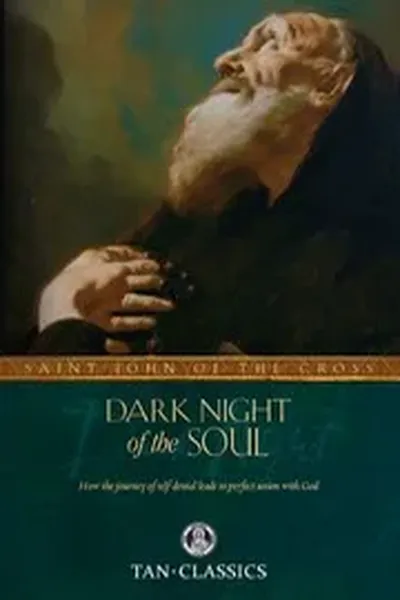
This 2013 edition collects the mystical writings of St. John of the Cross, a 16th-century Carmelite.
The writings of St. John of the Cross, gathered in this 2013 edition, detail the soul's ascent toward union with God. Born in 1542, he was a key figure in the Carmelite reform alongside St. Teresa of Ávila. His work, though not produced by a modern academic, shows a clear engagement with scholastic thought, particularly St. Thomas Aquinas's "Summa." This blend of rigorous intellectual grounding and personal spiritual experience gives his accounts of prayer a unique depth.
His teachings are directed toward theologians, scholars of Christian mysticism, and those committed to contemplative practice. Readers interested in the history of Western Christian thought, especially within Catholic mysticism, will find significant content here. The book also addresses the psychological and spiritual aspects of inner transformation, as explained by a central figure in this tradition.
St. John of the Cross stands as a major voice in Christian mysticism, a tradition that seeks direct experience of the divine. His writings emerged during the Counter-Reformation, a period of intense theological debate, yet he focused on the interior life. He articulated a path of spiritual purification and union that offered a distinct approach from the more scholastic methods prevalent at the time. His articulation of the soul's journey, particularly through the concept of the 'dark night,' has influenced contemplative traditions for centuries.
💡 Why Read This Book?
• Gain direct insight into the concept of the "dark night" as described by its originator, understanding its role in the purification of the senses and spirit, a core tenet of his mystical theology. • Explore the Carmelite reform initiated by St. John of the Cross and St. Teresa of Ávila in the 16th century, grasping its historical significance and impact on monastic life. • Comprehend St. John's sophisticated integration of Thomistic philosophy with mystical experience, evident in his systematic exploration of divine love and the soul's ascent.
⭐ Reader Reviews
Honest opinions from readers who have explored this book.
❓ Frequently Asked Questions
What is the "dark night" according to St. John of the Cross?
The "dark night" refers to stages of spiritual purification where the soul experiences detachment from sensory and spiritual consolations, leading to a more direct, albeit challenging, union with God.
What was St. John of the Cross's role in the Carmelite Order?
He was a co-founder, with St. Teresa of Ávila, of the Discalced Carmelites, a reform movement aimed at returning the order to stricter contemplative observance and poverty.
How did St. John of the Cross engage with scholastic theology?
Although primarily a mystic, his writings frequently demonstrate an acquaintance with the "Summa" of St. Thomas Aquinas, integrating philosophical rigor with his experiential theology.
Where and when was St. John of the Cross born and did he die?
He was born at Hontoveros, Old Castile, on June 24, 1542, and died at Úbeda, Andalusia, on December 14, 1591.
What is the "living flame of love" in his writings?
The "living flame of love" symbolizes the soul's intense desire for God and the transformative, purifying fire of divine grace that unites the soul with its Creator.
Is St. John of the Cross considered a Doctor of the Church?
Yes, he is recognized as a Doctor of Mystic Theology by the Catholic Church, acknowledging the profound depth and authority of his spiritual teachings.
🔮 Key Themes & Symbolism
The Dark Night of the Soul
This central concept details the stages of spiritual purification, dividing it into the "dark night of the senses" and the "dark night of the spirit." It describes a period of dryness, detachment, and profound inner transformation necessary for the soul to shed imperfections and ascend towards direct union with the divine. St. John meticulously outlines the characteristics of each stage, guiding the reader through this challenging yet essential process of divestment and divine encounter.
Union with God
The ultimate aim of the spiritual life, as articulated by St. John, is divine union. This is not a passive state but an active, transformative communion achieved through intense love, faith, and detachment. He employs powerful metaphors like the "living flame of love" and the "spiritual betrothal" to illustrate the profound intimacy and transformation that occurs when the soul surrenders itself fully to God's will and presence.
Detachment and Renunciation
St. John consistently emphasizes the necessity of detachment from all things, including spiritual consolations and even one's own will, as a prerequisite for spiritual progress. This radical renunciation is not about asceticism for its own sake but about clearing the soul of all impediments that hinder the full reception of divine grace. He argues that true freedom and spiritual advancement come from emptying oneself, allowing God to fill the void.
The Ascent of Mount Carmel
This metaphor, central to his work, illustrates the soul's arduous journey upward towards God. It involves actively climbing, shedding burdens, and facing spiritual challenges. The "ascent" requires discipline, faith, and perseverance, mirroring the rigorous path of contemplative practice. Each step taken on this spiritual mountain signifies a move away from the mundane and towards the divine summit of union.
💬 Memorable Quotes
Direct passages from the work, attributed to the author.
“To come to the enjoyment of all, desire the enjoyment of none.”
— This aphorism captures St. John's doctrine of detachment. By relinquishing desire for any specific outcome or spiritual reward, the soul paradoxically opens itself to the fullness of God's presence and gifts.
“The soul that is attached to anything, however much it may appear good, cannot attain to freedom.”
— This principle underscores the radical nature of spiritual liberation. St. John posits that any attachment, even to seemingly virtuous things, can act as an invisible chain, preventing the soul from achieving complete surrender to God.
“The soul's journey to God is a journey of love.”
— This interpretation highlights the relational aspect of St. John's mysticism. Despite the emphasis on purification and detachment, the underlying driving force and ultimate goal is a profound, intimate union born of divine love.
“For the spirit of man is already in God.”
— This concept suggests an inherent, albeit often obscured, connection between the human spirit and the divine. St. John's teachings aim to strip away the veils that prevent the soul from realizing this pre-existing unity.
💡 Key Ideas
Editorial paraphrase of the work's core concepts — not direct quotes.
In the evening of life, you will be judged on love.
This powerful statement, paraphrased from his teachings, highlights the ultimate criterion for spiritual evaluation. St. John directs practitioners to focus on cultivating divine love above all other spiritual disciplines or achievements.
🌙 Esoteric Significance
Tradition
St. John of the Cross is a central to Christian mysticism, a tradition deeply rooted in the contemplative practices of early Christianity and later influenced by Neoplatonism and Pseudo-Dionysius. His work fits within this lineage by emphasizing experiential knowledge of God and the soul's direct union, moving beyond purely theological dogma. While firmly within orthodox Catholicism, his focus on inner transformation and symbolic language of the soul's journey appeals to broader esoteric themes of spiritual ascent and divine immanence.
Symbolism
Key symbols in his work include the "dark night," representing stages of purification and detachment from sensory and spiritual consolations; the "living flame of love," symbolizing the soul's burning desire for God and the transformative power of divine grace; and the "ascent of Mount Carmel," a metaphor for the arduous but rewarding spiritual journey towards union with the divine, requiring rigorous discipline and self-emptying.
Modern Relevance
St. John's teachings continue to influence contemporary spiritual directors, contemplative practitioners, and scholars of religion. His psychological insights into the stages of spiritual growth and the nature of divine encounter are studied in comparative mysticism and depth psychology circles. Thinkers and practitioners in various traditions, including some within secular mindfulness and contemplative communities, draw on his rigorous articulation of detachment and the transformative power of surrender.
👥 Who Should Read This Book
• Advanced students of Christian mysticism and theology seeking to understand the foundational texts of contemplative prayer and the concept of the "dark night." • Scholars of religious history and comparative spirituality interested in the Counter-Reformation era and the development of Western esoteric thought within orthodox traditions. • Individuals engaged in deep personal spiritual practice who are seeking a structured, albeit challenging, guide to interior transformation and union with the divine.
📜 Historical Context
St. John of the Cross (1542-1591) lived during a period of profound religious upheaval in Spain, marked by the Counter-Reformation and the Inquisition. His life and work were deeply embedded within the Catholic tradition, yet he championed a radical interior spirituality that diverged from purely scholastic approaches. Alongside St. Teresa of Ávila, he co-founded the Discalced Carmelites, a reform movement seeking a return to primitive austerity and contemplative prayer, which faced considerable opposition from within the established Carmelite Order and ecclesiastical authorities. His contemporary, Luis de León, also a Carmelite and renowned humanist scholar, navigated similar intellectual and spiritual currents, though with a different emphasis. St. John's writings, particularly his "Dark Night" and "Ascent of Mount Carmel," became foundational texts for Christian mysticism, offering a profound psychological and theological exploration of the soul's journey towards God.
📔 Journal Prompts
The soul's detachment from sensory consolations during the dark night of the senses.
The transformative power of the "living flame of love" in the soul's journey.
St. John's integration of the "Summa" of St. Thomas Aquinas with mystical experience.
Reflecting on the "ascent of Mount Carmel" as a metaphor for personal spiritual growth.
The psychological implications of the "dark night of the spirit."
🗂️ Glossary
Discalced Carmelites
A reform branch of the Carmelite Order founded by St. Teresa of Ávila and St. John of the Cross, emphasizing stricter observance, poverty, and contemplative prayer.
Dark Night of the Senses
The initial stage of spiritual purification where the soul experiences a loss of relish for worldly activities and spiritual exercises, leading to a growing detachment from sensory pleasures.
Dark Night of the Spirit
A deeper and more profound stage of purification where the soul is detached from spiritual consolations and intellectual understanding, leading to a more direct, albeit obscure, union with God.
Living Flame of Love
A metaphor for the soul's intense desire for God and the transformative, purifying divine love that unites the soul with its Creator, often experienced as a burning desire or ecstatic union.
Ascent of Mount Carmel
A metaphor representing the soul's diligent and arduous journey towards God, involving active effort, detachment, and perseverance in overcoming spiritual obstacles.
Nihil Obstat
Latin for 'nothing hinders,' a declaration by a Catholic censor that a book is free from religious or moral error. Often precedes the Imprimatur.
Imprimatur
Latin for 'let it be printed,' an official license by a bishop or ecclesiastical superior allowing a book to be published, signifying it contains nothing contrary to Catholic doctrine.