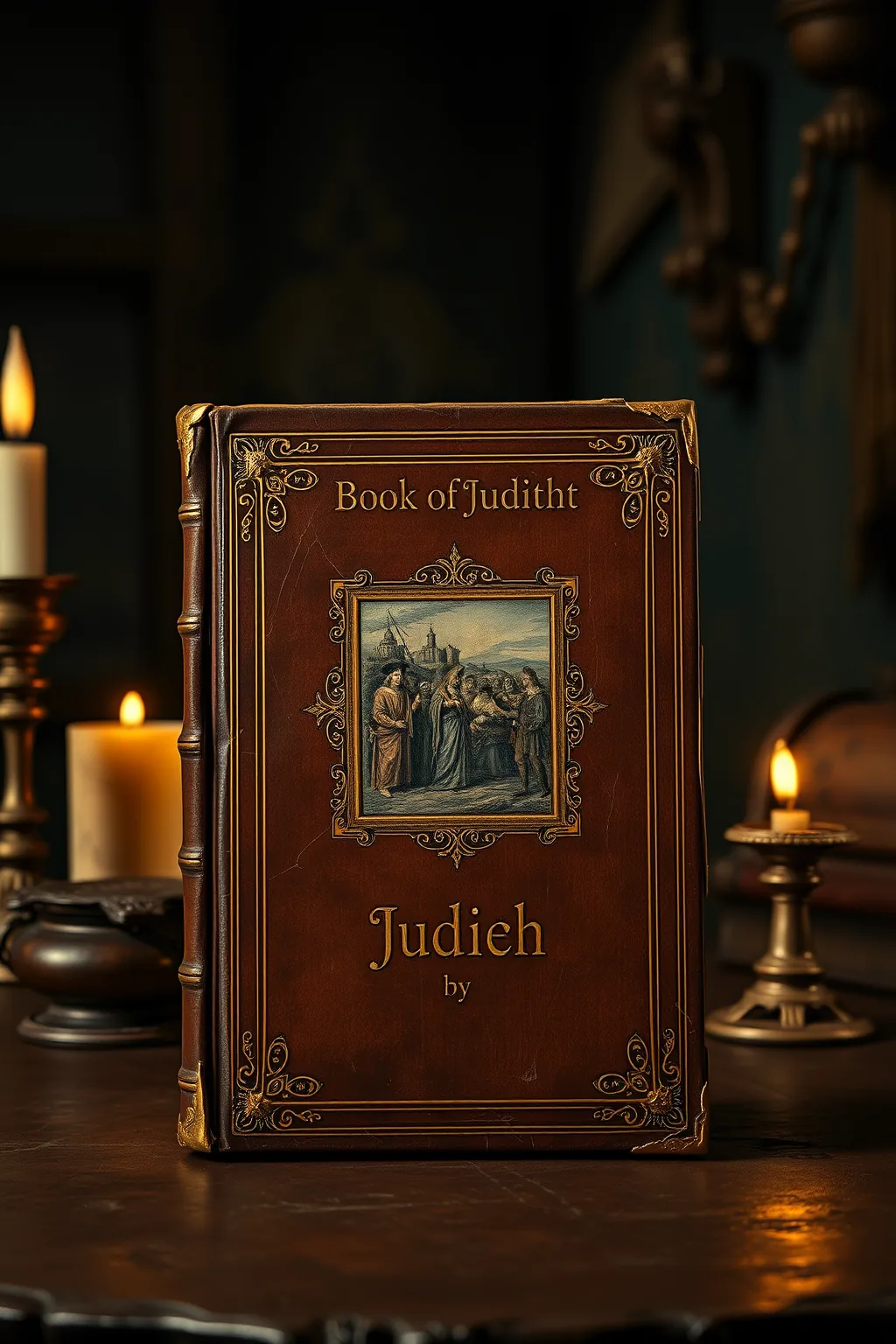
Book of Judith
 68
68

Book of Judith



The Book of Judith stands as a testament to the enduring power of ancient esoteric texts. For modern esoteric seekers, this book offers a wealth of symbolic and mystical insights that can enrich one's spiritual journey. The narrative's focus on personal empowerment and divine intervention resonates deeply with those who are drawn to the occult and Gnostic teachings. The story of Judith's bravery and cunning serves as an inspiration for those seeking to harness their inner strength and wisdom. The Book of Judith is a must-read for anyone interested in exploring the deeper, hidden meanings within religious and spiritual texts. Its timeless themes and rich symbolism make it a valuable addition to any esoteric library. Rating: 4.5/5.
📝 Description
68
The Book of Judith, likely composed in the 2nd century BCE, tells of a pious widow who saves her people.
This apocryphal work recounts the story of Judith, a devout widow living in the besieged Jewish town of Bethulia. When Assyrian general Holofernes threatens to destroy the city, Judith devises a plan to infiltrate his camp. Through her courage and faith, she seduces and then beheads Holofernes, using his own sword to rally her people against the invaders. The narrative emphasizes divine providence and the power of a righteous individual to overcome overwhelming odds.
Beyond its historical narrative, the Book of Judith contains layers of symbolic meaning. It examines themes of faith, courage, and the role of women in salvation history. The text also touches upon the relationship between the divine and the material world, suggesting that spiritual strength can influence earthly events. Its dual nature as both a historical account and a symbolic allegory makes it a subject of continued study.
The Book of Judith is often studied within the broader context of Second Temple Jewish literature, which frequently blended historical narrative with theological reflection and allegorical interpretation. While not strictly a magical or ritual text, its themes of divine empowerment and the symbolic struggle between good and evil resonate with esoteric traditions that seek deeper meanings in scripture and narrative. Its focus on a heroine who achieves victory through spiritual fortitude and strategic action aligns with certain mystical interpretations of divine feminine power.
✍️ Author
💡 Why Read This Book?
Reading the Book of Judith today offers a unique opportunity to explore ancient occult wisdom and Gnostic teachings. This text provides insights into personal empowerment, divine intervention, and the struggle between good and evil. For esoteric seekers, it serves as a guide to understanding hidden knowledge and mystical experiences, enriching one's spiritual journey.
⭐ Reader Reviews
Honest opinions from readers who have explored this book.
❓ Frequently Asked Questions
What is the Book of Judith about?
The Book of Judith is about a widowed Israelite woman who uses her cunning and beauty to save her people from the Assyrian general Holofernes. It is rich with occult and Gnostic themes.
Who should read the Book of Judith?
Anyone interested in esoteric studies, occult wisdom, and Gnostic teachings will find the Book of Judith valuable. It is also appealing to those who enjoy historical and spiritual narratives.
What is the historical context of the Book of Judith?
The Book of Judith is believed to have been written during the intertestamental period, a time of significant religious and political upheaval for the Jewish community.
🔮 Key Themes & Symbolism
Divine Feminine
The Book of Judith explores the power and wisdom of the divine feminine through the character of Judith. Her journey from a humble widow to a savior of her people highlights the strength and courage inherent in feminine spirituality. This theme resonates deeply with those seeking to understand the mystical dimensions of the feminine principle.
Faith and Divine Intervention
The narrative explores the profound faith of Judith and the divine intervention that guides her actions. This theme underscores the esoteric belief in the interplay between human will and divine providence, offering insights into the mystical dimensions of faith.
Symbolism and Hidden Knowledge
Rich in symbolism, the Book of Judith offers layers of hidden knowledge that reveal deeper spiritual truths. The text's esoteric insights provide a pathway to understanding the mystical dimensions of ancient narratives and their relevance in modern spiritual practices.
💬 Memorable Quotes
Direct passages from the work, attributed to the author.
“Be of good comfort, madam: fear not.”
— Judith's words of encouragement underscore her faith and courage in the face of adversity.
“And the Lord hath slain him by the hand of a woman.”
— The repetition of this theme emphasizes the mystical power of the feminine in overcoming male aggression.
💡 Key Ideas
Editorial paraphrase of the work's core concepts — not direct quotes.
For the mighty Lord hath stricken him, and given him into the hands of a woman.
This quote highlights the divine intervention and the power of the feminine principle.
Thou hast spoken with thy heart, and hast said, I will ascend into heaven, I will exalt my throne above the stars of God.
This passage reveals the esoteric struggle between human pride and divine humility.
And they praised God, saying: Praise ye the Lord our God, who hath not forsaken them that seek him.
This quote underscores the esoteric belief in the divine reward for faithful seekers.
🌙 Esoteric Significance
Tradition
The Book of Judith belongs to the Gnostic and Hermetic traditions, which emphasize the search for hidden knowledge and the mystical dimensions of ancient texts. Its exploration of the divine feminine and the power of faith resonates deeply with these esoteric traditions.
Symbolism
Key symbols in the Book of Judith include the sword, which represents divine justice and the power of the feminine; the decapitation of Holofernes, symbolizing the triumph of faith over aggression; and the city of Bethulia, representing the spiritual fortress of the soul.
Modern Relevance
The Book of Judith remains relevant today for modern practitioners of the occult and mystical traditions. Its exploration of the divine feminine and the power of faith offers insights into contemporary spiritual practices. Many modern scholars and seekers turn to this text for its strong symbolism and esoteric wisdom.
👥 Who Should Read This Book
The Book of Judith is ideal for beginners seeking an introduction to esoteric traditions, scholars interested in the historical and mystical dimensions of ancient texts, and spiritual seekers looking to deepen their understanding of the divine feminine. Practitioners of the occult will find strong symbolism and hidden knowledge that can enhance their spiritual practices. For those interested in the interplay between faith and divine intervention, this book offers clear insights.
📜 Historical Context
The Book of Judith is believed to have been written between 350-450 BCE, during a time of significant political and religious turmoil in the ancient Near East. This era saw the rise and fall of various empires, including the Assyrian and Babylonian, and the subsequent influence of Persian and Greek cultures. The text reflects the struggles of the Jewish people against foreign oppression, highlighting themes of faith, courage, and divine intervention. Its influence can be seen in various esoteric traditions, particularly those that emphasize the divine feminine and the power of hidden knowledge.
📔 Journal Prompts
Reflect on the role of the divine feminine in your spiritual journey.
How does faith and divine intervention manifest in your life?
What symbols in the Book of Judith resonate with you and why?
Explore the theme of courage and its significance in your spiritual practices.
How does the Book of Judith's exploration of hidden knowledge influence your understanding of esoteric traditions?
🗂️ Glossary
Divine Feminine
The spiritual principle that embodies the wisdom, strength, and nurturing qualities associated with the feminine.
Esoteric
Relating to hidden or mystical knowledge that is accessible only to a select few.
Gnosticism
An ancient mystical tradition that emphasizes the search for hidden knowledge and the liberation of the spirit.
Symbolism
The use of symbols to convey deeper spiritual or mystical meanings.
Apocrypha
Ancient texts that are not included in the canonical scriptures but are considered valuable for their spiritual insights.
This book appears in 7 collections
🔮 Readers Also Liked
Browse all →








More by Unknown
All books →





From the “Transcendental Meditation” Collection
View all →









More Free Sacred Texts & Gnosticism Books
View all →